@IRCTCofficial@AshwiniVaishnaw Dear railway team, Recently i was travelling in a long journey and find the overall train experience is improving. One observation on the single use water bottle. Can't a train install drinking water unit and charge.suatainable journey.
A 10x10 room. Two air-conditioners. And a saffron crop everyone said was impossible.
In Jharsuguda, Odisha, Sujata Agarwal built a hydroponic-style indoor farming setup inside a 100-square-foot room in her home, proving that climate doesn’t define possibility anymore.
She recreated Kashmir-like sub-zero conditions using air-conditioners, controlled humidity, trays, and a carefully designed growing system.
After researching saffron cultivation and training with experts from Jammu and Kashmir, she sourced Mogra saffron corms in 2023 and began her experiment.
The corms were planted in containers filled with nutrient-rich growing media instead of soil fields.
Inside this controlled environment, the saffron slowly adapted, and after a few months, flowers began to bloom indoors.
Each bloom is carefully hand-harvested, and the delicate red stigmas are separated and dried to produce saffron.
What began as a trial soon turned into a working model.
She invested around ₹10 lakh to set up the system. By October 2025, she reportedly harvested around 750 grams of saffron worth nearly ₹7.5 lakh in one cycle.
Today, her brand “Bloom in Hydro” sells saffron and herbal products across India and abroad, with reported annual earnings close to ₹24 lakh.
#Hydroponics #SaffronFarming #WomenEntrepreneurs #StartupIndia #Agritech
[hydroponic saffron farming, indoor saffron cultivation, women entrepreneur, Odisha]
A taxi driver’s son from Odisha has scored an incredible 99.17% in the State Board Class 12 exams!
Anshuman Sadangi from Ganjam secured 595 out of 600 marks despite financial hardships. His next dream - IIT.
Stories like these prove that talent and determination can overcome every obstacle. 👏
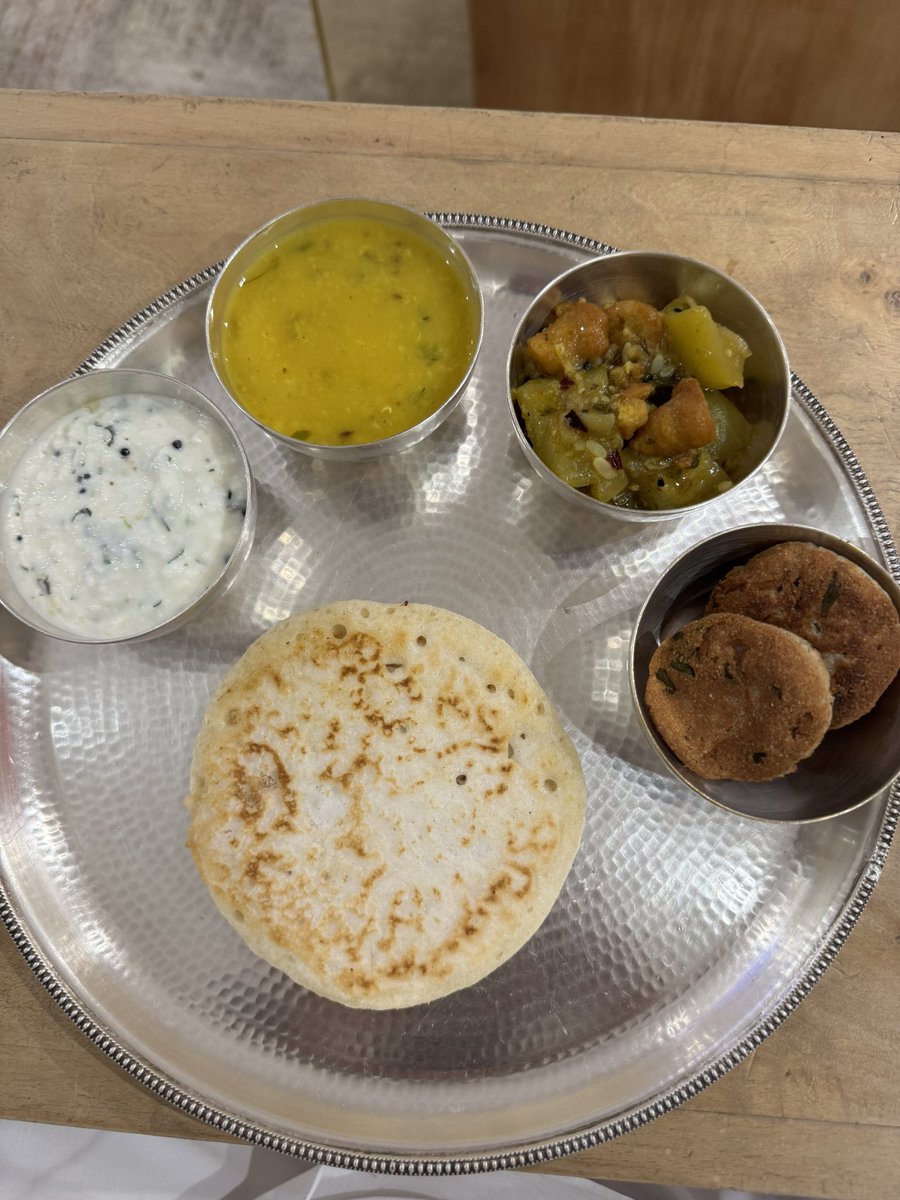
Indian cuisine conversations often revolve around Punjabi, South Indian or Bengali food. Odiya cuisine deserves a much bigger place on that table.
What struck me most was its restraint. No overload of cream, butter or chillies. Just balance, mustard, fermentation, texture and freshness.
Dahi Bara Aloo Dum (popular street food), Drumstick-Brinjal Besara, Chhena Tarkari, Chakuli Pitha (like dosa) Aloo Patra Besara… all made at home.
Heartiest congratulations to Dr. Atanu Nath, Assistant Professor of Physics at Tihu College, Assam, on being named a recipient of the 2026 Breakthrough Prize in Fundamental Physics—one of the world’s most prestigious scientific honors.
His contribution to the Muon g−2 experiment at Fermilab, advancing our understanding of the fundamental laws of nature, is a matter of immense pride for Assam and the nation.
Wishing him continued success in his pursuit of scientific excellence.
I want to see such indian content creators being celebrated, way more than we do.
What an awesome way to remember formulas: Bam Bam Bhole , Sona Chandi Tole 🤩
Not many celebrate Odia cuisine the way Vikas Khanna does.
Despite being a globally renowned chef in the US, serving the who’s who with world-class fusion, his love for Odia food remains strong and genuine.
You’ll find videos and interviews even from 12-15 years ago where he passionately speaks about Odia cuisine.
Thank you @TheVikasKhanna!! 🙌
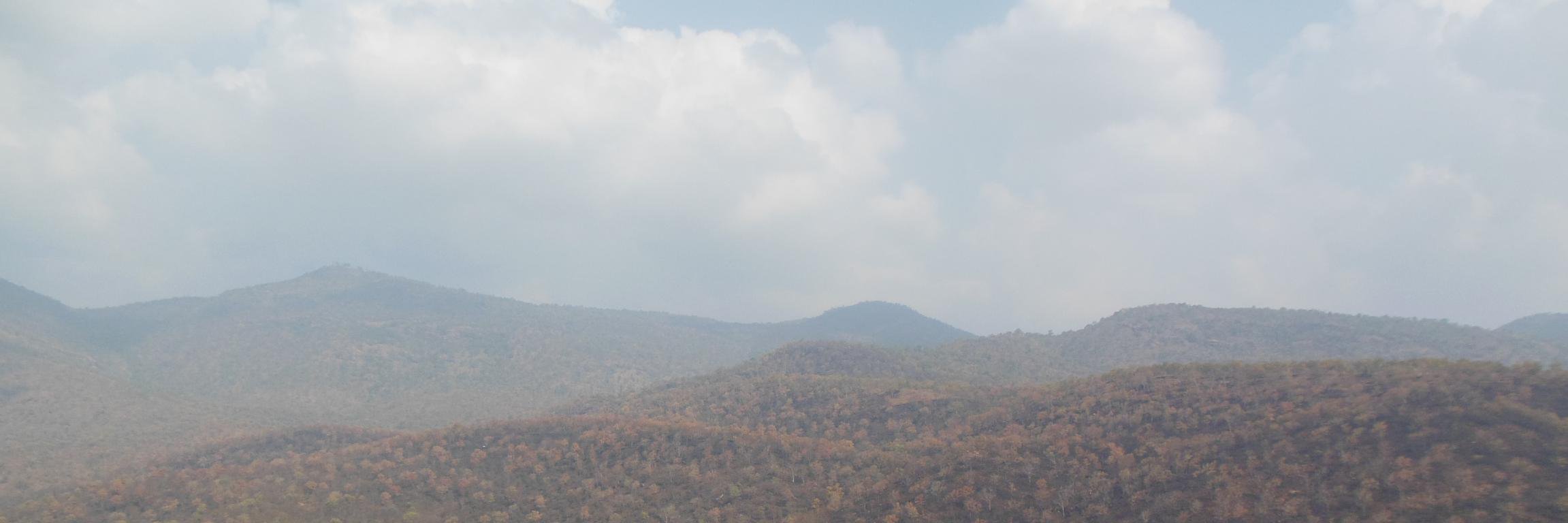
These pics are not from China, this is Odisha, India.
Apparel & textiles turn investment into jobs like few other industries can.
Low investment, high employment. If you want inclusive growth, this is the industry to back.
It supports employment across the value chain, especially for women and rural workers.
> Page Industries invested Rs 750 Cr in Odisha, generates 5,000+ jobs
> Welspun in building a mega factory at Choudwar, which will create 10,000+ jobs
> Khordha Industrial Area: Multiple big apparel units coming up
This is how apparel manufacturing drives real, large-scale employment.
The West poured $50 billion into fast breeder nuclear reactors and abandoned every single one. India poured $900 million and just achieved criticality on the first commercially viable one outside Russia.
The US spent $15 billion. Gave up. Japan spent $12 billion. Their Monju prototype had one sodium fire in 1995 and never recovered. The UK spent $8 billion. Germany spent $6 billion. France, Italy, all walked away. Six of the richest nations on Earth concluded this technology was too hard and too expensive to pursue.
India started building in 2004 with an initial budget of $420 million. Twenty-two years, a dozen missed deadlines, and a cost doubling later, the Prototype Fast Breeder Reactor at Kalpakkam just sustained a controlled fission chain reaction. The reactor is now alive.
The reason India never quit is a constraint most people have never thought about. India has only 1-2% of the world's uranium reserves. For a country of 1.4 billion people trying to build energy independence, that's a death sentence if you're running conventional nuclear.
But India has 25% of the world's thorium. The single largest national reserve on Earth.
The problem: you can't just burn thorium the way you burn uranium. A physicist named Homi Bhabha designed a three-stage nuclear program in the 1950s specifically to solve this. Stage 1: burn natural uranium in heavy water reactors, collect plutonium as a byproduct. Stage 2: feed that plutonium into fast breeder reactors, where it breeds MORE plutonium AND converts thorium into fissile uranium-233. Stage 3: burn thorium directly at scale.
India just entered Stage 2. Seventy years after Bhabha drew it up on paper.
The math on the thorium endgame is wild. At current energy consumption rates, India's thorium reserves could power the country for over 700 years. Most nuclear nations are playing a uranium game with maybe 80-100 years of runway. India is playing a completely different game with a 7x longer fuel supply.
The West quit because uranium stayed cheap and sodium coolant is terrifying. It catches fire on contact with air. It explodes on contact with water. Russia's BN-600 had 27 sodium leaks and 14 sodium fires between 1980 and 1997. And Russia kept going anyway because Russia doesn't quit nuclear projects. India watched all of that and kept going too.
When you have 1% of the uranium but 25% of the thorium, the engineering difficulty stops being a reason to quit. It becomes the price of admission to a 700-year energy supply that nobody else can access.
Here is that moment!!
Payal Nag receives her GOLD medal at Bangkok and the national anthem plays.
And right beside her, Sheetal - gracefully helping move her wheelchair.
Two champions. One podium. One unforgettable frame.
Pure inspiration. ❤️
An interesting story-
From 10th Grade Dropout to a 10k Cr Engine manufacturing business
1998 - A 17 yo dropout joined his father's business in
2008 - Started a workshop with 1 CNC machine
Now - That workshop is worth over 10k crores
I am talking about Azad Engineering
Azad has built a MOAT that even global giants can't disrupt.
Globally only 5 firms worldwide are trusted with these life critical spinning blades.
Plus
Moving components for engines are being produced by only 2 Indian companies
- Azad and
- Godrej Aerospace
Rotating parts are even more complex in the value chain and the hot rolled ones under that category are the epitome. It requires over 40 months for a new supplier to get onboarded for these parts.
Why?
Because if Static parts fail -> The engine leaks.
Rotating parts fail -> The engine disintegrates.
Video on Azad Engineering coming soon
Disclaimer - No recommendation
Meet Akshay Venkatesh !
(Legendary Mathematician of Indian origin)
The mind behind groundbreaking work in modern mathematics
> Born in New Delhi, India, in 1981
> His family moved to Australia when he was two years old
> There, he attended Scotch College and took extra classes for gifted students
> He represented Australia at the International Physics Olympiad and won a bronze medal at the age 11
> Later shifted to mathematics and Became the first Australian to win medals at both the International Physics Olympiad and International Mathematical Olympiad
> He completed his undergraduate degree from University of Western Australia at just 16
> And became the youngest person to earn First Class Honours in pure mathematics from the university
> For which He was awarded the J. A. Woods Memorial Prize as the most outstanding graduate of the year
> He Pursued his PhD at Princeton University under Peter Sarnak and Produced Limiting forms of the trace formula
> Supported by the Hackett Fellowship for postgraduate study, He did Postdoc from MIT
> After his PhD he held Clay Research Fellowship from 2004 to 2006
> And Served as Associate Professor at the Courant Institute (NYU) and became member of the Institute for Advanced Study (IAS)
> After that he Joined as Full Professor at Stanford University in 2008
He has received numerous awards for his contributions to mathematics, including the Fields Medal (the Nobel of Mathematics)
Along with the Infosys Prize (2016) and the Ostrowski Prize (2017).
His work in connecting different areas of mathematics-number theory, dynamics, topology, and representation theory has been revolutionary.
> He has solved long-standing problems using innovative approaches across disciplines.
> And has worked on deep problems like L-functions, quadratic forms, and number fields.
> Today, his work shapes some of the most advanced areas of modern mathematics.
A rare genius connecting ideas across disciplines.
Not widely known to the public.
But deeply respected in the world of mathematics.
@prakdadlani We have been working to bring efficiency for MSMEs and exporters of our country. This is using one unified platform https://t.co/fLuxOsVRVL
Pls share among the people for adoption.





![thebetterindia's tweet photo. A 10x10 room. Two air-conditioners. And a saffron crop everyone said was impossible.
In Jharsuguda, Odisha, Sujata Agarwal built a hydroponic-style indoor farming setup inside a 100-square-foot room in her home, proving that climate doesn’t define possibility anymore.
She recreated Kashmir-like sub-zero conditions using air-conditioners, controlled humidity, trays, and a carefully designed growing system.
After researching saffron cultivation and training with experts from Jammu and Kashmir, she sourced Mogra saffron corms in 2023 and began her experiment.
The corms were planted in containers filled with nutrient-rich growing media instead of soil fields.
Inside this controlled environment, the saffron slowly adapted, and after a few months, flowers began to bloom indoors.
Each bloom is carefully hand-harvested, and the delicate red stigmas are separated and dried to produce saffron.
What began as a trial soon turned into a working model.
She invested around ₹10 lakh to set up the system. By October 2025, she reportedly harvested around 750 grams of saffron worth nearly ₹7.5 lakh in one cycle.
Today, her brand “Bloom in Hydro” sells saffron and herbal products across India and abroad, with reported annual earnings close to ₹24 lakh.
#Hydroponics #SaffronFarming #WomenEntrepreneurs #StartupIndia #Agritech
[hydroponic saffron farming, indoor saffron cultivation, women entrepreneur, Odisha]](https://pbs.twimg.com/media/HJP_UMwbUAA0sIo.jpg)