The $40M TikTok Shop Playbook
@MROJayHunter CRO of @MaryRuths, breaks down exactly how they scaled on TikTok Shop.
No fluff. No gatekeeping. Just the full strategy.
You don't want to miss (Link below)
"The algorithm isn't pushing our content" - said every brand running 3 affiliate posts a week, expecting 7-figure results.
TikTok needs enough creator content to understand your product, identify your buyer, and build momentum.
Three posts a week across your entire affiliate program gives it almost nothing to learn from.
Top creators post about the same product 8, 10, 15 times because they know it only takes one video to hit.
Every post before that is the algorithm figuring out who buys this product, at what price point, after watching what type of content.
That data doesn't come from 3 affiliate posts a week.
It comes from 30.
When a brand tells me TikTok Shop isn't working, the first thing I check is how many creator posts are going live weekly across their program.
Nine times out of ten, the real problem is affiliate volume, not the platform.
More creators posting more often is the strategy most brands are missing.
What's your current weekly affiliate post volume?
MaryRuth's went from $0 to $70M on TikTok Shop in 12 months without a single polished ad.
They built an automated gifting pipeline sending 100 to 500 free units every month to micro-creators in the 10K to 50K follower range.
Open affiliate commission, no content mandates, no approval process.
The brief was simple: film your morning routine and include the product.
The videos that drove the most sales looked nothing like ads. They were creators pouring a spoonful of liquid vitamins into their morning juice while getting ready for work, completely unscripted and deliberately ordinary.
Viewers were watching someone's morning.
That psychological shift from "this is an ad" to "this is someone's habit" is what drove conversions at scale.
Three things made this work:
1) Volume consistently outperformed prestige. Five hundred micro-creator posts is a system. One macro-influencer post is a gamble.
2) Products that fit a habit loop convert better. Creators embedding the product into something they already do daily will always outperform creators presenting it in isolation.
3) TikTok's algorithm found the winning videos without MaryRuth's having to predict them. Seed enough content and the platform does the selecting.
Most brands spend three months finding one perfect creator, negotiate a large partnership, get a single video, and treat inconsistent results as a platform problem.
MaryRuth's treated creator outreach like a pipeline rather than a photoshoot.
That's the difference between $0 and $70M.
TikTok Shop in 2026 feels exactly like Amazon in 2008.
The margins looked thin, the platform felt gimmicky, and real retail was still where serious brands played, so most brands waited.
The ones that didn't wait built review velocity, algorithm equity, and brand positioning that took latecomers years and significantly more money to compete with.
By the time most brands took Amazon seriously, the cost of entry had multiplied.
TikTok Shop sceptics today sound identical:
"Our customer isn't on TikTok."
"We tested it and saw nothing."
"We'll move when it's more proven."
Every single one of those sentences was said about Amazon.
The brands quietly building on TikTok Shop right now are accumulating the same kind of early advantage.
Creator relationships that get harder to build as the platform gets more crowded, algorithm understanding that takes months to develop, and GMV data that informs every other channel they sell on.
That stuff compounds, and it takes time to build.
Amazon's window closed the same way most opportunities do, gradually and without warning, until the cost of catching up made the cost of starting early look trivial.
TikTok Shop is in that same window right now, and most brands are using the same logic to sit it out.
Are you building that position or leaving it for a competitor who isn't waiting?
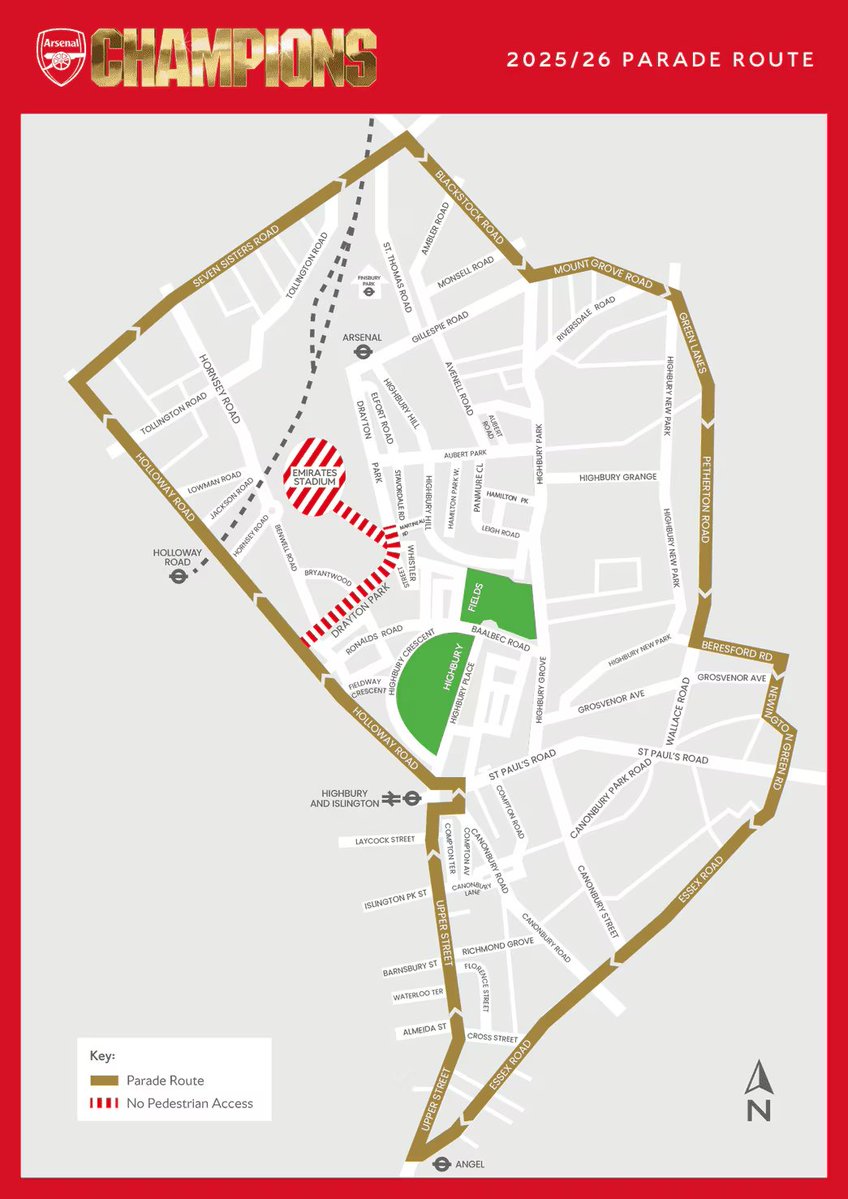
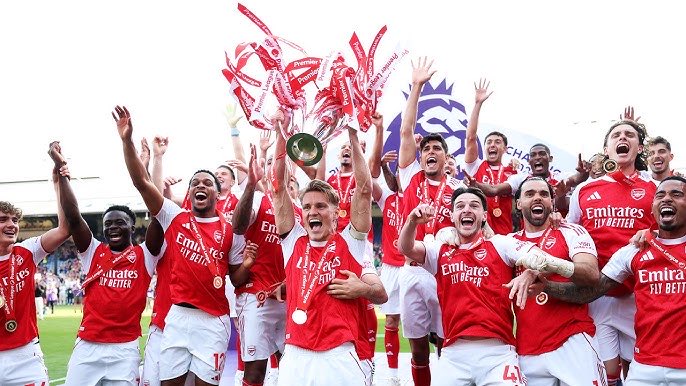
I’ve just run the ENTIRE Arsenal trophy parade route so you don’t have to guess where the best spots are 😂🔴⚪️
And first things first - it’s definitely closer to 10km than 9km.
https://t.co/6FZqdz8vIG (#ukrunchat)
The whole area is already buzzing. Genuinely one of the most joyful vibes I’ve ever experienced around the Emirates. A thread on parade tips 🧵
A simple way to get more out of your TikTok Shop listings today:
Change the order of your product titles.
Most brands default to leading with their brand name like this:
"[Brand] Teeth Whitening Kit with LED Light, 7 Day Treatment, Mint Flavour"
This is hurting your organic reach on TikTok Search.
Two reasons:
TikTok truncates titles in search results so buyers mainly see the first few words, and TikTok uses those first words heavily when deciding what searches to match your listing against.
So when the title starts with your brand name:
1) TikTok treats the brand as the strongest signal and leans into branded traffic
2) The buyer sees a name they don't recognise, which does nothing for you when they're not searching for you specifically
That leads to lower click-through rate, weaker reach on non-branded searches, and paid spend working harder than it should.
Instead, lead with what people are actually searching for:
"Teeth Whitening Kit for Sensitive Teeth, LED Technology, 7 Day Results | [Brand]"
Sounds like a minor fix, but it changes what searches your listing gets matched against, which changes organic reach, which changes how hard your paid spend has to work.
Worth going through your top SKUs today.
TikTok Shop has been getting a rebrand for months.
Affiliate commerce. Creator-led growth. Social selling. Community retail...
Every week, there's a new framework with a new acronym telling brands what they're missing:
"Seed 500 creators"
"Optimize your affiliate rate"
"Build a creator pipeline"
"Go live 3x a week"
"Stack UGC with paid"
"Segment your creator tiers"
When you strip away the jargon and ask what the least sophisticated brand and the most sophisticated brand would both tell you, it works on TikTok Shop.
They'd say the same thing: find a product people actually want, put it in front of creators whose audience already buys stuff like it, and post enough to let the algorithm find its footing.
90% of the "strategy" you're reading about is complexity dressed up as insight.
The brands doing $500K months on TikTok Shop aren't running elaborate frameworks.
They've got a strong product-creator fit, and they're consistent enough to let momentum build.
The industry loves making this harder than it is.
Running a TikTok Shop without really knowing what's working on the platform right now is one of the most expensive mistakes a brand can make.
The platform changes constantly.
What worked six months ago isn't what's working today.
Creator strategy, content formats, affiliate management, media buying, all of it shifts, and most brands are operating on assumptions that are already out of date.
That's why I started writing a newsletter a while back.
Every week, I share what we're actually seeing inside client accounts.
What's converting, what's not, where brands are wasting money, and where the real opportunities are right now.
It's the stuff that doesn't make it into a LinkedIn post.
If you're a brand doing serious numbers on other channels and you're either already on TikTok Shop or thinking about it, it's probably worth being in the loop.
27,000+ people are already in, feel free to join: https://t.co/hAv61DbhJ1
UGC farming is getting airtime now because the bigger brands are starting to talk about it.
We were running it before TikTok Shop existed.
What's actually changed is the infrastructure.
TikTok Shop makes the harvest layer almost trivial.
Creator sourcing, sample seeding, and testing with GMV Max are all native to the platform.
What used to take five different tools and a lot of manual work is just built in now.
But most people talking about UGC farming are glossing over the part that actually matters.
It works when you have a hero SKU and a cultural angle the algorithm can latch onto.
Without those two things, you're just sending out samples and hoping something sticks.
The method was never the moat. Anyone can read the playbook and copy the steps.
What they can't copy is the operating layer underneath, like how you build commission architecture, how you develop creator relationships over time, how you read what the algorithm is rewarding this week, and move before everyone else catches on.
That's where the real advantage is.
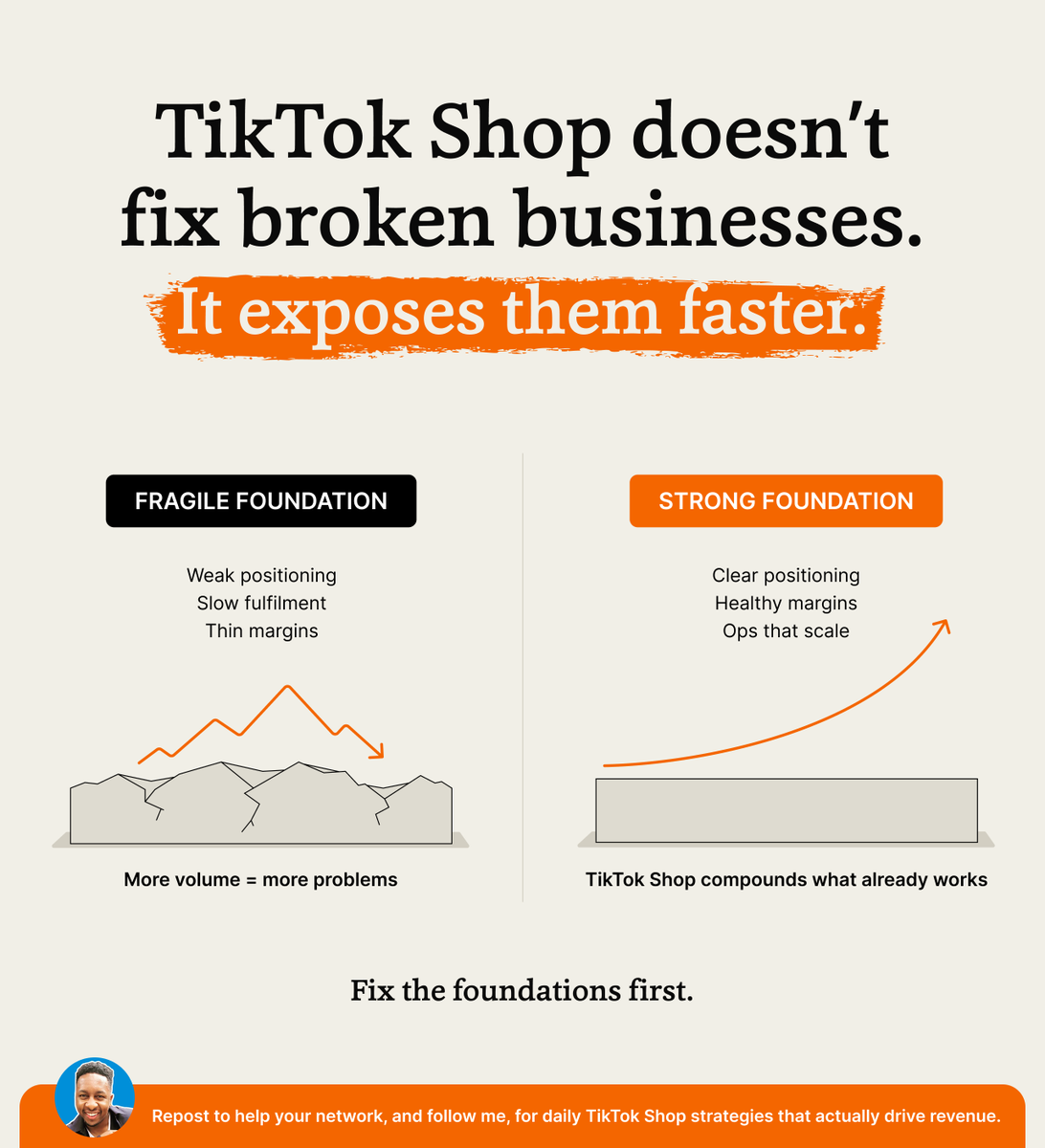
If Meta and Google aren't working, TikTok Shop won't fix it.
It'll just reveal more cracks faster.
Most brands come to us assuming TikTok Shop runs separately from the rest of their business.
It plugs straight into the same fulfilment, the same customer service, the same margin structure, the same returns rate.
If CAC is broken on Meta because the product positioning is weak, TikTok Shop will just sell that weak version faster, generate worse reviews, and tank shop health in the process.
If fulfilment is already struggling at 50 orders a day, a single TikTok live can hit you with 500 and break the whole operation overnight.
If contribution margin is thin before commission, every affiliate sale will cost you money.
Most brands don't realise any of this until month three, when the GMV looks great and the bank account tells a completely different story.
The brands compounding on TikTok Shop right now arrived with the ecosystem already working.
Meta paying efficiently. Amazon stable.
Margin healthy enough to absorb a 10 to 15% commission.
Operations able to flex with demand.
TikTok Shop elevates a working business and exposes a broken one.
If the foundations are shaky, fix those first. Arrive on TikTok Shop with momentum rather than hoping the platform creates it for you.
What's actually broken in your business before TikTok Shop is the question worth answering first.
This is/was an absolute must!! Every top club has the resources to be doing this now, and I’d put money on it becoming a regular feature across the league soon.
Can’t wait to see what they’ve got 👀
I can confirm the club have documented a lot of behind the scenes footage, maybe even from previous seasons too. How and when it will be dropped is still being planned but 2 sources have told me some of the scenes will leave you speechless.
Make It Happen ❤️
TikTok Shop just opened the highest-margin category in its history.
Most brands will not be allowed in.
Last month, TikTok Shop launched Virtual Goods in the US, invite-only.
Gift cards, video game codes, and software licences.
Three product types, one very different margin profile.
Physical D2C runs at a 30 to 60% margin.
Digital goods run at 70 to 95%.
But the margin isn't what's keeping brands out.
Every seller in this category has to issue codes via API within two hours of an order being placed.
That's the real filter, and it has nothing to do with who wants in or who has the right product. It comes down to who can actually fulfil that operationally.
There's also a $500 retail cap per product and no way to convert back to physical once you're set up as a digital goods seller. So the decision to enter is a one-way door.
The UK and EU rollout is expected sometime in the next 6 to 12 months.
The brands that get in now, prove their operational capability, and build their creator pipeline before the wider rollout will have a position that brands entering in 2027 simply cannot buy their way into.
Early-mover advantage on TikTok Shop has always been about timing.
In this category, it's structural.
TikTok Shop consumers behave differently from buyers on every other platform.
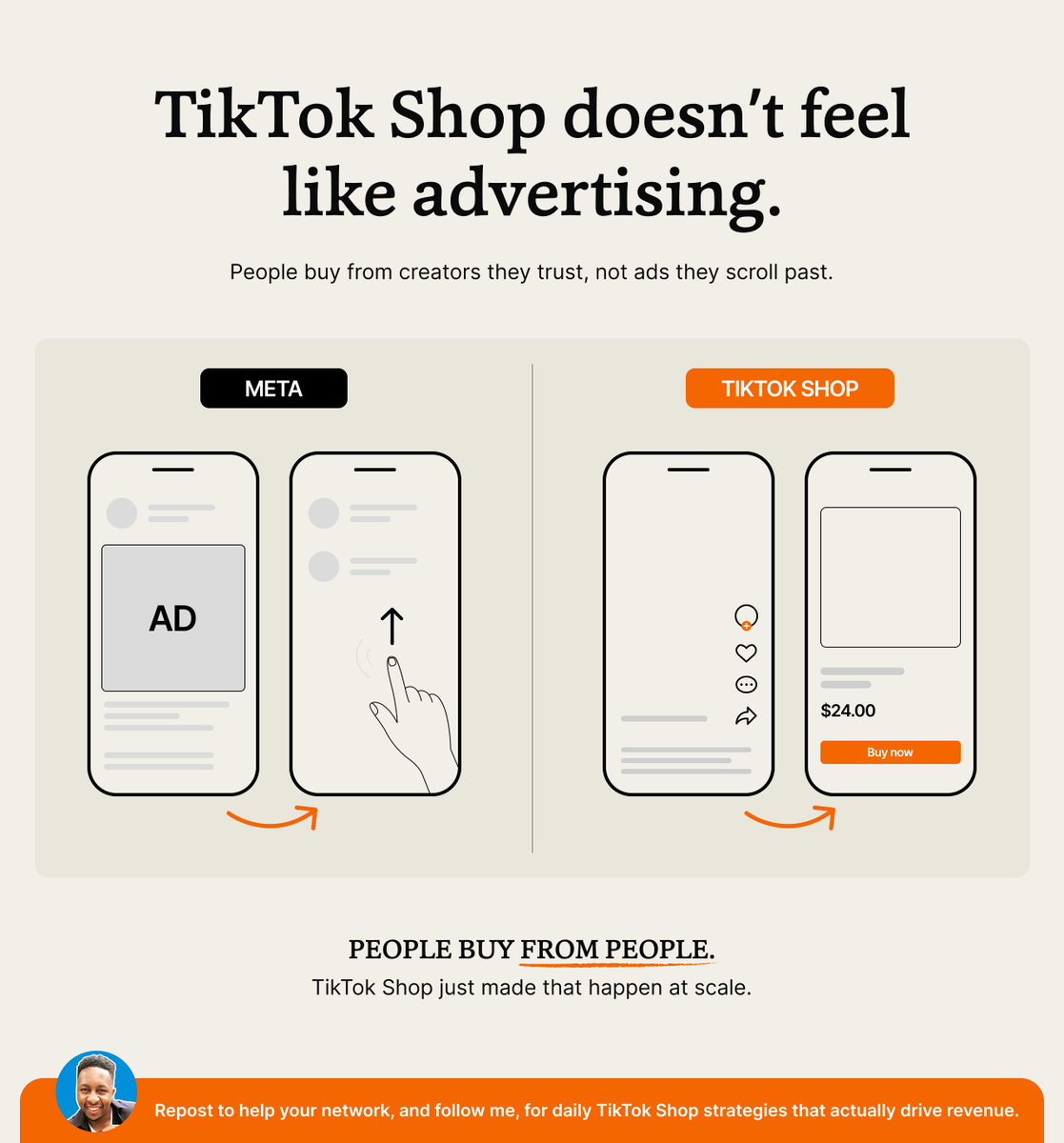
On Meta, you're interrupting someone's scroll with an ad they didn't ask to see.
On TikTok Shop, they're discovering your product through a creator they already trust.
That's a completely different starting point for a purchase decision.
The creator doesn't even need a big following.
That's not how the algorithm works.
What matters is whether the content resonates and the product fits the audience watching it.
What drives the purchase is the story.
Someone showing their acne before and after using a skincare product.
Someone is demonstrating a kitchen tool in their own home.
That kind of content does something a static ad never can. It lets the buyer see themselves in the result.
People have always bought from people.
TikTok Shop just made that happen at scale.
With a checkout that never takes the customer off the platform, it's one of the most frictionless buying experiences in e-commerce right now.
What other channel gives you a demo video and a buy button in the same scroll?






![ashley_wright's tweet photo. A simple way to get more out of your TikTok Shop listings today:
Change the order of your product titles.
Most brands default to leading with their brand name like this:
"[Brand] Teeth Whitening Kit with LED Light, 7 Day Treatment, Mint Flavour"
This is hurting your organic reach on TikTok Search.
Two reasons:
TikTok truncates titles in search results so buyers mainly see the first few words, and TikTok uses those first words heavily when deciding what searches to match your listing against.
So when the title starts with your brand name:
1) TikTok treats the brand as the strongest signal and leans into branded traffic
2) The buyer sees a name they don't recognise, which does nothing for you when they're not searching for you specifically
That leads to lower click-through rate, weaker reach on non-branded searches, and paid spend working harder than it should.
Instead, lead with what people are actually searching for:
"Teeth Whitening Kit for Sensitive Teeth, LED Technology, 7 Day Results | [Brand]"
Sounds like a minor fix, but it changes what searches your listing gets matched against, which changes organic reach, which changes how hard your paid spend has to work.
Worth going through your top SKUs today.](https://pbs.twimg.com/media/HJe69EeXkAEcG5M.png)