India told multiple generations that success meant escaping service work.
Get the degree, get the IT job, get “settled,” preferably in something your parents understand (or at least could explain :))
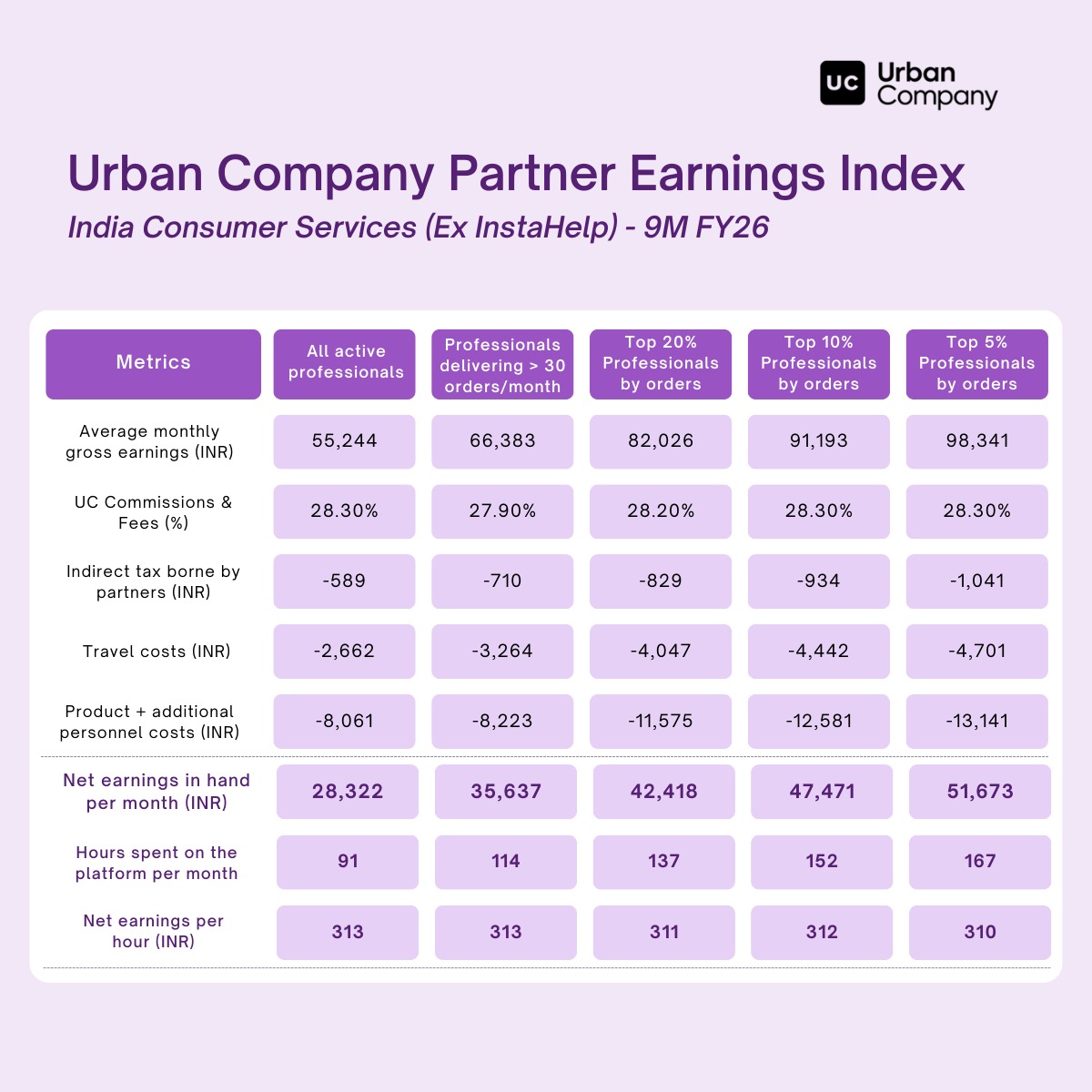
But new earnings data from Urban Company complicates that story a bit. The average service professional on the platform takes home about ₹28K a month, while top earners cross ₹51K, roughly 60% higher than many entry-level IT salaries. For decades, we treated degrees as the primary gateway to dignity and financial stability. Yet numbers like these suggest the labour market may already be reorganising itself around something more immediate: demonstrable skill.
What strikes me even more is what this could mean for women. Service platforms have become one of the few places in the economy where income is directly tied to output rather than office politics, pedigree, or who feels comfortable speaking over whom in a meeting. When earnings are linked to reliability, quality, and customer experience, the path upward can, at least in theory, become more accessible. For many women, especially those navigating re-entry after career breaks, constrained mobility, or the need for flexible schedules, that accessibility matters.
None of this is to suggest platform work is a perfect system: questions around protections, long-term security, and bargaining power deserve serious attention. But it would be equally short-sighted to ignore the signal. When women can convert skill into predictable income without waiting for institutional permission, the definition of “good work” begins to expand. Economic participation stops looking like a narrow corridor and starts resembling a wider field.
We may be underestimating how quickly prestige hierarchies shift once money moves. When pay begins tracking visible capability instead of just credentials, the old white-collar versus blue-collar binary doesn’t vanish overnight, of course, but it does start to wobble. And when that binary weakens, so do some of the gatekeeping structures that have historically kept large groups of workers, especially women, on the margins of formal aspiration.
The future of work in India might not be about leaving service work behind. It may be about professionalising it: pricing skill more honestly, broadening what we recognise as ambition, and acknowledging that dignity attaches less to job categories and more to the value someone can reliably create.
If that shift is underway, it is worth watching closely, not just as a labour story, but as a gender one too.
We’ve just released the latest edition of the Urban Company Partner Earnings Index.
During 9M FY26, @urbancompany_UC service partners earned an average ₹28.3k per month (net, in hand). Earnings scale meaningfully with performance: the top 20% earned ₹42.4k, the top 10% ₹47.4k, and the top 5% ₹51.6k per month, after removing commissions, taxes, fees, travel, and product costs.
These earnings are well above statutory minimum wages and at par with, or meaningfully better than, entry level IT salaries. This reflects a quiet but important shift toward dignified, skill based work that delivers strong and sustainable incomes.
Beyond earnings, all active service partners are covered under group life and accident insurance, including life cover up to ₹10 lakh, disability cover up to ₹6 lakh, and accidental hospitalisation and OPD coverage.
We’ve also partnered with HDFC Pension to enable access to the National Pension System (NPS), supporting long term financial security. In parallel, Urban Company continues to invest heavily in training and upskilling, with a large network of full time trainers and training centres across India. Through our partnership with NSDC, partners receive structured training and Skill India certified digital credentials, with high performers able to progress into full time trainer roles, creating clear pathways for career growth.
More details can be accessed here - https://t.co/LrqjXPGCrH
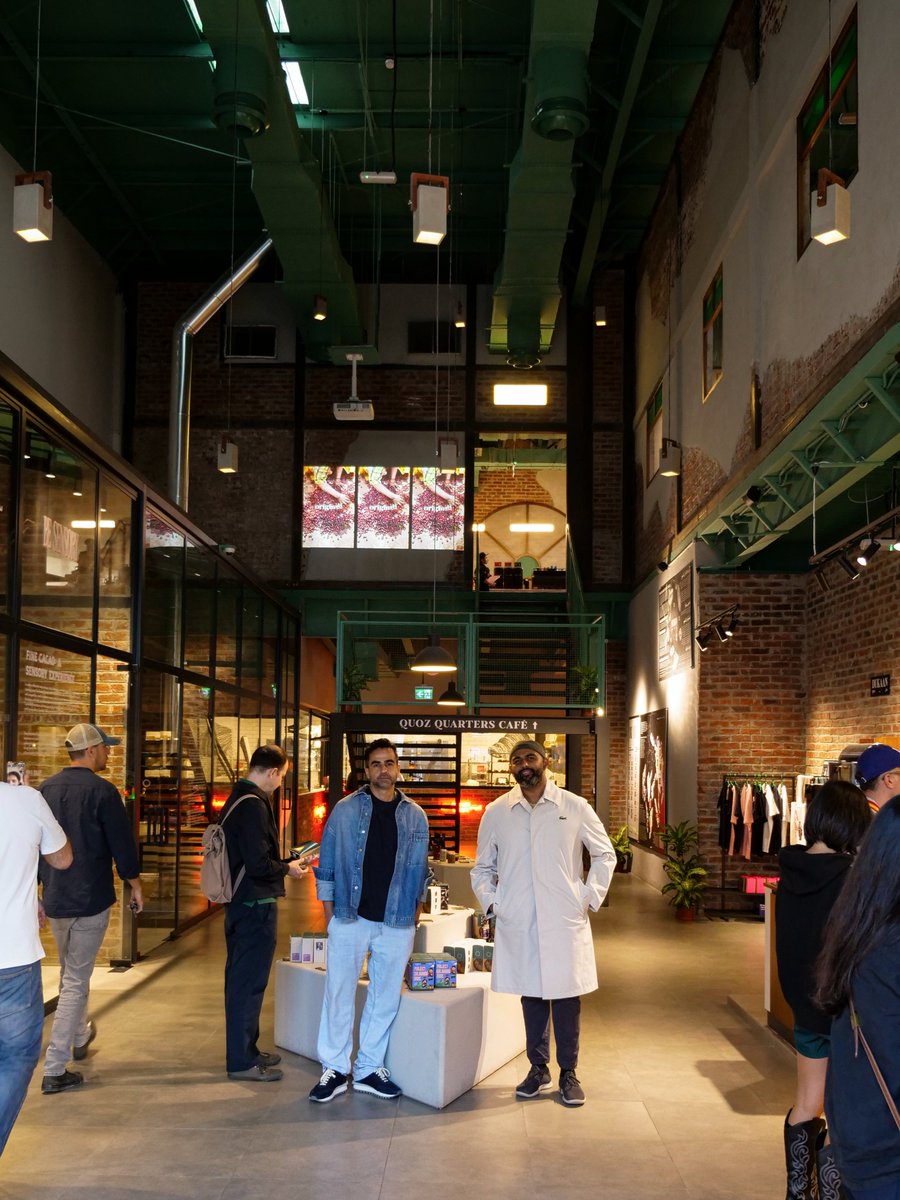
People said Indians can’t build premium brands that work abroad, well here’s Rahul at Subkos flagship store at Dubai Alserkal, Superyou now sells in Dubai, 11.11 sells in New York and Brad Pitt wears it in a movie (unpaid), Nappa Dori is on the parallel street to Subko in Alserkal (ps I have nothing to do with Nappadori, just proud)
@jointhefoundery will hopefully create a few brands like this too...
Premium, artisan, COOL, Indian brands to the world ❤️ 🇮🇳
After a certain age, your parents slowly become your children.
They ask simple questions, repeat stories, and depend on your patience the way you once depended on theirs. Very few understand this role reversal. What looks like innocence or inconvenience is really time coming full circle. Don’t correct them harshly. Don’t rush them. Care for them the way they once protected you. This is not a burden. It is repayment, quietly wrapped as love.