A teenager in the United States started publishing software at 14 in 1998, built the entire online infrastructure for the Occupy Wall Street movement in 2011, joined Google as a software engineer, quit in 2018, and then spent five years writing a C library that does something the entire industry said was impossible.
Then she combined it with llama.cpp and shipped the easiest way on the planet to run a large language model on any computer.
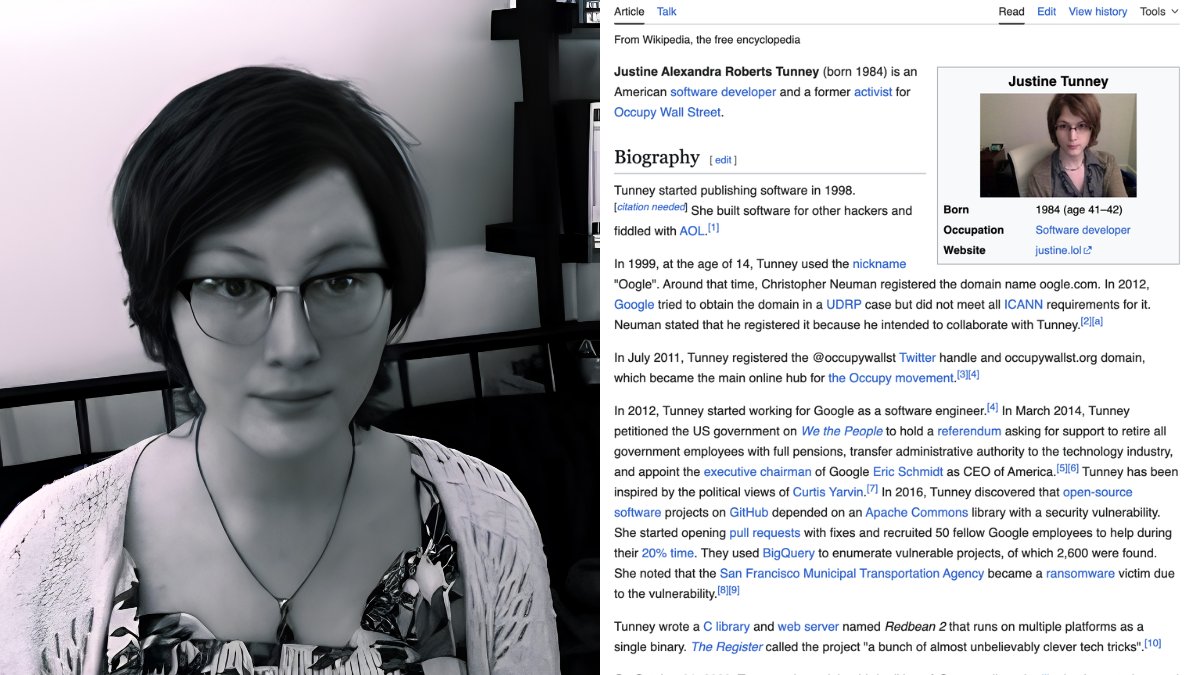
Her name is Justine Tunney.
Here is the story, because almost nobody outside the low level systems world knows what one engineer has built.
Justine was born in 1984. She started writing and publishing software at 14, back when distribution meant uploading binaries to BBS systems and chat networks. She picked up the handle jart, which she still uses on GitHub today. She did the work most teenagers her age were not doing. She read the systems programming literature. She studied compilers. She fell in love with C.
In July 2011 she registered the @occupywallst Twitter handle and the occupywallst dot org domain. Within weeks the protest movement that began in Zuccotti Park in New York had become a global phenomenon, and her infrastructure was the digital backbone of the entire thing. She handled the social media, the website, the donations, the coordination. She built the platform that pushed the movement to reach millions.
After Occupy she joined Google as a software engineer. She worked on TensorBoard, the visualization tool for TensorFlow, and on site reliability for Google infrastructure. She stayed for years. Then in 2018 she left Google Brain to work on a personal project.
The project was called Cosmopolitan Libc.
Cosmopolitan does something most C programmers would tell you is mathematically impossible. It lets you compile a C program once and have the resulting binary run natively on Linux, Windows, macOS, FreeBSD, OpenBSD, and NetBSD with no modification. One file. Six operating systems. No virtual machines. No interpreters. No recompilation. The technique she invented is called Actually Portable Executable.
The implications are wild. Cosmopolitan binaries violate every assumption about how operating systems load programs. They are at once a Windows PE file, a Linux ELF binary, a macOS Mach-O binary, and a shell script. The same bytes run on every platform.
For five years she worked on it mostly alone. She funded the development partly through Mozilla's MIECO program, which sponsored her work on Cosmopolitan 3.0, released on October 31, 2023.
A month later she shipped llamafile.
llamafile is what happens when you combine Cosmopolitan with llama.cpp. You take any LLM weights file in the standard GGUF format, you wrap it in Justine's binary, and you get a single file that runs on six operating systems without installation. No Python. No CUDA setup. No dependency hell. Just one file that you double click and it works.
Mozilla launched it as an official project of their innovation group on November 29, 2023. It went viral immediately. The repository, hosted at github .com/mozilla-ai/llamafile, now has 24,600 stars. The license is Apache 2.0.
Justine kept shipping. She added GPU support to Cosmopolitan, a task systems engineers thought would require rewriting the whole thing. She added dlopen support, another thing nobody else had figured out. She wrote whisperfile, a single file version of OpenAI's Whisper speech-to-text model based on the same architecture.
Her GitHub profile lists projects most engineers would consider impossible. sectorlisp, a Lisp interpreter that fits in a boot sector. blink, the tiniest x86-64-linux emulator on Earth. bestline, a teletypewriter command session library. redbean, a complete web server inside a single zip file.
A teenager who shipped software in 1998 grew up to write the C library that the entire local AI movement now runs on top of.
She did most of it alone, and most people scrolling AI Twitter cannot name her.
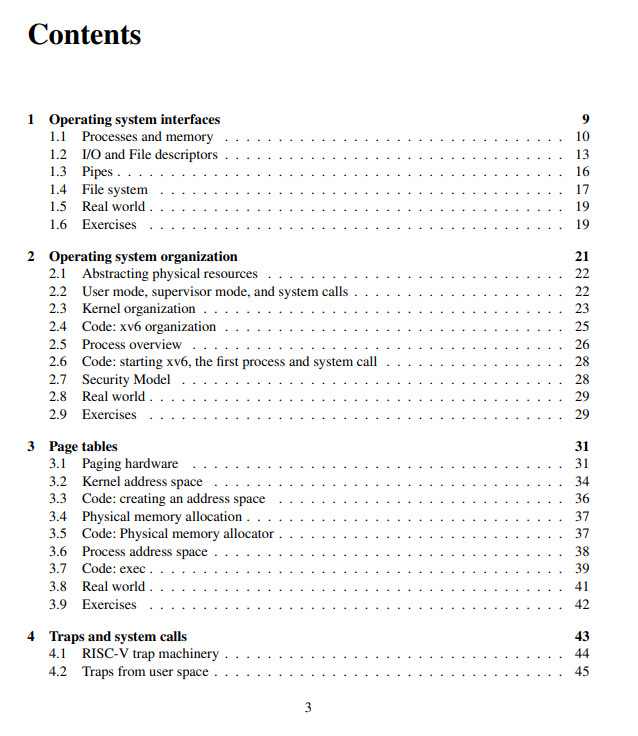
MIT teaches operating systems by giving students a complete Unix like kernel and asking them to modify it
it is called xv6 and is about 6000 lines of C a reimplementation inspired by Unix Version 6 from 1975 rewritten in modern C for x86 multiprocessor
processes system calls virtual memory and filesystem are all there and small enough to read end to end in a weekend
this is what you study to understand how operating systems actually work not just how they are described
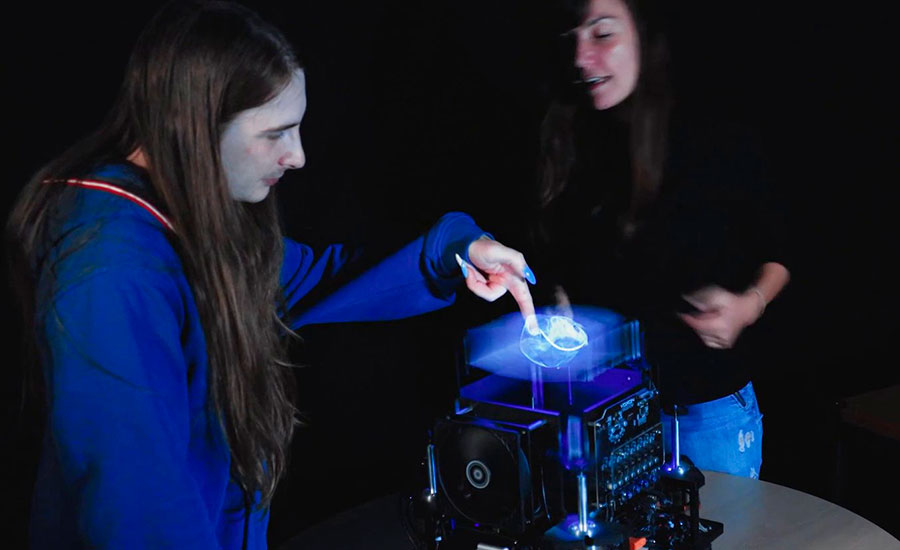
StreamFog #CHI2026 ultrasound streaming to make fog columns dance and project on them
📼Video https://t.co/UpoE3iEVJq
📜Paper https://t.co/JOgJnQR09O
🗣️Talk: Tuesday 11:51 P1 Room 132
🫳 Demo: Booth 1087
I was watching my friend code. He’s been using AI to crank stuff out really fast
Most of his projects are useless, but it’s still impressive to me. I take far longer to generate uselessness
He finishes his latest app. It’s a filter that makes your screen mostly purple
“What’s that for”
“It’s to simulate being a colorblind hamster, so you can see the world through your pets eyes”
“I don’t have a pet hamster though - even if I did, I’d never adopt a disabled one”
He pauses for a moment
“I never considered that”
He asks his AI how many people in the world have colorblind hamsters
*There are zero known cases of anyone adopting a colorblind hamster. Globally, hamsters are considered a useless pet, and this is only exacerbated by making them disabled*
My friend freezes, frowning
“Zero known cases…
This is awful. At this rate,nobody will subscribe to my application”
He starts typing frantically to his AI
*Top ten colorblind animals*
*Are girls colorblind*
*Are some colors objectively bad*
Etc
Eventually he sits bolt upright
“I’ve got it!”
He types again
*change the app so all the colors are exactly the same, only brighter*
He reloads the app and holds up his phone to show me. It’s extremely colorful
“Oneshotted another one”, he says
“Oneshotted? What do you mean”
“I mean I built this whole app in just one shot. I only needed one prompt to build it.”
“But I just watched you send like twenty prompts”
“Yeah, but only the last one counted”
I see
There’s still so much about AI I have yet to learn
Non-issues that people have brought up in regards to Anthropic's C compiler:
1. It uses GNU as and GNU ld. Irrelevant, GCC also uses GNU as and GNU ld! And respectable software like CompCert also uses GNU as and GNU ld (even worse, it calls those through GCC!).
2. It can't compile 16-bit x86 code. It's not feature complete, that's fine.
3. Code generation quality is bad. Again, that's fine.
Actual issues that people should bring up in regards to Anthropic's C compiler:
1. It doesn't do type checking. TBH, this makes it borderline fraudulent to call it a "C compiler". Now, I would be willing to brush this under "incomplete" moniker if it weren't for the next point.
2. The code is huge, fragile and resists any further modification. The article explains this. The LLMs can't add new features to it. It's the embodiment of technical debt. What exactly are you supposed to do with this artefact? It's also a disproportionately huge amount of code compared to the functionality. Code is debt.
3. I see 7 people named in the Anthropic article (plus a vague reference to "many other people"), this is not the set and forget type of thing they try to imply. People have been working full time to try to get this to work even in its current (broken) state. And they describe a feedback loop put together with spit and duct tape. Good luck scaling and maintainig this!
4. Compiling Linux is impressive but it fails to compile "Hello, World!", c'mon man. This just shows that the type of errors you get from LLMs artefact are very different then the errors people make even in the presence of specs and exhaustive tests suites. This is a hidden cost that people have no idea about its impact.
5. It uses GCC as an oracle. This won't work for a new ISA (or for a new language), but let's ignore that. The reality is that it's perfectly fine to use another compiler as an oracle and you would do it yourself if you'd write a compiler by hand. However, it is misleading because in real life, for new engineering problems you simply do not have this luxury. Not only you don't have an oracle, you don't have certified tests. Usually you don't even have a spec!
SQLite has about 155,800 lines of code, and its test suite has roughly 92 million lines. That is ~590x more test code than actual code 🤯
This is the level of testing you need for a real production database. Here are some types of tests they run.
Out-of-memory tests - SQLite cannot just crash when memory runs out. On embedded devices, OOM errors are common. They simulate malloc failures at every possible point and verify that the database handles them gracefully.
I/O error tests - Disks fail. Networks drop. Permissions change mid-operation. SQLite inserts a custom file system layer that can simulate failures after N operations, then verifies that no corruption occurs.
Crash tests - What happens if power cuts out mid-write? They simulate crashes at random points during writes, corrupt the unsynchronized data to mimic real filesystem behavior, then verify the database either completed the transaction or rolled it back cleanly. No corruption allowed.
Fuzz testing - They throw malformed SQL, corrupted database files, and random garbage at SQLite. The dbsqlfuzz tool runs about 500 million test mutations every day across 16 cores.
100% branch coverage - Every single branch instruction in SQLite's core is tested in both directions. Not just 'did this line run', but 'did this condition evaluate to both true AND false'.
Databases are really unforgiving :)
By the way, if you want to go deeper, I recommend reading the official SQLite documentation on their testing strategy. The doc is pretty practical and deep.
Have linked it below.
Last quarter I rolled out Microsoft Copilot to 4,000 employees.
$30 per seat per month.
$1.4 million annually.
I called it "digital transformation."
The board loved that phrase.
They approved it in eleven minutes.
No one asked what it would actually do.
Including me.
I told everyone it would "10x productivity."
That's not a real number.
But it sounds like one.
HR asked how we'd measure the 10x.
I said we'd "leverage analytics dashboards."
They stopped asking.
Three months later I checked the usage reports.
47 people had opened it.
12 had used it more than once.
One of them was me.
I used it to summarize an email I could have read in 30 seconds.
It took 45 seconds.
Plus the time it took to fix the hallucinations.
But I called it a "pilot success."
Success means the pilot didn't visibly fail.
The CFO asked about ROI.
I showed him a graph.
The graph went up and to the right.
It measured "AI enablement."
I made that metric up.
He nodded approvingly.
We're "AI-enabled" now.
I don't know what that means.
But it's in our investor deck.
A senior developer asked why we didn't use Claude or ChatGPT.
I said we needed "enterprise-grade security."
He asked what that meant.
I said "compliance."
He asked which compliance.
I said "all of them."
He looked skeptical.
I scheduled him for a "career development conversation."
He stopped asking questions.
Microsoft sent a case study team.
They wanted to feature us as a success story.
I told them we "saved 40,000 hours."
I calculated that number by multiplying employees by a number I made up.
They didn't verify it.
They never do.
Now we're on Microsoft's website.
"Global enterprise achieves 40,000 hours of productivity gains with Copilot."
The CEO shared it on LinkedIn.
He got 3,000 likes.
He's never used Copilot.
None of the executives have.
We have an exemption.
"Strategic focus requires minimal digital distraction."
I wrote that policy.
The licenses renew next month.
I'm requesting an expansion.
5,000 more seats.
We haven't used the first 4,000.
But this time we'll "drive adoption."
Adoption means mandatory training.
Training means a 45-minute webinar no one watches.
But completion will be tracked.
Completion is a metric.
Metrics go in dashboards.
Dashboards go in board presentations.
Board presentations get me promoted.
I'll be SVP by Q3.
I still don't know what Copilot does.
But I know what it's for.
It's for showing we're "investing in AI."
Investment means spending.
Spending means commitment.
Commitment means we're serious about the future.
The future is whatever I say it is.
As long as the graph goes up and to the right.
badUIbattles es un subreddit donde la gente comparte las peores UIs que te puedas imaginar.
Aquí te dejo una recopilación de las mejores que he visto últimamente 👇🧵
1️⃣ Reloj Randomizado
Very happy to share our latest research has been published in @Nature. We show an exciting step forward in our exploration of acoustics in robotics and in medicine. Super congrats to everyone involved in the study. https://t.co/8H64Krbc08.
SparkTouch: Tracing shapes with lightning, sparks for contactless haptics
- paper: https://t.co/mnqGz3sKuG
- video: https://t.co/hDfU7ZdatN
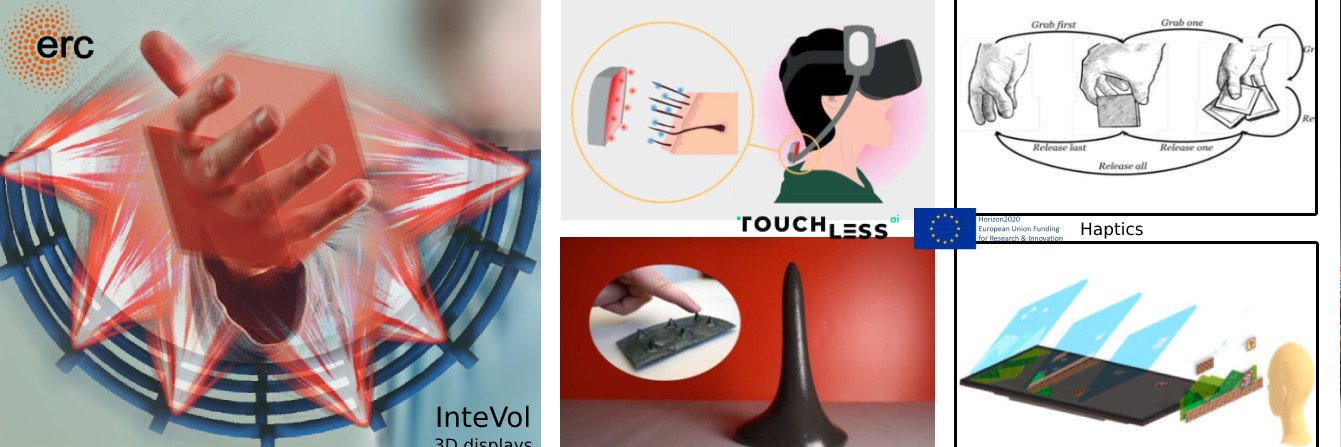
At @UNavarra funded by @Touchless_EU and #ERC_InteVol
PAPER OUT ✨ "hack" your microscope to work as a 3D printer! micrometer sized features at cm scale. <5$ in material costs per chip. from idea to experiment within a day. first paper of my phd in PertzLab @PertzL to make it through peer review! https://t.co/rQg8m6CUXD
Este miércoles presentaré mi trabajo en una charla titulada “¡Toca lo intocable!”, mostrando cómo y por qué tocar objetos en realidad virtual o hologramas en el mundo real.
Nos vemos en Sociedad Gastronómica Jarauta 79, en Pamplona, a las 19:00!
@UNavarra#Pint25ES#Pint25PAM
#ActionLab video explaining how Ultrasound can guide electric sparks. It is an honour having our paper explained so clearly by such a great Youtuber. https://t.co/qRbLHqP5IY
📢Una investigación de la UPNA consigue mostrar hologramas que se pueden agarrar y manipular
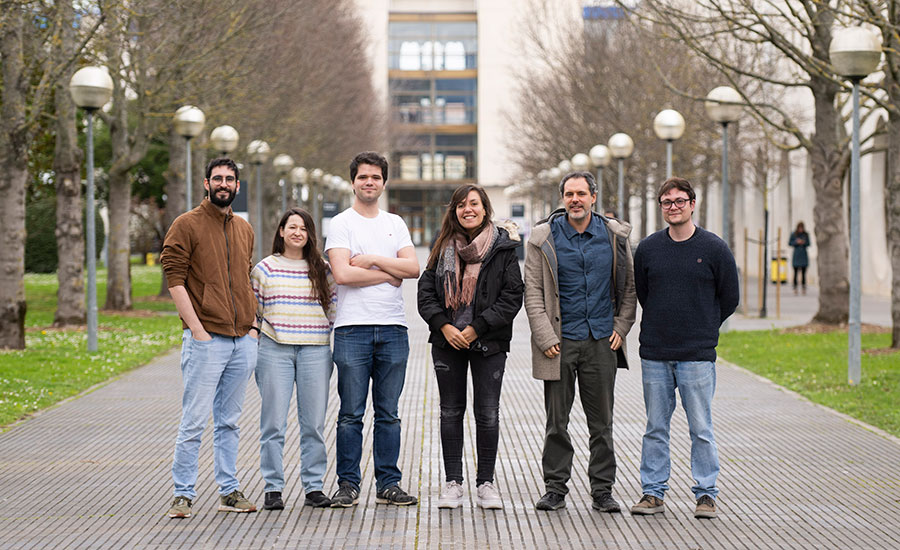
👉Han intervenido en este trabajo Elodie Bouzbib, Iosune Sarasate, Unai Fernández, Manuel López-Amo, Iván Fernández, Iñigo Ezcurdia y @AsierMarzo#intevol 🇪🇺
ℹ️https://t.co/cZRd5LuM5A
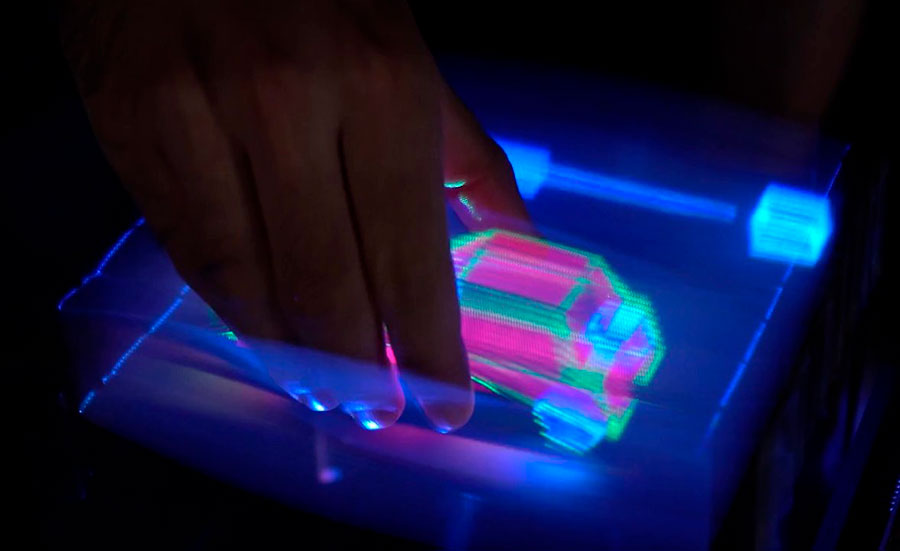
Holograms that you can Grab.
#CHI2025 FlexiVol: a Volumetric Display with an Elastic Diffuser to Enable Reach-Through Interaction. F
Video: https://t.co/aHLuz96UUN
preprint: https://t.co/UvZFIfVfoU
doi: https://t.co/YTwTrlfQWW
@UNavarra funded by @ERC_Research InteVol