We just made our enterprise signing infrastructure free for every business in India.
(Here- https://t.co/AH0cERiHkQ )
Any business can now sign documents for free on our website.
Upload a PDF. Add up to 2 signatories. Choose your signature method. Send, track, and execute.
The entire flow takes 3 steps and works without a sign-up or a credit card.
The signing infrastructure underneath is the same one our enterprise clients use.
Tamper-proof audit trails, court-admissible execution, encrypted processing, and legally valid signatures.
We support Digital Signature (OTP-verified), Aadhaar eSign, and DSC Token signing. All three methods are available immediately.
Most growing businesses still coordinate signatures over email, WhatsApp, and follow-ups.
Reliable signing infrastructure usually shows up only after teams adopt a larger platform.
That felt backwards to us.
Signing is the most fundamental business workflow.
We wanted growing companies, founders, and small legal teams to have access to the same level of trust and reliability that large enterprises already run on.
Start with signing. Scale into broader contract and document workflows when you are ready.
Being impressed by AI output usually means you cannot evaluate it.
I read a sharp take recently arguing that LLMs only impress people who avoid doing the actual work. Writers who avoid writing. Lawyers who avoid understanding case law.
There is real truth in it. But it draws the wrong conclusion.
The more domain expertise you have, the less impressed you are by the output, and the more useful the tool actually becomes.
A lawyer with strong fundamentals reads an AI draft and spots the gaps in seconds.
A lawyer with weak fundamentals reads the same draft and calls it brilliant.
AI exposes your standards. The expert uses it to move faster. The amateur uses it to make mistakes at scale.
The tool amplifies whatever you bring to it.
If your legal team is evaluating AI and wants tools where verification is built in, happy to show you how we approach this at Legistify.
A model that flags its own mistakes is worth more than a model that scores highest on benchmarks.
Anthropic launched Opus 4.8 yesterday. It leads across most categories.
Opus 4.8 is 4x less likely than its predecessor to let flaws in its own output pass unremarked.
It proactively flags issues that other models missed and left for users to catch.
A model that tells a lawyer "I am uncertain about this citation" saves more time than a model that drafts 10% faster.
2 more things from this launch worth noting:
1. Dynamic Workflows is now in research preview.
Hundreds of parallel subagents are working on large-scale tasks. For legal teams managing hundreds of matters, this is the kind of parallel analysis the infrastructure layer has been missing.
2. The benchmark race is converging.
GPT-5.5 and Gemini 3.1 Pro are close in several categories. When models perform similarly, the differentiation moves to what you build around them. Structured data, governance, and workflow depth become the product.
If your legal or compliance team is figuring out how to evaluate these models, happy to share what has worked for us.
Excited to partner with Raymond Lifestyle as they strengthen legal operations with Legistify.
50+ users rely on Legistify for litigation management from case updates and hearings to alerts and proactive matter monitoring
#LegalOperations#LitigationManagement#RaymondLifestyle
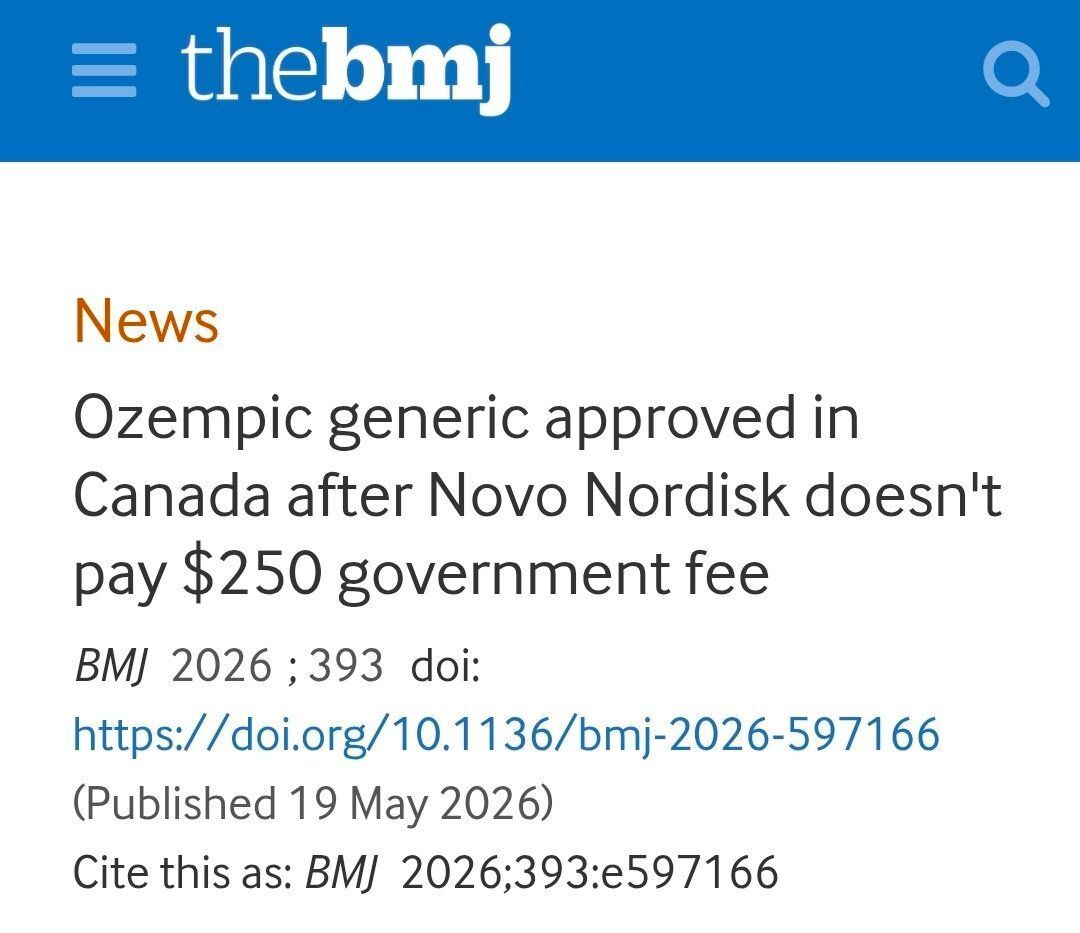
This is what happens when IP management runs on spreadsheets and calendar reminders.
Novo Nordisk failed to pay a $250 annual maintenance fee on its Canadian semaglutide patent in 2019.
The reversal window closed in August 2020. The patent would have provided protection through 2028.
Canada became the first G7 country to approve generic Ozempic. Dr. Reddy's launched their version earlier this month.
This is a $200 billion company with entire legal departments, outside counsel across geographies, and IP specialists on payroll.
They still missed a routine fee.
The most expensive legal failures are administrative.
Missed deadlines, unpaid fees, and lapsed filings are the kind of work that feels too boring to prioritize until it costs billions.
When a single missed deadline can wipe out years of exclusivity on a $30 billion asset, compliance tracking is business-critical infrastructure.
If your team manages IP deadlines, patent renewals, or compliance filings across jurisdictions, happy to show you how this works inside Legistify.
OpenAI offered every YC startup $2M in credits.
We went through YC W22 4 years ago.
Today, we serve 300+ large enterprises across multiple countries.
The credits will help. They will also run out.
The best founders will use them to iterate fast, talk to customers, and ship. The rest will burn through them, building features nobody asked for.
The one thing I would tell early-stage founders is simple.
Spend time on infrastructure before you spend tokens on features.
1. Get your data layer right early. Everything you build later sits on top of it.
2. Set up compliance and governance foundations from day one. Retrofitting these later is painful and expensive.
3. Build your deployment pipeline before you scale features. Reliability earns trust faster than speed.
4. Talk to 10 customers before building the 11th feature. Early product decisions should come from conversations.
Founders who skip this end up rebuilding everything 6 months later.
Infrastructure, domain expertise, and customers compound. Everything else is noise.
If you are a YC founder building for enterprise or regulated industries, happy to share what 4 years of post-YC company building has taught us. DMs are open.
When code becomes a commodity, the moat moves down the stack.
Marc Andreessen recently shared something that stuck with me. Software is now the prompt for the next version of the software.
Features that used to take weeks now take hours. Entire applications can be scaffolded in a single afternoon.
If code is getting cheaper every quarter, the defensibility shifts to what sits underneath it.
Structured data, customer workflows, institutional knowledge, integration depth, and governance frameworks.
This is where the value is moving.
We ship features faster than ever at Legistify.
But the domain knowledge underneath took 10 years to learn and encode.
How courts process cases across jurisdictions. How compliance calendars interact with multiple regulators. How audit trails must be structured for different enterprise buyers.
AI accelerates the build cycle. The learning curve stays the same.
The software layer gets cheaper. The domain layer gets more valuable.
For anyone who has spent years building the domain layer, that tradeoff is a good one.
If you are building or evaluating legal tech for your enterprise, happy to share what a decade of building this domain layer has taught us.
Build is winning in enterprise AI right now, but it has a shelf life.
AWS gave you the servers. It did not give you Salesforce.
Foundation models, vector databases, orchestration frameworks, agent runtimes, and MCP servers are accessible to anyone. A team of 5 can wire together capabilities that needed a research lab 18 months ago.
Primitives are not products.
Every serious enterprise is rolling its own stack today because there is no credible alternative to buy.
Every data team that stood up its own Hadoop cluster in 2013 was on Snowflake or Databricks by 2019. Open-source primitives become accessible.
Every enterprise rolls its own. A platform absorbs the complexity. The Build crowd quietly migrates.
The holdouts spend 3 years maintaining infrastructure that their competitors have outsourced.
3 reasons Build eventually loses:
1. Models change every quarter.
What gets written today will look unrecognisable by 2027.
2. The components around the model move even faster.
Agent frameworks, memory layers, and eval tooling are still being figured out.
3. The unglamorous layer takes years.
Scale, security, compliance, audit trails, role-based access, multi-tenancy, and deep integrations. This is what separates a prototype from production.
In regulated industries like legal, the cycle moves faster. The audit and compliance wall hits sooner. The moment something touches a regulator or a court, the standard changes.
What replaces the current Build phase is a generation of vertical, AI-native platforms that absorb this complexity.
If you are a legal team in the Build phase right now and thinking about what the next 18 months look like, happy to share what we have learned. DMs are open.
Anthropic launched Claude Legal last week. It is a great fit for smaller legal setups.
Enterprise legal is a longer story.
Claude Legal connects to tools like iManage, NetDocuments, and DocuSign with plugins for commercial, corporate, IP, and litigation work.
A strong horizontal launch and a meaningful step for the legal AI ecosystem.
For solo practitioners, small in-house teams, and growing firms, this works well. Time to value is fast. The lawyer stays inside Word or Outlook. Productivity gains are immediate.
Enterprise legal is a different game.
Enterprises buy a legal operating system.
That means litigation portfolio management across hundreds of matters, IP tracking across geographies, compliance calendars across regulators, contract workflows, audit trails on every action, role-based access, and deep integrations into the enterprise stack.
This is where vertical depth wins.
The AI is only as good as the structured legal data it sits on, the governance around it, and the workflows it plugs into.
That foundation takes years to build and cannot be retrofitted on top of a horizontal layer.
It is also why Anthropic itself partners with vertical legal AI companies like Harvey and Eve.
The horizontal layer matters. The vertical layer matters more for enterprises.
300+ large enterprises across multiple countries run their legal operations on Legistify today. For smaller setups, horizontal AI is the right starting point. For large enterprises, the operating system is the product. AI is one layer inside it.
If you are an enterprise legal team thinking about how these two layers fit into your stack, happy to share what we have learned. DMs are open.
Today, we launched Connectors inside Codex.
A new architecture that lets Codex work directly across your live litigation portfolio using natural language.
No manual compilation.
No fragmented workflows.
No case-by-case review.
#ArtificialIntelligence#LegalTech#EnterpriseAI
We’re excited to partner with NTPC Limited as they strengthen legal operations with Legistify’s Litigation Management solution.
100+ users across NTPC now rely on Legistify for litigation updates, hearing tracking, workflows & real-time case visibility.
Andrej Karpathy said something that explains the entire AI adoption curve in legal tech.
"LLMs automate what you can verify."
This single line is the clearest framework I have seen for understanding where AI works and where it stalls.
Contract drafting is verifiable. You can check the output against a template, a playbook, or a standard. AI handles it well.
Clause extraction is verifiable. You can compare extracted data against the source document. AI handles it well.
Litigation strategy is harder to verify.
The right answer depends on jurisdiction, judge behavior, opposing counsel, and dozens of contextual factors. AI struggles here.
At Legistify, our entire product roadmap makes every effort to expand this verifiability boundary by heavily investing in features where AI can create the most value.
The next frontier in legal AI is expanding what becomes verifiable. Inline citations, source traceability, and structured reasoning steps all move the boundary forward.
The companies that crack legal verifiability at scale will define the next era of this market.
This is the biggest launch we have shipped at @legistify this year.
Today, we are launching Connectors inside Codex.
Connectors is a new architecture that lets Codex work directly across your live litigation data using natural language.
The first connector, From My Cases, is enabled by default. The moment you open Codex, your entire case directory is already connected.
You can ask anything in plain language and get structured, grounded answers across your full portfolio in seconds.
Legal teams think across their entire portfolio. Tools, until now, forced them to think case-by-case. Connectors close that gap.
This sounds simple. It was not.
The hardest problem in enterprise legal AI is rarely the model.
It is connecting the model to live, structured, governed case data at scale, without breaking auditability or trust.
That is what took us a decade to get right.
Data structuring, AI grounding, enterprise controls, and reproducibility all had to be in place before something like Connectors was even possible.
Here are some examples of what enterprise legal teams can now do inside Codex.
1. Generate a weekly litigation calendar with hearings, deadlines, and compliance activities across all cases.
2. Identify high-risk matters where missed deadlines could lead to adverse orders or financial exposure.
3. Track pending filings, missing drafts, and incomplete compliance actions across the portfolio.
4. Analyse team workload and detect matters with no assigned owner.
5. Pull cross-case summaries for mediations, settlements, or court-wise hearing schedules.
Every answer comes back as an editable artifact that legal teams can review, download, and share, with the full research trail visible.
From My Cases is the first connector live. More are on the way, each designed to bring a different layer of enterprise legal data into Codex.
For us, this is the moment Codex becomes the layer enterprise legal portfolios run on.
If your legal team is still reviewing cases one by one to compile weekly reports, happy to show you how Connectors changes that workflow. DMs are open.
Capability gets you the first meeting in enterprise AI. Consistency gets you the contract!
In consumer AI, variance feels like creativity.
In regulated workflows, variance is a liability.
The same clause cannot return a different risk score on Tuesday than it did on Monday.
The same compliance question cannot give two answers to two users in the same legal team.
Once that happens, trust breaks.
And once trust breaks inside a regulated workflow, adoption stalls.
10 years of building for legal teams taught me this early.
Reproducibility is a system problem.
The model is one component, but the architecture around it decides whether outputs can be defended six months later in front of a regulator.
This is also why enterprise procurement conversations rarely start with capabilities.
They start with governance, audit trails, and reproducibility.
The teams that will win enterprise AI are the ones treating consistency as a first-class product requirement from day one.
If this resonates with your legal or compliance team, happy to share what we have learned building for regulated workflows. DMs are open.
We are hiring. And the first thing we look for has nothing to do with your resume.
Sam Altman wrote this in 2018.
Values first. Aptitude second. Specific skills third.
After a decade of building Legistify, this ordering has only become more true.
In enterprise legal tech, values show up in how someone handles client data, how they respond when they make a mistake, and whether they cut corners under pressure.
You can teach someone contract management workflows in three months. You cannot teach someone to care about accuracy when the deadline is tight.
AI made specific skills the most replaceable layer of any hire.
The tools change every year.
The person who has strong values and high aptitude will figure out the next tool without being told how.
The hires that lasted the longest at Legistify were rarely the ones with the best resumes.
They were the ones who cared deeply about the work and learned fast.
We are hiring across:
➡️ Sales and Business Development
➡️ Customer Success and Deployment
➡️ Engineering (Frontend, Backend, Python, Mobile, AI)
➡️ Design, Marketing, and Analytics
If this sounds like you or someone you would bet on, say hi at [email protected].
Features we vibe coded P6: Home Dashboard for Litigation (Time ~ 48 Hours).
Here is why we built it.
Every legal team managing litigation at scale had the same problem.
Understanding case status, financial exposure, upcoming hearings, and team workload required opening dozens of cases individually and compiling everything manually.
A single weekly review meeting needed hours of preparation just to answer basic questions like how many cases are at risk, what is the total contingent liability, and which hearings are coming up next week.
So we built a centralized litigation dashboard directly into Legistify.
One screen to view, analyze, and act on all litigation data.
Here is what it covers:
1. Command Center with total cases, high-priority flags, and system-generated risk insights
2. Hearings tracker with upcoming schedules, adjournment rates, and delay patterns
3. Financials view with contingent liability, legal spend, and invoice status across cases
4. Geography breakdown showing case distribution across regions, states, and cities
5. Team and Counsel performance with workload visibility, win rates, and task tracking
The insight behind this feature was simple. Legal teams were spending more time compiling data than analyzing it. The preparation for a review meeting was taking longer than the meeting itself.
The impact was immediate:
- Hours of manual preparation reduced to a single dashboard view
- Risks, delays, and missing data are flagged automatically
- Financial exposure visible at a glance across all cases
- Team workload and external counsel performance tracked in one place
If your legal team still prepares litigation reviews manually every week, happy to show you how this works.
DMs are open.
8 new beginnings. One strong step forward 🚀
Welcoming new team members across Sales, Customer Success, Finance, & Corporate functions at Legistify.
Fresh energy. New perspectives. Shared ambition.
Because growth is about who you build with.
#Hiring#LegalTech#TeamLegistify
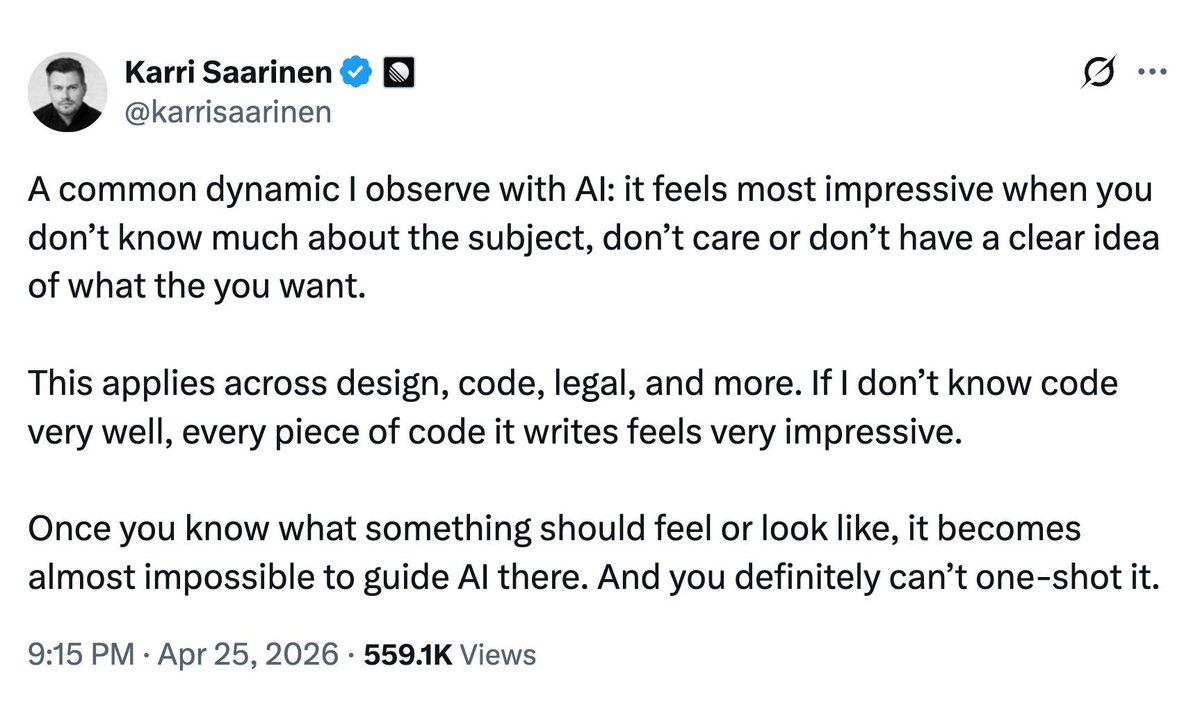
This is the most accurate observation about AI I have seen this year.
AI feels impressive when you do not know the subject deeply.
The moment you do, you see every flaw.
In legal tech, we see this every single day.
A junior associate thinks AI drafted a perfect contract.
A General Counsel with 20 years of experience spots five problems in the first paragraph.
That is why enterprise legal teams are simultaneously the toughest and the most valuable users of AI.
They demand precision that no generic model can deliver out of the box.
At Legistify, our best product improvements have come from experienced legal professionals telling us exactly where the AI fell short.
Their feedback sharpened our system faster than any internal QA process ever could.
Building AI for domain experts requires deep domain knowledge on the builder's side.
If you do not know what a great contract looks like, you will ship something that impresses outsiders and frustrates the people who actually use it.
If you are a legal professional who has tested AI tools and found them lacking, I would love to hear what fell short.
DMs are open.
Sullivan and Cromwell, one of the most prestigious law firms in the world, just apologized to a federal judge for submitting a court filing full of AI hallucinations.
The filing contained fictitious case names, fabricated quotes, and non-existent provisions of the U.S. Bankruptcy Code.
The firm has 900+ lawyers, mandatory AI training, verification policies, and partners billing $2,000+ per hour. The errors still got through.
The opposing firm caught them.
That brings the total to over 1,300 documented cases of AI hallucinations in courts worldwide.
Policies and training alone cannot solve this.
The verification layer has to be built into the tool itself with inline citations, source traceability, and automated accuracy checks.
At Legistify, every AI output is traceable, verifiable, and designed to be reviewed before it leaves the system.
Every law firm will use AI. The ones that survive will be using tools built for the stakes involved.