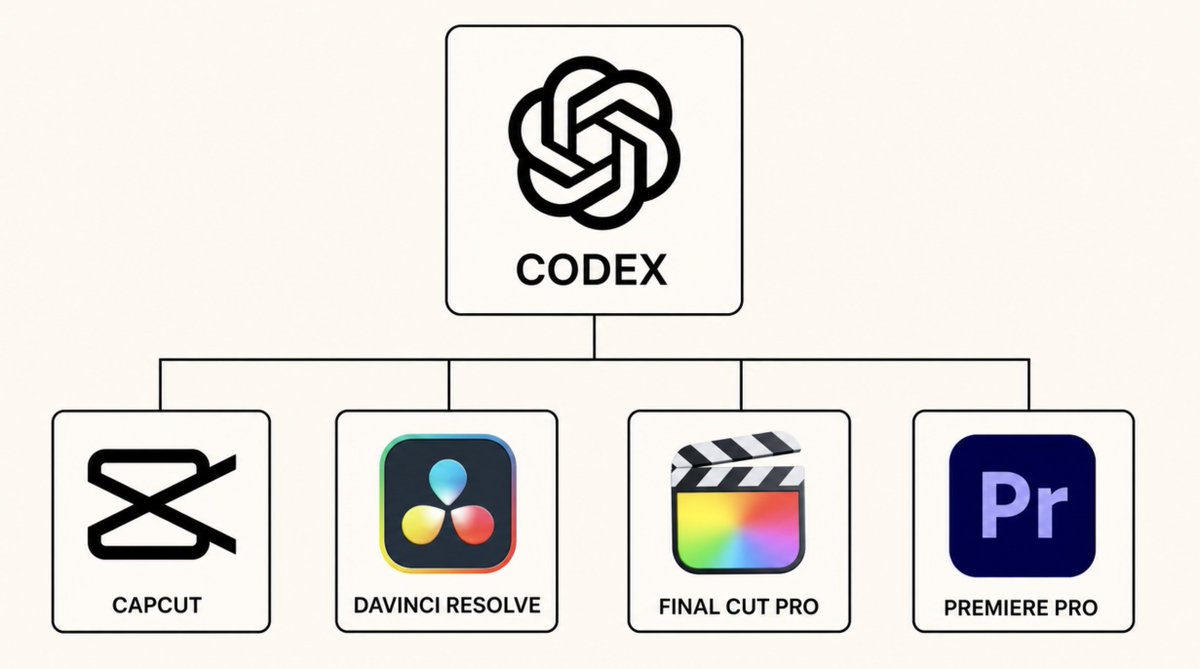
codex is weirdly underrated as a creative tool.
most people still use it like a coding chatbot. ask for a function, fix an error, review a diff.
but say you want to animate a character.
codex can use an image model to establish the character and generate a consistent set of poses. then it switches back to deterministic tools: removing backgrounds, cropping and aligning frames, packing them into a sprite sheet, writing the playback logic, and rendering the final animation.
if the movement feels stiff, you don’t have to rebuild everything manually. tell it what looks wrong. it can regenerate the weak poses, adjust the timing, rebuild the sprite sheet, render again, and inspect the result.
the surprising part isn’t that it can generate an image or write animation code. plenty of tools can do either.
it’s the handoff between them.
the image model handles the ambiguous visual decisions. code handles the precise and repetitive work. codex coordinates both until you have actual artifacts on disk: source images, sprites, animation code, and a rendered video.
that feels less like chatting with autocomplete and more like directing a tiny creative engineering team.
IntelliJ IDEA, but rebuilt in Rust: 0.9s to open a project and 169MB of RAM. Editor, debugger, Git, terminal, databases and HTTP clients for 60+ languages.