@Kmart_realism Dear Follower: You liking an unrelated post of mine in response to my comment (was that meant to be bone-throwing? no thanks) adds weirdness to lameness. *And* now I must live my days in suspense, waiting to see if you typing "WRITER" in your bio ever makes it so. Signed, SANTA
Ah, RIP, Salon. Sad in general and I wrote one of my favorite reported pieces for them. Sorry this moment is what caused me to revisit it. Here it is (for now): https://t.co/ElLTUWLEC6
An evening with Ed Park! 📚 Joined in conversation by Sloane Crosley for what promises to be an unforgettable exploration of memory, art, and storytelling.
Thursday, October 22, 2026
7–8:30 PM
Central Library, Dweck Center
Save your seat! https://t.co/EGqRi3gKcJ
A few weeks ago, I got an email from The New York Times being like hey, we need an essay about every gripe we’ve ever gotten and we thought of you. Be still my heart:
https://t.co/10SF5CxFLM @nytopinion
Happy 50th to Metropolitan Diary, the section of @nytimes that dares to ask: Is everyone a humor essayist, like, everyone? Delighted to help kick off the celebration. They asked me for some overheard dialogue, they got it. https://t.co/gybcn3sny6
Love this. I met Kate in 2001, when I almost moved into the haunted loft below hers. 295 Bowery, site of McGurk's Suicide Hall, so named because of all the women who killed themselves there. I buzzed her apt by accident. We chatted about prostitution. NY!
https://t.co/rtyjTPa6In
Misophonia is a neurophysiological disorder broadly characterized by two things: a severe aversion to sound and a struggle to convince others of the severity of that aversion. For those who meet the criteria for misophonia—an estimated 4.6 per cent of U.S. adults—tapping, clicking, chewing, smacking, slurping and sniffling trigger intense fight-or-flight responses. It is often diagnosed alongside other conditions, such as anxiety, O.C.D, or A.D.H.D, but it still hasn’t been incorporated into the International Statistical Classification of Diseases and Related Health Problems with a formal diagnostic code, leaving people who have the condition uncertain about their treatment.
“What differentiates misophonia from simply being alive is that it’s not just about sound. It’s about how certain brains process that sound,” Sloane Crosley writes. Crosley herself has long suspected that she has some degree of misophonia. She investigates the condition, those who suffer from it, and the experts who study it—from a friend who can’t dine with his father without wanting to “rip his face off” to the founder of Duke University’s Center for Misophonia and Emotion Regulation: https://t.co/GEHSfYG8ee
Ever want to know what your kids are thinking without having to ask them or having to have kids at all? Then talk to @ModernLibrary and see if Katherine Mansfield is right for you! Here's my introduction to her collected stories, out now: https://t.co/6VOttVTXu1
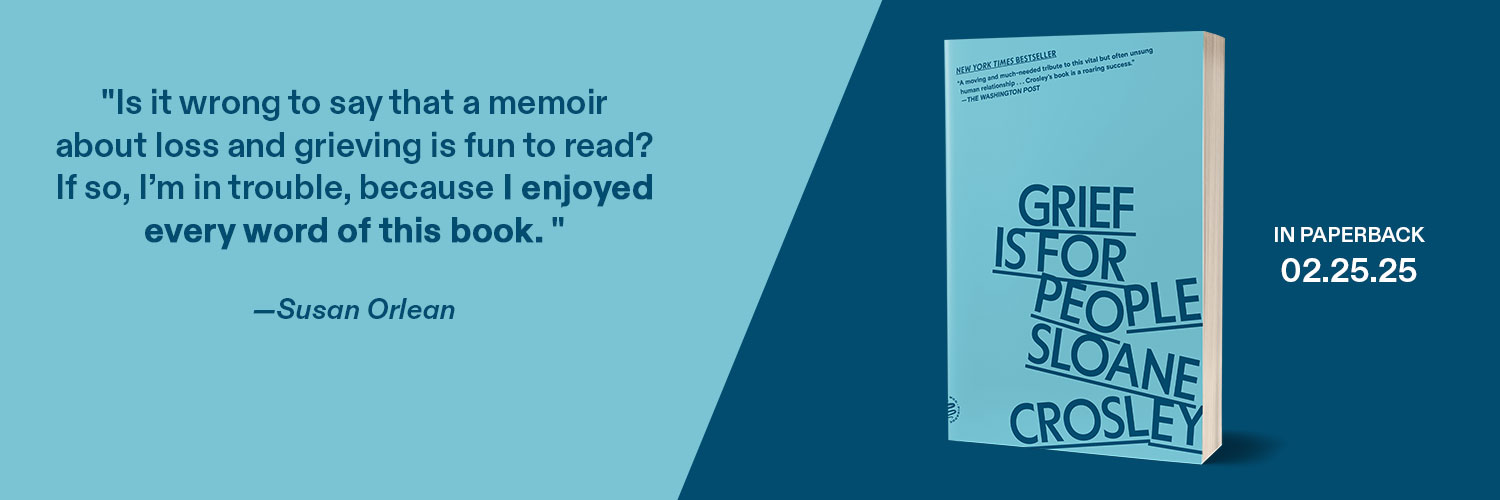
In 'Grief Is for People' by Sloane Crosley, essayist Crosley searches for meaning through philosophy, art, and the disorienting work of mourning someone who chose to leave after losing her closest friend to suicide.
#BookOfTheDay: https://t.co/zz0r2LHpxP
I come on here for the first time this year and THIS is what burns my eyes? Yes, I remember this palace where the nerves of everyone I know ran through the walls. You could actually eat the hollandaise. I puked in the bathroom. Though not from that. This has been my aughts essay.