Hepatobiliary surgeon, 30 yrs. Plain-English answers on gallstones and gallbladder surgery: what needs an operation, what can safely wait. Educational only.
In 83 out of 100 gallbladder operations, the surgeon pulls the gallbladder out through your belly button.
So tell me — a few weeks after your surgery, did a hard lump show up right there? And did anyone actually explain what it is?
Most of the time, it is not infection. I wrote the guide I walk my own patients through: the 6 things that lump can be, how long each one lasts, and the signs that mean call your surgeon the same day.
Gallbladder Decisions, No. 2: https://t.co/lRPVe8IbM4
A child with repeated pain in the upper right of the belly is usually told it is something they ate. Sometimes it is a gallstone.
A study published this week looked at 53 children who needed gallbladder surgery across two centres. The most common reason was symptomatic stones (71.7%), followed by acute gallbladder inflammation (20.7%).
What struck me was the pattern behind the stones. Nearly half — 47.2% — had a family history of gallstones. About 1 in 4 had a blood disorder. Obesity, the explanation most people reach for first, accounted for 17% — the same share as certain stone-forming exposures.
Children are not small adults, and this does not mean every tummy ache needs a scan. But a pattern is a pattern: repeated pain after meals, a parent who had gallstones young, or a known blood condition — that combination deserves an ultrasound and a proper conversation, not another round of 'probably indigestion.'
In my practice, family history is the question adults forget to mention about themselves, too. If gallstones run in your family, say it out loud at the appointment. It changes what we look for.
When a gallbladder is acutely inflamed and the patient is not fit for surgery that day, we drain it first. What most patients never hear is that 'drain it' can mean three quite different routes.
One goes through the skin, leaving an external tube. One goes through the natural duct opening. And one is created from inside, under endoscopic ultrasound, with no external tube at all.
A study of 84 bridge-to-surgery patients compared all three. The through-the-skin and inside routes both worked technically in 100% of cases; the duct-opening route succeeded in about 74%. No patient in the inside-route group had the inflammation come back while waiting, compared with 7.7% and 14.3% in the other groups. And the inside-route group went home sooner — a median of 7 days, against 13.5 days with the external tube.
The honest limits: 84 patients, one hospital, not a randomised trial, and the inside route needs specific expertise and the right anatomy. It is not available everywhere, or for everyone.
In my practice, 'drain first' is only half the decision. Which route — and what living with that drain will actually feel like for the weeks until surgery — is the other half, and it is worth asking about by name.
Your gallbladder is inflamed, and the team suspects a stone may also be sitting in your bile duct. Does that mean you automatically need an ERCP — a scope procedure with its own risks?
A study of 401 patients in exactly that situation suggests the answer should depend on five ordinary numbers first: age, the width of the bile duct on ultrasound, bilirubin, and two liver enzymes, ALP and GGT.
Combined, those five separated patients sharply. In the lowest-risk third, only about 1 in 10 actually had a duct stone. In the highest-risk third, it was nearly 3 in 4 — 72.9%.
That gap is the whole point. ERCP is excellent treatment when a stone is really there. It is a poor diagnostic gamble when the chance is 1 in 10, because the procedure itself can cause pancreatitis.
In my practice, the sequence matters: estimate the probability first, use a scan like MRCP or EUS when the probability sits in the middle, and reserve ERCP for when treatment is likely to be needed. The question is never just 'is there a stone?' It is 'how likely is it, before we choose the tool?'
'Why am I still so tired months after my gallbladder came out?' A new paper gives that question a name — and, to its credit, admits it has no answer yet.
Researchers have proposed a 'cholecystectomy cascade': without the gallbladder storing and releasing bile in pulses, bile-acid signals change, and the body may switch fuels less flexibly after meals. Their testable prediction is narrow — a smaller rise in respiratory exchange ratio after eating, in patients with new persistent fatigue.
Everything beyond that — brain fog, weight, mood, hormones — the authors themselves label untested. The paper explicitly does not justify any test, diet, or supplement.
That honesty is the point. Real post-surgery symptoms deserve real studies, not products. In my practice, persistent symptoms after removal have known, checkable causes we look for first — a retained duct stone, bile-acid diarrhoea, reflux. Start there, with your own doctor, before anyone sells you a syndrome.
@gutdoc_surgeon@JAMASurgery Well said — that clustering point is exactly what I worry about too. In my practice, bile duct injury runs about 3–5 in 1,000 operations, so rare events need that careful accounting.
A well-known singer in Türkiye has just had his gallbladder surgery moved forward. He had an attack in July, cancelled a concert, and planned to have the gallbladder out later, at a calmer time. This week it flared again, he was admitted, and the operation is happening now instead.
I see this sequence constantly in my practice. The first attack feels like a warning you can schedule around. The second one picks its own date — usually a work night, a holiday, a flight.
That does not mean every gallstone needs an operation. Stones that have never caused symptoms can usually just be watched. But once attacks start repeating, the question quietly changes from 'should I?' to 'who chooses the timing — me, or the next attack?'
If you have had more than one attack, that conversation with your surgeon is worth having while it is still a conversation, not an emergency.
Your surgeon left part of your gallbladder behind — on purpose. Here is why that can be the safest decision in the room.
When a gallbladder is severely inflamed, the anatomy around the bile duct can be impossible to see safely. Forcing the full removal is how bile ducts get injured. So surgeons sometimes do a subtotal removal: most of the gallbladder out, a small part left, duct protected.
A multicentre study of 541 emergency gallbladder operations for acute inflammation just priced that trade. Subtotal removal was linked to a higher chance of a bile leak afterwards — odds about 8 times higher. Leaks are usually manageable. A cut bile duct is a life-changing injury.
And the strongest predictor of needing another procedure within 30 days was not the gallbladder at all. It was a stone sitting in the bile duct — odds ratio 53.8. The duct, again.
In my practice, a subtotal operation is not a failed operation. It is the moment the surgeon chose the complication they can fix over the one they cannot.
@DoctorMed0 I love this point: ceftriaxone sludge often clears after the drug stops, so not every 'sludge and stones' scan means surgery. How long after stopping did it clear on recheck, if you know?
Most people who gain weight after gallbladder surgery tell me the same thing. Food finally stopped hurting, so they ate more of it, and more freely. That is not a failure. It is a thing to notice. Education only — not medical advice.
@NewtonAllan6@DoreenNasaasira I agree — and speed matters. Faster than about 1.5 kg a week is where stones climb, and water alone won't prevent them. Are the cases you see mostly weight-loss shots or dieting?
The 'safer' option was a drain, not surgery. In older, high-risk patients, it led to more return trips to hospital — not fewer.
A study published this week matched 145 pairs of patients aged 65 and over with acute gallbladder inflammation, all flagged high-risk. One group got a drainage tube first, planning surgery later. The other had the gallbladder removed during the same admission.
Within 90 days, the drain-first group had more problems overall: 36 in 100 versus 25 in 100. They came back to hospital more often (20% vs 11%), needed another bile procedure more often (14.5% vs 5.5%), and had more repeat bile attacks (12.4% vs 4.1%). They also spent more days in hospital — a median of 13 versus 9.
Deaths and major complications were not significantly different.
The honest reading: this is one hospital, not a randomised trial, and the surgery group were people judged able to tolerate an operation. A drain is still the right call for someone who truly cannot. But 'drain first' is not automatically the gentle path. Sometimes it is just the longer one.
In my practice, the question is never drain versus surgery in the abstract. It is what this person's heart, lungs and reserves can handle — and what happens in the 90 days after we choose.
@drkeithsiau I find the gallbladder murkiest. Retatrutide isn't approved, and phase 3 releases don't break out gallbladder rates — any % is invented. Approved drugs: gallstones 1.6% vs 0.7%, rapid loss. Asked more about gallbladder or pancreatitis?
Here is the kind of result that makes me careful with single numbers. A study of more than 1.6 million people with type 2 diabetes found that those on a GLP-1 had a lower risk of gallbladder cancer than those on insulin — the report put it at about 65 percent lower. The same drugs raise the chance of gallstones. Both can be true at once. The comparison matters: against insulin, the cancer signal went one way; against placebo, the gallstone signal goes the other. One drug, two numbers, opposite directions — which is why I always ask what the comparison is before I react to a headline. Education only — not medical advice.
Save this. Five signs to call your doctor after gallbladder surgery:
1. Fever.
2. Pain that keeps getting worse instead of better.
3. Yellow eyes or yellow skin.
4. Vomiting that will not stop.
5. Bile-colored fluid from a wound, usually 2 to 10 days after surgery.
Most recovery is boring and normal — some shoulder ache, some tiredness, a strange appetite for a week or two. The five above are not. If one shows up, call the same day. Education only — not medical advice.
Four gallbladder findings that sound scary, and what I actually do with them:
Silent stones = about 1 to 2 in 100 cause trouble per year. Most never need surgery.
Sludge on a scan = often gone by the next scan. Recheck first, decide second.
A polyp under 10 mm = watched, not cut. Size and growth decide, not fear.
Pain that fades in 20 minutes and never comes back the same way = often not the gallbladder at all.
In my practice, the scan finding is the start of the conversation, not the decision.
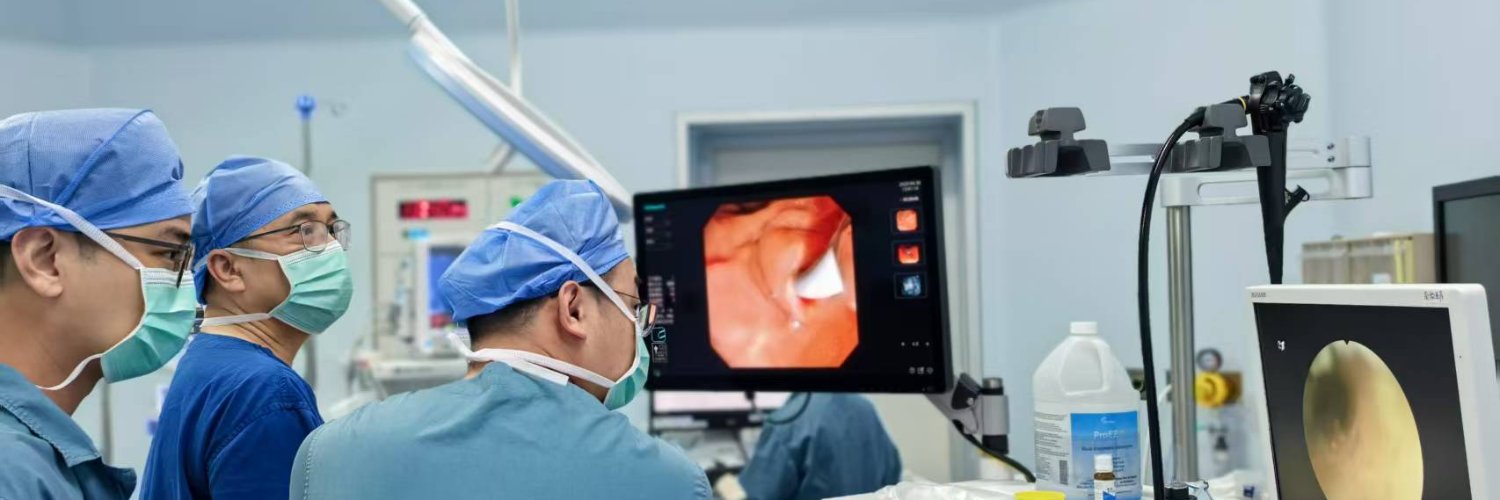
The gallbladder was already out. One stone stayed behind.
An 11 mm stone, impacted at the very end of the bile duct. In with the cholangioscope, everything under direct vision — and out it came, in one pass.
The gallbladder gets the attention. The duct is where the trouble hides.
One team, one room, one strategy.
@IbrahimBan56538@Chiragrx07 Great explanation — thank you for spelling out the mechanism so clearly. In my practice, that ceftriaxone sludge is the part to watch, because it often clears on its own once the drug stops.
@deNutrients I'm sorry your family member went through that — I hear that story often. Gallstones show up in about 1 to 2 in 100 people on GLP-1 drugs, usually as weight comes off fast.