Platelet Transfusion (specifically Platelet Concentrates or Single-Donor Platelets)
High-Yield Clinical Summary
Primary Indication: In patients with severe symptomatic thrombocytopenia (low platelet count) who are experiencing active, life-threatening bleeding (e.g., mucosal bleeding, gastrointestinal bleeding, or intracranial hemorrhage), urgent platelet transfusion is indicated to rapidly restore hemostasis.
Transfusion Thresholds:
Active Bleeding / Emergency Surgery: Transfuse to maintain platelet count > 50,000/\mu\text{L} (> 100,000/\mu\text{L} for CNS or ocular bleeding).
Prophylactic Transfusion (Non-bleeding): Standard threshold is typically < 10,000/\mu\text{L} (< 20,000/\mu\text{L} if febrile or high risk).
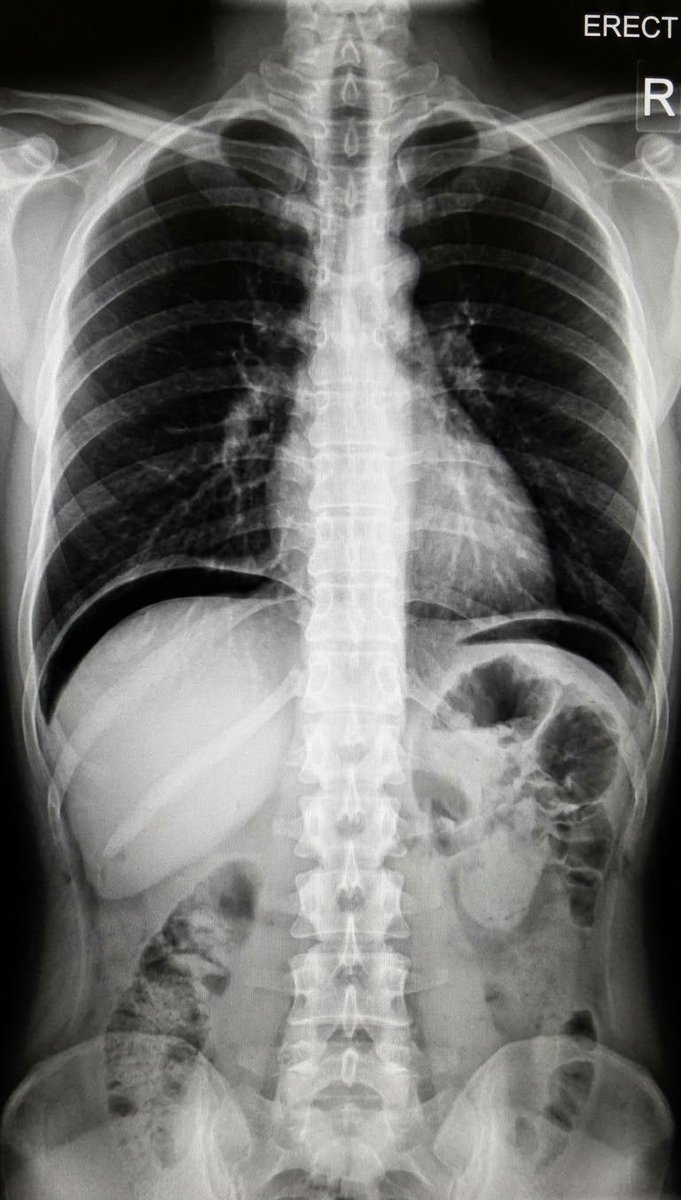
Pneumoperitoneum (secondary to a perforated peptic ulcer / hollow viscus perforation)
High-Yield Diagnostic Features
Subdiaphragmatic Free Air: The radiodiagnostic hallmark of a pneumoperitoneum on an erect chest X-ray is the crescentic lucency (free air) trapped between the liver and the right hemidiaphragm. The right side is more easily visualized because the dense liver parenchyma provides clear radiolucent contrast.
Clinical Presentation: The triad of sudden-onset, severe epigastric pain ("thunderclap" onset), board-like abdominal rigidity (peritonitis), and radiographically demonstrated free air strongly points to a perforated duodenal or gastric ulcer.
A 42-year-old man presents with sudden, severe abdominal pain, vomiting, and abdominal rigidity. An erect chest and abdominal radiograph shows a crescent of free air beneath the right hemidiaphragm.
What is the most likely radiographic diagnosis?
A. Correctly positioned NG tube
Why this is the correct answer:
Statistical Probability: In clinical practice, the vast majority of nasogastric (NG) tube placements are performed successfully without misplacement. Even in high-risk patients (such as elderly individuals with acute ischemic stroke and impaired swallow/cough reflexes), a correctly positioned NG tube remains statistically the most likely outcome on post-procedural confirmation imaging (chest X-ray).
A 72-year-old woman admitted with an acute ischaemic stroke has an NG tube inserted for feeding.
What is the most likely finding?
A. Correctly positioned NG tube
B. NG tube in the right main bronchus
C. NG tube coiled in the oesophagus
D. NG tube in the left main bronchus
Piebaldism
Key Features Shown:
Poliosis: A localized patch of white hair (white forelock), typically located near the anterior midline of the scalp.
Depigmented Macules: Symmetrical depigmented patches (leukoderma) on the central forehead, face, and chest, usually sparing the dorsal spine and extremities.
D. All of the above
Why this is the correct answer:
All three agents (Artesunate, Artemether, and Artether) are semisynthetic derivatives of artemisinin (derived from the plant Artemisia annua) used as fast-acting antimalarial medications, particularly against Plasmodium falciparum.
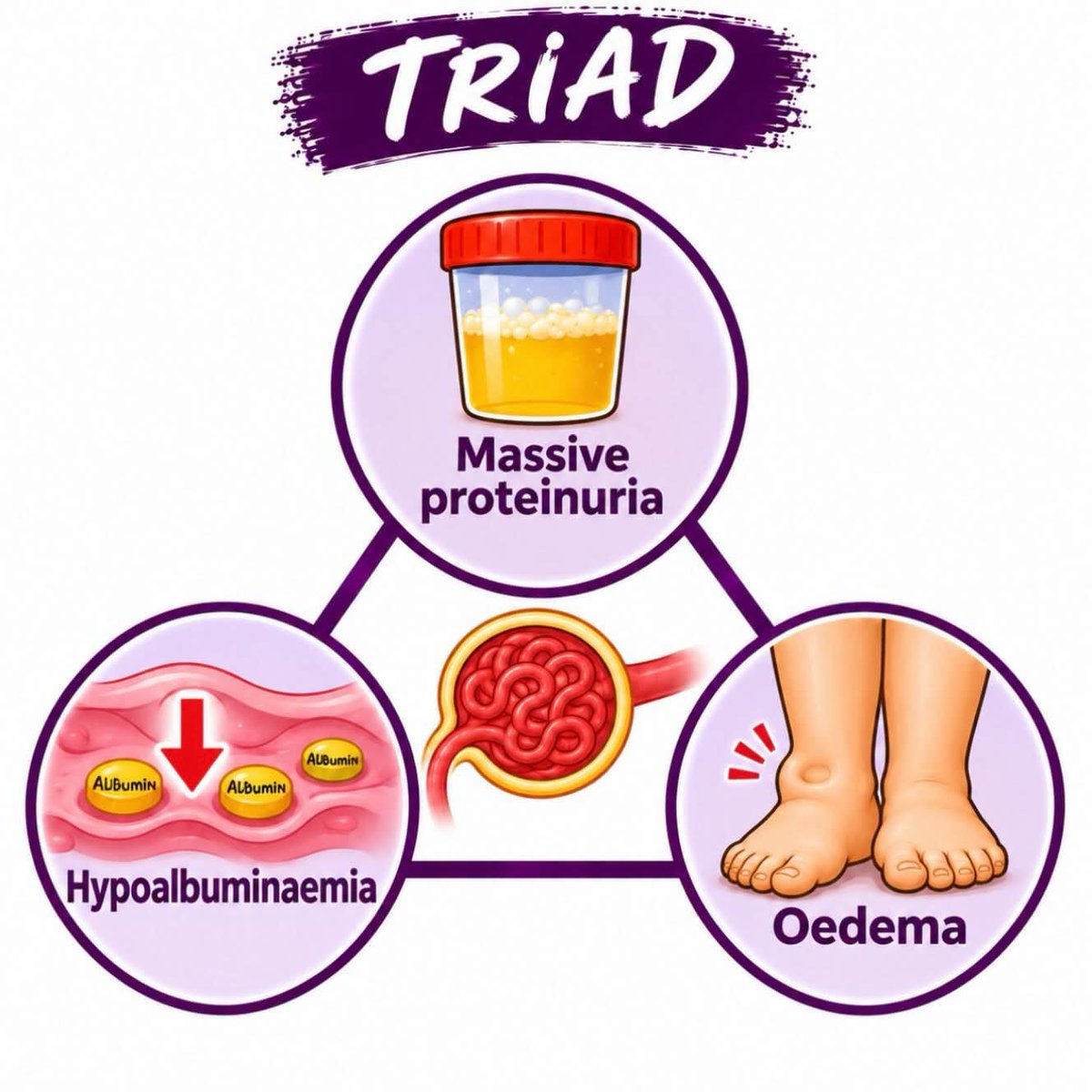
Nephrotic Syndrome
Why Nephrotic Syndrome is the correct diagnosis:
Classic Triad: Nephrotic syndrome is defined by the clinical triad depicted in the graphic:
Massive proteinuria (typically >3.5\text{ g/24 hours} in adults or >40\text{ mg/m}^2/\text{hr} in children, causing frothy urine)
Hypoalbuminaemia serum albumin level <3.0\text{ g/dL} due to urinary protein loss
Oedema (generalized/periorbital and peripheral pitting edema due to decreased plasma oncotic pressure and sodium retention)
Right Bundle Branch Block (RBBB) (or rSR′ pattern in lead V1)
High-Yield Diagnostic Features Shown:
Classic rsR' / rSR' Pattern: Lead V1 shows the classic "triphasic" complex with a prominent late secondary R wave (R'), creating the classic "rabbit ears" or "M-shaped" deflection.
QRS Duration: The QRS complex is widened (\ge 120\text{ ms} or \ge 3\text{ small boxes} at standard 25\text{ mm/s} paper speed).
Pathophysiology: Impulse transmission down the right bundle branch is delayed or blocked. As a result, the left ventricle depolarizes normally first, followed by delayed, unopposed rightward and anterior depolarization of the right ventricle, generating the characteristic late R' deflection in the right precordial leads (V1–V2).
• Close up of yellowish plaques around the eyelids (xanthelasma)
• These yellow patches around the eyes are often linked to :
A) High cholesterol (hyperlipidemia)
B) Vitamin C deficiency
C) Dry eyes
D) Low blood pressure
Here is the ECG strip of Patient
A. Involuntary and striated
Why this is the correct answer:
Involuntary: Cardiac muscle contracts automatically without conscious thought or control, regulated by the heart's internal pacemaker system and autonomic nervous system.
Striated: Under a microscope, cardiac muscle fibers show distinct alternating light and dark bands (striations) because their contractile proteins (actin and myosin) are organized into repeating units called sarcomeres, much like skeletal muscle.
B) Glucagon
Why this is the correct answer:
Glucagon: Secreted by the alpha cells of the pancreas in response to low blood glucose levels (such as during fasting or exercise). It acts directly on liver cells to stimulate glycogenolysis (the breakdown of stored glycogen into glucose) and gluconeogenesis (creation of new glucose), releasing glucose into the bloodstream to maintain normoglycemia.
B. Meninges
Why this is the correct answer:
Meninges: The protective three-layered membrane system that envelopes the brain and spinal cord. From outermost to innermost, the layers are:
Dura mater: Tough, fibrous outer layer.
Arachnoid mater: Web-like middle layer containing cerebrospinal fluid (CSF) in the subarachnoid space.
Pia mater: Delicate, vascular inner layer adhering directly to the surface of the brain and spinal cord.
B. Progressive limb weakness
Why this is the correct answer:
Progressive limb weakness is a classic red-flag symptom of spinal cord compression (myelopathy). Compression impairs the descending motor tracts, leading to upper motor neuron signs (such as weakness, hyperreflexia, spasticity, altered gait, and sensory disturbances below the level of the lesion).
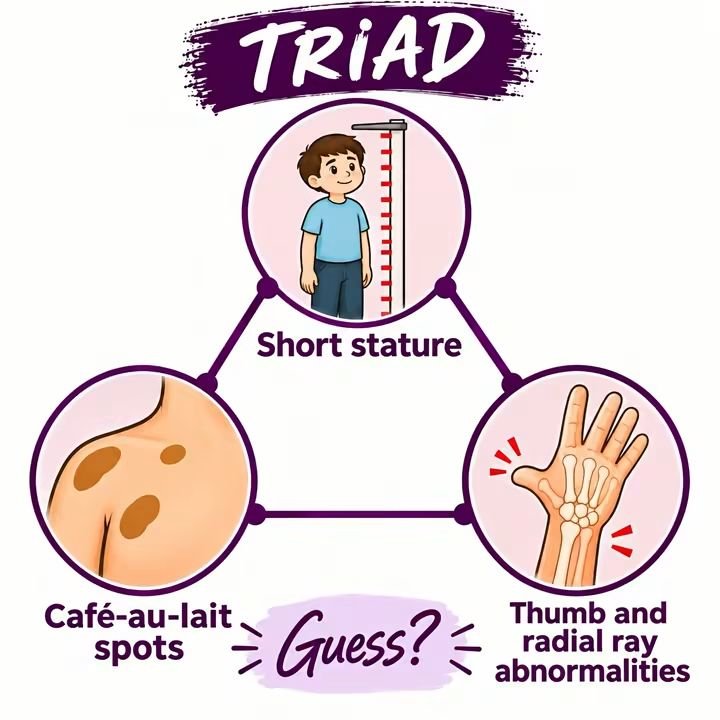
Fanconi Anemia
Why Fanconi Anemia is the correct diagnosis:
Classic Triad: Fanconi Anemia (FA) is a rare inherited bone marrow failure syndrome characterized by the classic clinical triad shown in the image:
Short stature
Café-au-lait spots (and hyperpigmented macules)
Thumb and radial ray abnormalities (e.g., hypoplastic/absent thumbs, bifid thumb, radius dysplasia)
B. LDL
Why this is the correct answer:
LDL (Low-Density Lipoprotein) is known as "bad cholesterol" because high levels lead to the buildup of fatty deposits (plaque) inside arteries—a process called atherosclerosis. This narrows the arteries and increases the risk of heart disease, angina, and stroke
Ampulla of the Fallopian Tube
Over 95% of all ectopic pregnancies occur within the Fallopian tube (tubal pregnancy), with the ampulla being the single most common anatomical location
B) Hodgkin Lymphoma
Why this is the correct answer:
Classic B Symptoms: The combination of fever (often cyclical/Pel-Ebstein type), profuse night sweats, and unexplained weight loss (>10% body weight over 6 months) are the hallmark "B symptoms" of lymphoma.
Lymphadenopathy: Painless, rubbery, firm cervical lymph node swelling in a young adult (peak incidence is in the 20s and >55 years) is the classic clinical presentation of Hodgkin Lymphoma.
Alcohol-Induced Pain: A unique, high-yield diagnostic clue (though not mentioned here) is pain in the enlarged lymph node after drinking alcohol.
SPOT DIAGNOSIS | NUMBER 28
A 26-year-old woman presents with painless cervical lymph node swelling, fever, night sweats, and unexplained weight loss.
What is the most likely diagnosis?
A) Leukemia
B) Hodgkin Lymphoma
C) Multiple Myeloma
D) Aplastic Anemia
What's your diagnosis?
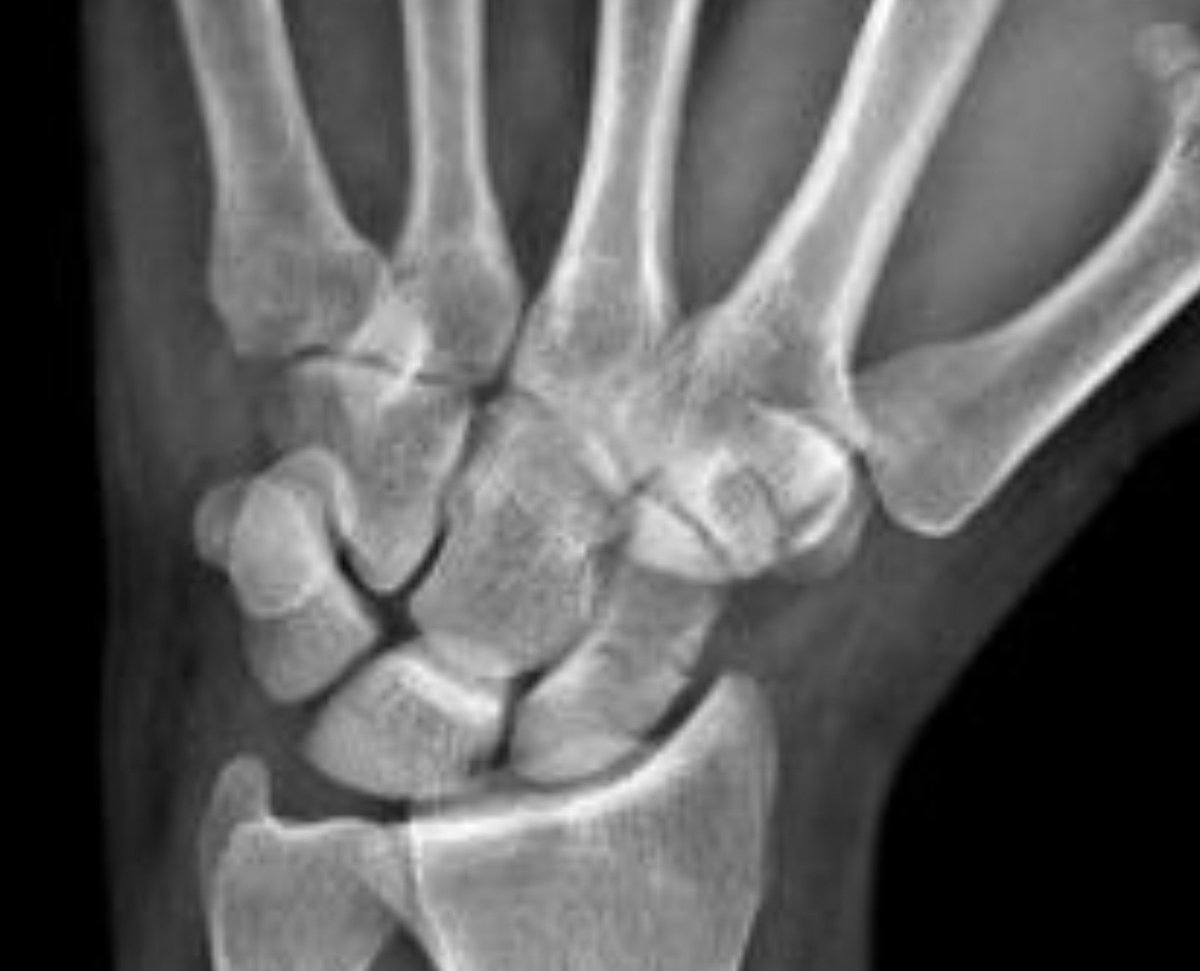
Scaphoid Fracture (specifically of the right wrist)
Why this presentation points directly to a scaphoid fracture:
Mechanism of Injury: A fall on an outstretched hand (FOOSH) is the classic mechanism for fracturing the scaphoid, as axial loading drives the bone directly against the distal radius.
Anatomical Snuffbox Tenderness: Tenderness upon palpation of the anatomical snuffbox (located at the base of the thumb between the extensor pollicis longus and brevis tendons) is the most sensitive physical examination finding for a scaphoid fracture.
Preserved Grip Strength: Mild or occult scaphoid fractures often retain near-normal range of motion and grip strength initially, which can lead to misdiagnosing them as simple wrist sprains.
A 29-year-old man fell on his outstretched right hand during a football match. Mild snuffbox tenderness, can still grip. X-ray done.
What is the diagnosis?
B. Cerebellum
Why this is the correct answer:
Cerebellum: Often referred to as the "little brain," the cerebellum processes sensory input from the body and coordinates voluntary movements, posture, balance, and equilibrium to ensure smooth, precise muscle activity.
c) Propylthiouracil
Why PTU is preferred in thyroid storm:
While both Methimazole and Propylthiouracil (PTU) inhibit thyroid peroxidase to block new thyroid hormone synthesis, Propylthiouracil (PTU) has a critical advantage during an acute thyroid storm:
Dual Mechanism: PTU also inhibits the peripheral conversion of T4 (thyroxin) to the more active T3 (triiodothyronine) by blocking the enzyme 5'-deiodinase. This rapidly decreases circulating active thyroid hormone levels.