Strong words from the greatest Shooter of All Time
“Your state of mind is the main driving force behind your successes and failures”
Thoughts have a frequency
(Via @DanAbrahams77 🎥)
1) Read more than you think you should
2) Write down everything, about everything, all the time
3) Build as many relationships as you can and learn to connect the dots between those relationships
4) Never turn down an opportunity to learn or to work
Gregg Popovich shares his final message and it has nothing to do with wins and losses.
"The wins and losses are all crap. The highs and lows are all crap. It's illusory. It doesn't really exist."
"What exists is seeing these guys and their kids. Those relationships with your assistant coaches - everybody else you're with - your colleagues, your friends."
"'Cause that's what you take with you as you move along."
The best leaders and coaches invest in people.
"All those wins or losses - they fade away. They fade away."
"But those relationships stick with you forever. And that's where the self-esteem and the self-satisfaction comes."
A must-listen message for all coaches, players, parents, and teach out there.
Great leadership isn't one style. It's knowing your people well enough to give them what they need. Invest in the relationships.
Care about people, hold them to their potential, and lead in your style.
(🎥NBA )
A reminder from Atomic Habits by James Clear:
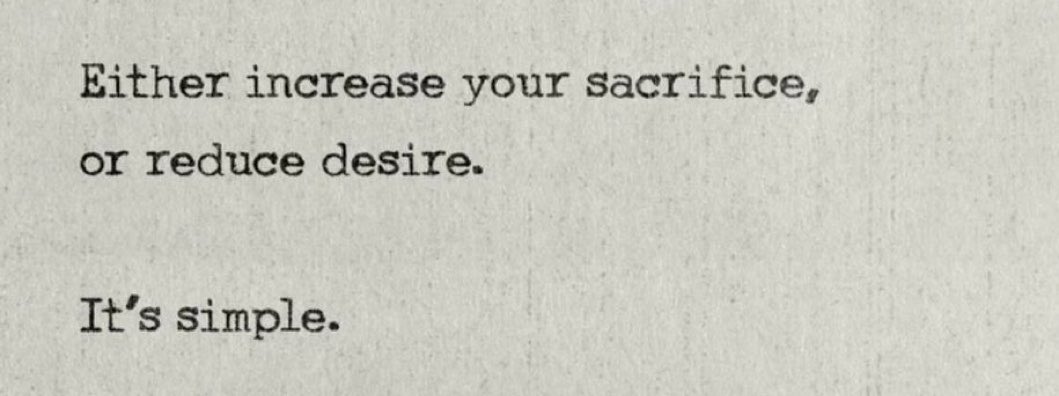
“It doesn't make sense to continue wanting something if you're not willing to do what it takes to get it. If you don't want to live the lifestyle, then release yourself from the desire. To crave the result but not the process is to guarantee disappointment.”
Major cheat code: Stay calm in the chaos. Not because nothing bothers you. Because you have decided your reaction is a choice. Calm is contagious. So is panic. When everything is on fire, people seeks stability. Clarity. Don't just survive the chaos. Lead through it.
As an AD, one of the hardest things I witness our coaches deal with is a parent wanting it more than their child. Coaches use offseason work ethic, skill, athleticism, and what is most valuable to the team when determining playing time.
Parents often hear from their child that the coach does not like them, that it is unfair, or that favorites are being played. In many situations, the harder truth is that the child simply does not love the sport as much as the parent does.
That can lead to parents fighting battles with coaches that their child should be learning to handle themselves. One of the most important lessons sports can teach young people is how to communicate, compete, handle adversity, and advocate for themselves.
Playing time is rarely about one conversation or one moment. It is usually about consistency, effort, preparation, attitude, and trust built over time.
This has become an ongoing trend in sports today. The athletes who grow the most are usually the ones who learn to accept coaching, respond to challenges, and take ownership of their role instead of relying on others to fight their battles for them.
Mark Daigneault on his relationship with the team: “I got great advice one time. You need to be there when they need you. Early on, when we were younger, I think they needed us a little bit more in terms of direction, in terms of guidance, in terms of some of the stuff we're talking about. As time's gone on, there's been situations where they've needed us less. I think the worst thing you can do in those situations is stifle their autonomy and over-coach their ownership.”
Life rarely changes in a positive way without an increase in responsibility.
That can mean taking ownership of your health or committing to a relationship or starting a business.
Whatever it is, if you want the trajectory to change, the amount of responsibility usually has to change.