Research Software Engineer for @HNNsolver in lab of @drstephjones. Prior: PhD in computational neuroscience, simulations of thalamocortical oscillations.
Want to learn more about the new release? We are hosting a free online workshop with NSG on June 22nd, 12 PM - 3 PM (ET). We will go over the basics of HNN, simulating and optimizing ERPs, as well as NSG resources and submitting batch simulations on NSG.
https://t.co/NAUAtJ1n4f
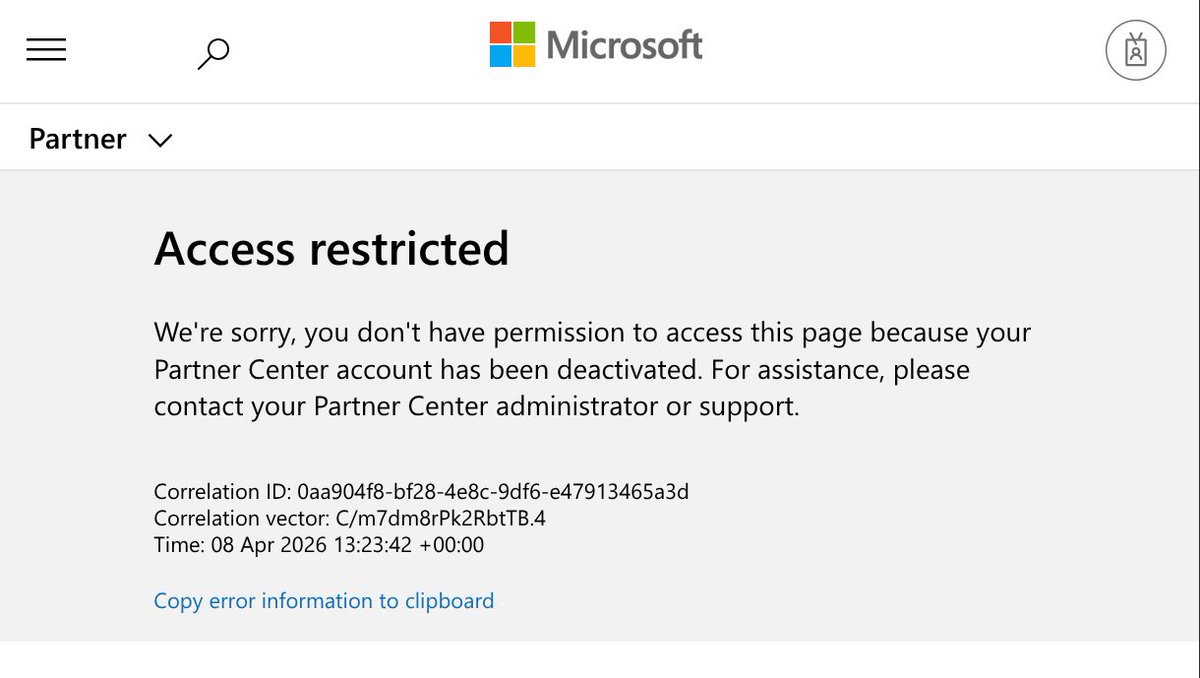
WireGuard has some big updates ready to go on Windows, our first on the platform in nearly 4 years. We've done some nice modernizations and improvements, fixed bugs, added features, updated the toolchain, and more. But our release is currently blocked by @Microsoft.
The recent thread on Hacker News encouraged me to write this up, rather than just grumbling to myself privately about it as I have the last two weeks.
I logged in to get the WireGuardNT driver signed -- a necessary step for driver authors -- and was greeted by this vague message that the account has been suspended. Looking further into it, it seems like they instituted an identity verification policy, didn't notify me about it, and then I guess they suspended accounts who didn't do the verification. So of course I did the ID card verification immediately, but now an appeal is necessary. The appeals process requires filing a support ticket, but filing a support ticket requires a non-suspended account... Catch-22, eventually resolved by filing one through Azure and getting it rerouted to the right department. That was two weeks ago. Now they've told me there's a 60 day appeal review period. Wish us luck!
It's a little crazy, because what if there was some critical ring 0 RCE vuln that was being exploited in the wild and that needed to be patched immediately? (Just hypothetical; there isn't.) In that case, telling users "sorry, you've got to wait 60 days" would be sort of bad. And users of WireGuard for Windows are also Microsoft Windows users, so I can't see how this is good for Microsoft either. I think it must just be a case of bureaucracy gone slightly off the rails. Happens.
If any Microsofters are able to make this take not-sixty-days, please do get in touch.
@MobiusSync Is MobiusSync compatible with the new Syncthing 2.0 updates? Is it safe to upgrade? Also thanks for developing an iOS Syncthing client! I use this every day.
New code released! https://t.co/37m0wJNdpM for anyone needing a generalisation of Pandas `.apply` to run massively in parallel on large HPC systems (or just on a small laptop ofc).
📃Rapid thalamocortical network switching mediated by cortical synchronization underlies propofol-induced EEG signatures: a biophysical model (Austin E. Soplata et al.)
https://t.co/rVzqzaPzw9
@asoplata @MGH_PurdonLab #thalamus#CholinergicModulation#SlowRhythms#AlphaRhythms
Brain imaging without compromise. ✨🔬 Using technology originally designed for defect detection in electronics manufacturing, the ExA-SPIM microscope is showing scientists the brain as it’s never been seen before. Look into the future of #microscopy at https://t.co/MrYDZQmrO6
3/4) Moreover, we risk overlooking real immediate threats from AI (e.g. use of AI for manipulating populations, biased models being used to make decisions, etc.).
And, we risk impairing research into beneficial applications of AI with this sort of hyperbole.
2/4) Compared to other global risks (e.g. climate change, war between the US/China, and the breakdown of democracy) the extinction risk from AI is purely hypothetical, and not an imminent danger. We have many more important things we should be spending our time talking about.
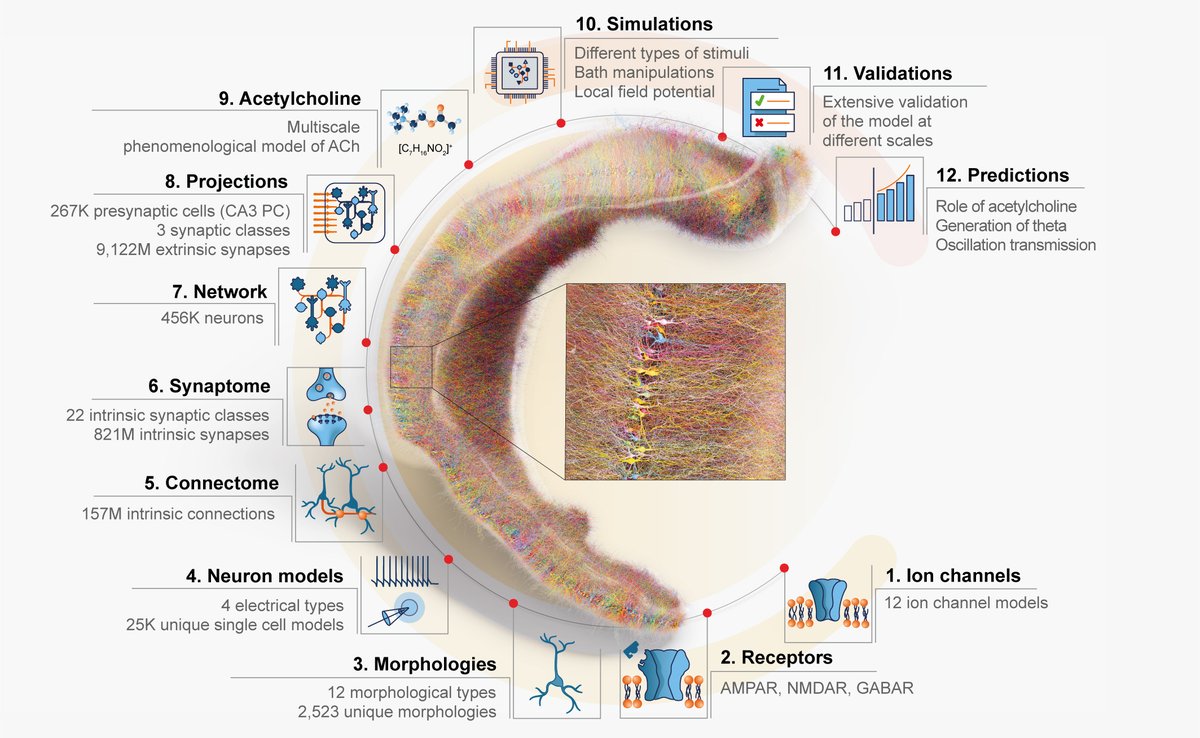
📢#PreprintAlert Our state-of-the-art models of rat somatosensory cortex https://t.co/NldqwHwIiS and hippocampus CA1 https://t.co/WHoGd2df3x are out! These atlas-based, biophysically detailed models exhibit in vitro and in vivo-like activity and replicate laboratory experiments.
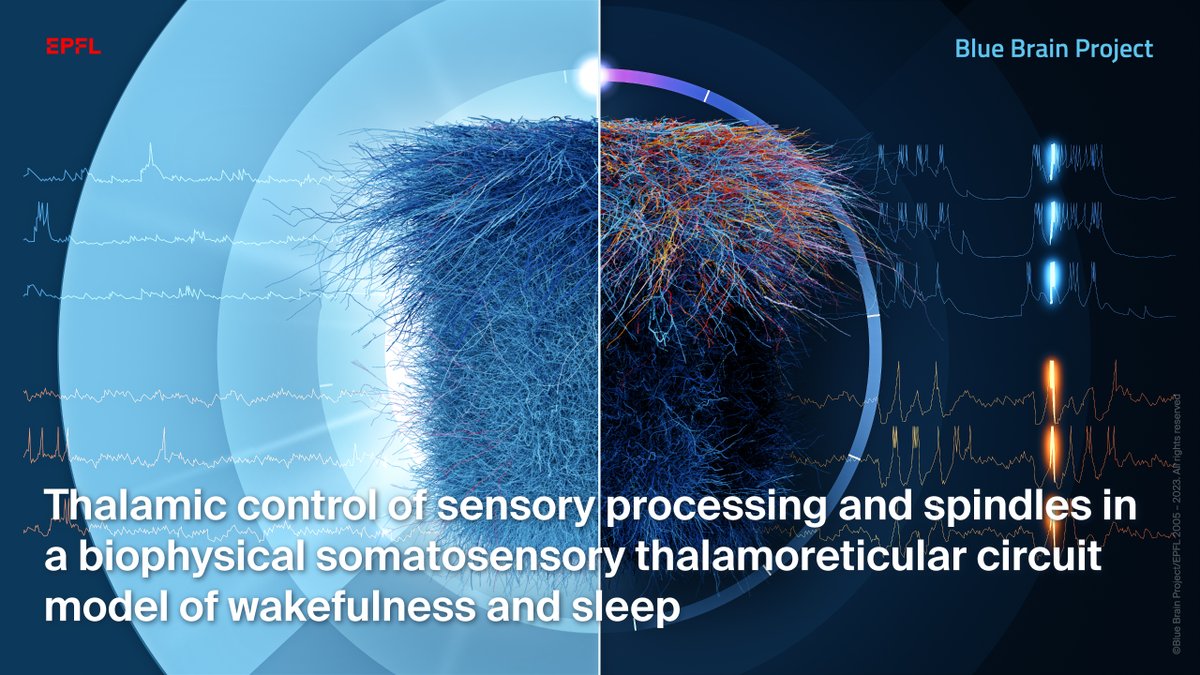
Discover a groundbreaking computational model of the thalamic microcircuit offering new insights into brain dys/function: 14,000 neurons connected by 6 million synapses!
Find out more - https://t.co/GQUMggmB9R
Read the paper - https://t.co/h6lQP2A8wG
#neuroscience
This shows a shocking lack of understanding about research ethics and informed consent | Controversy erupts over non-consensual AI mental health experiment https://t.co/v2MJAuzVzC
RT @[email protected]
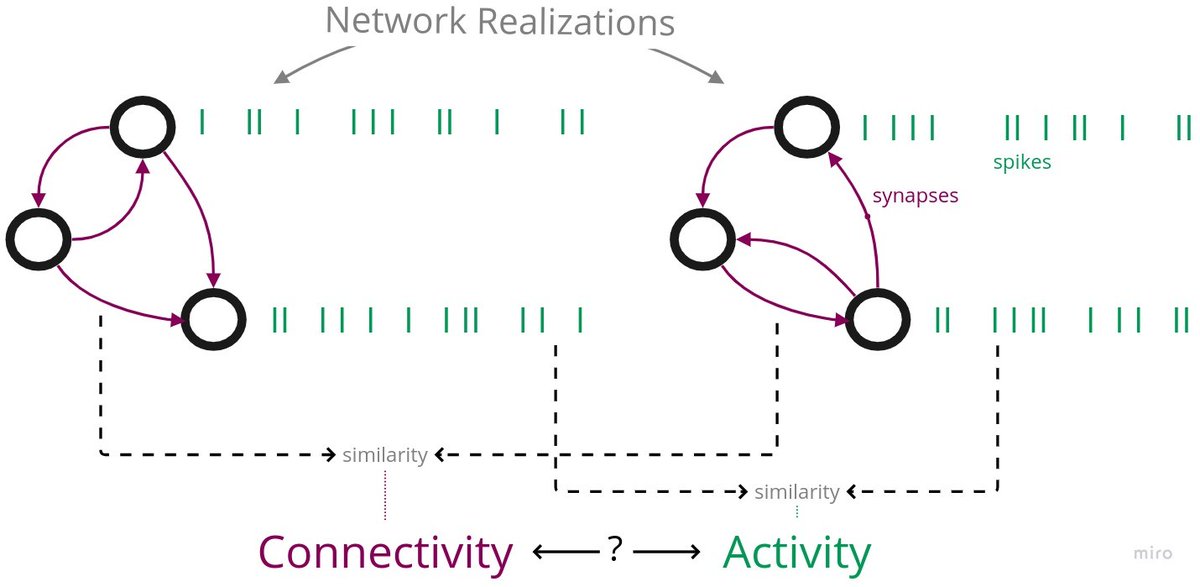
Additionally, the test can also compare synaptic weight matrices.
In rewiring experiments, we measure which connectivity properties have an over- or under-proportional effect on the spiking correlations.
Thus, presenting a means to measure the (1/2)
recently proposed that serotonin has a central role in digesting information. Our paper w macshine DrYohanJohn claireocallaghan and others can be found here: https://t.co/14AxMq6uMX
https://t.co/jqzfXUmb1F (2/2)
RT @[email protected]
Serotonin is such an enigma.
In a fresh paper by the lab of Mark Andermann it is shown that serotonin gates the information flow from retina to thalamus.
https://t.co/EYIBnQXuvt
Trying to understand the bigger picture, we have (1/2)
engineering grows (and matures) as a field, it'd be great to establish shared resources for courses. And I'd love to put some of my materials out there for others to build on.
#neuroscience#NeuralEngineering#teaching
https://t.co/6H1aC8WWWC (2/2)
RT @[email protected]
I'm deep in prepping materials for my neural engineering lab class. It's got me wondering: what are the best venues and formats for sharing course materials? Do neuro folks have any favorite examples of shared course materials?
As neural (1/2)
RT @[email protected]
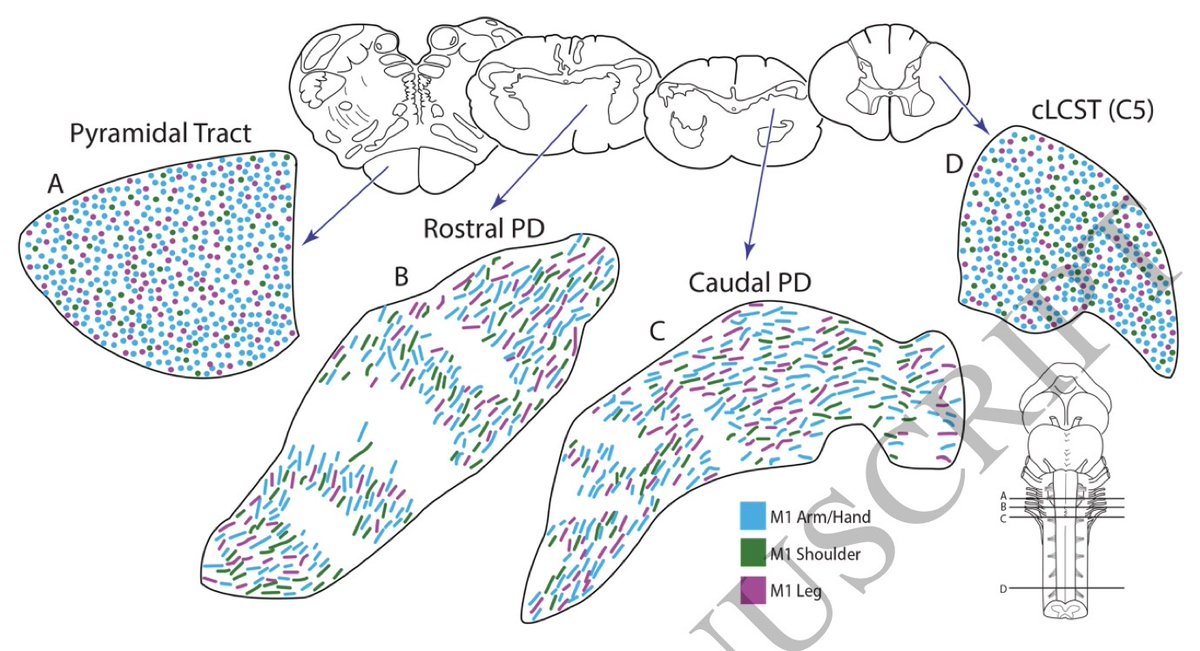
New #Brain review on “The evidence against somatotopic organization of function in the primate corticospinal tract”
https://t.co/EW44IFx5aw
In contrast to established ideas (Foerster, 1936; Bell, 1970), they show extensive intermingling of (1/3)
corticospinal outputs from different cortical regions
Text book explanations of the motor sequelae of incomplete spinal injury, are still based on a supposed corticospinal somatotopy
#Neuroscience#Neuroanatomy#Neurophysiology#Physiology (2/3)