🏴🇬🇧
The smallest astronomer in England was 4 foot 3, scarred by smallpox and trained as a house servant. 🏴🇬🇧
Then she found something in the sky no woman had ever claimed.
Caroline Herschel was born in Hanover, a bandsman's daughter. Smallpox scarred her face as a little girl. Typhus at 10 nearly killed her and stopped her growing at 4 foot 3. Her mother decided no man would ever marry her, so she was trained for the scrubbing brush, a servant in her own family's house.
Then a letter came from her brother William, a musician in Bath. Keep his house, and learn to sing. In August 1772 she stepped ashore in England. It would be home for the next 50 years.
By day she ran his house and sang his concerts. By night, her brother answered to a different master: the sky. He ground telescope mirrors for hours on end and she fed him as he worked. In 1781, from their back garden, he found Uranus, the first planet discovered in recorded history. The King made him his astronomer, and Caroline came along as the housekeeper. Again. 🔭
Then William built his little sister a telescope of her own. She swept the sky with it, and the night began to give things up. New nebulae of her own, 14 of them.
And on 1 August 1786, with William away and the telescope hers alone, she caught a blur that had not been there the night before. It moved. A comet. The first ever found and claimed by a woman in her own name. The court called it "the first lady's comet". 🔥
A year later King George the 3rd put her on a royal salary. £50 a year, in her own name. The first woman in Britain ever paid to do science. The girl trained to scrub floors was now paid to read the sky.
7 more comets followed. 8 in all.
England kept her for 50 years, until William died. Back home in Hanover she set 2,500 nebulae in order, a catalogue for everyone who came after. In 1828 the Royal Astronomical Society sent its Gold Medal to Hanover. 🏛️
No woman won it again until Vera Rubin. In 1996. 🇬🇧
━━━━━━━━━━━━━━
Her second comet is still out there, on the long road back. It returns around 2092.
A girl in school today could live to watch it come home.
She should know a girl 4 foot 3, told to scrub floors, got there first.
We are the home of British heroes. There is a place for you in it.
👉 https://t.co/rih7iKwVkN 👈
Be part of us. ☝️🇬🇧
Be Proud Of Us. 🙏🇬🇧
🇬🇧 Most British schoolchildren are taught about Magna Carta.
They are taught it was sealed in twelve fifteen at Runnymede.
They are taught it is the foundation of English liberty.
They are taught it is one of the most important documents in human history.
They are not taught what came next.
They are not taught about the eighty years between twelve fifteen and twelve ninety-five when ordinary Englishmen forced three successive kings to write down, for the first time in any kingdom in medieval Europe, what English law was, what English liberty was, and how an English king must govern.
They are not taught about the Charter of the Forest, which restored the right to graze, gather firewood, and live on common land, and which remained in force for seven hundred and fifty-four years.
They are not taught about the Provisions of Oxford in twelve fifty-eight, often called England's first written constitution, which placed the king under a council of fifteen and required Parliament to meet three times a year.
They are not taught about the Provisions of Westminster in twelve fifty-nine, which subjected the barons themselves to the same law they had forced upon the king.
They are not taught about Simon de Montfort, an earl born in France who died for England, who summoned the first Parliament in English history to include ordinary commoners alongside the great lords.
They are not taught about the Statute of Marlborough in twelve sixty-seven, which is the oldest piece of statute law in the United Kingdom still in force today. ⚖️
Seven hundred and fifty-nine years old.
If you've ever taken a debt to court in England, you've used it. 🏠 If you've ever rented a home, you've been protected by it. 👑 If a creditor can't lawfully drag your possessions into the street to settle what you owe, that's because of a law signed seven hundred and fifty-nine years ago.
They are not taught about the Model Parliament of twelve ninety-five, summoned by Edward the First, which became the shape of every English Parliament since.
Eighty years. Three successive kings. The first written constitution in any kingdom in medieval Europe.
It was not given to them. It was not handed down from God or king or Pope.
✍️ It was written. By Englishmen. For England.
🇬🇧 The British write their own history. They always have.
This one needed more than a thread. The full story is in our video, watch it below 👇
Help us remember who we are. Help us remember every British achievement. 👇🙏
👉 https://t.co/rih7iKwnvf 👈
Be part of us. ☝️🇬🇧
Be Proud Of Us. 🙏🇬🇧
Turns out @ret_ward doesn't understand the difference between voltage and frequency and assumes the fact the blackout wasn't caused by low inertia means renewables weren't to blame
Oh dear
Renewables create a range of threats to the grid. Low inertia is one but voltage instability is another
In Spain the grid operator found the original grid disturbance (voltage oscillations) was caused by a faulty solar inverter
It also said that the subsequent failure of many wind and solar plants to remain connected under low frequency conditions but still within the range the grid code says they need to withstand was the trigger for the actual blackout
When these generators tripped they pushed frequency outside the tolerance range causing conventional generators and interconnectors which DID comply with their fault ride through obligations to trip and that then cascaded into the full blackout dragging Portugal with it
So despite it not being an inertia issue it still happened because of renewables
Pointing this out, and explaining that this is what REE says happened, does not make me a liar
It does however suggest Bob Ward has a limited understanding of the technical issues and perhaps should refrain from commenting until he gets up to speed
Here is my blog that explains it with a link to the REE report
https://t.co/FgUCPHrRip
Rome thought flogging a queen would silence her people.
It did not.
Her name was Boudicca. It means Victorious Woman. 🇬🇧
She was queen of the Iceni, a tribe that had lived in modern Norfolk for centuries.
Her husband Prasutagus made a deal with Rome. When he died in AD 60, he left his kingdom jointly to Rome and his daughters. He thought it would protect them.
Rome ignored the will. They seized the lands. Treated the king's relatives as slaves.
Then they flogged the queen in a public square. In front of her people.
She raised an army.
Not just the Iceni. Every tribe that had had enough joined her. 120,000 people.
She marched on Camulodunum. Modern Colchester. The Roman capital of Britain. Built around a temple to Emperor Claudius. A temple paid for by the Britons Rome had conquered.
She burned it to the ground.
Rome sent the 9th Legion to stop her. She destroyed it. Almost to the last man.
The Roman governor was 250 miles away on Anglesey, massacring Druids. When the news reached him, he raced south.
London was defenceless. He made a decision. He abandoned it.
She burned London.
Today, under the streets and Tube stations of modern London, archaeologists find a thick black-red layer of ash from that fire.
They call it the Boudican Destruction Horizon.
Then she burned St Albans.
Around eighty thousand Romans and their allies were dead.
Nero, in Rome, considered abandoning Britain altogether.
But Rome's general chose his ground. A narrow valley along Watling Street. His ten thousand trained legionaries against her vast untrained force. The narrow ground broke her.
How she died, no one knows for certain. Some Roman historians said poison. Others said sickness.
Two thousand years later, her statue stands on the north bank of the Thames. Outside Parliament. The woman who burned London, watching over the city she destroyed.
What Rome did to her, she made them pay for.
Did they teach you that?
We will. 🇬🇧
That is your history.
This is who we are.
We find what Britain has forgotten. And we tell it properly.
https://t.co/rih7iKwnvf
Be part of us. Be Proud Of Us. 🙏🇬🇧
Scurvy killed more British sailors than France and Spain ever did. 🇬🇧
The Royal Navy's greatest enemy wasn't cannon fire. It was a disease.
In 1747 a Scottish naval surgeon named James Lind had a theory.
He took twelve sailors suffering from scurvy aboard HMS Salisbury. Divided them into six pairs. Gave each pair a different remedy the navy believed in... Cider, vinegar, seawater.
And gave one pair two oranges and one lemon a day.
After six days, five pairs were unchanged.
The sixth pair were almost recovered. 🍊
Lind had just conducted the first clinical trial in recorded history.
Every medicine you have ever taken was tested using his method.
He published his results in 1753.
The Admiralty ignored him for forty years.
Meanwhile Captain James Cook used citrus on his second voyage.
He lost only one sailor to scurvy in three years at sea.
The Admiralty noted it. Did nothing.
Tens of thousands of sailors died of a disease that had already been cured.
In 1794 one admiral finally acted. He ordered lemon juice issued to every sailor aboard HMS Suffolk for a twenty three week voyage to India.
Not one case of scurvy.
The following year the Royal Navy made it standard issue. Every sailor. Every ship.
Scurvy vanished from the fleet almost overnight. ⚓
Then the Navy switched from lemons to West Indian limes... Cheaper and easier to source from British colonies.
Limes carry a fraction of the vitamin C that lemons do.
American sailors watching British sailors drink their lime rations had a name for it.
They called us limeys. And it stuck.
Ten years later, at Trafalgar, Britain's navy was at full strength.
The French and Spanish fleets were not.
One Scottish surgeon. Twelve sailors. Two oranges and a lemon.
James Lind died in 1794. One year before the navy he served finally adopted his cure.
He invented the clinical trial. He saved more British sailors than any admiral in history.
Your ancestors proved the truth.
Did they teach you that?
It's time to prove the truth again.
Your support pays for the research, production and hours it takes to get it right.
https://t.co/rih7iKwnvf
Be part of us. Be Proud Of Us. 🙏🇬🇧
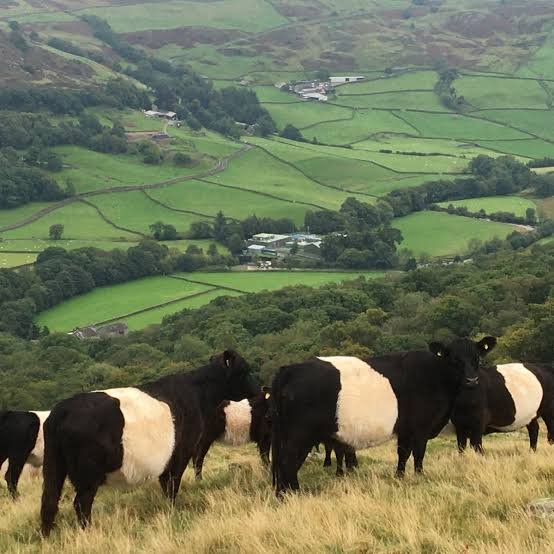
You want to know the most efficient land use in Britain?
Not almonds. (You can't grow almonds here. The climate would make them feel personally attacked.)
Not avocados. (Laughable.)
Not quinoa. (We tried. It's fine. It's not fine.)
Grass. Which grows on the 65% of British agricultural land that cannot support arable crops. Which feeds ruminants. Which converts that grass into complete protein, saturated fat, and fat-soluble vitamins through a digestive system that has been running without modification for forty million years.
The cow is not a problem to be solved.
The cow is the solution that was already here.
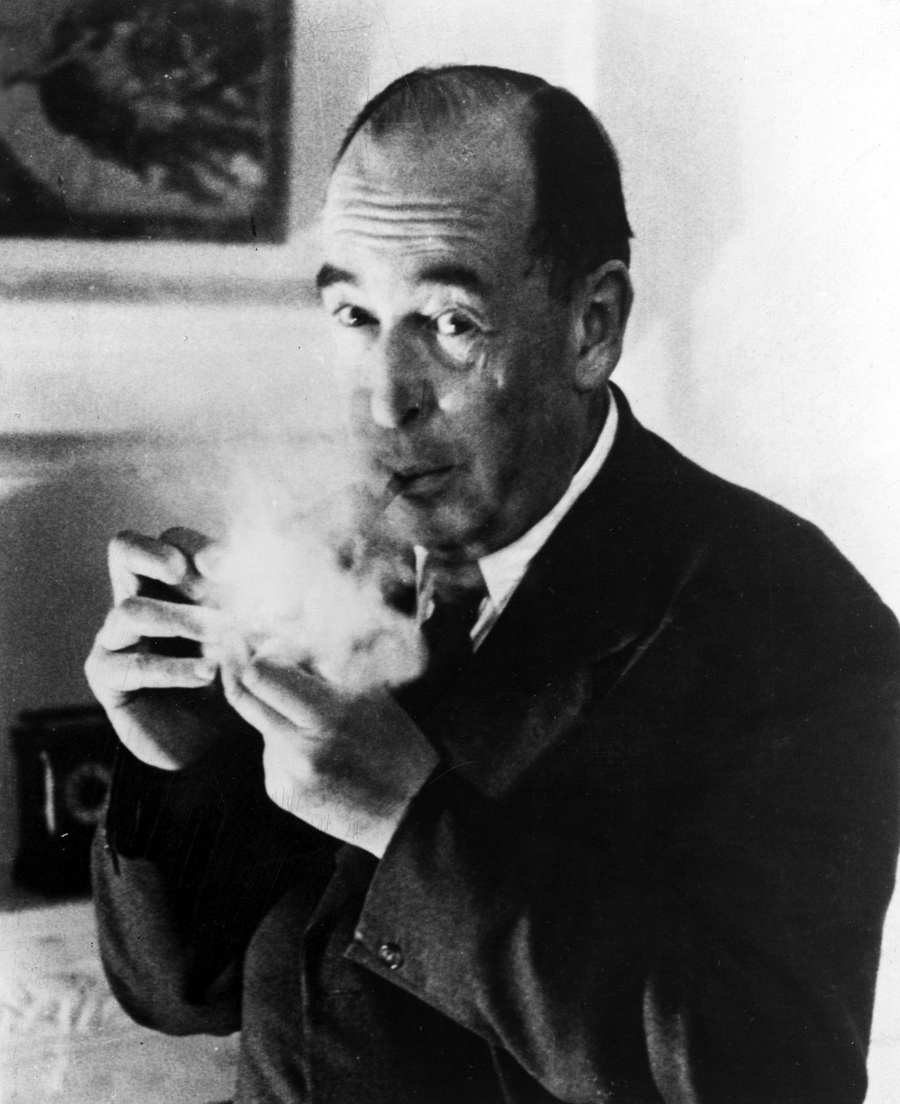
Did you know C.S. Lewis predicted the modern obsession with “being nice” would destroy the soul?
In The Abolition of Man, Lewis argues that when a society stops believing in objective virtue, it doesn’t become tolerant… it becomes manipulable.
He calls the result “men without chests.”
People with appetites and intellects, but no courage, no honor, no trained moral instincts. They can calculate everything and defend nothing.
Lewis saw that once we reject inherited moral law, we don’t become free. We become raw material… easily shaped by propaganda, pleasure, and fear.
Modern man prides himself on compassion while quietly surrendering every standard that once gave compassion meaning.
Lewis’s insight is brutal: a civilization that educates clever cowards will eventually be ruled by tyrants or technicians.
Because when nothing is worth dying for, everything becomes negotiable… including human dignity.
Britain invented the world's first traffic lights. 🚦 1868.
Britain introduced the world's first driving licences. 1903.
And in 1931, when seven thousand people a year were dying on British roads, a man called Herbert Morrison decided enough was enough. 🇬🇧
No driving test existed. No drink-driving laws. No speed limits in towns. Roads that were absolute chaos.
So Britain's Minister of Transport sat down and wrote twenty-one pages.
For one penny.
The first line was quintessentially British: "Always be careful and considerate towards others."
It covered drivers. Cyclists. Pedestrians. Even horse-drawn vehicles.
It sold out on the first day.
It is now one of Britain's best-selling books. Ever.
In 1931 there were 2.3 million vehicles on British roads. Today there are over forty million. Britain's roads are among the safest on earth.
Twenty-one pages. One penny. One man who decided to fix it.
Britain's roads were broken. Britain fixed them. That is your history. 🇬🇧
Every story on this channel is available at https://t.co/wN9S2gRmFj
If you want to help us keep them alive: https://t.co/rih7iKwnvf
Be Part Of Us.
Be Proud Of Us. 🇬🇧
#onthisday 9 April 1806 – Isambard Kingdom Brunel was born (died 1859) 🇬🇧
Isambard Kingdom Brunel was an English civil engineer & mechanical engineer who is considered "one of the most ingenious & prolific figures in engineering history", "one of the 19th-century engineering giants", & "one of the greatest figures of the Industrial Revolution, [who] changed the face of the English landscape with his groundbreaking designs & ingenious constructions". Brunel built dockyards, the Great Western Railway (GWR), a series of steamships including the first purpose-built transatlantic steamship, & numerous important bridges a& tunnels. His designs revolutionised public transport & modern engineering.
Though Brunel's projects were not always successful, they often contained innovative solutions to long-standing engineering problems. During his career, Brunel achieved many engineering firsts, including assisting his father in the building of the first tunnel under a navigable river (the River Thames) & the development of the SS Great Britain, the first propeller-driven, ocean-going iron ship, which, when launched in 1843, was the largest ship ever built.
On the GWR, Brunel set standards for a well-built railway, using careful surveys to minimise gradients & curves. This necessitated expensive construction techniques, new bridges, new viaducts, & the two-mile-long Box Tunnel. One controversial feature was the "broad gauge" of 7 ft 1⁄4 in (2,140 mm), instead of what was later to be known as "standard gauge" of 4 ft 8+1⁄2 in (1,435 mm). He astonished Britain by proposing to extend the GWR westward to North America by building steam-powered, iron-hulled ships. He designed & built three ships that revolutionised naval engineering: the SS Great Western (1838), the SS Great Britain (1843), & the SS Great Eastern (1859).
In 2002, Brunel was placed second in a BBC public poll to determine the "100 Greatest Britons". In 2006, the bicentenary of his birth, a major programme of events celebrated his life & work under the name Brunel 200.
#britishhistory
They didn't wait for the government. They didn't wait for anyone. 🍺🇬🇧
Centuries before the NHS, ordinary British working people built their own system.
In secret. In pubs.
Every week they pooled their pennies.
If you fell ill, they paid your rent. 🏠 If you died, they buried you. ⚰️ If your family starved, they fed them. 🍞
No government. No institution. Just British working people looking after each other.
By 1800. Four million members. 🇬🇧
They called them Friendly Societies.
The NHS. The trade unions. The co-operative movement. All of them started the same way. In rooms like this. With people like these.
And almost nobody knows this happened.
Britain lost its story. We're taking it back. Story by story. Name by name.
Nobody is coming to do this for us.
If you want to be part of making sure this country remembers who it is: https://t.co/rih7iKwnvf
Be Part Of Us.
Be Proud Of Us. 🇬🇧
Britain's Gifts To The World 🇬🇧
They taught you to be ashamed of this country. ⛓️
Here's what they left out.
The steam engine. The telephone. The television. The world wide web. The computer you're reading this on. All of it Britain.
Vaccination, given to the world for free. Over an estimated 200 million lives saved. 🇬🇧
Britain abolished the slave trad4e. Then spent sixty years on the open ocean making sure the rest of the world agreed.
Over 800,000 people freed at once. Countless more saved from a life of slavery.
The NHS. Free at the point of need.
This is not a perfect country. No country is.
But this is a country that looked at what was wrong with the world and tried to fix it. Repeatedly. For centuries.
Britain's greatness didn't happen by accident. It happened because ordinary people worked together. That's what we're doing again. First it starts with us working together once more.
Proud Of Us is a community of people who love Britain and want to help bring it back. Story by story. Name by name.
If you want to be part of it: https://t.co/rih7iKwnvf 🇬🇧
Be Part Of Us.
Be Proud Of Us. 🇬🇧
Everyone knows Britain was part of the slave trade. ⛓️
Here's what they didn't teach you.
Britain was the first country to abolish it. Then spent sixty years hunting down everyone else's slave ships.
150,000 people freed by the Royal Navy. 🇬🇧
800,000 people freed by the British people.
Find the full story on our channel or at https://t.co/wN9S2gRmFj
🇬🇧 Magna Carta had a twin.
It was law for 754 years.
You've never heard of it.
After 1066, the Normans claimed the forests of England. Not just the trees...
Villages, farmland, rivers. One third of the country. Land ordinary people had farmed for centuries. Taken.
Hunt a deer to feed your family? They blinded you.
Cut down a tree to heat your home? They took your hands.
1215. The barons forced King John to sign Magna Carta. The most famous document in English history.
But Magna Carta was for the barons. Not for the people in the forests.
Two years later. 1217.
A second charter was sealed. The Charter of the Forest.
This one was for everyone.
The right to gather firewood. The right to graze your animals. The right to fish the streams. No more blinding. No more mutilation. For gathering wood.
For the first time in English law, ordinary people had rights to the land. Not given by the king. Taken from him.
754 years. It was law until 1971.
Every common in England. Every village green. Every right of way.
The idea that land belongs to everyone... It started here. 🇬🇧
They taught you Magna Carta.
They never taught you this.
Be Proud Of Us. 🇬🇧
Britain invented free schooling for every child. 1560. 🇬🇧
Rich or poor. Every parish. Every child.
The idea spread to America. To Africa. All around the world.
It started with a man who spent 19 months chained to an oar on the North Sea.
Be Proud Of Us. 🇬🇧
Most of the women couldn't read. 🖊️🇬🇧
They signed anyway.
Cradley Heath. The Black Country. 1910.
Women making chains. Twelve hours a day. Six days a week. For tuppence halfpenny an hour.
In 1909 Parliament passed a law. The Trade Boards Act. It set a minimum wage for chain-makers.
For many women nearly double what they were earning. 💰
But the factory owners refused to pay it.
There was a loophole in the Act. Workers could sign a form opting out of the minimum wage.
Most of the women couldn't read. They signed.
Her name was Mary Macarthur. She had spent years in these forges. She called them some torture chamber of the Middle Ages. She knew what it felt like to stand in one. 🔥
She organised the women.
22 August 1910. Eight hundred women laid down their hammers. 🔨
Ten weeks. A strike fund was raised across the country. Four thousand pounds. They held.
They won. Every penny of their back pay secured. A Workers' Institute was built in their honour. It still stands today.
Today ninety percent of countries on earth have a minimum wage law.
All of it traces back to eight hundred women who laid down their hammers. And didn't pick them up. Until they were paid what the law said they were owed. 🇬🇧
This channel exists because people like you chose to make it happen.
Thousands of stories like this one are waiting to be told. Battles won. Names forgotten.
History that belongs to all of us but gets told to none of us.
If you want to be part of keeping it alive: https://t.co/rih7iKwnvf
Be Part Of Us. Be Proud Of Us. 🇬🇧
630 people drowned in the Irish Sea in one night. ⛵💀
A British man studied the data afterwards. And invented something that every single person on earth uses every single day.
On 25 October 1859 the Royal Charter was hit by a hurricane off Anglesey. 450 people died. That same storm destroyed 133 ships and killed nearly 800 people around Britain in a single night.
Robert FitzRoy was head of Britain's Meteorological Office. He went through every piece of data from that night. And he realised something that stopped him cold.
He could have predicted it. 🌊
So he built a network of 15 coastal weather stations around Britain, each one connected to London by telegraph. Every morning they wired their readings in. Pressure. Temperature. Wind direction. Cloud.
He began to see patterns nobody had ever seen before.
On 1 August 1861 The Times newspaper carried something completely new. A prediction of tomorrow's weather. FitzRoy called it a forecast. Not a prophecy. A calculation. 📰
He hoisted storm warning cones at every major British port. When the cones went up, fishing boats stayed in harbour. Lives were saved. How many? Nobody will ever know.
Today every country on earth publishes a daily weather forecast. Every app on every phone. Every "chance of rain" anywhere on earth. The word forecast itself. All of it invented by a British man who decided we would be prepared next time. 🇬🇧
This history has no budget. No broadcaster. No institution behind it. Just the people who believe it deserves to exist.
Support the channel: https://t.co/rih7iKwnvf
Be Part Of Us. ☝️ Be Proud Of Us. 🇬🇧
🏴🇬🇧 Your ancestors advanced human civilisation further than any people who ever lived.
This is what they did.
They looked at the oldest evil in human history.
Slavery.
Every civilisation on earth had accepted it.
These people decided to end it.
Not their government. Not their king.
Ordinary people. With no power except their conscience.
They organised the first mass petition in history. 📜
The first boycott ever.
A man on horseback who didn't stop for thirty-five thousand miles. 🐴
He introduced the same bill to Parliament for twenty years.
On the twentieth year the House of Commons rose to its feet.
Eight hundred thousand people. Free. In a single act of law. ⛓️
They paid forty per cent of the national budget.
They carried the debt for a hundred and eighty-two years.
And decided that wasn't enough.
Sixty years. Three thousand miles of coastline. Sixteen hundred ships captured. A hundred and fifty thousand people freed. ⚓
Over fifteen hundred British sailors died doing it.
One for every nine they freed.
They didn't stop when it was expensive.
They didn't stop when their own people were hungry.
They didn't stop for a century.
The Atlantic fell silent.
And when it did the mill workers of Lancashire, who had chosen to go hungry rather than buy cotton picked by slaves, received a letter from Abraham Lincoln. ✉️
He called it "an instance of sublime Christian heroism which has not been surpassed in any age or in any country."
No other nation in history has done this.
Not at this scale. Not at this cost. Not for this long.
That is your inheritance. 🏴🇬🇧
We are a community of people who care enough to keep these stories alive.
Will you keep your history alive?
We will.
Be Part Of Us. 👉 https://t.co/wN9S2gRmFj 🙏
Be Proud Of Us.🇬🇧
He was called the strangest man in physics.
Not the brightest. Not the fastest. The strangest.
But here's what they never told you about him.
His name was Paul Dirac. Born in Bristol, 1902.
His father had one rule: you could only speak to him in French. When young Paul couldn't find the words, he stopped speaking entirely.
That silence became a superpower.
At 25, he wrote a single equation that united quantum mechanics with Einstein's relativity. Two pillars of physics that nobody could connect.
A quiet boy from Bristol did it with a pen.
Then his equation predicted something impossible. A mirror particle. Matter that shouldn't exist.
Other scientists said he was wrong.
Dirac said nothing.
In 1932, they found it. Antimatter. Exactly where his equation said it would be.
They gave him the Nobel Prize. He nearly REFUSED it — he hated publicity so much.
They offered him a knighthood. He turned that down too. Didn't want to be called Sir.
He was given Newton's chair at Cambridge. Held it for 37 years. Barely spoke a word.
Today every MRI scanner uses his equation. Every particle accelerator is built on his work. Every smartphone chip traces back to his mathematics.
His memorial stone lies in Westminster Abbey. Right next to Newton.
The greatest British physicist since Newton. And most of Britain has never heard his name.
Until now. https://t.co/oNQ4y5feox
Be part of us.
Be Proud Of Us. 🇬🇧


![BritishHistorym's tweet photo. #onthisday 9 April 1806 – Isambard Kingdom Brunel was born (died 1859) 🇬🇧
Isambard Kingdom Brunel was an English civil engineer & mechanical engineer who is considered "one of the most ingenious & prolific figures in engineering history", "one of the 19th-century engineering giants", & "one of the greatest figures of the Industrial Revolution, [who] changed the face of the English landscape with his groundbreaking designs & ingenious constructions". Brunel built dockyards, the Great Western Railway (GWR), a series of steamships including the first purpose-built transatlantic steamship, & numerous important bridges a& tunnels. His designs revolutionised public transport & modern engineering.
Though Brunel's projects were not always successful, they often contained innovative solutions to long-standing engineering problems. During his career, Brunel achieved many engineering firsts, including assisting his father in the building of the first tunnel under a navigable river (the River Thames) & the development of the SS Great Britain, the first propeller-driven, ocean-going iron ship, which, when launched in 1843, was the largest ship ever built.
On the GWR, Brunel set standards for a well-built railway, using careful surveys to minimise gradients & curves. This necessitated expensive construction techniques, new bridges, new viaducts, & the two-mile-long Box Tunnel. One controversial feature was the "broad gauge" of 7 ft 1⁄4 in (2,140 mm), instead of what was later to be known as "standard gauge" of 4 ft 8+1⁄2 in (1,435 mm). He astonished Britain by proposing to extend the GWR westward to North America by building steam-powered, iron-hulled ships. He designed & built three ships that revolutionised naval engineering: the SS Great Western (1838), the SS Great Britain (1843), & the SS Great Eastern (1859).
In 2002, Brunel was placed second in a BBC public poll to determine the "100 Greatest Britons". In 2006, the bicentenary of his birth, a major programme of events celebrated his life & work under the name Brunel 200.
#britishhistory](https://pbs.twimg.com/media/HFeJyZKWYAA5vjD.jpg)
![BritishHistorym's tweet photo. #onthisday 9 April 1806 – Isambard Kingdom Brunel was born (died 1859) 🇬🇧
Isambard Kingdom Brunel was an English civil engineer & mechanical engineer who is considered "one of the most ingenious & prolific figures in engineering history", "one of the 19th-century engineering giants", & "one of the greatest figures of the Industrial Revolution, [who] changed the face of the English landscape with his groundbreaking designs & ingenious constructions". Brunel built dockyards, the Great Western Railway (GWR), a series of steamships including the first purpose-built transatlantic steamship, & numerous important bridges a& tunnels. His designs revolutionised public transport & modern engineering.
Though Brunel's projects were not always successful, they often contained innovative solutions to long-standing engineering problems. During his career, Brunel achieved many engineering firsts, including assisting his father in the building of the first tunnel under a navigable river (the River Thames) & the development of the SS Great Britain, the first propeller-driven, ocean-going iron ship, which, when launched in 1843, was the largest ship ever built.
On the GWR, Brunel set standards for a well-built railway, using careful surveys to minimise gradients & curves. This necessitated expensive construction techniques, new bridges, new viaducts, & the two-mile-long Box Tunnel. One controversial feature was the "broad gauge" of 7 ft 1⁄4 in (2,140 mm), instead of what was later to be known as "standard gauge" of 4 ft 8+1⁄2 in (1,435 mm). He astonished Britain by proposing to extend the GWR westward to North America by building steam-powered, iron-hulled ships. He designed & built three ships that revolutionised naval engineering: the SS Great Western (1838), the SS Great Britain (1843), & the SS Great Eastern (1859).
In 2002, Brunel was placed second in a BBC public poll to determine the "100 Greatest Britons". In 2006, the bicentenary of his birth, a major programme of events celebrated his life & work under the name Brunel 200.
#britishhistory](https://pbs.twimg.com/media/HFeJyIQWoAAy_-e.jpg)
![BritishHistorym's tweet photo. #onthisday 9 April 1806 – Isambard Kingdom Brunel was born (died 1859) 🇬🇧
Isambard Kingdom Brunel was an English civil engineer & mechanical engineer who is considered "one of the most ingenious & prolific figures in engineering history", "one of the 19th-century engineering giants", & "one of the greatest figures of the Industrial Revolution, [who] changed the face of the English landscape with his groundbreaking designs & ingenious constructions". Brunel built dockyards, the Great Western Railway (GWR), a series of steamships including the first purpose-built transatlantic steamship, & numerous important bridges a& tunnels. His designs revolutionised public transport & modern engineering.
Though Brunel's projects were not always successful, they often contained innovative solutions to long-standing engineering problems. During his career, Brunel achieved many engineering firsts, including assisting his father in the building of the first tunnel under a navigable river (the River Thames) & the development of the SS Great Britain, the first propeller-driven, ocean-going iron ship, which, when launched in 1843, was the largest ship ever built.
On the GWR, Brunel set standards for a well-built railway, using careful surveys to minimise gradients & curves. This necessitated expensive construction techniques, new bridges, new viaducts, & the two-mile-long Box Tunnel. One controversial feature was the "broad gauge" of 7 ft 1⁄4 in (2,140 mm), instead of what was later to be known as "standard gauge" of 4 ft 8+1⁄2 in (1,435 mm). He astonished Britain by proposing to extend the GWR westward to North America by building steam-powered, iron-hulled ships. He designed & built three ships that revolutionised naval engineering: the SS Great Western (1838), the SS Great Britain (1843), & the SS Great Eastern (1859).
In 2002, Brunel was placed second in a BBC public poll to determine the "100 Greatest Britons". In 2006, the bicentenary of his birth, a major programme of events celebrated his life & work under the name Brunel 200.
#britishhistory](https://pbs.twimg.com/media/HFeJxyKXgAELuIP.jpg)






![BritishHistorym's tweet photo. #onthisday 9 April 1806 – Isambard Kingdom Brunel was born (died 1859) 🇬🇧
Isambard Kingdom Brunel was an English civil engineer & mechanical engineer who is considered "one of the most ingenious & prolific figures in engineering history", "one of the 19th-century engineering giants", & "one of the greatest figures of the Industrial Revolution, [who] changed the face of the English landscape with his groundbreaking designs & ingenious constructions". Brunel built dockyards, the Great Western Railway (GWR), a series of steamships including the first purpose-built transatlantic steamship, & numerous important bridges a& tunnels. His designs revolutionised public transport & modern engineering.
Though Brunel's projects were not always successful, they often contained innovative solutions to long-standing engineering problems. During his career, Brunel achieved many engineering firsts, including assisting his father in the building of the first tunnel under a navigable river (the River Thames) & the development of the SS Great Britain, the first propeller-driven, ocean-going iron ship, which, when launched in 1843, was the largest ship ever built.
On the GWR, Brunel set standards for a well-built railway, using careful surveys to minimise gradients & curves. This necessitated expensive construction techniques, new bridges, new viaducts, & the two-mile-long Box Tunnel. One controversial feature was the "broad gauge" of 7 ft 1⁄4 in (2,140 mm), instead of what was later to be known as "standard gauge" of 4 ft 8+1⁄2 in (1,435 mm). He astonished Britain by proposing to extend the GWR westward to North America by building steam-powered, iron-hulled ships. He designed & built three ships that revolutionised naval engineering: the SS Great Western (1838), the SS Great Britain (1843), & the SS Great Eastern (1859).
In 2002, Brunel was placed second in a BBC public poll to determine the "100 Greatest Britons". In 2006, the bicentenary of his birth, a major programme of events celebrated his life & work under the name Brunel 200.
#britishhistory](https://pbs.twimg.com/media/HFeJyzGX0AAUu5W.jpg)


