Surgical adverse events cost the US healthcare system ~$17B per year (Health Affairs). The fraction attributable to between-surgeon technical variation is large. Our ability to measure it at scale is zero.
Building deep tech in India in 2026 feels different than in 2019. Component supply chain is still partial, but talent density is finally there. The Make-in-India moment for medical devices is now, not 2030.
The Tier-3 hospital generalist in India who does 40 surgeries a month has no access to mentorship, no record of their cases, no way to benchmark against peers. That's the population that would benefit most from surgical AI. Also the one it's been least built for.
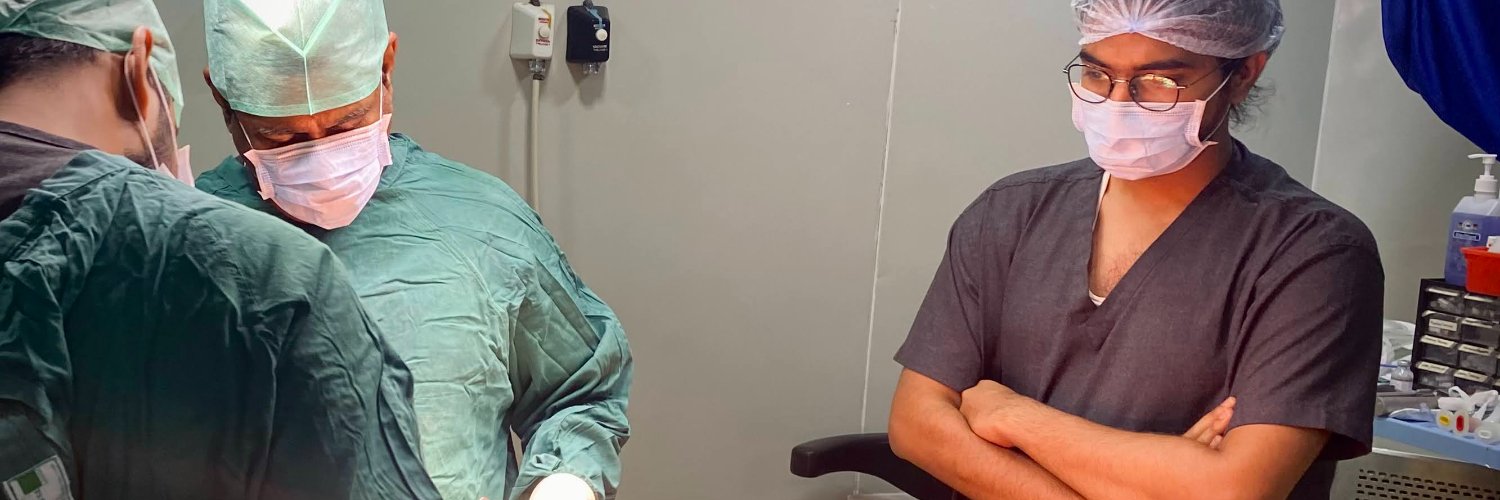
Most surgical AI work is downstream of capture. We are working upstream of it. The capture infrastructure for open surgery is the bottleneck. Everything else is the easy half.
Hardest engineering problem in surgical head-mounted capture: not optics. Not AI. It's six hours of comfortable wear without compromising the procedure.
Every five years the field discovers a new 'surgical AI breakthrough' and rebuilds it for laparoscopic cholecystectomy. There are 100+ surgical procedures with no equivalent of Cholec80.
The next dataset of consequence in surgical AI will not be another laparoscopic corpus. It will be the first large-scale archive of open surgical video. Somebody will build it. We are.
India performs 2-3 crore surgeries per year. There are roughly 20 surgical AI startups globally. Almost none are built for the volume distribution we actually have here.
Question for anyone working in surgical AI: if you had a clean dataset of 10,000 open surgical procedures with phase annotations and surgeon-perspective video, what is the first thing you would build with it?
The Indian surgical workforce is one of the largest in the world. The Indian surgical data substrate is one of the smallest. This gap is where the next decade of work is.
The senior surgeon in Hyderabad who has done 3,000 thyroidectomies stopped using his recording camera because the cable kept catching on his assistant's gown. This is what 'feature requirements' actually looks like.