Starting a game studio? Decide what you'll build, set up the business side, pick your tools (version control before production starts), prototype, then launch. Our refreshed guide walks through all five phases:
https://t.co/5z3HobMny1 #GameDev#IndieDev
Still on SVN? Good, it works.
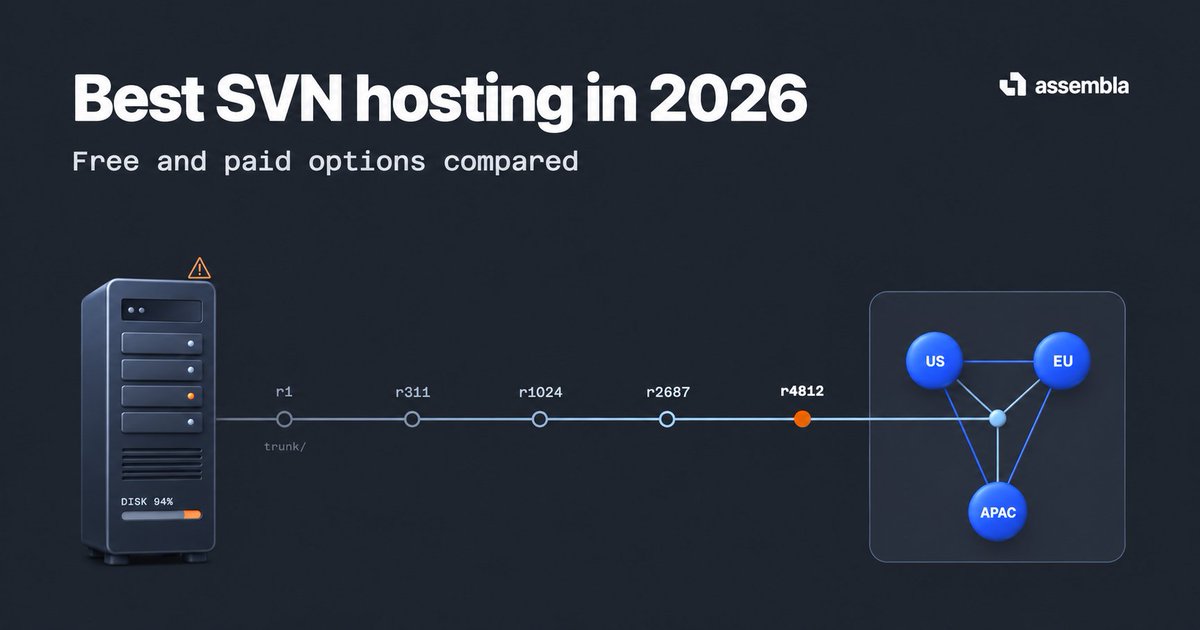
Still running the SVN server yourself? That part is optional.
Our 2026 guide compares SVN hosting providers, free options, and how to switch hosts without losing a single revision.
https://t.co/VAdVIpkrKc
#SVN#Subversion
AI coding agents assume Git. Your code lives in Perforce. As of October 2026: Claude Code works with setup, Copilot works in the editor, Cursor has no Perforce support planned. Perforce's P4 MCP server bridges the gap. The full breakdown:
https://t.co/m83iQGcXxn
Plastic SCM is now Unity Version Control, and since March it has no per-seat fees.
So when does Perforce still make sense for an indie studio? Unreal, big binary depots, real file locking, a team that will grow.
Our 2026 comparison: https://t.co/0S1yUlUWW1
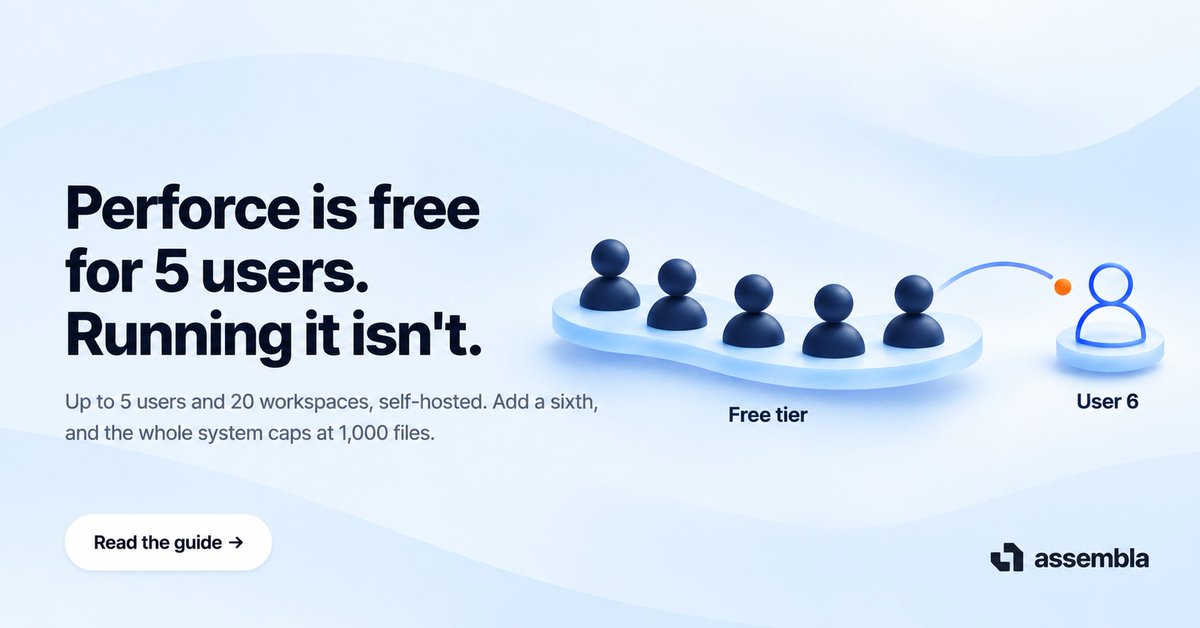
Is Perforce free? Yes, for up to 5 users and 20 workspaces, self-hosted.
Add a sixth user and the server caps the whole system at 1,000 files.
What the free tier covers, where it stops, and your options after:
https://t.co/y8Smv38uhe
#Perforce#GameDev
Perforce gives you strong security controls. The catch: someone has to set them, patch the server, and test restores, every week. Our new guide covers how to secure a Perforce server and who should own the work.
#Perforce#DevOps https://t.co/Q5OddZ5IRd
When your Perforce server goes down, it's not one dev blocked. It's 50 to 100.
Metadata corrupts, every depot drops offline, and recovery runs from hours to days.
Downtime isn't a maintenance problem. It's a risk problem. Who carries it?
https://t.co/IWA9JnoQwW
Two people open the same .uasset in Unreal. One loses their work.
That is why Unreal teams use Perforce: it locks binary files so no one overwrites anyone.
Our guide: what to use, how to set it up, and where Git LFS fits.
https://t.co/sSwmUQuxXs
You picked Perforce. Now: how do you host it?
4 ways, compared honestly, from on-prem to fully managed. Includes Perforce's own P4 Cloud and where managed wins on scale and region (yes, APAC).
The guide: https://t.co/gNnSCGaxYY
Already run Perforce?
Move to managed hosting and keep the license you negotiated. We take the servers, backups, upgrades, and the migration. You keep your license and your history.
How it works: https://t.co/Qy55N2F9lT
Routine Perforce maintenance: 50-80 hours/year. Not the real cost.
The real cost: a depot restore that takes up to 24 hours, or an incident that blocks 50-100 developers at once.
Where managed Perforce ROI actually comes from → https://t.co/5NQtPWZB0m
Perforce lists a $39 price. That's not your real bill.
Servers, egress, and engineer time are the real cost. We broke down what running Perforce actually costs, and where managed hosting wins:
https://t.co/PKEdYJqL1R
Self-hosted Perforce is cheap to maintain. Until it goes down.
Your version control is a single point of failure. One outage can block your whole team and slip a milestone.
The real cost of self-hosting Perforce, broken down:
https://t.co/1XQJPDSOrH
Perforce vs Git isn't a technical debate. It's about what you version.
Mostly code? Git wins. Large binary assets? Perforce pulls ahead: one central server, sync only what you need, plus file locking.
Full breakdown: https://t.co/y8wmOotZKQ
Gitflow vs trunk-based development isn't really a Git question.
Branching strategy and version control are separate choices. Trunk-based dev runs on Git, SVN, and Perforce. "Trunk" even comes from SVN.
Which to pick, and why:
https://t.co/a1TwsjhUQX
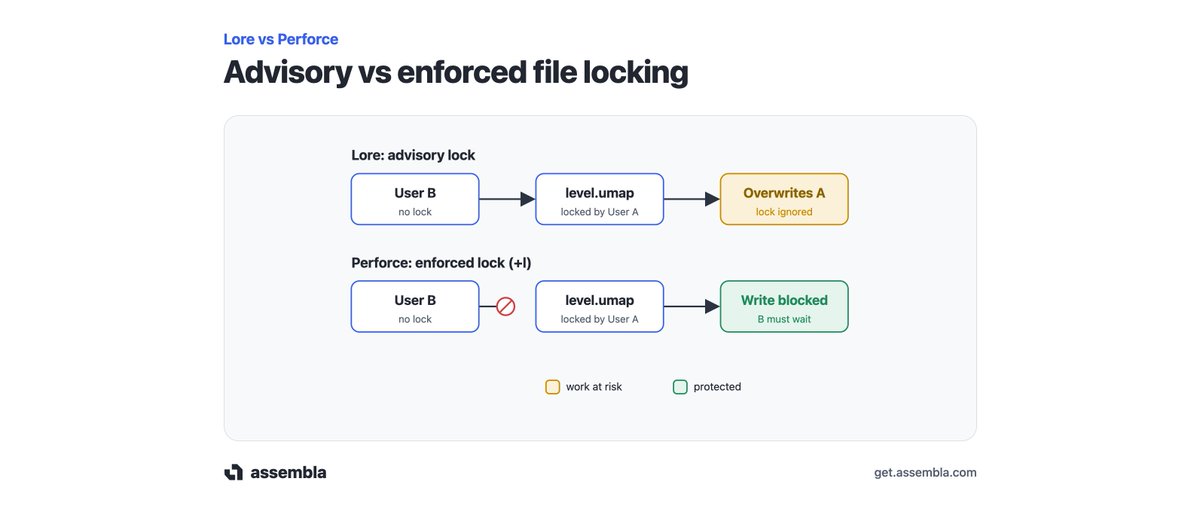
Epic has released Lore, its new open-source version control system for game development.
Can it replace Perforce?
Our take: not for most production game studios.
Lore introduces a modern binary-first architecture and brings real innovation to version control for large assets. But production teams also rely on enforced file locking, authentication, permissions, access control and operational maturity.
We've broken down the trade-offs in our latest analysis:
https://t.co/NnncUfwhFT
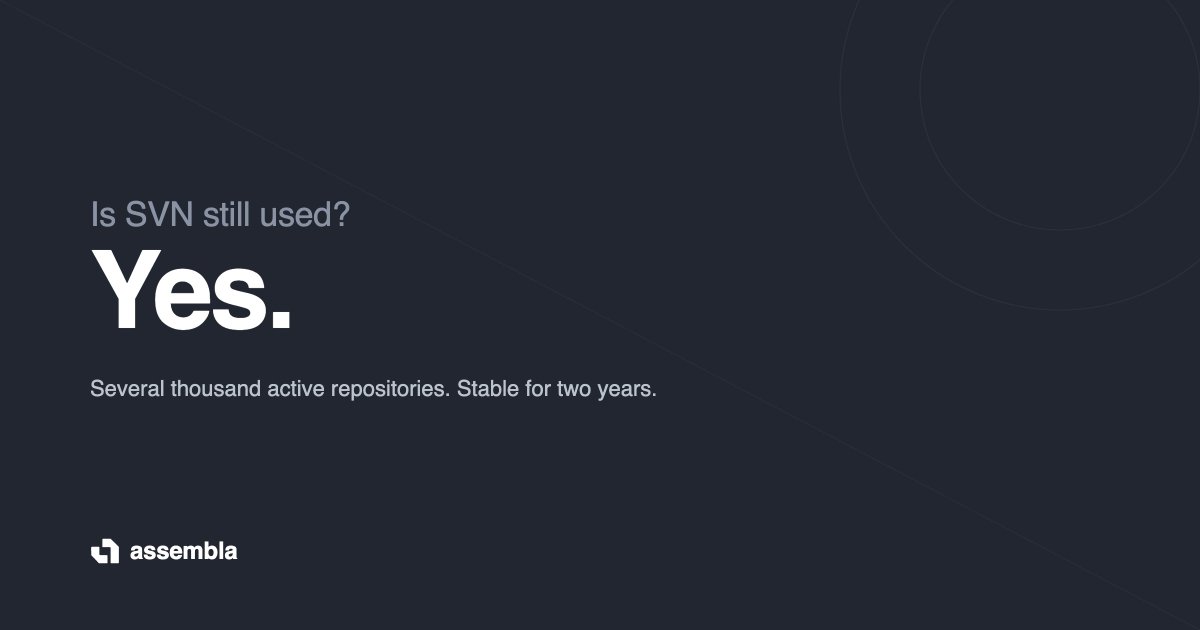
"Is SVN still used?"
Everyone answers this with a guess. We run the servers, so we don't have to.
Several thousand active SVN repos on our platform, 1,000+ paying orgs, stable for two years, growing in the EU.
SVN isn't dead. It's a choice. Here's who makes it, and when you shouldn't: https://t.co/5DZ9gXnLlY
Most "GitHub alternatives" lists are a pitch for whoever wrote them. Ours isn't.
We say when to self-host (Gitea, Forgejo), when Bitbucket or GitLab wins, and where we fit: the only managed cloud that hosts Git, SVN, and Perforce natively.
https://t.co/o08789tafa
GitHub Actions logged three incidents in seven days (July 7, 9, 13). The July 13 outage hit 30% of jobs and cascaded into Copilot agents and Pages builds. Shared infrastructure fails together. Resilience starts with knowing your dependency chain.