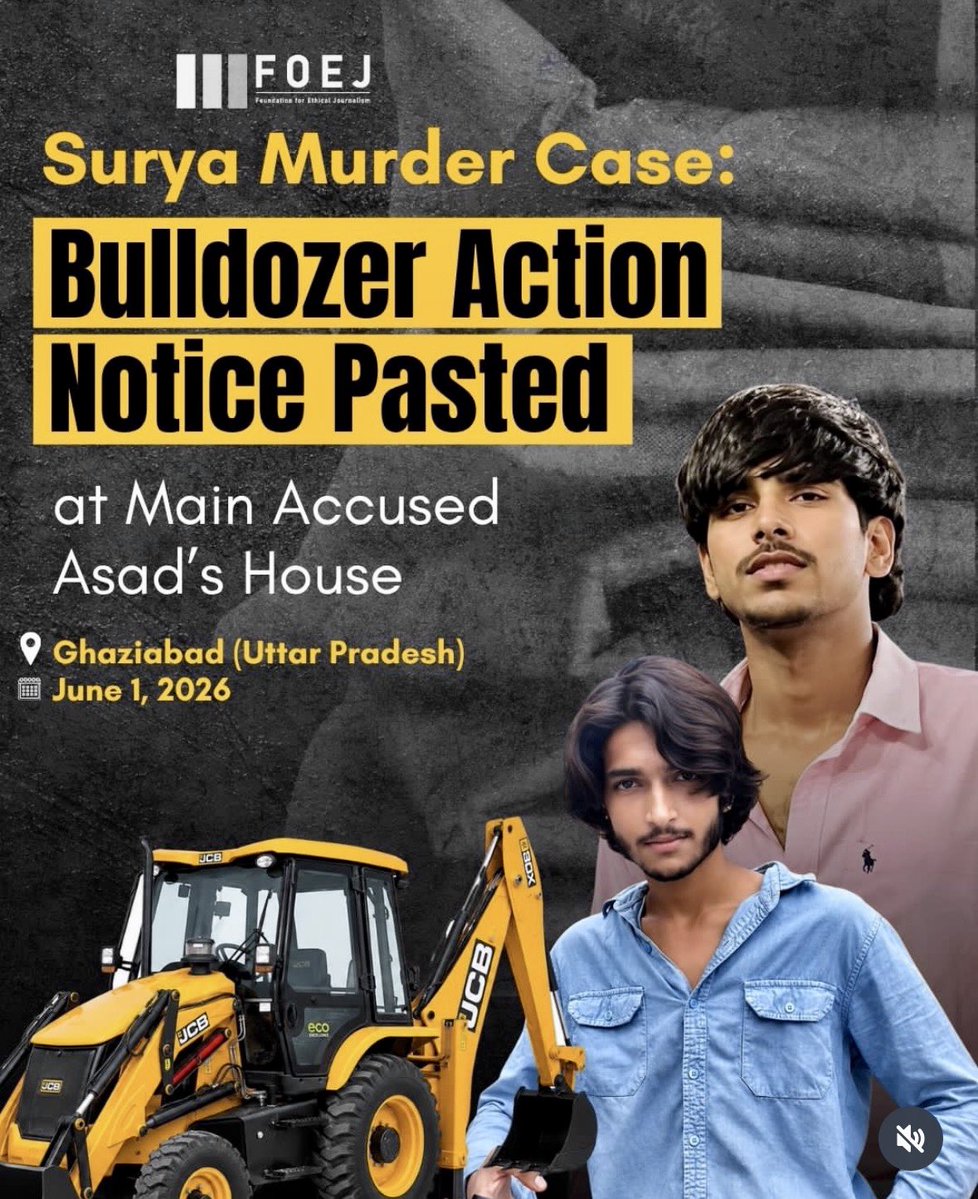
Uttarakhand: In Bairagiwala of Dehradun, on June 13, a violent clash took place between two groups over water for agricultural fields, in which local leader Vinod Kashyap, associated with the BJP and Bajrang Dal, died; after this, Hindu nationalist groups attacked the houses of the accused Muslim people, carried out arson, and demanded that they be bulldozed, after which the administration demolished their houses and shops, and during the action, slogans were raised: “Hindustan mein rehna hoga to ‘Jai Shri Ram’ kehna hoga ‘desh ke gaddaron ko goli maro salon ko’
The prices of ethanol-blended petrol should be:
E100 – ₹15/L
E85 – ₹20/L
E20 – ₹60/L
E0 – ₹80/L
Nitin Gadkari promised ethanol-blended petrol at ₹15 per litre. Govt saves on crude imports and taxes, but people still pay ₹100+ per litre. And if ethanol blending creates vehicle-related issues, the cost still falls on consumers.
If you still don’t understand this simple point, the problem is not people questioning the govt, the problem is people defending it without thinking.
There is a new scam by @IndiGo6E these days.
When you web check-in, they don’t show any free seat options to select.
If you skip seat selection and choose auto-assigned seating, they say you'll receive your boarding pass by email around 4 hours before departure. In my case, it never arrived.
When I called customer care to ask why the boarding pass wasn't sent, they told me that auto-assigned seating can only be done 12 hours before departure. If it isn't assigned by then, the airport has to allocate the seat. They also said they have no way to contact the airport.
So you are forced to reach the airport at least 1 hour early for physical check-in. If you arrive close to the check-in cutoff, they may refuse to issue a boarding pass and say you missed the check-in deadline.
Technically, there are no FREE seats for web check-in.
Everybody is out here scamming common people because apparently there’s nowhere for us to go and complain. Well done!
Welcome to Mumbai’s newest flyover worth ₹248 crore. At 750 metres of road, that’s ₹33 lakh a metre.
And it opened this week full of potholes.
The flyover is named after the iconic Mrinal Tai Gore, who spent her whole life fighting so ordinary Mumbaikars got a life of dignity.
After seven years, three cost revisions, and a daily penalty on the contractor - this is all they could come up with to honour her?
But kya karein. This is the standard now under the triple-engine sarkar. Cut the ribbon. Click the photo. Leave the potholes for us. Bajao taali.
If accused is a Muslim, not only he gets killed in an encounter but his house faces bulldozers too, If accused is a Muslim not only he is demeaned on prime time debates but is also put to jail for 10-15 years. if accused is a Muslim, he is essentially guilty until proven innocent. In many cases they never even get the chance to prove their innocence. Thats how communal Indian Justice System has become.
Uttarakhand: Bhupesh Joshi, the state convener of the ‘Kali Sena’ organization, reached Jama Masjid Thano along with administrative officials and warned #Aseem in a threatening tone to vacate the #mosque by June 1.
Joshi dismissed their documents, saying valid papers would have prevented action, and suggested approaching the High Court or Supreme Court. Senior officials present remained silent spectators.
This is how Muslims and mosques are being harassed in India.
A major controversy erupted on May 27th regarding the Jama Masjid located in the Thano area of Dehradun district, Uttarakhand. Bhupesh Joshi, president of the Uttarakhand.@OIC_OCI@RTErdogan@MofaQatar_EN@KSAMOFA
Authorities in Thano, Dehradun, Uttarakhand, have sealed the Jama Masjid, triggering protests from local Muslims.
The controversy has intensified after Kali Sena leader Bhupesh Joshi visited the site and told mosque representatives that the premises should be vacated by June 1. Muslims allege that the court order pertained only to a specific portion of the mosque structure, but that authorities sealed the entire premises.
Watch:
Uttarakhand: In the Thano area of Dehradun, local residents allege that, as per the court order, action was supposed to be taken only on a 20-by-40-feet portion of the Jama Masjid, but the MDDA sealed the entire premises. It is also alleged that the responsible parties were not informed before the action was carried out.
The order was limited to a specific section, but the entire mosque was sealed? The local Muslim side alleges that the administration took this action under pressure from the Hindu organization Bajrang Dal and local Hindus, and that the MDDA did not act according to the law or the notice.
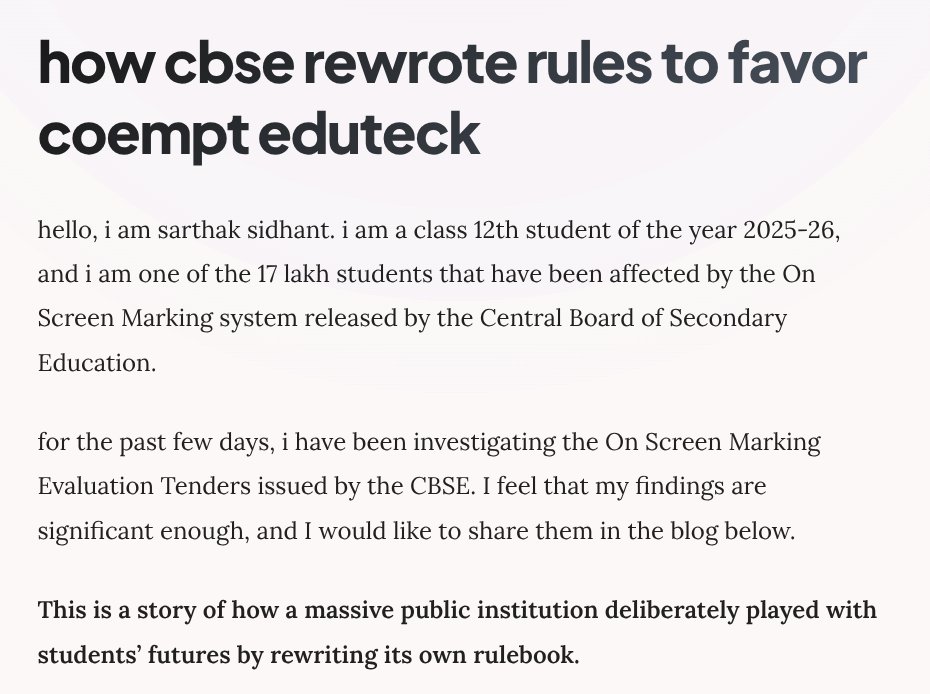
This is an unbelievable piece of work by Sarthak and something that requires amplification.
Let me explain what he found, in simple terms.
Sarthak is a Class 12 student from the 2025-26 batch, one of the 17 lakh students whose answer sheets went through CBSE's new On-Screen Marking system.
He spent days reading through CBSE's evaluation tenders, scraped all 576 tenders CBSE has issued, and tracked how the rules changed across three versions of the same tender.
The core finding is that the company that won the contract to scan and grade 17 lakh students' answer sheets is Coempt Eduteck.
Coempt used to be called Globarena Technologies. Globarena was the company behind the 2019 Telangana intermediate exam disaster, where software failures led to 3.8 lakh students getting wrong or missing marks, and 23 students died by suicide.
A government committee found systemic failure and negligence. Six months later, Globarena rebranded to Coempt Eduteck.
So a company with that track record won a contract to handle 17 lakh CBSE students. Sarthak's investigation is about how the rules were rewritten to let that happen.
The tender was issued three times.
> First tender, February 2025. It existed, then disappeared from the public GeM portal. Sarthak scraped all 576 CBSE tenders and this one was missing from the archive entirely.
> Second tender, May 2025. Four companies applied including TCS and Coempt. All four failed the technical evaluation. Cancelled.
> Third tender, August 2025. Coempt won. Between the second and third tender, a series of rule changes happened, and every single one made it easier for Coempt to qualify.
Here is what changed, one by one.
01. The old rules disqualified any company with a history of abandoning work, failing to complete contracts, or financial weakness. The new rules deleted this clause entirely. Coempt's Telangana history stopped being a barrier.
02. The old rules disqualified any company that was "blacklisted earlier." The new rules changed this to "currently blacklisted." Because Globarena rebranded after Telangana, removing the word "earlier" effectively erased their past.
03. The rules required Rs 50 crore average turnover over three years. Coempt's exact average came to Rs 50.86 crore. They cleared the bar by less than 1%. Earlier, a smaller company had asked CBSE to lower the bar to Rs 30 crore for fairer competition. CBSE refused. So the bar was kept high enough to block small players, but sat exactly low enough for Coempt to scrape through.
04. Software maturity is measured on the CMMI scale, 1 to 5. The old rules required Level 5. The new rules dropped it to Level 3. Coempt is a Level 3 company.
05. The cooling-off period for engaging retired CBSE officials was cut from two years to one. This makes it easier to use recently retired insiders to influence the process.
06. The old rules required experience with large projects of at least 5 lakh students each. The new rules removed the student count and counted cumulative answer-book volume across small projects instead. Coempt has many small fragmented university contracts. This helped Coempt and hurt TCS.
07. The old rules required bidders to own their own data centre and disaster recovery centre on Indian soil. The new rules allowed third-party MeitY-empanelled cloud hosting. Coempt runs on AWS and Azure. This helped Coempt and hurt TCS, which owns its own data centres. It also means student data is no longer on sovereign, Indian infrastructure.
08. The old rules required the bidder to own or control the complete source code of its software. The new rules deleted this. Coempt's platform runs on Microsoft's proprietary IIS, which they don't own.
09. A last-minute corrigendum, issued right before bid submission, removed CBSE's own power to blacklist the firm if its software failed catastrophically. So even a Telangana-scale failure couldn't get Coempt banned from future government tenders.
10. The penalty structure shifted from punishing mistakes to punishing delays. The old rules fined the vendor for wrong scanning, merged pages, and unscanned books. The new rules dropped those and instead levied Rs 50,000 per day for delays. This incentivises rushed scanning over accurate scanning.
11. The old rules had a hard accuracy threshold, error rate not to exceed 0.5%. The new rules removed this number entirely.
12. The old rules specified proper book and robotics scanners. The new rules just say "sufficient scanners." The definition was vague enough that, as Sarthak notes, the scanning could be done with a phone on a stand.
13. On the security side, the contract required a VAPT (vulnerability and penetration test) certified by CERT-In before go-live, and a restricted beta phase before launch. The system clearly wasn't restricted, because the other researcher, Nisarga, was able to access it and find vulnerabilities four days before go-live. So the mandatory security audit appears to have been bypassed.
These are more than a dozen rule changes, all between the failed tender and the winning tender, all pushing in the same direction, all benefiting the one company with the worst track record in the field.
The security holes Nisarga found last week now have an explanation. The system was built by a vendor that was specifically allowed to skip the security certification, the source code ownership, the data sovereignty, and the quality thresholds the original rules demanded.
Following things need to happen immediately;
1. An immediate CAG audit of the tender process.
2. A parliamentary debate on the topic.
3. An independent investigation into
> Why the first tender vanished?
> Why the disqualification clauses were deleted?
> Why the turnover bar was held exactly where it was?
> Why the security level was dropped?
> Why the blacklisting power was removed at the last moment?
Sarthak, this is genuinely exceptional investigative work. Far better than most journalists with full resources ever manage. Take a bow. :)
For the 8th consecutive year, Muslims of Kashmiris have been denied the right to offer Eid prayers at the historic Eidgah/Jama Masjid, and I have been placed under house arrest. On the revered and celebratory occasion of Eid , Muslims of Kashmir are greeted with barricades, restrictions, locked gates and intimidation.
This is not governance; it is a systematic assault on our religious identity, dignity and fundamental rights which deeply hurts us.
It is very unfortunate that children in Kashmir are growing up without witnessing the spiritually uplifting Eid prayers at Eidgah and the festivities thereof. An entire generation is being deprived of knowing their traditions and making memories that have shaped our collective life for centuries.
But let those in power know that no power on earth can erase the deep spiritual bond people of Kashmir share with Eidgah, Jama Masjid and their religious institutions. Faith cannot be imprisoned or suppressed through force.
When James Forbes (1749-1819) visited India, he observed that Hindus would build small temples within or beside Muslim buildings and gradually expanded it until the structure was effectively appropriated.
Nothing has changed today... James wrote:
"Here are many splendid remains of Mughal buildings, and ruinous mausoleums in a grand style; in some of their enclosures the Hindus had built small places of worship, which among so bigotted a people appeared very extraordinary; in another place we saw a Muslim mosque inhabited by a Hindu Gosains."
20 year old Faizan Ahmad Shah was traveling from UP to Bihar on Purvanchal Express.
He was on his way home to celebrate Eid with his family.
While his parents were waiting for him at home, his father received a message from Faizan.
He told him that he has been attacked in the train and he's hiding to text his father.
This was the last time Faizan's family heard from him.
This is at least the third lynching news I've come across in the last three days.
More and more Muslims are getting attacked while traveling in train.
This country has already become unrecognizable.
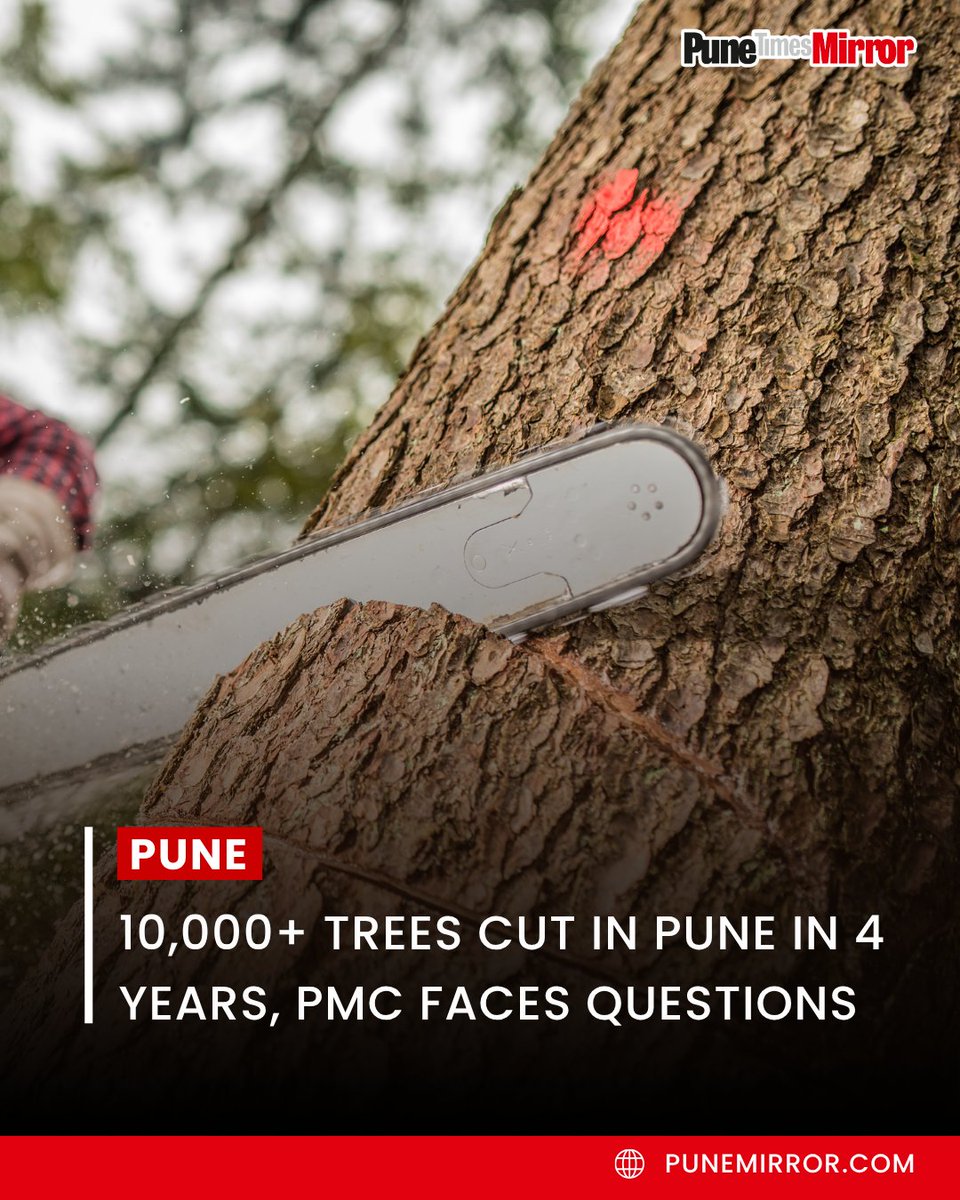
More than 10,389 trees have reportedly been cut in Pune over the last four years for various development projects, raising fresh concerns about the city's shrinking green cover.
According to information cited by corporator Devendra Wadke, while thousands of trees were removed, there is little clarity on the survival and monitoring of the compensatory plantations that were supposed to replace them. The issue has sparked questions about whether enough is being done to protect Pune's environment while pursuing urban development.
The debate has once again brought attention to the balance between infrastructure growth and preserving the city's green identity.
#PuneNews #Environment #TreeCutting #PMC #Punetimesmirror
Location: Bandra,Mumbai
Police personnel brutally kick an injured Muslim man.
During the anti‑encroachment drive in Garib Nagar under Bombay High Court orders, a mosque was bulldozed, triggering violence. Muslims were then reportedly treated with extreme cruelty and brutality.
@ThePuneMirror It's the rikshawala themselves who'd benefit from the rapido tie up. But since they are illiterate and simply want to protest against anything this city can't improve. What reason do the authorities have to get feared by their union? Can't they enforce their rules themselves