I seriously don't understand why would you need a platform for all this. Just get a claude subscription and setup things custom made for you. I have skills and harnesses setup for my personal learning which does most of what he's selling. What is the value in these gpt wrappers?
ZENKAI is LIVE! 💙
We’ve put months of work into this, and we’re so excited for you guys to finally try it.
Go explore, play around with the new features, and tell us what you think.
Checkout: https://t.co/8kboUTptLV
Poor error handling wastes more dev hours than anything. Spent hours on - "Authentication failed with kafka broker" even when password was correct. Reason? underlying library was sending an empty string to kafka instead of throwing error when unsupported mechanism was being used.
Just tried out Omarchy and this is exactly the experience I had been looking for. After breaking and playing with Arch for few years, I think I might just stick to sane defaults that come with Omarchy. Definitely worth a try if you've ever been impressed by posts on r/unixporn.
This weekend I wrote a go implementation of Twitter snowflake which generates time sortable UUIDs for distributed systems.
Though initial inspiration was from @tangledbytes https://t.co/2rMwxfjWkE
my impl varies in terms of how it handles rate limit
gh:
https://t.co/tbrKcuIApn
This week I luckily found these notes on "Designing Data Intensive Application" by @milan_milanovic
In case you haven't gone through the book or are looking for revision, you can check it out.
https://t.co/jMchdQDMJb
TIL: If you add "-,omitempty" in your json tag, "-" will not behave as expected and users can modify internal data.
Below is what happens when I
curl -H "pass:test" localhost:8080 -X POST -d '{"name":"ashish", "-":true}'
This weekend I wrote this small blog/notes exploring workings of sync.Mutex in Golang and the little exploration I did in the go runtime code while understanding the control flow behaviour with sync.Mutex
https://t.co/pNX5ZCgs2M
This weekend I read through the amazing Golang blogs by Victoria Metrics written by @func25 .
One of the must have bookmarks if you like exploring Golang.
https://t.co/Pca0LiGvvT
Over two weekends I made this project K8sdebug. https://t.co/p8Y93moAlb
So far it does log aggregation and smart queries on pods to help application developers debugging their cloud native app. It also has smart port forwarding.
Some feedback would be great. Read README for more.
Over two weekends I made this project K8sdebug. https://t.co/p8Y93moAlb
So far it does log aggregation and smart queries on pods to help application developers debugging their cloud native app. It also has smart port forwarding.
Some feedback would be great. Read README for more.
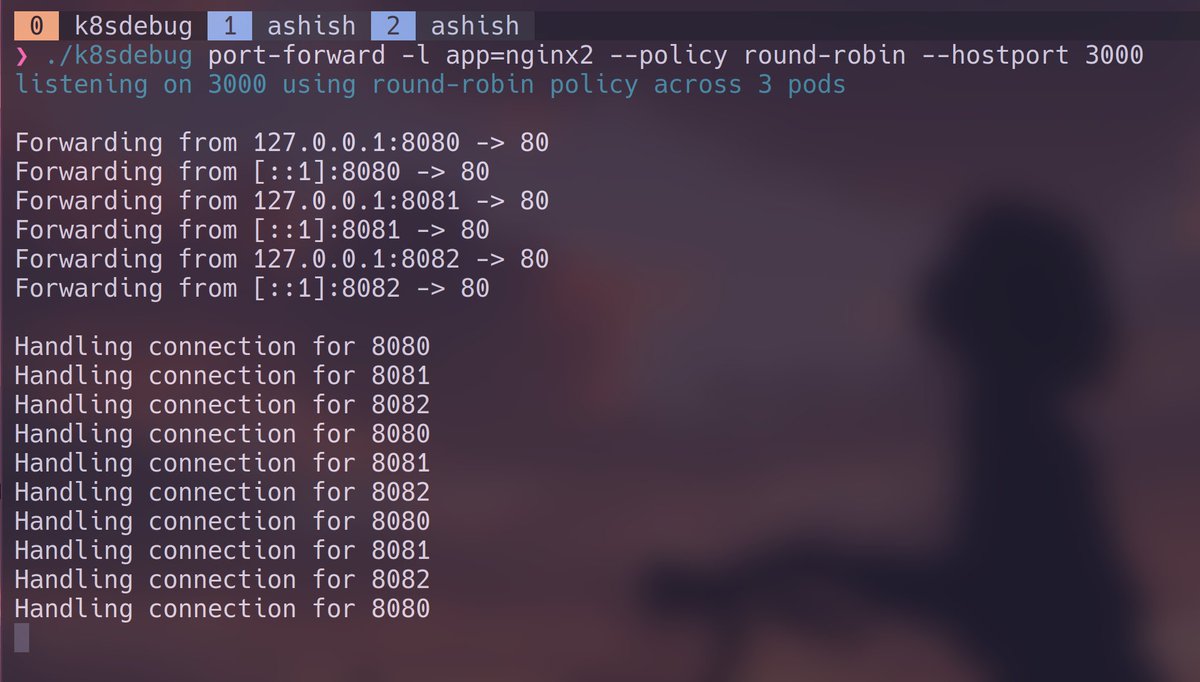
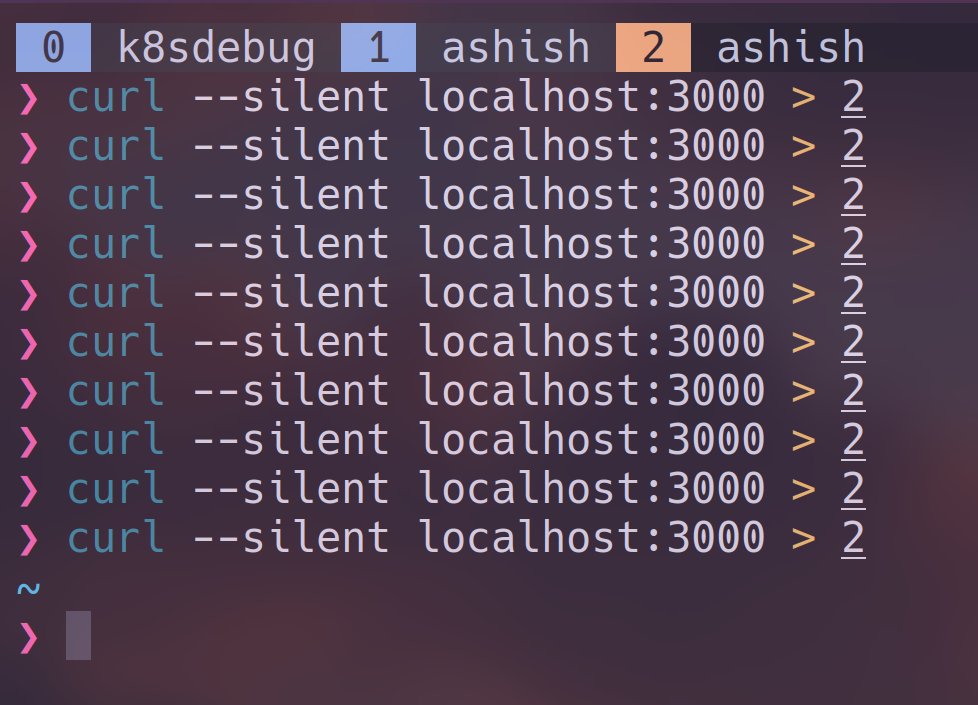
Okay how bout this neat little feat. Run your app on host for easy debugging and use round robin smart portforwarding on desired pods(eg: base on labels) to simulate the traffic when the app will run in-cluster going through k8s service.
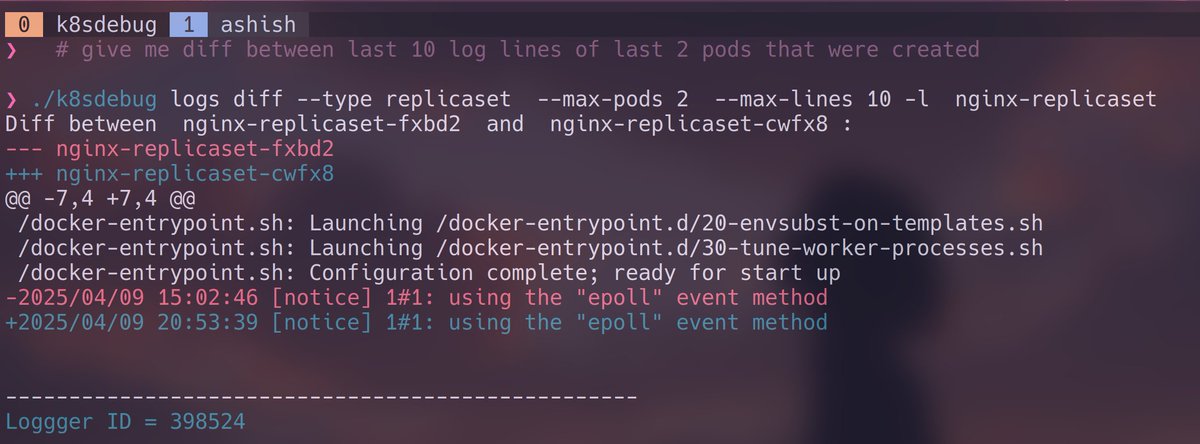
I was working on a file system based K8s logs persistent tool that can do some smart queries even when not connected to cluster. How about the below query? Do you think it will be helpful for an application dev debugging in k8s environment?
And this is not a API server thing. When listing resources, etcd returns keys in lexicographical order, which means Pods are sorted by their namespace/name by default.
When you start a watch in Kubernetes without specifying a resourceVersion, the watch first sends existing pods in alphabetical order and not in the order those pods were added(resourceVersion).
In a debugging tool I am writing, I was relying them to be sent creationOrder.
WHY😟?