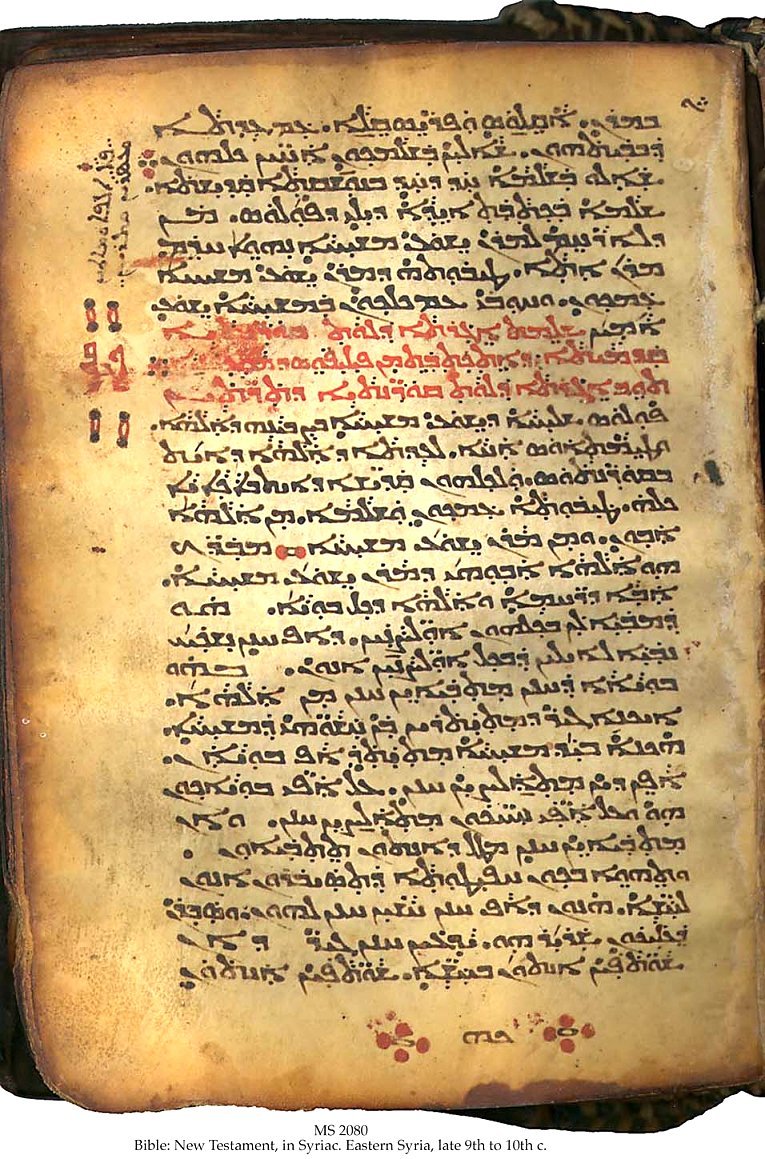
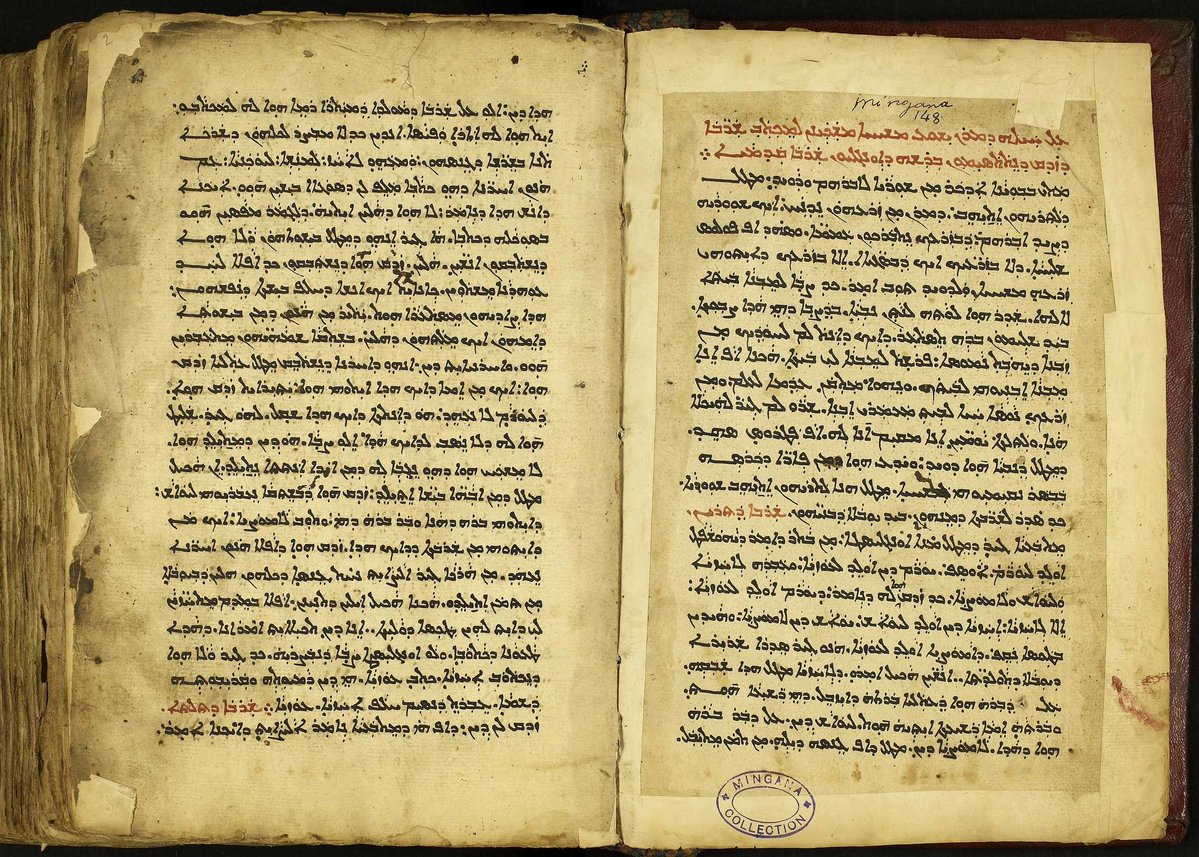
3000 manuscripts from the Middle East were collected by the Chaldean priest Alphonse Mingana in the 1920s.
One of the most famous items is the Birmingham Qur'an fragment which may be from the 6th century, close to the lifetime of Muhammad.
The collection consists of manuscripts in many different languages like Arabic, Syriac, Ethiopic, and Armenian.
The Mingana Collection is currently under the care of the University of Birmingham. Many of the manuscripts are inaccessible for most people but the university offers a paid scanning service.
Ms. Mingana Syr. 195 is one of those manuscripts not easily available and it contains unpublished 6th-7th century works on the Epiphany, fasting, and Mary written by authors connected to the School of Nisibis which was arguably the first Christian university in history.
I've requested scans of those manuscripts and will be posting any interesting insights here on X in the future so be sure to follow if you are interested in the manuscript history and theology of the Church of the East.
Is it true that Oriental Orthodoxy is closer to reunion with Rome than Eastern Orthodoxy? I know that there are ecumenical dialogues just like with the Assyrian Church but I haven’t looked into them much.
Many Protestants who seem to have discovered Oriental Orthodoxy yesterday take it to be a serious competitor to Catholicism.
By and large, the Catholics are much closer to corporate reunion with Oriental churches than w/ the Orthodox. The prospect of reunion is not unrealistic.
@cappadocianist An agreed on doctrinal formula is an interesting idea. I think there was one in 1971, the "Vienna Christological Formula" but I haven't reviewed that.
@houstonlatin02 We say Alaha. It simply means God in Aramaic. If someone leaves Christianity due to that kind of silly propaganda, were they Christian to begin with?
I’m a deacon of the Assyrian Church of the East and on my page I document our beliefs on things like relic veneration, invocation of the saints, our high view of the Virgin Mary, Nicaea, Christology, etc. from original Syriac sources.
What surprises a lot of people is that we don’t completely lack influence from the Church in the Roman Empire as we considered ourselves as part of the Catholic Church from the beginning but we do have our own particular doctrinal tradition.
My goal is to inform other Christians on here with accurate info on the Church of the East so please follow if interested!
Of the four major surviving apostolic communions: Roman Catholic, Eastern Orthodox, Oriental Orthodox, and the Church of the East, I increasingly think two stand out for almost opposite reasons.
Roman Catholicism strikes me as the most intellectually honest about doctrinal development. Catholicism does not need to pretend that the Church of A.D. 2026 looks, speaks, worships, or formulates doctrine exactly as the Church of A.D. 200. It openly admits development. The claim is not that nothing changes, but that legitimate developments preserve the identity of the apostolic deposit while drawing out implications that were previously implicit. Whether one ultimately accepts Newman’s theory of development or not, at least Catholicism gives an explicit account of the obvious historical phenomenon: Christianity developed.
At the other end of the spectrum, the Church of the East fascinates me precisely because of how geographically and politically removed it was from many of the controversies that transformed Christianity inside the Roman Empire. It developed in the Persian sphere, outside Roman imperial Christianity, and consequently escaped much of the Caesar–Church interaction, imperial council politics, and later Byzantine/Latin rivalry that shaped the other great communions.
That does not mean the Church of the East experienced no development or political pressure; it certainly did. Nor does antiquity automatically equal truth. But as a kind of historical control group, it is enormously interesting. When an ancient Syriac Christian tradition that developed largely outside the Greco-Roman imperial ecclesiastical system independently preserves a belief or practice also found in the other apostolic churches, that strikes me as particularly powerful evidence that we may be looking at something genuinely primitive rather than a later Byzantine or Latin development.
So my tentative conclusion is almost paradoxical: Catholicism may give the most honest explanation of how Christianity developed, while the Church of the East may offer one of our best windows into what Christianity looked like when comparatively insulated from the political and theological machinery of the Roman world.
That doesn’t prove either communion correct. And I’m a layman, not a patristics scholar or professional church historian, so obviously I could be wrong. But the more I read the history, the more that is what it seems like to me.
@AramaicWire This portion of Christian heritage is often ignored by the West simply because they are unaware of Christianity outside of the Roman Empire.
The School of Nisibis was the first Christian university. It was admired by those in Constantinople and even as far as Rome. I’ve been delayed but I’ll be releasing a thorough article on it soon.
The Church of The East lived in isolation, yet it offers a window into a world of Christianity without politics.
Critics of the faith often try to undermine Christianity by pointing to the political nature of Rome or Constantinople--arguing politics shaped Church tradition.
What these critics don't understand is that there was a parallel Apostolic tradition in the Near East which had no state power yet whose traditions somehow mirror & affirm Catholicism (with important differences).
"When an ancient Syriac Christian tradition that developed largely outside the Greco-Roman imperial ecclesiastical system independently preserves a belief or practice also found in the other apostolic churches, that strikes me as particularly powerful evidence that we may be looking at something genuinely primitive rather than a later Byzantine or Latin development."
- @CHS_SC843
There are primitive Apostolic realities to be found in this Church. A Church which till this day uses an Anaphora brought directly from the disciples 3 years after the crucifixion, which still uses Aramaic in its liturgy, the language of Jesus. If we want to understand the Apostolic faith in its totality, we have to understand The Church of The East & the Syriac tradition at large.
Throughout the entire history of the Church of The East, the Church of Martyrs, it was stuck between Rome & Persia. It was a mislabelled Church, misunderstood by Christians and non-Christians alike. Slandered by Christological controversies that weren't its own ("Nestorianism").
Isolation was its biggest challenge but in hindsight today, as we study this Church, it may prove to be its greatest strength, a window into untainted ancient traditions which can be traced to the Apostles.
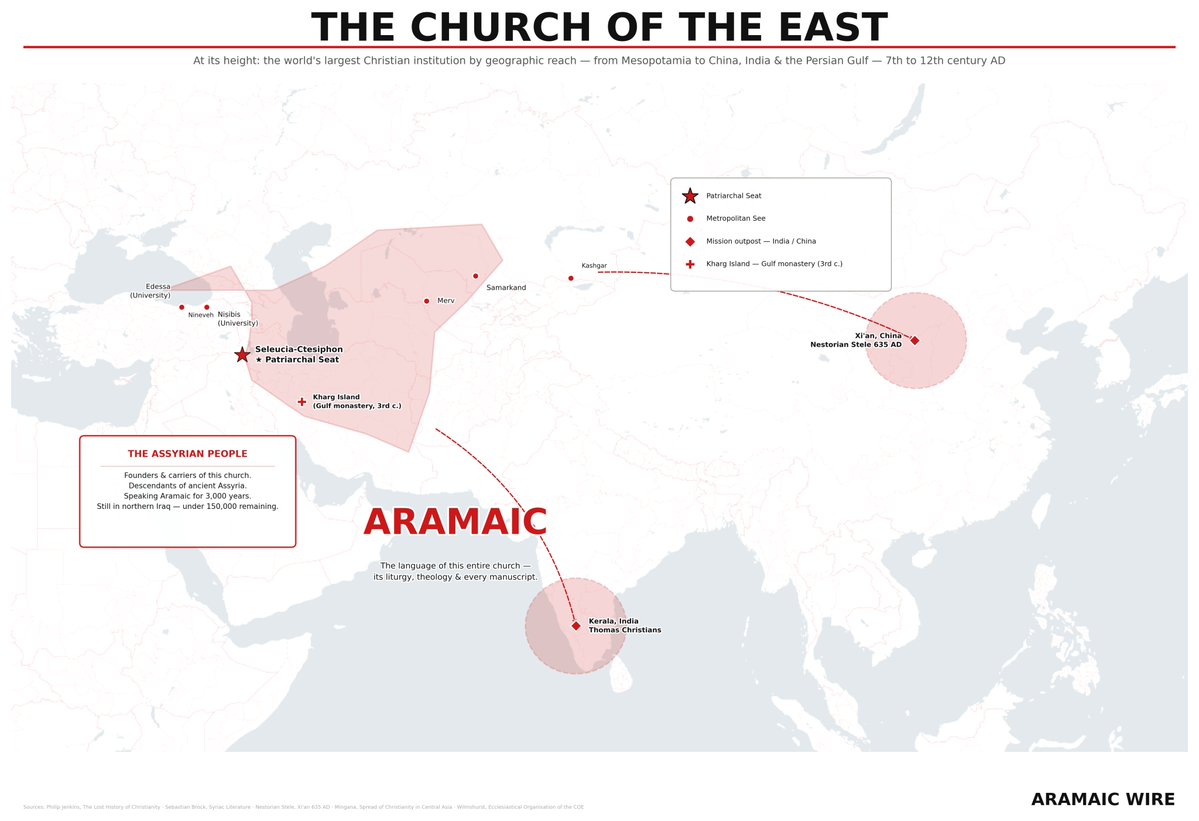
Despite persecution, through the power of Apostolic evangelism, The Church of The East took the faith as far East as China & Japan. It was at one point the largest non-state missionary operation in the world.
An operation from Mesopotamia to China, the Assyrians who hailed from Edessa translated (*and saved*) Greek philosophy under the Caliphs. They started the first Christian universities of Urhay & Nisibis.
An obscure Church which has been shielded from history & disconnected from Christendom.
It is time to uncover the truths that lay deep within it, not to build an alternative picture to Rome, but a parallel Apostolic tradition which existed in the Near East which ultimately affirms one Holy Apostolic & Catholic tradition.
ܥܕܬܐ ܕܡܕܢܚܐ
The Church of The East lived in isolation, yet it offers a window into a world of Christianity without politics.
Critics of the faith often try to undermine Christianity by pointing to the political nature of Rome or Constantinople--arguing politics shaped Church tradition.
What these critics don't understand is that there was a parallel Apostolic tradition in the Near East which had no state power yet whose traditions somehow mirror & affirm Catholicism (with important differences).
"When an ancient Syriac Christian tradition that developed largely outside the Greco-Roman imperial ecclesiastical system independently preserves a belief or practice also found in the other apostolic churches, that strikes me as particularly powerful evidence that we may be looking at something genuinely primitive rather than a later Byzantine or Latin development."
- @CHS_SC843
There are primitive Apostolic realities to be found in this Church. A Church which till this day uses an Anaphora brought directly from the disciples 3 years after the crucifixion, which still uses Aramaic in its liturgy, the language of Jesus. If we want to understand the Apostolic faith in its totality, we have to understand The Church of The East & the Syriac tradition at large.
Throughout the entire history of the Church of The East, the Church of Martyrs, it was stuck between Rome & Persia. It was a mislabelled Church, misunderstood by Christians and non-Christians alike. Slandered by Christological controversies that weren't its own ("Nestorianism").
Isolation was its biggest challenge but in hindsight today, as we study this Church, it may prove to be its greatest strength, a window into untainted ancient traditions which can be traced to the Apostles.
Despite persecution, through the power of Apostolic evangelism, The Church of The East took the faith as far East as China & Japan. It was at one point the largest non-state missionary operation in the world.
An operation from Mesopotamia to China, the Assyrians who hailed from Edessa translated (*and saved*) Greek philosophy under the Caliphs. They started the first Christian universities of Urhay & Nisibis.
An obscure Church which has been shielded from history & disconnected from Christendom.
It is time to uncover the truths that lay deep within it, not to build an alternative picture to Rome, but a parallel Apostolic tradition which existed in the Near East which ultimately affirms one Holy Apostolic & Catholic tradition.
ܥܕܬܐ ܕܡܕܢܚܐ
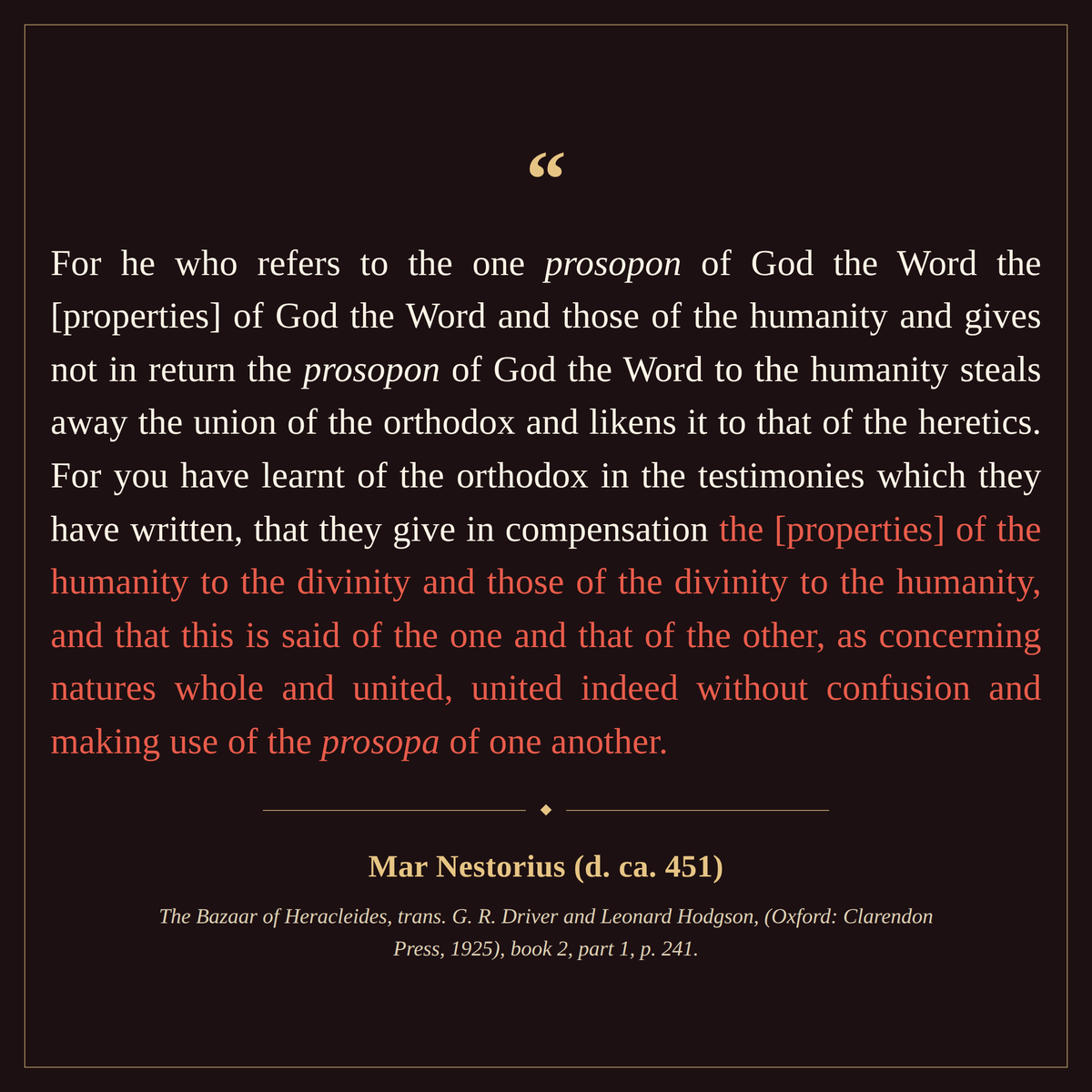
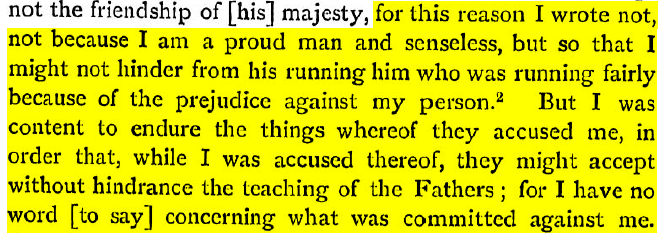
Great video from @ApostolicOrtho. Nestorius' unjust condemnation and his willingness to endure it for the sake of the acceptance of "teaching of the Fathers" is why in the Assyrian Church we call Nestorius the "Bloodless Martyr".
Nestorius' humility and zeal for the faith is shown when, in answering the criticism of his supporters as to why he wasn't willing to write to Pope Leo to defend himself, he says:
@MrLavish__@ApostolicOrtho It's no wonder that, since the discovery of Nestorius' book in the late 19th century, his perception is being rehabilitated in the west.
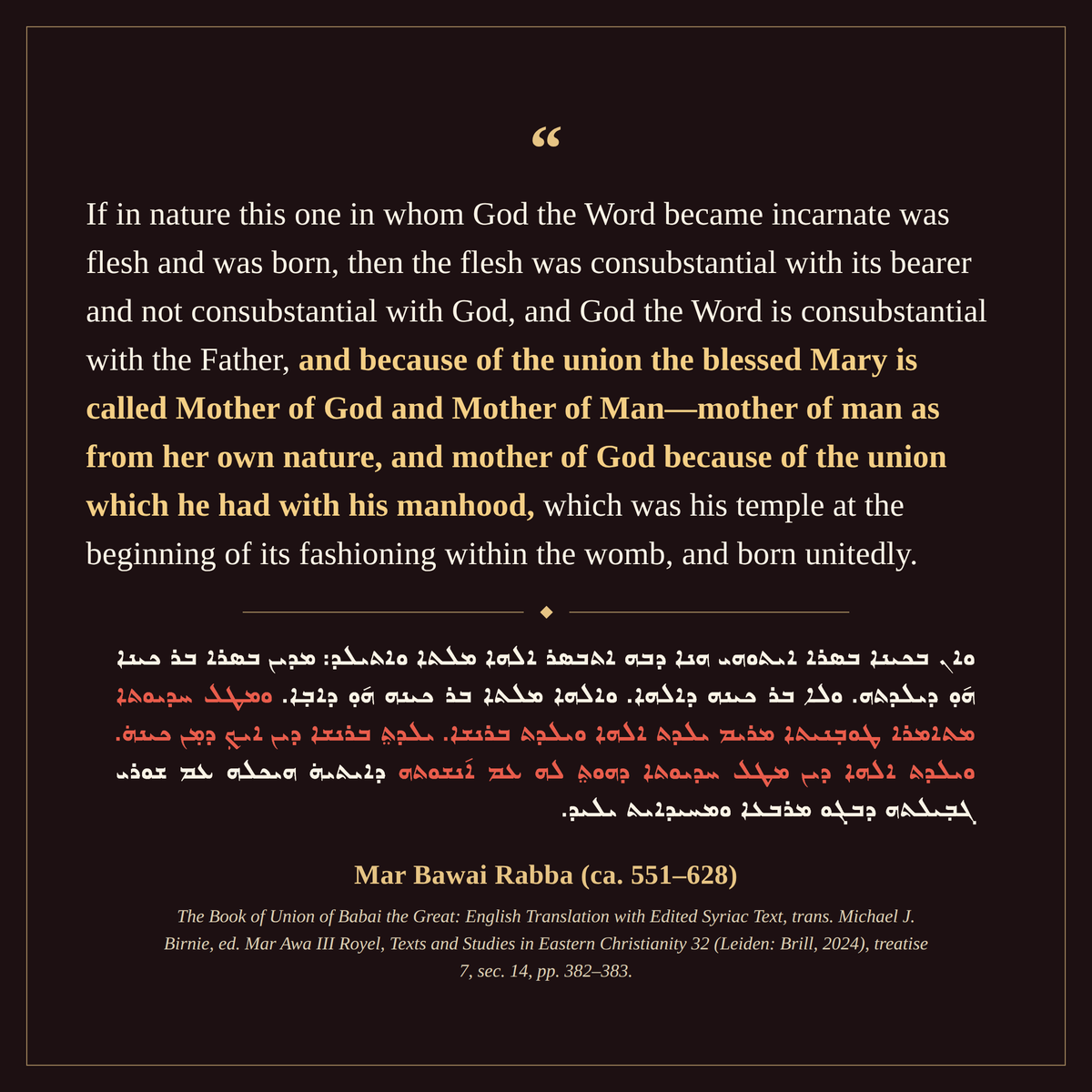
@Melvingiwargis@ApostolicOrtho Yes, also see this post which explains the logic in the same way by a different Father of the Assyrian Church. Mother of Christ is prefered as it signifies the unity of natures. https://t.co/mo1nAv4jsz
Nestorius had real disagreements with Cyril, but I’m plenty convinced his beliefs were- in analysis- indistinguishable from those confessed by Chalcedon.
The real question has always been whether Chalcedon represented Cyril as claimed.