LIVE: Goodbyes have been said and the Soyuz hatch is closed. Now, watch as the spacecraft undocks, beginning @Astro_ChrisW's journey back to Earth. https://t.co/8KrW3ANqZp
LIVE: Watch as @Astro_ChrisW and cosmonauts Sergey Kud-Sverchkov and Sergei Mikaev say farewell to the @Space_Station and board their Soyuz MS-28 spacecraft. https://t.co/vTlOtSsjab
LIVE: Watch @Astro_ChrisW and @Astro_Jessica go on a spacewalk! They're replacing a wrist joint on the @Space_Station's Canadarm2 robotic arm. https://t.co/bS4W9Ja4tG
One question I get a lot is can you see the stars differently from up in space. When we orbit on the night side of the planet, we get a view of the stars very much like being in a very dark place on Earth. And because of our orbital inclination, we get to see the stars of both the northern and southern hemisphere. I captured this shot of our galactic plane from one of the windows of the Crew Dragon Freedom that is docked to the zenith docking port.
On April 27th at about 10:40 PM GMT, I was in the @Space_Station Cupola and saw something really neat. I was scanning the sky to try to catch a glimpse of the approaching Progress MS-34 vehicle bringing new supplies. Just as we were passing over West Africa, I saw a bright object directly below us, streaking through the upper atmosphere. I saw its tail grow and then split apart into a shower of smaller pieces. I think it must have been some piece of orbital debris or a satellite breaking up as it entered the atmosphere. It was quite a light show!
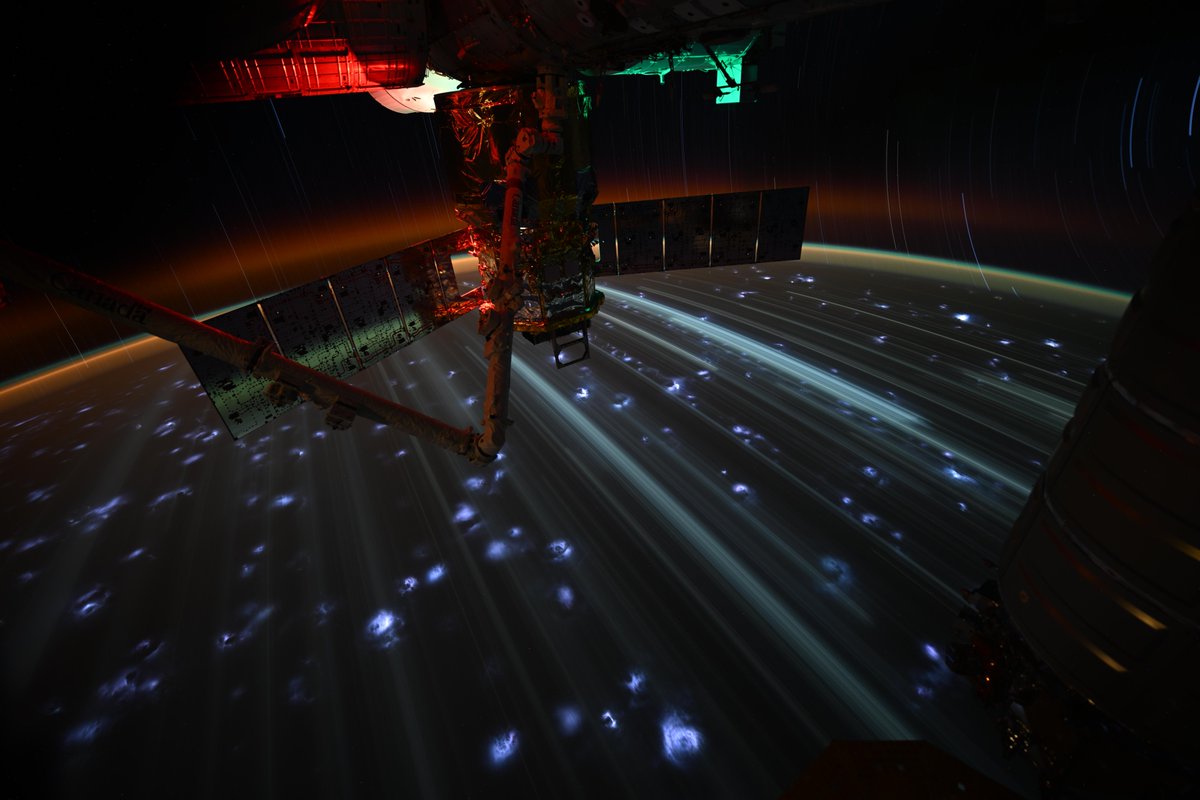
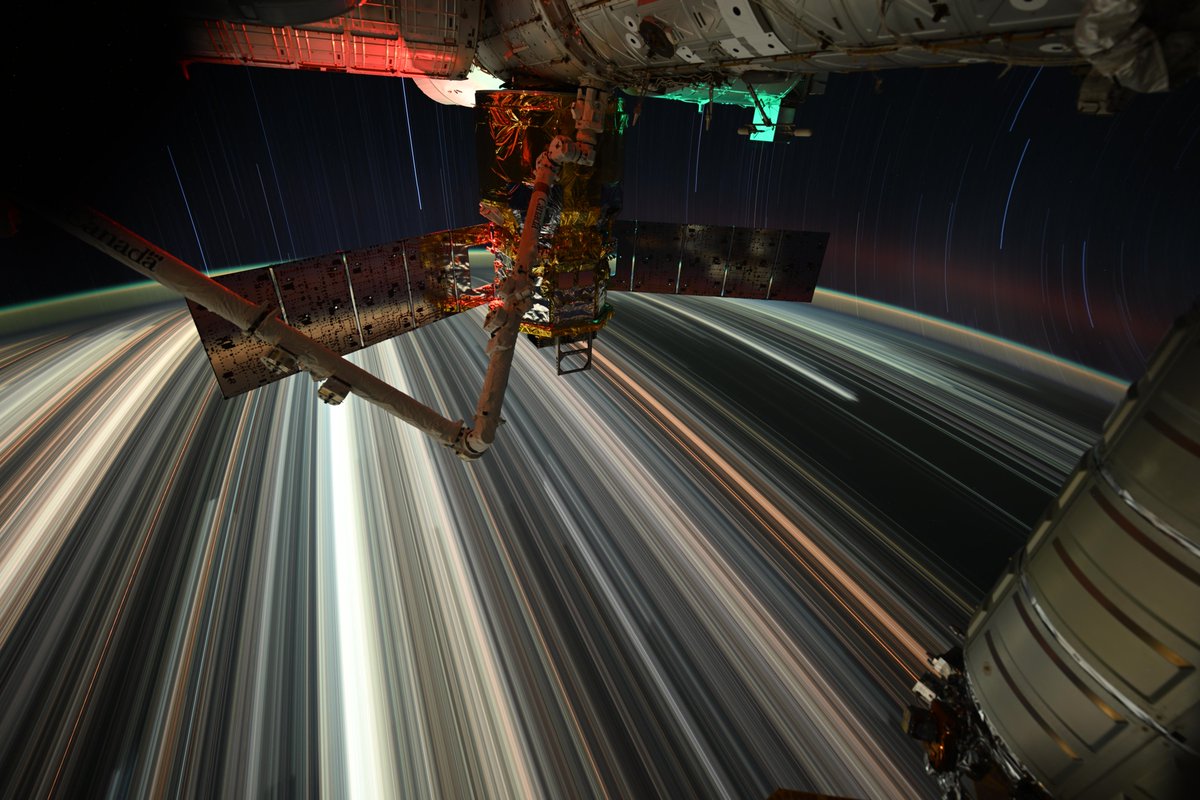
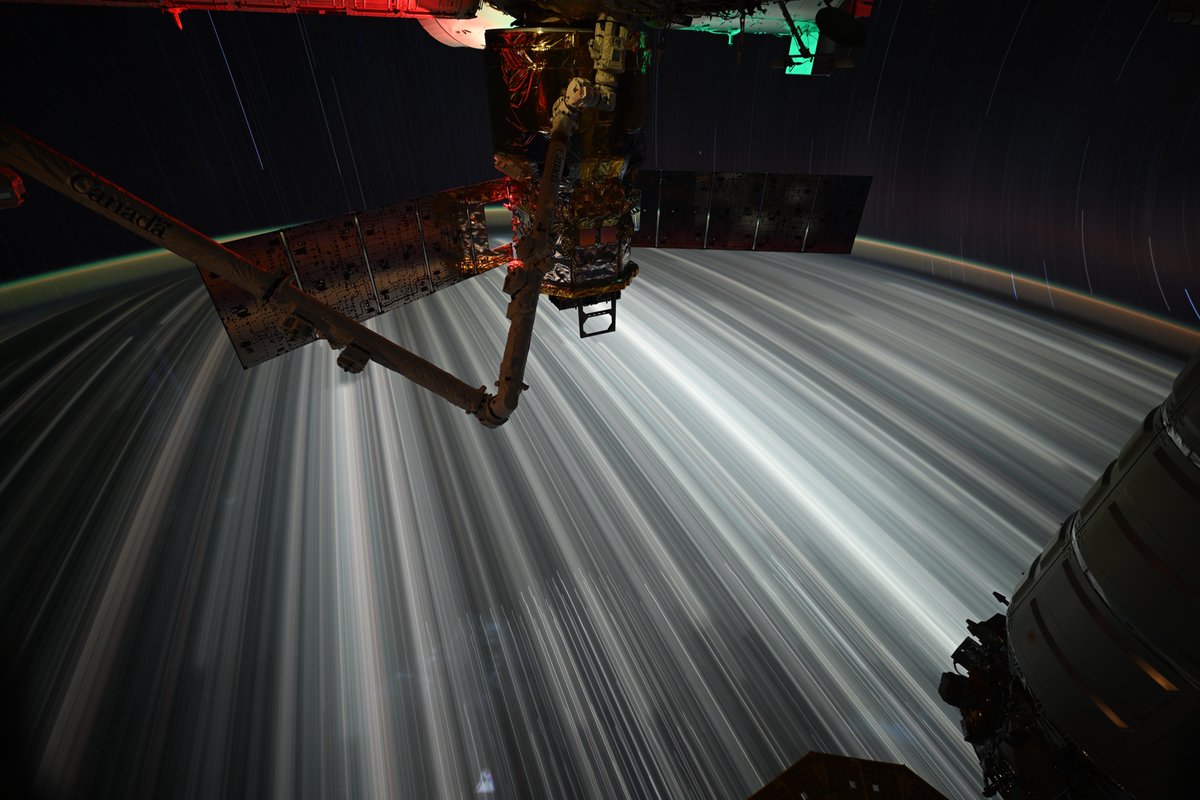
I have been playing around with some long exposure shots that show some beautiful effects with our orbital motion. City lights are turned into streaks across the earth, and lightning storms form a speckled pattern during these several-minute exposures.
Looking out the windows of the @Space_Station during a night pass, you can occasionally see greenish lights just off the coast. These lights are from fishing boats that use the green light to attract squid and other fish. I captured this image while we were flying over the west of India.
This is an image of Comet C/2025 R3 (PanSTARRS) that I took from the Cupola on the @Space_Station. I was originally taking some photos looking for meteors from the Lyrid and saw the tail of the comet! It was almost blocked in my view by the base of the Canadarm2 robotic arm, but I was just able to get a photo of it.
This comet was discovered in late 2025 by the Pan-STARRS project, which uses two telescopes in Hawaii with large fields of view to take large images of the sky every night and then compares them to find any objects that might be new or moving. This comet made its closest approach to the sun on April 19th.
Z9/200mm
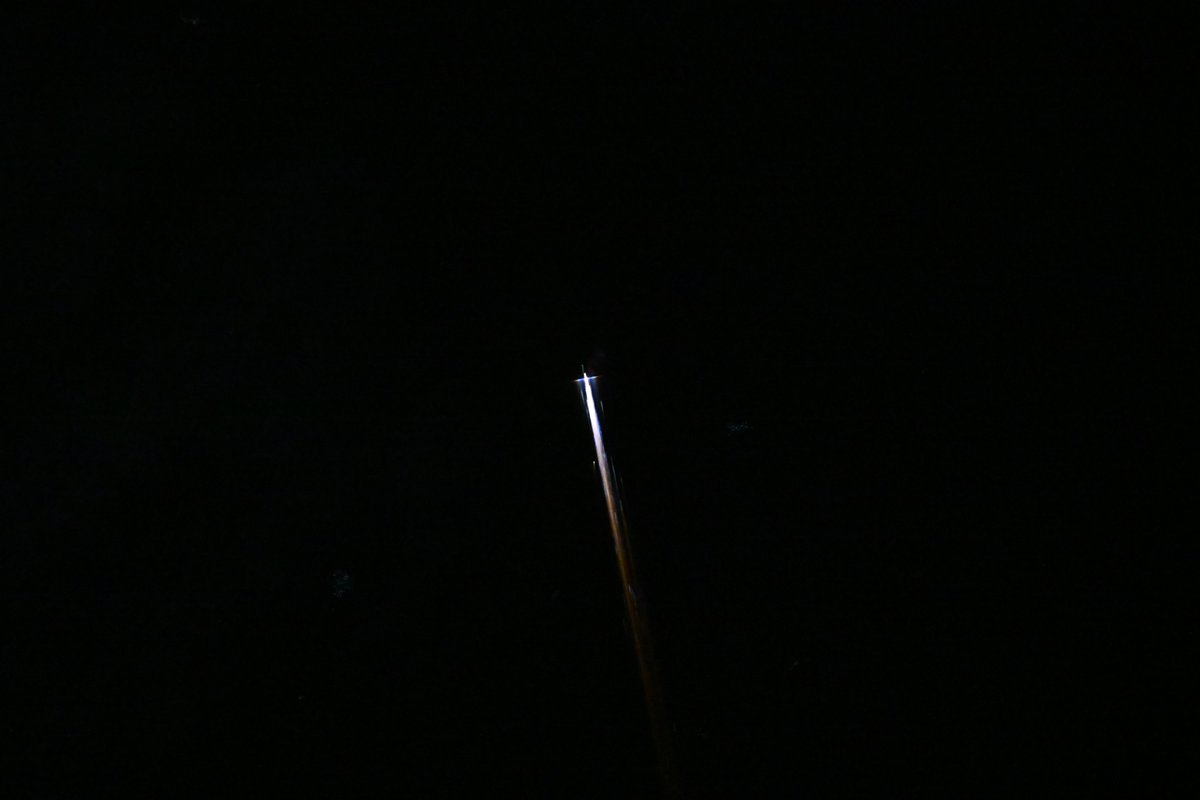
It has been a busy week since the arrival of our latest Cygnus cargo vehicle, S.S. Steven R. Nagel! We were just over the horizon from Florida (where it launched from on a Falcon 9 rocket); however, I was able to catch the rocket trail in this image, as well as the upper stage firing (the small dot in the upper-left)!
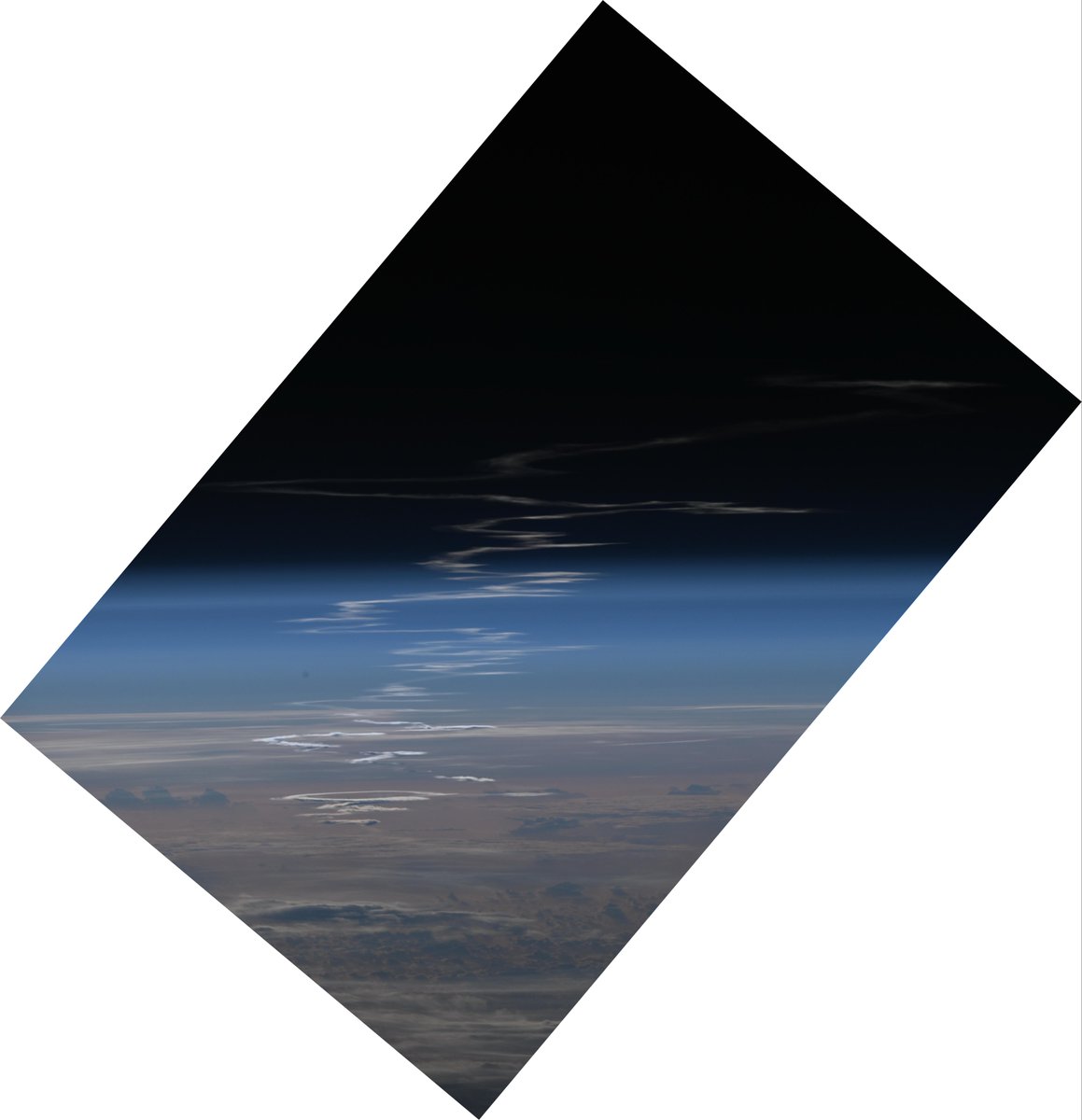
Our crew on the @Space_Station caught a glimpse of the @NASAArtemis II crew as they re-entered the atmosphere from their journey to the Moon! We first saw a bright light and a trail as the service module burned up. We didn’t see the Orion capsule itself as it re-entered, but we saw the wispy trail it left behind in the upper atmosphere. Overjoyed that our friends are safely back on Earth after their awe-inspiring mission!
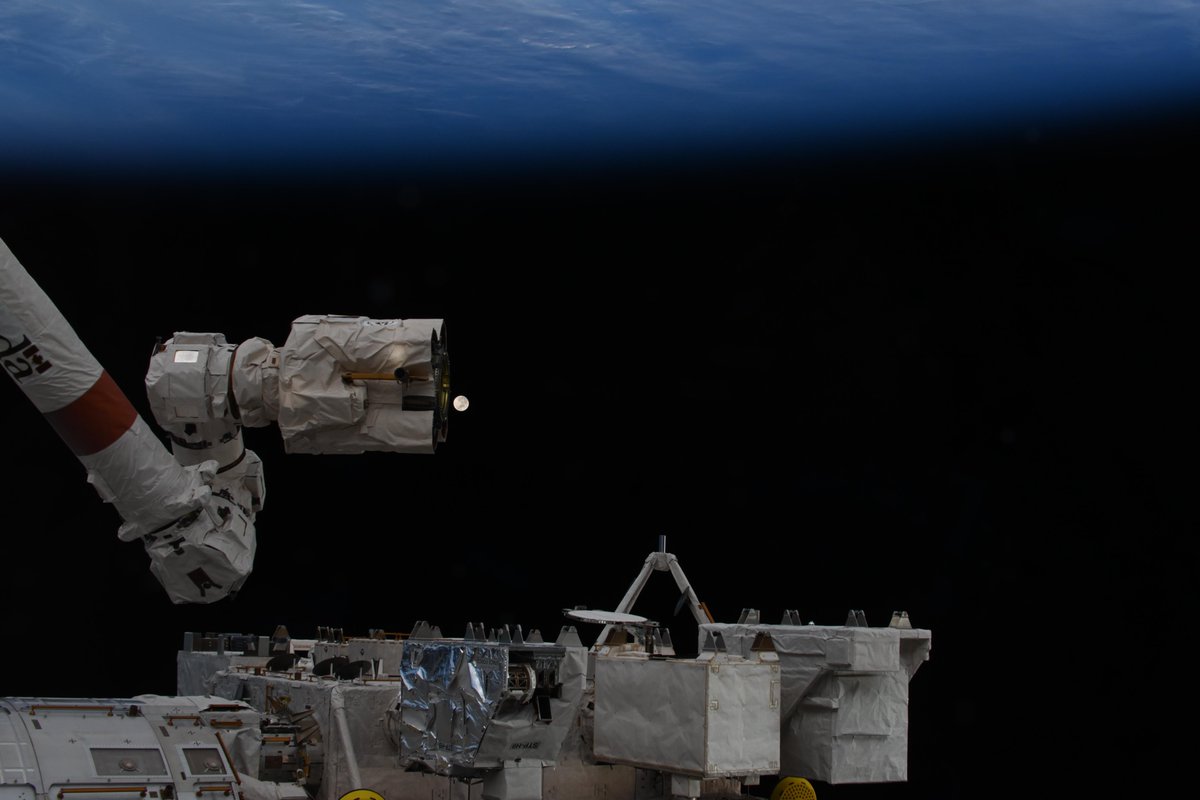
A few days ago, I was down in the Cupola while we were watching the @NASAArtemis II launch broadcast. As I was floating there, I saw the full Moon rising just past the tip of the Canadarm2. The arm is a crucial part of the @Space_Station, developed by our partners at the @csa_asc.
I thought it a fitting image, taken just a few hours before @Astro_Jeremy became the first Canadian to embark on a voyage to the Moon.
As the @NASAArtemis II crew approaches the Moon, they will get a firsthand view of the Moon's surface. One of the most striking (pun intended) features they will see is the craters which mark its surface, and are especially numerous on the far side, which the crew will be able to directly see. These craters are formed by impacts that have happened over the history of our Solar System and act as a sort of historical record of the conditions around the Earth and Moon.
The Earth has had many impacts over its history that have had big consequences on our planet (just ask the dinosaurs...), but plate tectonics, weathering, and volcanism have erased many craters on the Earth, and with them, the record of this history. The Moon helps us fill in the picture and tells us a unique story about our planet's past!
Even so, there are still many craters on Earth, but many are often not as easily visible as those on the Moon. Some, like Manicouagan Crater in Quebec, Canada, are very readily seen from the @Space_Station. This crater was created over 200 million years ago, when a 5 km asteroid crashed into the Earth, and is over 70 km wide. I saw this view through the Cupola window as I was exercising and had to pause to take a picture!
NASA astronaut Chris Williams photographed a full Moon from the International Space Station the day before Artemis II launched. The next day, Williams photographed the exhaust plume left behind by the SLS (Space Launch System) rocket that launched Artemis II from NASA’s Kennedy Space Center in Florida on April 1, 2026.
The Expedition 74 astronauts aboard the International Space Station express their gratitude to the teams supporting the @NASAArtemis II crew and its mission to fly around the Moon.
Godspeed Artemis II! Our crew on the @Space_Station stayed up to watch the launch of our friends on their historic mission to the Moon. We were over the Northern Pacific Ocean at the time of launch, so we couldn’t see it directly (we watched it on NASA TV). However, about a half hour later, as we orbited a few hundred kilometers from Florida, I was able to catch a glimpse of the remnants of the trail the rocket made as it passed through the atmosphere! You can see the effect of the wind at different altitudes.
#OTD in 2001, our team at #NASAMarshall began 24/7 support for science on the @Space_Station. This partnership has resulted in over 4,000 different scientific investigations and breakthroughs!
Learn more as we celebrate this 25-year milestone: https://t.co/1oZInBgH80
Can you spot the astronauts? 👩🚀👨🚀
The original solar arrays on the International Space Station have a 240 foot wingspan, towering over the crew at the base.
.@Astro_Jessica and @Astro_ChrisW concluded a seven-hour, two-minute spacewalk today at 3:54pm ET. The duo is back inside the space station following the installation of a solar array modification kit to the port side of the orbital complex. https://t.co/tBTQQJcAi9
LIVE: Tune in to watch @Astro_ChrisW and @Astro_Jessica go for a spacewalk!
Our astronauts are scheduled to step outside the @Space_Station at about 8am ET (1200 UTC) and work for about six-and-a-half hours. https://t.co/uCJYmHnFzL