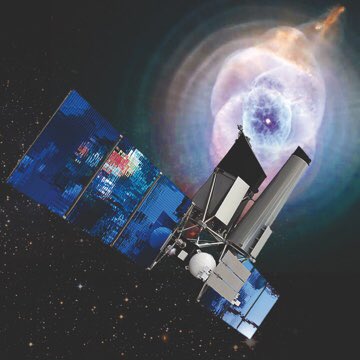
The @AandA_journal special issue on the early data release of @eROSITA_SRG and ART-XC has been published! #theobservatory was heavily involved in some very cool science.
Check out all the amazing papers!
👇
https://t.co/DozBhENDbK
Photo-credit: Roscosmos/DLR
A rare event has been identified in a brief detection of X-rays, and researchers have used the finding to verify a long-standing theory about a class of exploding star https://t.co/T8VOjXiXN6
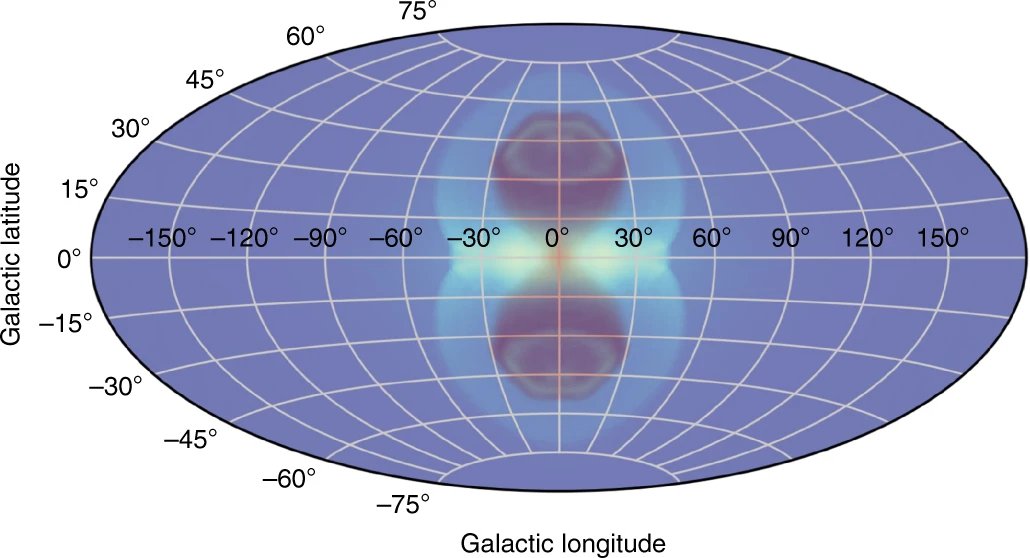
The newly discovered eRosita X-ray bubbles, together with the Fermi bubbles and associated microwave haze, might be explained by a single episode of central supermassive-black-hole jet activity a few million years ago. Karen Yang et al.: https://t.co/jmRSynLl1y
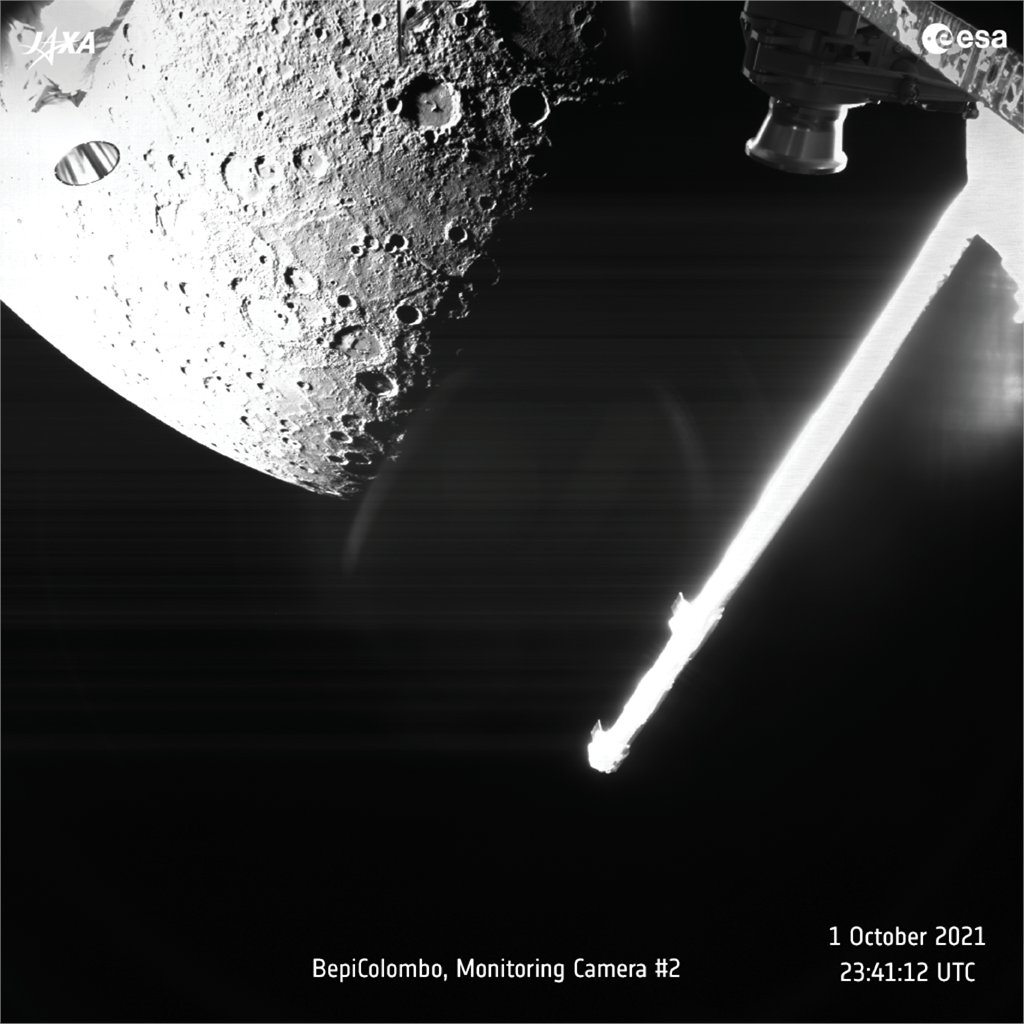
More incredible first impressions of #Mercury as we made our first #MercuryFlyby last night. I cannot wait to get more data about this truly beautiful planet 😍 I hope you enjoy these postcards as much as me in the meantime!
https://t.co/GnWRupanhA
#ExploreFarther
FINAL FOUR time. @HUBBLE_space has been dominating the competition, but @NASASwift may have the Twitter grass roots support to pull off an underdog victory. Make. Your. Case.
#TelescopeTourney
Novel, ultra-soft nuclear transient uncovered by @eROSITA_SRG during its third all sky scan. Archival SDSS optical spectrum suggests a quiescent host, yet VLA imaging suggests system to be radio loud and a Fanaroff-Riley Class II !
Impressive #eROSITA 360° panoramic map of the sky. You can zoom-in, move around and click on some selected objects.
#SpektrRG has now completed 50% of its third all-sky survey.
With its unique configuration, GeCAM is capable to monitor the whole Gamma-ray sky at any time with better (slightly but still better) sensitivity and position uncertainty than Fermi/GBM.
With its unique configuration, GeCAM is capable to monitor the whole Gamma-ray sky at any time with better (slightly but still better) sensitivity and position uncertainty than Fermi/GBM.
The Chinese Academy of Sciences' GECAM X-ray/Gamma ray telescope, which consists of two twin satellites, was successfully launched into orbit. https://t.co/AXIWNz1Bdm
The Chinese Academy of Sciences' GECAM X-ray/Gamma ray telescope, which consists of two twin satellites, was successfully launched into orbit. https://t.co/AXIWNz1Bdm
For more #Swiftie throwback photos, here's @PhysicsUoL's Andy Beardmore from March 2004, posing with Swift as it prepares to undergo environmental testing @NASAGoddard. Remember those amazing dust scattering rings around the black hole binary V404 Cyg - guess who made that image!
After the successful commissioning of all seven #eROSITA cameras we are now performing a couple of specific tests, among them measuring the susceptibility for optical light. This is done with Telescope Modules 5, 6, and 7 operating simultaneously.
During the #XRayAstronomy19 conference last week, @andmerloni made the "First announcement of the #eROSITA and ART-XC scientific conference", that will take place in Garching on March 16-20 next year!