Who doesn't love a good mystery?! 🔍🔴
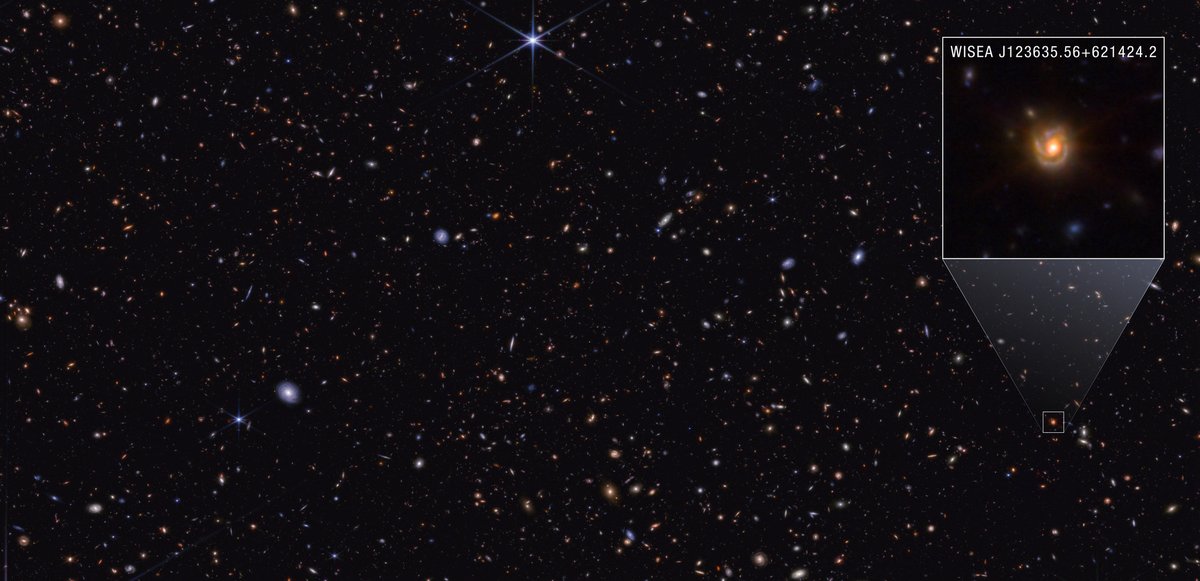
Little Red Dots (LRD), first detected by Webb, are very distant, seemed to emerge ~600 million years/mysteriously decline by ~1.5 billion years post-big bang. What if they didn’t disappear, they just evolved?
https://t.co/wjGjkeZYE7
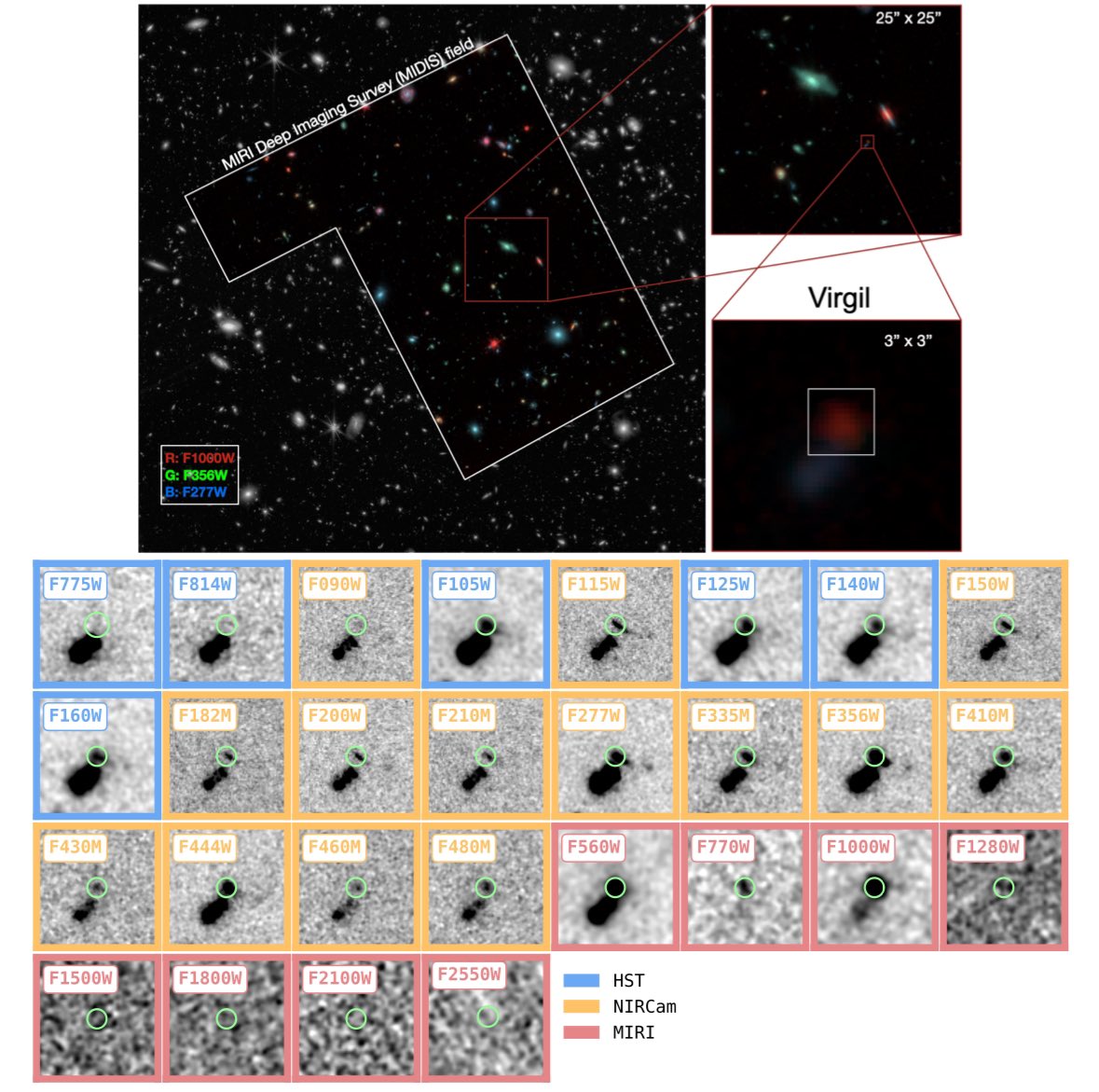
Finally, Virgil’s SED resembles the ones of the exotic Little Red Dots (LRDs), but it does not match the compactness criterion. Is Virgil a LRD in which we can finally observe the galaxy host?
A few months ago I discovered Cerberus, the first MIRI Extremely Red Object. Lately, I did it again and found another one, which I called Virgil! I asked my friend and colleague Edoardo Iani to study it, and today you can finally ready our study!
#jwst
https://t.co/sUU21DmW51
This finding showcases how adding the MIRI bands can actually unveil a new whole population of AGNs at z>6 that we could totally miss if we relied on the solely NIRCam bands.
We can actually see that Virgil is far from being a normal star forming galaxy and actually the only way to explain its spectral energy distribution (SED) is including the presence of an active galactic nucleus (AGN)!
Here it is how it looks like! The power of the MIRI photometric information is incredibile. Without the MIRI bands, Virgil would look like as a normal star forming galaxy at z~6.63. However, MIRI shows us that the reality is a bit different!
I’m super proud to share with you that I discovered the first MIRI extremely red object, that I called “Cerberus”.
Cerberus is a puzzling object, barely detected in the most deepest NIRCam images available on the market.
Now on https://t.co/8FLmughgUy
#JWST
What drove Cosmic Reionization?
It’s been one of the most important questions that modern astronomers tried to answer in the last decades.
In our recent study, we tried to shed new light on this very hot topic!
Check it out!
https://t.co/L6E2j3Bh6Z
Happy to share with you that our work on the Galaxy Stellar Mass Function (GSMF) at high redshift is finally on the arXiv! We have been able, for the first time, to constrain the faint end of the GSMF at z ~4-8 thanks to JWST!
https://t.co/mNGZBe7xAr
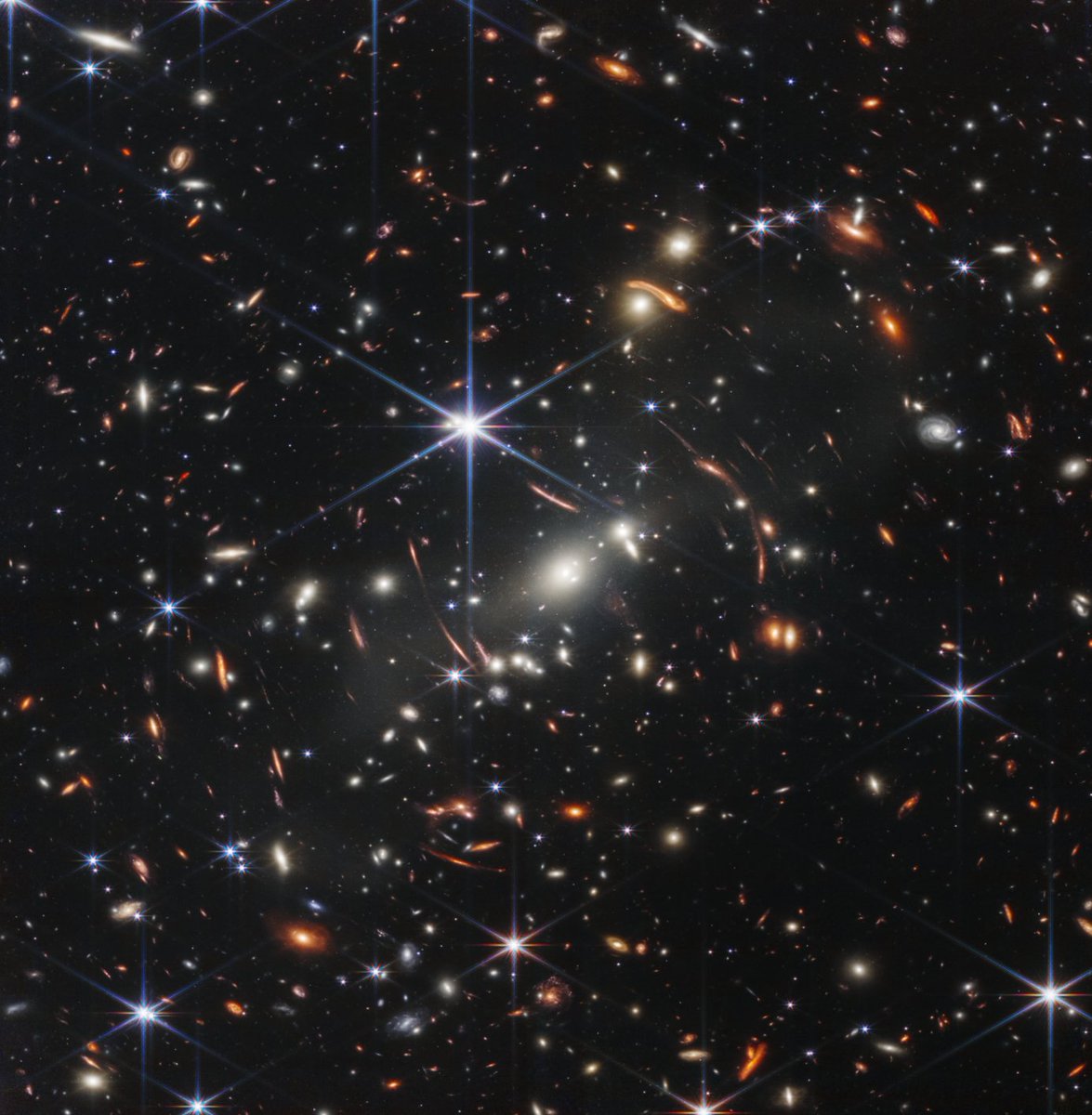
👀 Sneak a peek at the deepest & sharpest infrared image of the early universe ever taken — all in a day’s work for the Webb telescope. (Literally, capturing it took less than a day!) This is Webb’s first image released as we begin to #UnfoldTheUniverse: https://t.co/tlougFWg8B
SMACS 0723 will be one of the first targets to be seen with Webb! Complex cluster with lots of galaxies in the foreground - its going to be fun to analyze this!! :)
Check it out:
https://t.co/i0kXEZLw5Z
"E quindi uscimmo a riveder le stelle".
Un evento riguardo l'astronomia da non perdere assolutamente se siete da quelle parti!
#Padova#specoladipadova#astronomia
✨ Nei primi miliardi di anni dopo il Big Bang, l’universo conteneva molte più #galassie#starburst del previsto. Lo dimostra l’analisi di 20mila galassie lontane guidata da Pierluigi Rinaldi, laurea @Unibo e oggi dottorando a @univgroningen ⤵️ @Astro_Pier
https://t.co/l7cEMi8Zu6
Vroeg heelal wemelde van sterrenstelsels met groeispurt. Analyse van meer dan 20.000 verre sterrenstelsels door astronomen @univgroningen en anderen.
Nieuws: https://t.co/8WFngqrxFq
Preprint: https://t.co/lugXUpyqr5
Beeld: Rinaldi/Aversa/NASA
cc: @KapteynDirector @ScienceLinX
🏠 Home, home on Lagrange! We successfully completed our burn to start #NASAWebb on its orbit of the 2nd Lagrange point (L2), about a million miles (1.5 million km) from Earth. It will orbit the Sun, in line with Earth, as it orbits L2. https://t.co/bsIU3vccAj #UnfoldTheUniverse
For the first time, we are able to study the galaxy starburst/main-sequence bimodality over five decades in stellar mass at z ~ 3 - 6.5. #astrotwitter#astrostuffs#astronomy#astrophysics#research
Check it out: https://t.co/VSK1hIRvZC