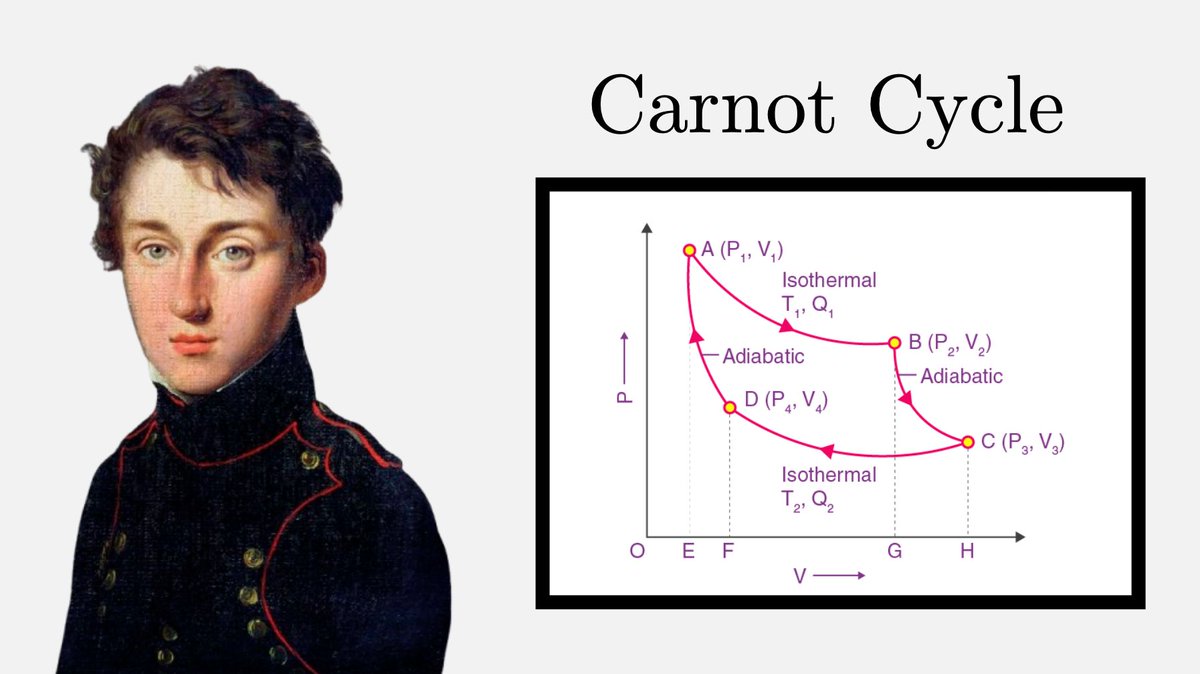
Sadi Carnot was born 230 years ago today.
In 1824, while studying steam engines, he discovered a limit that no technology can overcome:
No engine can convert all heat into useful work.
This insight became the foundation of thermodynamics and understanding of energy. Carnot died in 1832 at just 36 years old.
"Finally, finite? The end of #infinity"
#Lecture by Thomas Schramm
in #Hamburg#Observatory, May 20, 2026
(Hybrid - live and online)
https://t.co/sJTaFSB2Rw
https://t.co/AsayXDztGr
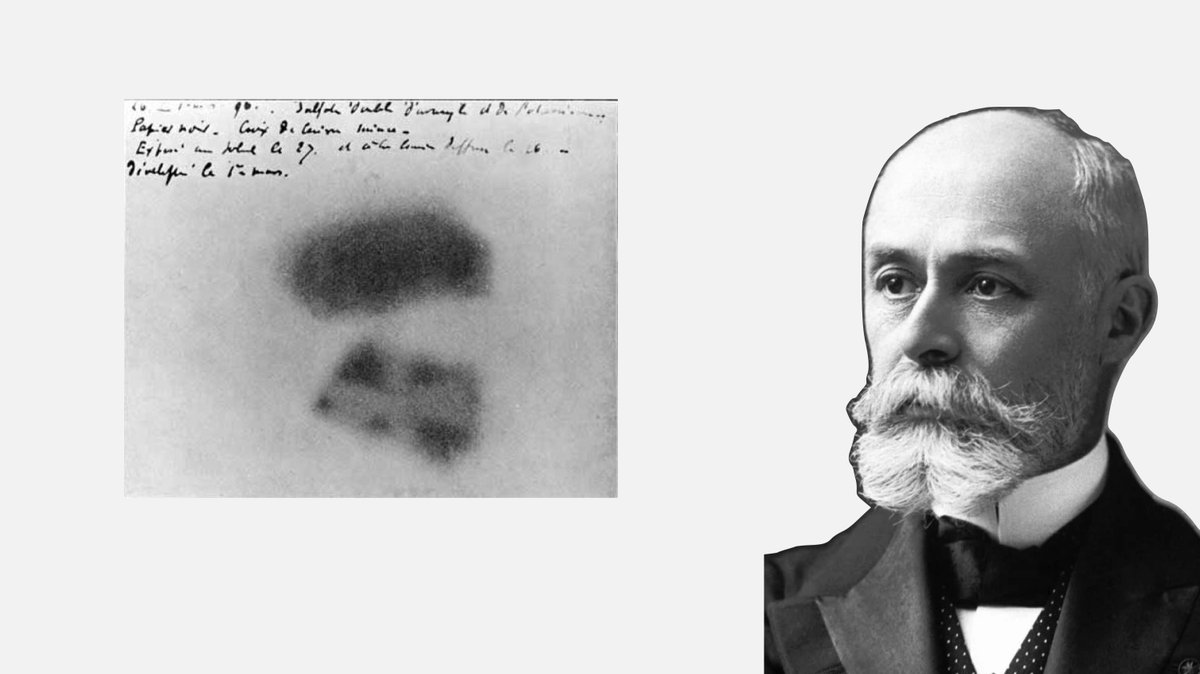
On March 1, 1896, Henri Becquerel discovered radioactivity because of bad weather.
He'd been testing whether uranium could absorb sunlight and re-emit it as X-rays by placing it on photographic plates wrapped in black paper.
But Paris turned cloudy for days so he shoved everything into a desk drawer. When he developed the plates the image was amazingly clear. The uranium was emitting radiation on its own. No sunlight needed. This discovery earned him the 1903 Nobel Prize.
40 years earlier, a photographer named Abel Niépce de Saint-Victor had made the exact same discovery. Nobody cared.
On this day in 1972, NASA launched the Pioneer 10 spacecraft. It became the first probe to successfully traverse the asteroid belt, the first to capture close-up images of Jupiter, and the first human-made object placed on a trajectory to completely leave our solar system.
Bolted to its exterior: a golden plaque designed by Carl Sagan, using the hydrogen atom as a universal unit of measurement to tell any alien civilization where we are.
Pioneer 10 sent its last signal in 2003 and it's still flying heading toward the star Aldebaran. Estimated arrival: 2 million years.
The Foucault pendulum was introduced in 1851 and was the first experiment to give direct evidence of the Earth's rotation. The plane of oscillation remains fixed in space while Earth rotates beneath it. At the poles, the pendulum's plane completes a full rotation in one sidereal day; at other latitudes, the rotation period is longer.
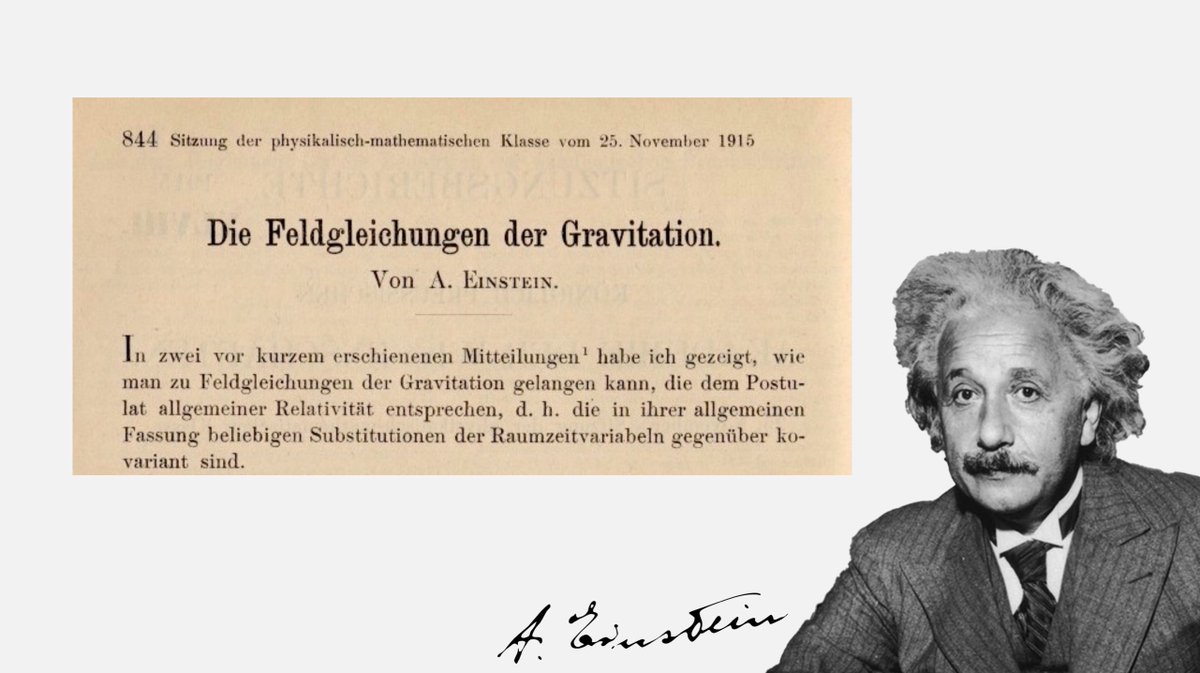
Einstein's General Relativity turns 110 today.
On November 25, 1915, Albert Einstein presented the final form of his gravitational field equations to the Prussian Academy of Sciences in Berlin. It became one of the most important scientific breakthroughs of the 20th century.
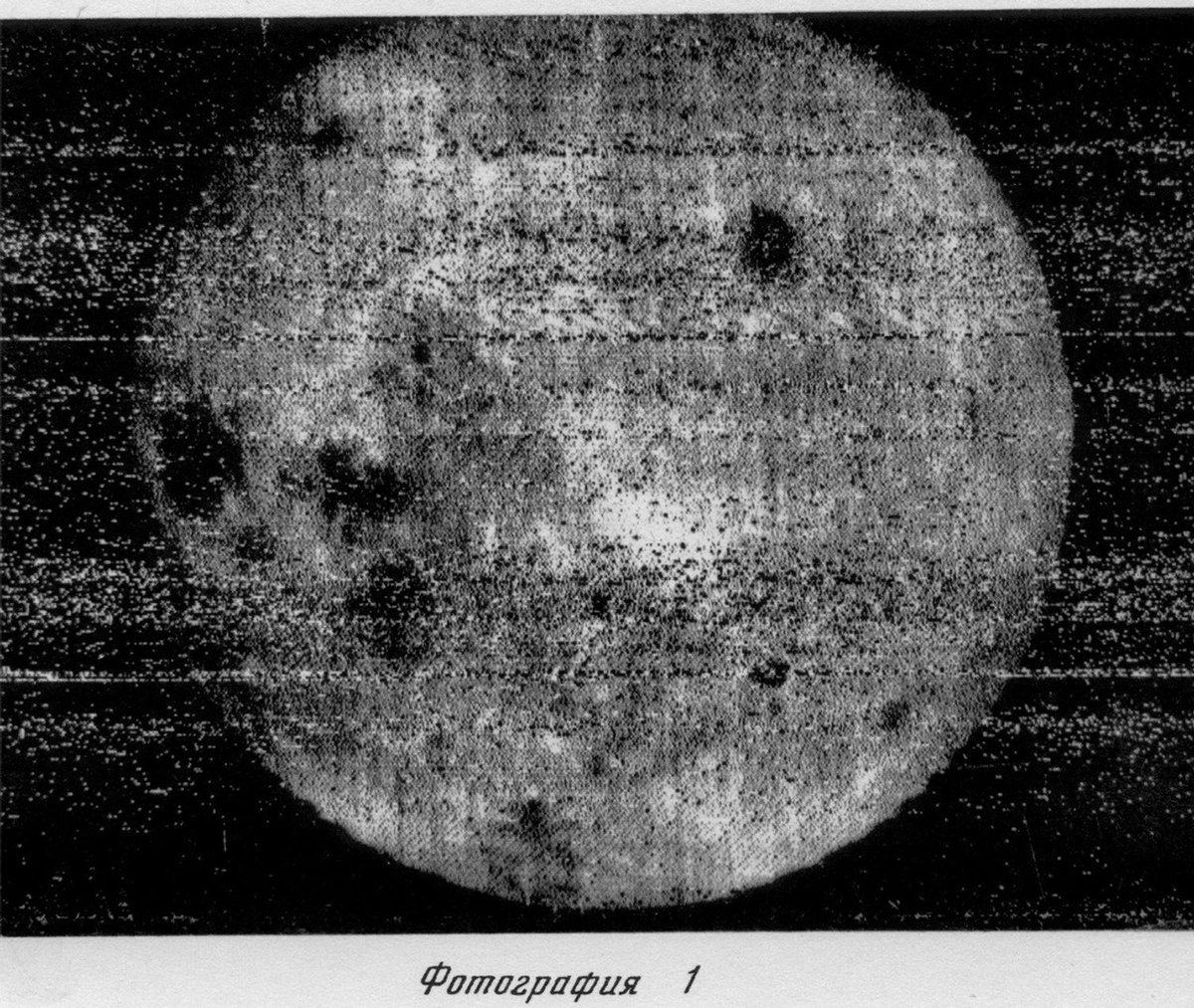
The first photographs of the Moon's far side were taken 66 years ago. 🌑 The photographs taken by the Soviet Union's Luna 3 spacecraft marked the first time we saw the far side of the Moon.
They were taken Oct. 7, 1959 at a distance of about 39,457 miles.
🎆 Zum Jahreswechsel noch einmal der Bericht zu einem erwarteten stellaren "Feuerwerk", das wahrscheinlich bald wieder von vielen Orten der Welt aus bewundert und vor allem weiter erforscht werden kann: https://t.co/aioEViVpWy