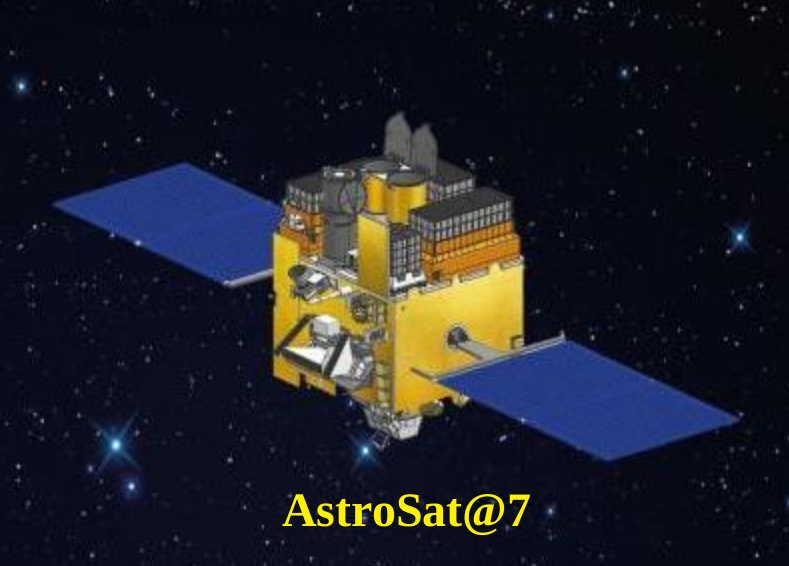
Happy b'day #AstroSat !
India's first multi-wavelength space observatory has surpassed its planned lifetime of 5 years in 2020 and still counting...
May the force be with you!
https://t.co/nSoAv5nEv4
https://t.co/TlzbEt9rg5
#AstroSat@7 @isro
[2301.13394] Rwitika Chatterjee, Vivek K. Agrawal, Kiran M. Jayasurya et al.: Spectro-polarimetric view of bright atoll source GX 9+9 using IXPE and AstroSat https://t.co/inHgnROchI https://t.co/fHPBun4MaZ #astro_ph_HE
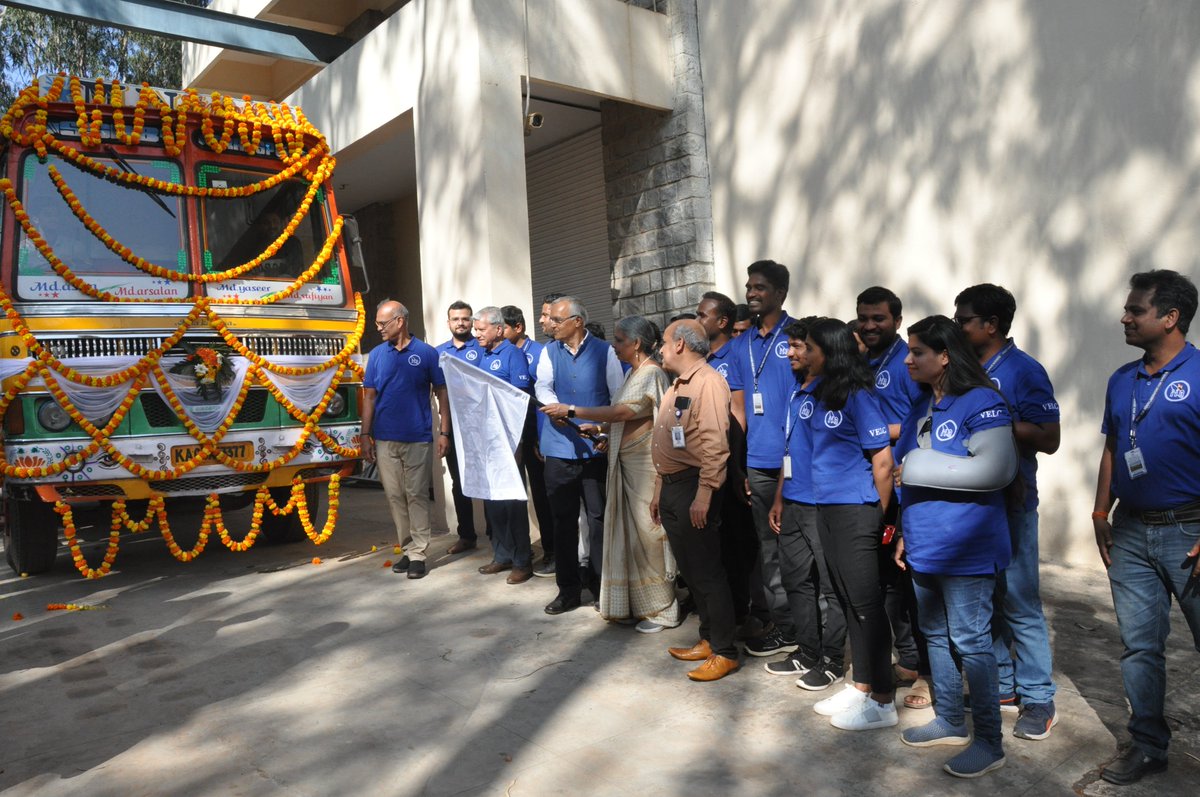
The #VELC handover ceremony was a success, with many congratulations flowing in for the VELC team. We were happy to have Shri S. Somanath Chairman #ISRO, Nigar Shaji, PD of #AdityaL1, M. Sankaran Dir URSC, Usha Dixit of @IndiaDST and many others.
A big thank you to the media too!
[2301.10678] Amar Deo Chandra, Jayashree Roy, P. C. Agrawal: AstroSat observations of the Be/X-ray binary XTE J1946+274 during 2018 and 2021 outbursts https://t.co/pmbwNaN4V4 https://t.co/6LaTdWW586 #astro_ph_HE
Published:
Pulsars in AstroSat-CZTI: detection in sub-MeV bands and estimation of spectral index from hardness ratios
Authors: K. G. ANUSREE, DIPANKAR BHATTACHARYA, VARUN BHALERAO & AKASH ANUMARLAPUDI
Link: https://t.co/0f0rLybNRx
@IAScBng@IUCAAstro@iitbombay@springerastro 1/2
[2212.11302] Arvind K. Dattatrey, R.K.S. Yadav, Sharmila Rani et al.: GlobULeS-IV. UVIT/AstroSat detection of extremely low mass white dwarf companions to blue straggler stars in NGC 362 https://t.co/TGkbcF2Vpf https://t.co/ZHVKo71Aoo #astro_ph_SR
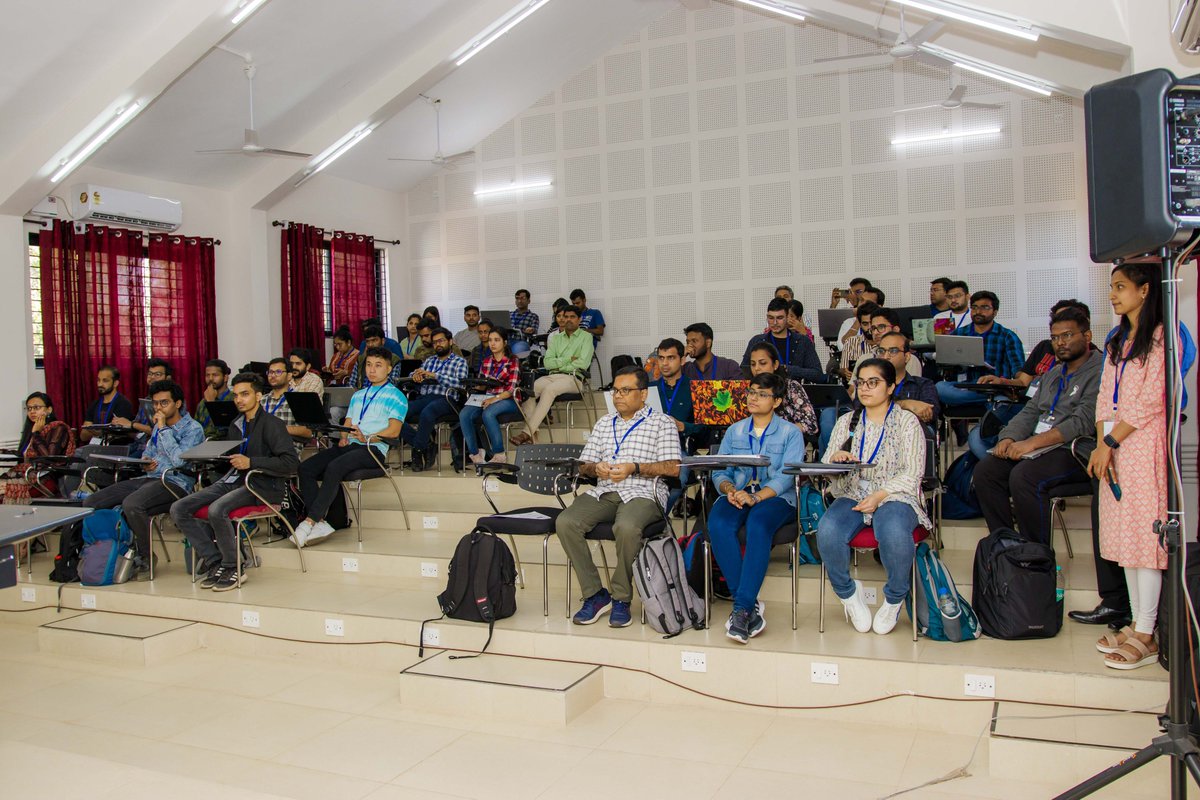
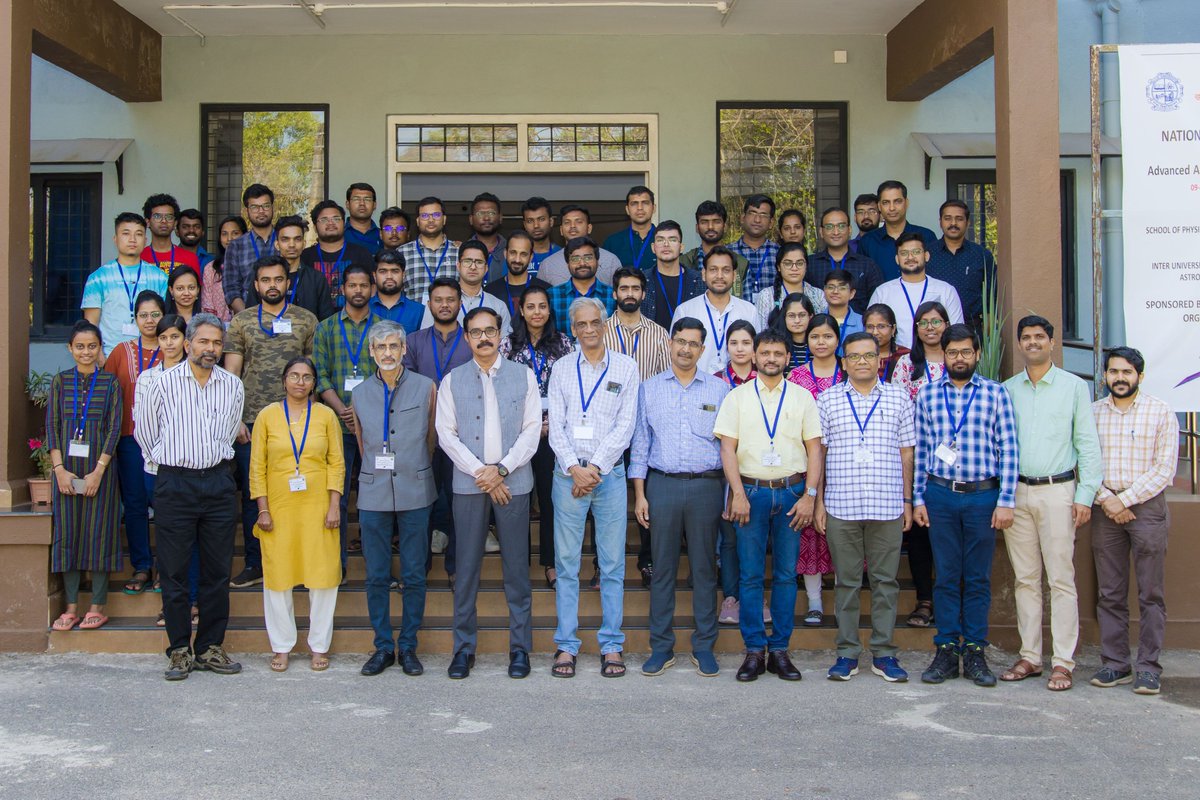
#NCRA_TIFR invites applications for Radio Astronomy School (RAS) 2023 to be held from 13- 24 Mar 2023
Apply online before Jan 5 2023:
https://t.co/AB8IKqea2C
#RAS2023 will include lectures on radio interferometry (theory+techniques) & hands-on tutorials for #GMRT data analysis
[2212.01003] Rahul Sharma, Chetana Jain, Ketan Rikame et al.: Broadband mHz QPOs and spectral study of LMC X$-$4 with AstroSat https://t.co/LcfcbSXf8o https://t.co/LN3HvCKnbm #astro_ph_HE
Data from the SARAS 3 experiment has been used to constrain (in terms of mass, star formation, radio luminosity) a population of radio-luminous galaxies ~200 million years after the Big Bang (z ≈ 20). Bevins et al.: https://t.co/72AaeA6MdM








![arXiver's tweet photo. The AstroSat observation of accreting millisecond X-ray pulsar SAX J1808.4-3658 during its 2019 outburst... [HEAP] https://t.co/CmwoIkTOag https://t.co/lB9efUnl6K](https://pbs.twimg.com/media/FkeJoJSaMAEt24i.jpg)
![arXiver's tweet photo. UOCS-IX. AstroSat/UVIT study of the open cluster NGC 2818: Blue Stragglers, Yellow Stragglers, Planetary... [SSA] https://t.co/SFLXtRcJMV https://t.co/lQIRE3Py0I](https://pbs.twimg.com/media/FlwgUXyaYAAqRQ-.jpg)





