🫀Vasopressor Dose: Are We Measuring Drug Exposure, Shock Severity, or Both?
Norepinephrine dose is one of the most frequently reported variables in critical care. We use it to define refractory shock, trigger adjunctive therapies, enroll patients into clinical trials, and estimate prognosis. But what if the way we report vasopressor dose fundamentally changes its clinical meaning?
A thought-provoking editorial in Annals of Intensive Care challenges a long-standing assumption: that weight-based vasopressor dosing automatically represents a more individualized approach.
The authors argue that vasopressor dose is not merely a pharmacologic variable. It is also a physiological signal reflecting circulatory failure, vascular responsiveness, and disease severity. Consequently, whether norepinephrine is reported as μg/min or μg/kg/min can substantially alter clinical interpretation.
The issue becomes particularly relevant in obesity.
Weight-based dosing assumes total body weight reflects the relevant pharmacokinetic and pharmacodynamic compartment. However, excess adipose tissue may not correspond to vascular target tissues or receptor exposure for short-acting vasoactive agents. As a result, dividing norepinephrine dose by body weight may create the appearance of personalization while potentially underestimating the true vasopressor burden in obese patients.
The authors highlight recent observational data involving more than 10,000 septic shock patients. When norepinephrine was expressed as μg/kg/min, predicted mortality differences between obese and non-obese patients reached 14.5%. When expressed as absolute μg/min, this difference nearly disappeared (0.3%). These findings suggest that dose expression alone may influence severity stratification and prognostic assessment.
Importantly, this is not an argument against bedside titration.
Norepinephrine should continue to be adjusted according to MAP, tissue perfusion, cardiac output when available, lactate kinetics, urine output, and overall hemodynamic response. The concern arises when vasopressor dose is repurposed as a marker of shock severity, trial eligibility criterion, or escalation threshold.
The authors propose a more sophisticated framework: phenotype-guided interpretation.
Instead of focusing exclusively on absolute or weight-based doses, clinicians should interpret vasopressor requirements within the context of:
• Vasoplegia severity
• Cardiac reserve and echocardiographic findings
• Lactate kinetics
• Acid–base status
• Body composition
• Previous catecholamine exposure
• Organ perfusion markers
Reference 📚
Sanchez-Escalante C, Wieruszewski PM. Absolute, weight-based, fixed-dose, or phenotype-guided? Rethinking the meaning of vasopressor dose in critical care. Annals of Intensive Care. 2026;16:100094. DOI: 10.1016/j.aicoj.2026.100094.
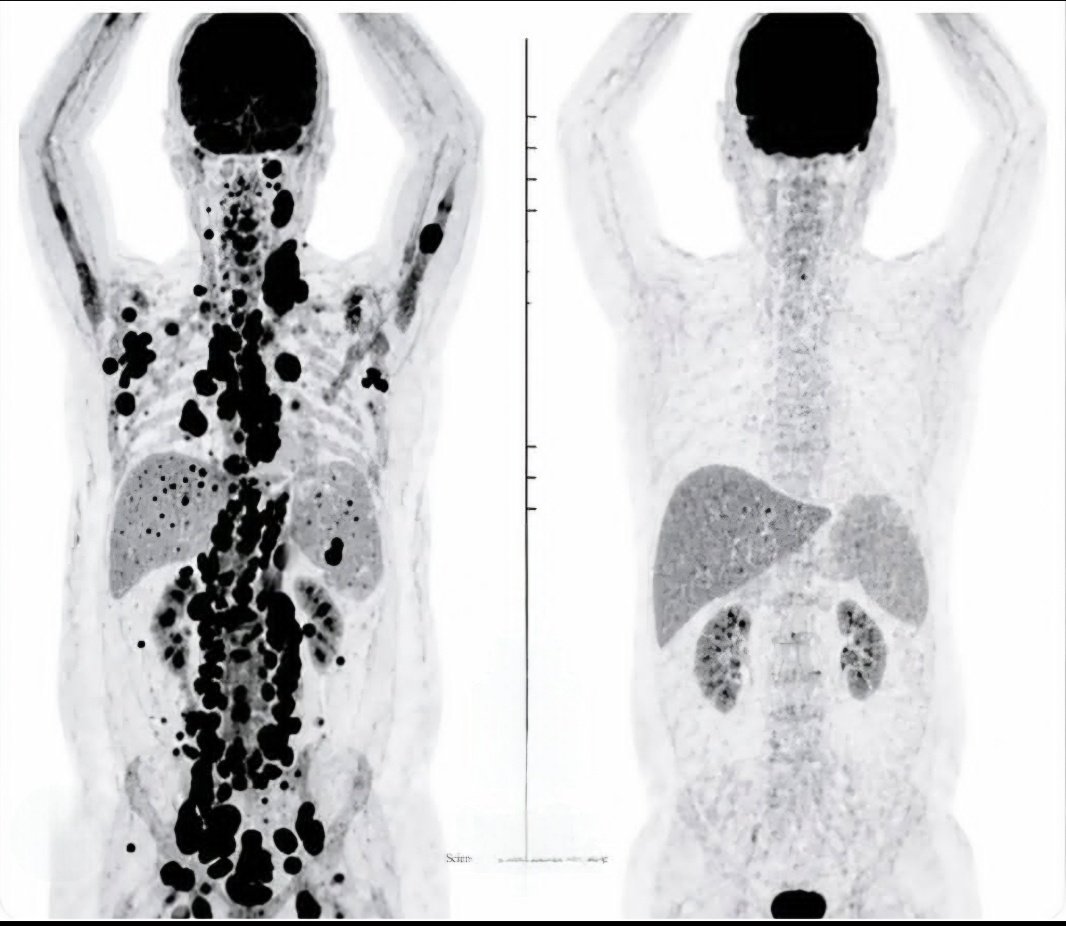
اون نقاط مشکی سمت چپ بافتهای درگیر با سلولهای سرطانی هستند. سمت راست ۴۸ روز بعد از درمان با تکنیک مهندسی ژنتیک سلولهای CART در بدن یک بیمار برزیلی است.
معجزه اینه.
یکی از بزرگترین خطاهای ذهن اینه که فکر میکنه «اگر بیشتر فکر کنم، حتما جواب رو پیدا میکنم».
در حالی که خیلی از مسائل زندگی با فکر کردن حل نمیشن؛ با تجربه کردن، اشتباه کردن و وارد عمل شدن حل میشن. نشخوار ذهنی اغلب جستجوی پاسخ نیست، تعویقِ زندگیه.
معدن فيروزه نيشابور قديمى ترين معدن دنيا و گرانترين غار ايران است كه مرغوب ترين فيروزه دنيا نيز از اين معدن 40 كيلومترى صادر ميشود و سابقه بهره بردارى از آن به بيش از 5000 سال ميرسد.
📌 خیلی از رابطهها نه به خاطر کمبود عشق؛ که به خاطر کمبود ”انعطافپذیری“ از بین میرن.
+ اینکه دو نفر حاضرن بجنگن، اما حاضر نیستن کنجکاوانه همدیگه رو یاد بگیرن.
+ حاضرن سخت به موضع خودشون بچسبن، اما حاضر نیستن انعطافپذیرانه نگاه طرف مقابلشون رو هم ببینن.
+ و حاضرن همه چیز خراب شه، اما حاضر نیستن مشتاقانه آسیبپذیر دیده بشن.
گاهی تروما از چیزی که اتفاق افتاده ایجاد نمیشه؛ "از چیزی ایجاد میشه که باید اتفاق میافتاد و نیفتاد." آغوشی که نبود، حمایتی که نرسید، امنیتی که تجربه نشد. روان فقط از زخمها آسیب نمیبینه؛ از کمبودها هم آسیب میبینه.
جدول خلاصهی هزاران مطالعه در خصوص فاکتورهای موثر و غیر موثر بر حس خوشبختی🔻
تمامِ داستان، فریب بود.
سوره آل عمران، آیه ۱۸۵
«... وَمَا الْحَيَاةُ الدُّنْيَا إِلَّا مَتَاعُ الْغُرُورِ»:
و زندگی دنیا جز کالایی فریبنده نیست.
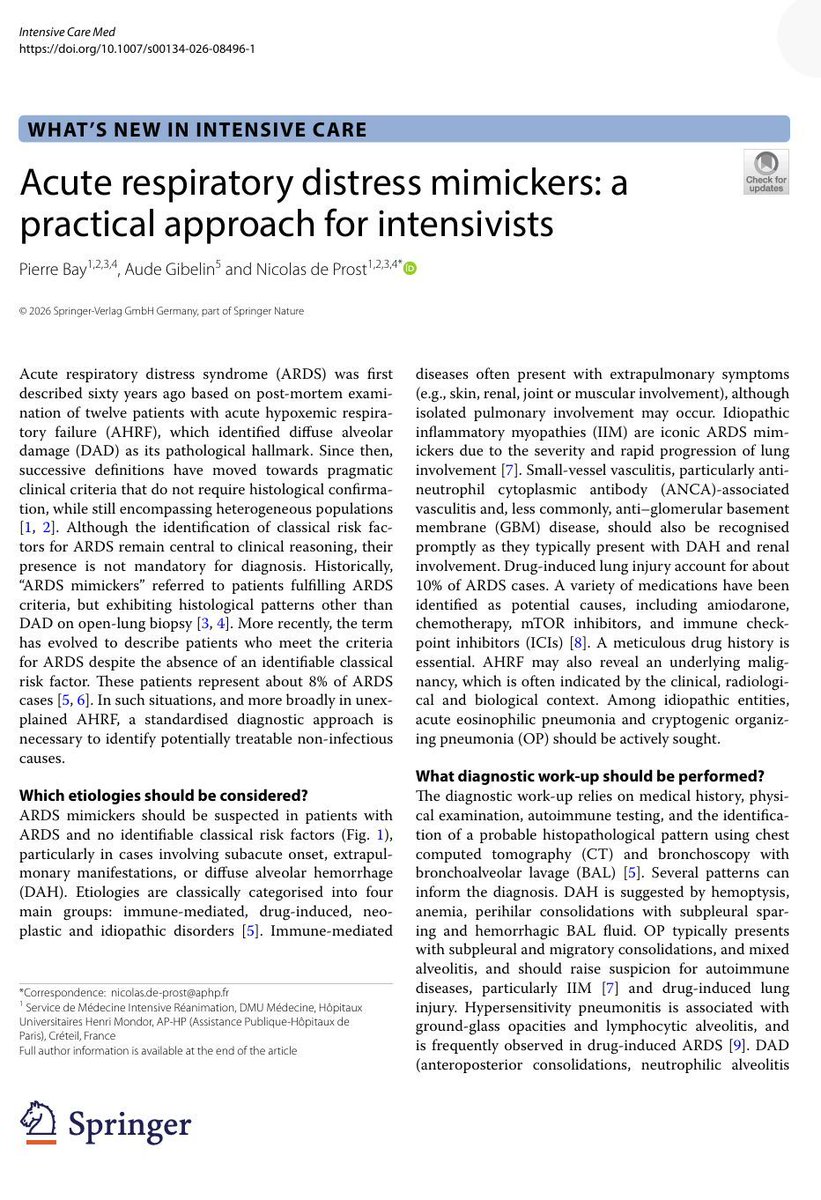
🫁 ARDS… or something else?
Every intensivist has faced it.
A patient arrives with acute hypoxemic respiratory failure, bilateral infiltrates, severe oxygenation impairment, and fulfills all clinical criteria for ARDS.
But what if it is not ARDS?
A timely review published in Intensive Care Medicine reminds us that approximately 8% of patients meeting ARDS criteria have no identifiable classical ARDS risk factor, and some of these patients harbor highly treatable diseases that require a completely different therapeutic strategy.
The authors propose a practical diagnostic framework for identifying ARDS mimickers, particularly when the presentation includes:
🔹 No clear ARDS risk factor
🔹 Subacute symptom onset
🔹 Extrapulmonary manifestations
🔹 Diffuse alveolar hemorrhage
🔹 Unexpected radiologic patterns
The major categories include:
✅ Immune-mediated diseases
• ANCA-associated vasculitis
• Anti-GBM disease
• Idiopathic inflammatory myopathies (anti-MDA5, antisynthetase syndrome)
✅ Drug-induced lung injury
• Amiodarone
• Chemotherapy
• mTOR inhibitors
• Immune checkpoint inhibitors
✅ Neoplastic pulmonary infiltration
✅ Idiopathic disorders
• Acute eosinophilic pneumonia
• Organizing pneumonia (OP)
One of the most useful concepts from this review is that diagnosis should not rely solely on the chest CT.
Instead, intensivists should combine:
📌 Detailed history and medication review
📌 Extrapulmonary examination (skin, joints, muscles, kidneys)
📌 Autoimmune testing
📌 Bronchoscopy with BAL
📌 Pattern recognition on CT imaging
The article highlights several time-critical diagnoses not to miss:
⚠️ Anti-MDA5 dermatomyositis and antisynthetase syndrome
ICU mortality approaches 50%, and up to 20% of patients require VV-ECMO. Early aggressive immunosuppression is essential.
⚠️ ANCA-associated vasculitis and anti-GBM disease
Prompt recognition of diffuse alveolar hemorrhage and initiation of immunosuppression can be life-saving and kidney-saving.
⚠️ Immune checkpoint inhibitor pneumonitis
A rapidly growing cause of severe respiratory failure in oncology patients that often responds to corticosteroid therapy if recognized early.
The key message is simple:
Not every patient fulfilling ARDS criteria has diffuse alveolar damage.
When classical risk factors are absent, the diagnosis should trigger curiosity rather than closure.
Because sometimes the difference between survival and mortality lies in recognizing the mimicker.
Question for the ICU community:
What is the most memorable ARDS mimicker you have encountered in your practice?
Reference 📚
Bay P, Gibelin A, de Prost N. Acute respiratory distress mimickers: a practical approach for intensivists. Intensive Care Medicine. 2026. DOI: 10.1007/s00134-026-08496-1.
راست: بلندترین درختِ ایران. «بلوط بُلَندْمازو» با ارتفاع بیش از ۶۰متر. عکس از محسن جعفری
چپ: کُهنترین درختِ ایران. «سرو ابرکوه» با سن حدودا ۴۰۰۰سال. عکس از حبیب میری