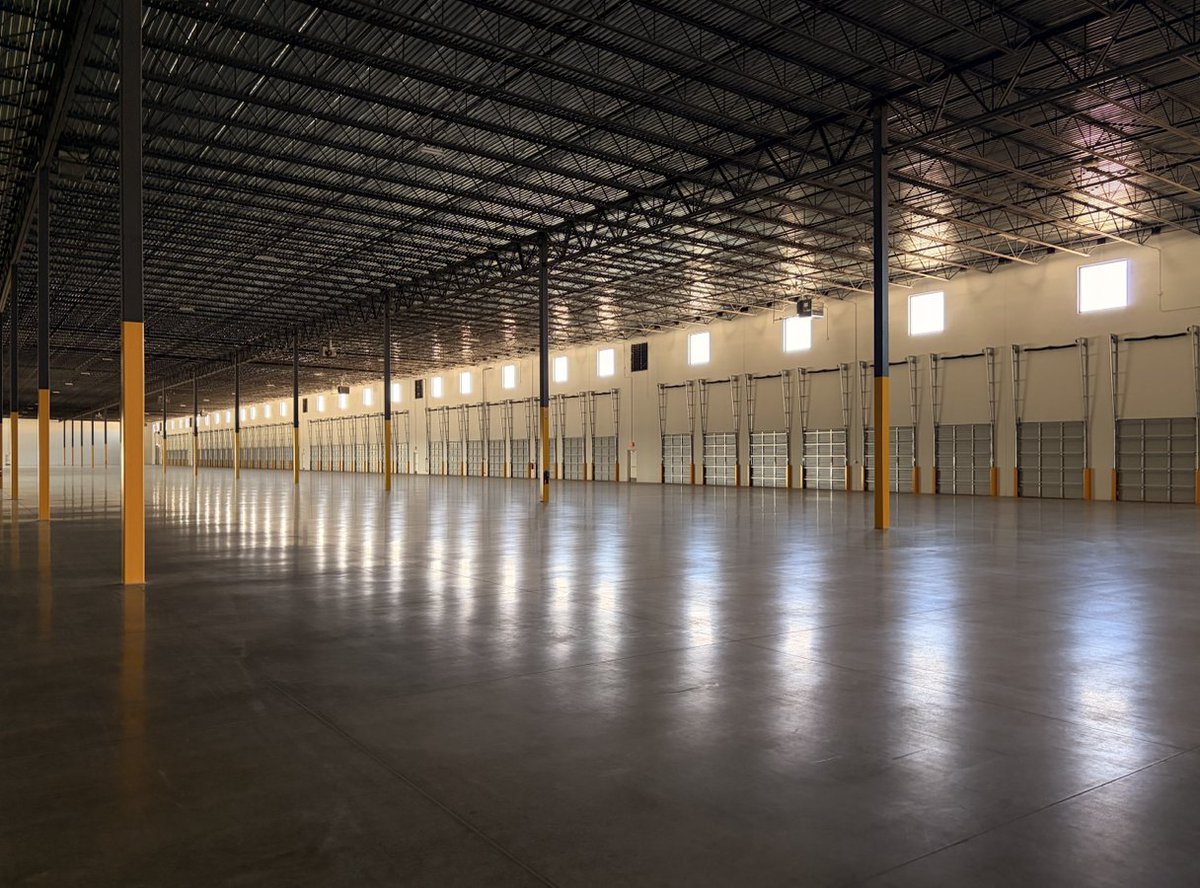
@ShanuMathew93 A new nuclear industry is being nurtured. Seeds were planted about 25 years ago. It takes time to build a strong root system. Growth is visible and getting stronger.
Fission facilities can be built with speed, cost effectiveness AND safety.
Nucleation Capital is proud to be part of Team @AaloAtomics, one of the entities that is demonstrating the weaknesses of old mantras used to condemn nuclear energy.
"You can't build nuclear quickly"
Built our first 10 MW-scale reactor and facility from bare dirt in 5 months.
"You can't build nuclear affordably"
Only spent $70M in our company history. Includes our real reactor & facility, fuel, prototypes, factory & equipment, payroll, regulatory costs, etc.
"You can't build small nuclear at scale"
🔜 About to build out our 1,000,000 sqft factory space.
More to come.
@Nichola05431379@MalcolmRaw99915 True enough. But do you know WHY the construction started before the design was complete?
It’s not uncommon for the FOAK to be started while the detailed design is still being finalized.
Vogtle 3 & 4 famously increased bills for Georgia Power customers.
It's a fact that has been repeated ad nauseam.
It's one that deserves quantification.
For the median household, the increase attributable to the Vogtle expansion project is roughly 50 cents per day.
It came it two tranches approved in rate cases submitted to the Georgia Public Service Commission.
The first was $5.50/month after Unit 3 was placed into service.
The second was $9.00/month after Unit 4 was placed into service.
Total - $14.50/month or a little less than 50 cents per day.
@mrfriebe Customers will consume electricity in perpetuity. The capital cost of Vogtle will be paid off in ~30 years, leaving another 70 years of low cost electricity production before the plant ages out.
Sorry, but promised future subsidies aren’t the same as generous CURRENT subsidies that have been in place for decades.
Nuclear was beaten down, partly by government actions.
Solar and wind started off as being very expensive 30 yrs ago, but many tens of billions and several market mandates later, high volume production has achieved its predictable effects.
@empathyenergy@EVCurveFuturist Sure they can adapt. But forcing them to curtail their output to let other sources make sales hurts their economic performance.
Batteries would help.
@shai_machnes@Matthuber78 If companies are going bankrupt and product prices are falling, why would anyone invest?
If no one invests, how will production be sustained? If sustaining production is difficult, how hard will it be to grow production!
@EVCurveFuturist No doubt. But what is the benefit of spending $8 B/yr for clean energy sources so that you can reduce output from existing clean sources?
With very low marginal costs, fewer MWh/ from France’s nuclear fleet just makes the remaining MWh more expensive to produce.
Do you foresee any space issues that would limit the amount of storage that can be added to the commercial facilities that have rooftop solar?
For busy facilities, interior space is hard to find.
Many jurisdictions have setback rules governed by fire safety codes and zoning regulations. This limits the ability to use open air placement.
A brief foray into the plastics business after a few years of nuclear advocacy solidified a valuable lesson - Environmentalists are often fronts for a variety of interests that oppose certain technologies.
For often denigrated plastics, competitors include paper, steel, lumber and aluminum interests.
They often use Environmentalists to carry their water to hamstring a potent competitor that successfully captured valuable markets in containers, autos, building materials and toys.
This strategy successfully rests on the “warm and fuzzy” reputation of seemingly altruistic Environmentalists. It would be far less effective if people realized that much of what they have been taught comes from financially motivated PR experts who have carefully crafted negative messages to reduce competition.