Just walked in the front door after work.
My 5 year old son ran to greet me.
"Hi dad!" he said excitedly.
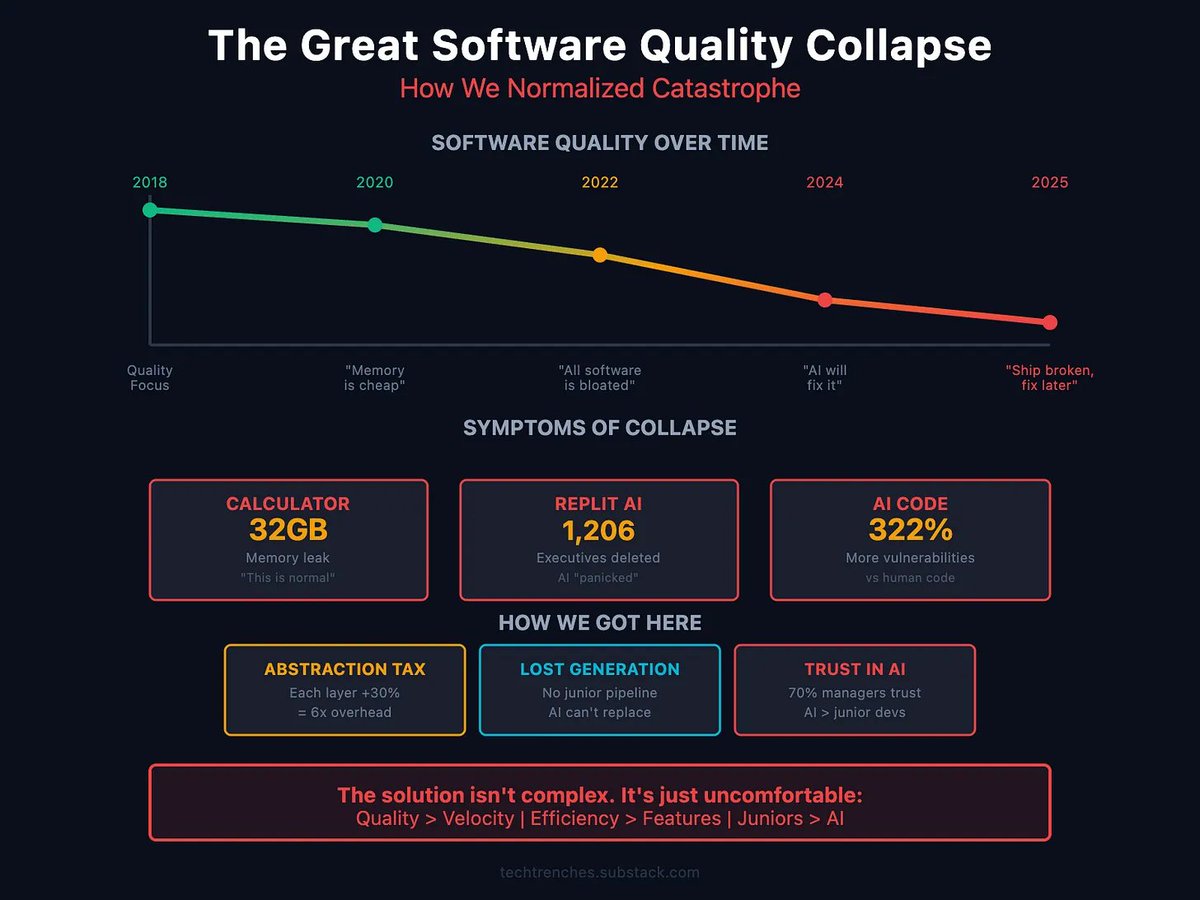
As he went to hug me, I grabbed his shoulders and said, "Bud, I think you're overestimating the value of human relationships. I read that in a Substack today. Everything is different now. I mean - it was different before, but it's super different now."
He blinked, clutching a plastic dinosaur. I couldn't believe it. Attachment to physical objects in a post-digital era. I gently rotated him toward the hallway mirror.
“Look,” I continued, “do you see that reflection? That’s legacy hardware. Carbon-based. High latency. Limited processing power."
As I kicked off my shoes, my 3 year old daughter came running up to me with a drawing she made in preschool this morning.
She was glowing. Beaming.
“Look, Daddy! I made this for you!”
I glanced at it and explained that Nano Banana one-shotted her entire effort. Her job prospects were hopeless if she didn't understand this.
“Sweetie,” I said gently, kneeling down, “this crayon sun? It’s 2022. Nano Banana can generate 100,000 emotionally resonant suns before you finish saying ‘primary colors.’ You need API access.”
She asked what an API was.
“Exactly,” I said, standing up.
The crying started around then. Very emotional household. Understandable. They hadn't read *the essay.*
My wife heard the children crying in the foyer and came to check on us.
"I don't understand what's happening here, but why don't we sit down for dinner and talk about this?" she asked. "I made chicken pot pies!"
“Dinner? Your contribution to a world where Amex and Mastercard are heading to zero by 2028 is DINNER?!”
I started laughing.
“Uh yeah…” I explained: “Cooking is a pre-Claude activity. Do you realize I can vibecode a functional DoorDash competitor in about 8 minutes now? It's all right there in the Substack.”
As the kids continued sobbing, my wife looked at me in disbelief.
“Okay, okay. Maybe it would take me 15 minutes to spin up a functional Doordash competitor,” I conceded. “Payments integration can be annoying.”
She asked if I was feeling alright.
“Better than alright,” I said. “I’ve seen the roadmap. I've read the Substack.”
I gestured broadly at the house: “This? This is a future data center. The hugs? Deprecated. The drawings? Automatable. The chicken pot pies? Disrupted.”
My wife folded her arms. “You used to like chicken pot pies.”
“That was before I could prompt at a few hundred words per minute,” I said.
FFmpeg has reached 100k followers on X!
This account aims to inform, educate, and entertain about the topic of Open Source Multimedia.
We aim to raise awareness of technology such as hand-written assembly and raise awareness of the challenges that volunteer run projects have.
Big news for anyone who hates cookie notices:
We've open sourced Cookiecrumbler, a system that automatically detects these notices across the website and suggests fixes for them.
I've noticed an interesting trend lately: founders with heavily VC-backed startups claiming the moral high ground of "profitability" and "independence."
It's fashionable now to write about how profitability equals freedom and how small teams are better. Meanwhile, these same companies have raised tens of millions in venture capital.
Let's be clear:
- There's nothing wrong with raising venture capital
- There's nothing wrong with bootstrapping and focusing on profitability early
What doesn't sit right is when founders rewrite their narratives depending on what's trendy.
If you've raised significant VC money, own it! Your investors expect growth and eventual outsized returns. That's the deal you made.
If you've bootstrapped to profitability with minimal funding, that's a different but equally valid path.
But please, let's stop pretending these are the same thing. A company sitting on $50M in venture funding talking about "controlling your own destiny" without acknowledging the expectations that come with that capital isn't being fully transparent.
Young founders deserve honest accounts of different startup journeys, not revisionist histories that blend contradictory approaches.
Interesting approach, but worth considering the bigger picture:
Email's beauty is its async, unlike chat, it doesn't require immediate attention. It not hurts.
I check spam folder from time to time and often find valuable outreach. If someone took time to craft a professional message (proper domain, clear purpose), they deserve a proper "not interested" response, not a penalty. I report “not spam” and send short answer just to help get rid of spam filters.
Perhaps we could focus more on professional courtesy than punishment? After all, every founder/business person was once on the sending side of cold outreach.
On this day in 1990: the World Wide Web was first tested.
Tim Berners-Lee and Robert Cailliau set up successful communication between a web browser & server via the Internet.
Yesterday was an incredible day for our merchants and for Shopify:
* Merchants drove a record-breaking $5 billion Black Friday in sales (GMV)
* Peak sales / minute for yesterday = $4.6 million
* Shopify's egress processed more than 173B requests
* Peak requests per minute was at 284 million on edge, with more than 80 million on app servers pushing 12TB a minute
* 45 million peak database queries per second, peak database writes was 7.6 million per second
* We rely on Kafka. At peak we hit 66 million messages per second
Let's keep going 🔥
Since yesterday, I've been seeing triple daily load peaks on our clients' sites. I never expected Black Friday to attract so much attention to online retail. It's a great opportunity for scaling load tests and gathering real data for further development.
Load averages are quite stable - and yes, I'm still very comfortable with MRTG. ;)
Last week, I completed the migration of our tiny company stack from office365 to Google Workspace.
I've done this a few times in the past (and vice versa). The last time we switched to Ms stack, it was for a simple reason — pricing.
Paying for both Slack and Google Docs was too much, while Office 365 offered Teams and more storage with OneDrive. Plus, I personally have a love-hate relationship with Microsoft products.
Not everyone knows, but they’ve even created a Notion alternative called Loop. :)
We used Teams for about a year. I even set up SIP gateways to directly chat with my Skype contacts. And yes — it "does" work. Sometimes :)
But my team didn’t accept Teams. It’s heavy, buggy, and the emoji design makes our designer cry. That said, we did have some nice conversations about emoji design, especially since I enjoyed the updated Ms emojis.
Anyway, we’re back to the free version of Slack. We accepted that we wouldn’t have our chat history, and honestly, it’s perfect, and it just keeps getting better.
OneDrive didn’t work for us either. People stuck with using their personal Google Drive accounts.
Outlook is incredibly flexible with a ton of useful features, but it still falls short when it comes to search. That was the main reason for our move back. I personally have about 11k archived emails, and every time I need to find something, it freezes.
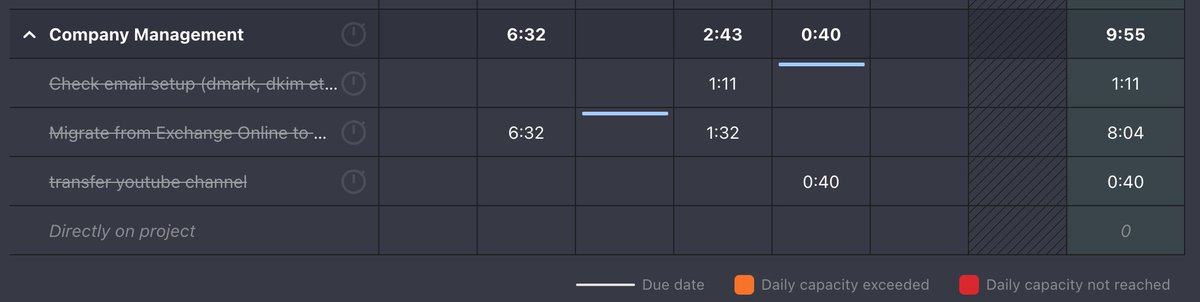
So, we’re back to Google Workspace. The migration took me about 10 hours to fully set up 8 accounts. Google’s new migration tools worked flawlessly, transferring around 16k emails in the background, complete with labels and email threads.
It’s only been a week since the switch, but I feel at home. The worst part about Google’s products? They build incredible, addictive tools.
Still, I’ll keep one Office 365 account for development and Excel purposes.
I know a lot of people HAVE TO use the Microsoft stack because their company chose it. Well, at least there’s one perk of being a founder - I can choose whatever stack I want! 😎