Amazing bravery and presence of mind!
A woman in Odisha's was bitten by a venomous snake. Instead of panicking, she caught the snake, locked it in a container, and took it to the hospital so doctors could identify the species & provide right treatment!
“शंकराचार्य जी को गार्ड ऑफ ऑनर: कांग्रेस ने किया, बीजेपी सिर्फ़ राजनीति करती है!”🚨
केरल में कांग्रेस सरकार ने जगद्गुरु शृंगेरी शंकराचार्य जी को भव्य राजकीय सम्मान दिया पुलिस बैंड, गार्ड ऑफ ऑनर और पूरा प्रशासनिक स्वागत!
@INCKerala
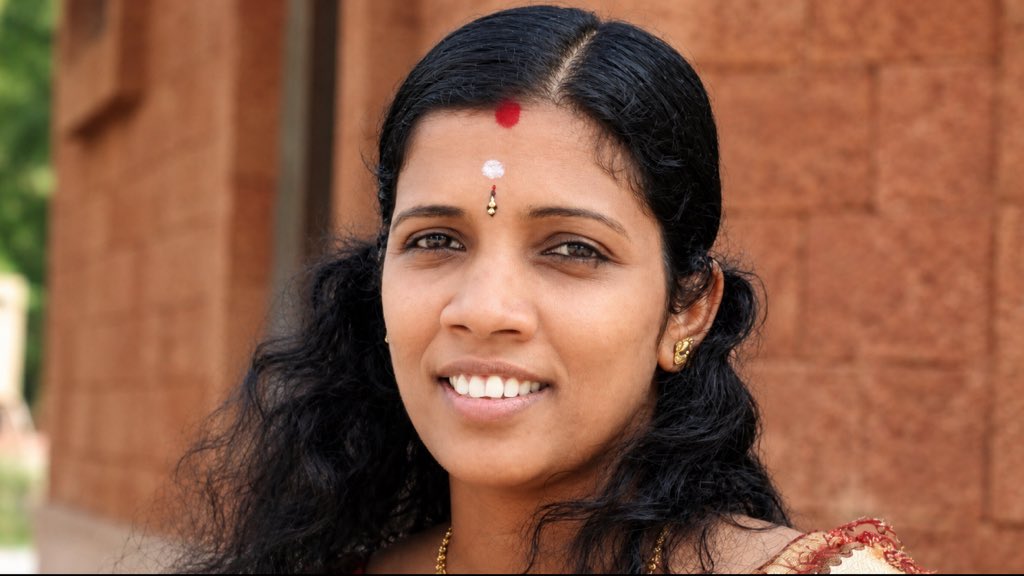
Her name was Lini Puthussery.
She was 31 years old. A nurse at the Perambra Taluk Hospital in Kozhikode Kerala. She had been working there for six years.
She had two sons. Ritul was five years old. Sidharth was two years old.
In May 2018 the Nipah virus arrived in Kerala. Two brothers and a relative were brought to the hospital with symptoms nobody had seen before.
Lini was on night duty when they arrived. She cared for them through the night.
They died soon after. Confirmed Nipah positive.
By Friday Lini herself had fallen ill.
She was shifted to the ICU at Kozhikode Medical College Hospital.
When she learned she had contracted the Nipah virus she asked the hospital not to allow her two sisters to visit. She did not want them exposed.
From the ICU she wrote a note to her husband Sajeesh.
“Sajeesh I am almost on my way. I don’t think I will be able to see you. Sorry. Please look after our little ones and take them to the Gulf. They should not be alone like our father. Lots of love.”
She died on May 21, 2018.
Her body was cremated quickly to prevent the spread of infection. Her family could not say a proper goodbye.
She did not hesitate when the patients arrived.
She did not ask who would care for her sons if she fell ill.
She showed up for her shift and did her job.
Today is International Nurses Day.
Her name was Lini Puthussery. She deserves to be remembered.
I hope the people of Bengal have awakened the cosmic spirit of Mahishasura Mardini to lead the state’s great and dharmic transformation. 🙏
#bengaleletion2026#bengalassemblypolls
En Rumanía, los pasajeros pueden pagar un ticket de autobús haciendo 20 sentadillas.
Un dispositivo cuenta las sentadillas y luego emite un ticket válido para un viaje en la red de transportes.
¿Qué opinas de esta idea?
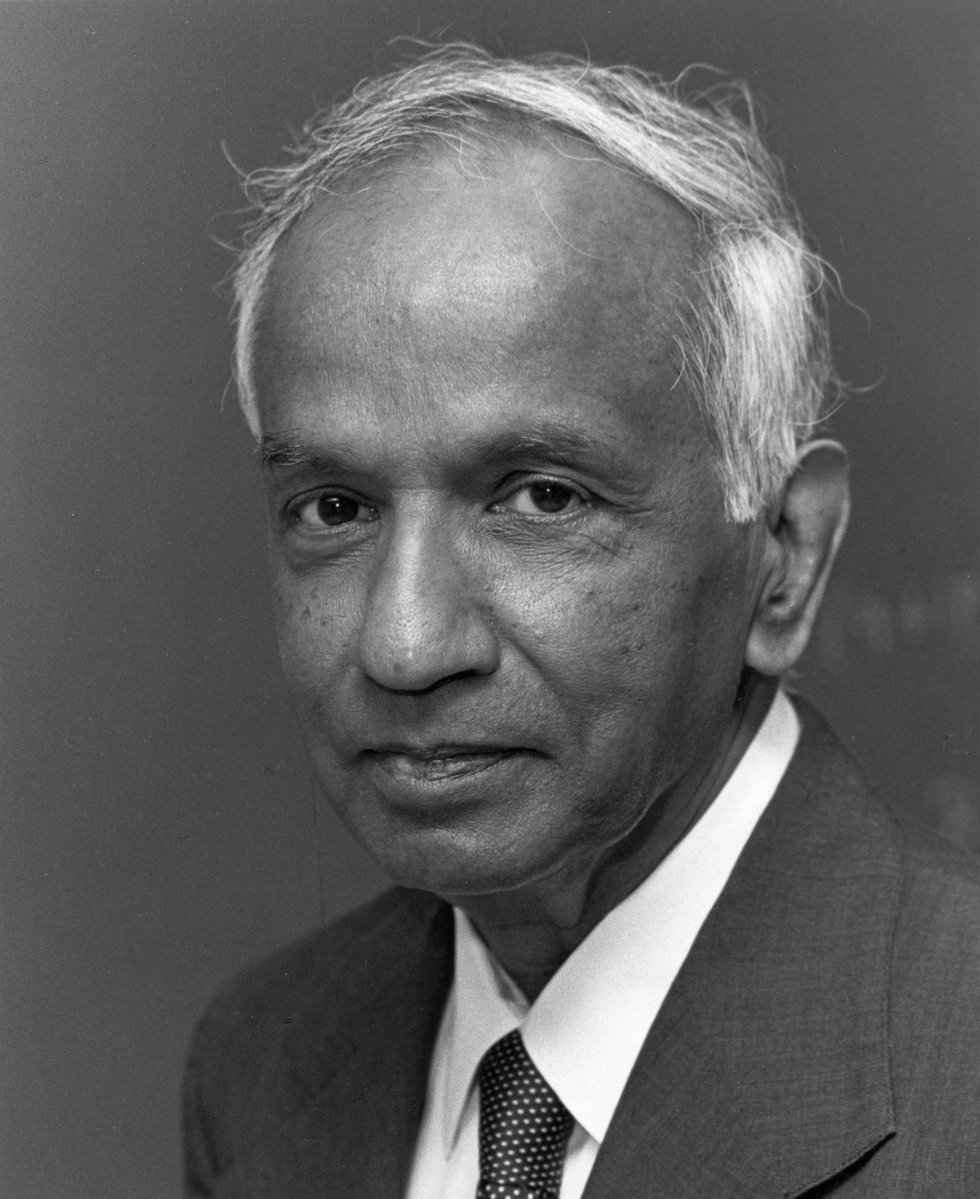
His name was Subrahmanyan Chandrasekhar.
In 1930, he was 19 years old. A boy from Madras is boarding a ship to England on a scholarship to Cambridge.
During that sea voyage, he opened his notebook and started calculating.
By the time the ship docked in Southampton, he had worked out something no one in the history of science had understood before.
Stars do not simply fade and die. Stars above a certain mass collapse into themselves with such force that nothing can stop them. Not light. Not time. Not physics as anyone understood it.
What he had discovered on that ship would eventually be called black holes.
He arrived at Cambridge. He spent four years refining his calculations. He showed them to Arthur Eddington. The most famous astronomer in the world at that time. The man who had proven Einstein right.
Eddington watched his progress. Encouraged him. Asked him to present his findings at the Royal Astronomical Society in January 1935.
Then Eddington gave his own presentation immediately after.
He publicly ridiculed Chandrasekhar in front of the entire scientific establishment. He said the theory had no physical meaning. He called it absurd. He used his enormous reputation to crush a 24-year-old Indian student in front of everyone who mattered.
Chandrasekhar left that conference devastated.
He appealed to the president of the International Astronomical Union. He was told not to respond to Eddington publicly.
He left England.
He went to America. To the University of Chicago. He drove 150 miles every week to teach a class of just two students. Those two students were Tsung-Dao Lee and Chen-Ning Yang.
Both of them won the Nobel Prize before he did.
He spent 50 years working quietly. He never stopped.
In 1983, the Nobel Committee called.
53 years after he worked out the existence of black holes on a ship as a teenager, the Nobel Prize in Physics was his.
NASA later named its most powerful X-ray telescope after him.
The Chandra X-Ray Observatory.
The universe he described is real. Eddington was wrong. The boy on the boat was right.
Most Indians have never heard his name.
They should say it every day.
Follow for real stories about Indians who changed the world.
When Andres Freund, Linux kernel contributor & Microsoft engineer was debugging slow SSH logins on his Debian machine in March 2024, he noticed something weird:
liblzma (part of XZ Utils) was using way too much CPU power, so he kept digging, and what he uncovered was a multi-year supply-chain attack!
An attacker using the name “Jia Tan” had spent two years slowly infiltrating the tiny XZ Utils project, a compression library used by virtually every major Linux distribution.
The backdoor wasn’t in the source code. It was hidden deep inside the build scripts. It would have given the attacker remote root access on millions of servers the moment a specially crafted SSH key was used.
Freund caught it days before it would have shipped in Debian, Fedora, Ubuntu and more.
One man, one anomaly, one routine debug session saved the internet from a potential catastrophe.
Respect!
He once dreamed with nothing but grit. Today, Coach Kuldeep Kumar Vedwan is shaping champions.
He trained Payal Nag—the world’s first limbless archer—who won gold in Bangkok, defeating her idol Sheetal Devi. From a farmer’s son to the mentor behind India’s para-archery stars, his journey is built on belief, not resources.
With handmade bows and relentless hope, he’s proving something powerful—sometimes, heroes simply help others fly.🏹🇮🇳
#Inspiration #RealLifeHero #ParaArchery #SportsForAll #PayalNag
[Real Life Dronacharya, Coach Kuldeep Kumar Vedwan, Payal Nag, the world’s first limbless archer, World Archery Para Series in Bangkok, Payal Naga Wins Gold]
🚨 30 Seconds. One Decision. A Life Saved.
When a CISF jawan suddenly collapsed on a busy road in Patna, it could have been just another tragic headline.
But it wasn’t.
Because a Bihar traffic constable didn’t freeze. He acted. :heart:
Constable Anjani Kumar Gaurav immediately recognised the signs of a possible heart attack and began CPR, right there on the road.
Within 30 seconds, the jawan started breathing again. A life, pulled back from the brink.
No ambulance. No hospital.
Just training, presence of mind, and courage.
💡Here’s the real question:
If CPR can save a life in 30 seconds, why isn’t it a basic life skill we all learn in school?
Should CPR training be mandatory in schools?
Tell us what you think.
Because the next life saved… could depend on it.
Credits : @bihar_police
#CPRSavesLives #IndiaNews #RealHeroes
[CPR Awareness, Real Hero, Public Safety, Life Skills]
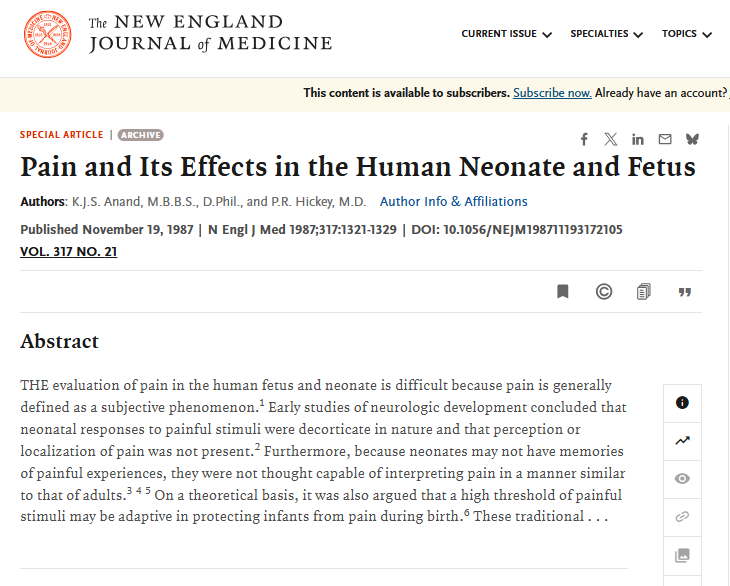
Infant surgeries were routinely performed with minimal or no anesthesia because anesthetists wrongly believed infants felt no pain due to their immature nervous systems, dismissing their responses as mere reflexes. This barbaric practice persisted until 1987, when Dr. Kanwaljeet J.S. Anand and Dr. P.R. Hickey published their groundbreaking research in the NEJM, demolishing those outdated myths.
An earlier 1985 review by Dr. K.J.S. Anand had exposed the horror that about 76% of reported preterm neonatal surgeries relied solely on muscle relaxants, leaving helpless infants fully awake, aware, and paralyzed during agonizing procedures.
The 1987 article, "Pain and Its Effects in the Human Neonate and Fetus," published in the New England Journal of Medicine, aggressively synthesized damning evidence on pain perception in fetuses and newborns. This explosive work revolutionized medical practices, igniting global reforms in pediatric anesthesia by demanding proper pain relief for infant surgeries and it's been cited over 2,700 times as a testament to its impact.