software factories feel like a temporary problem. the models will learn to build them for you
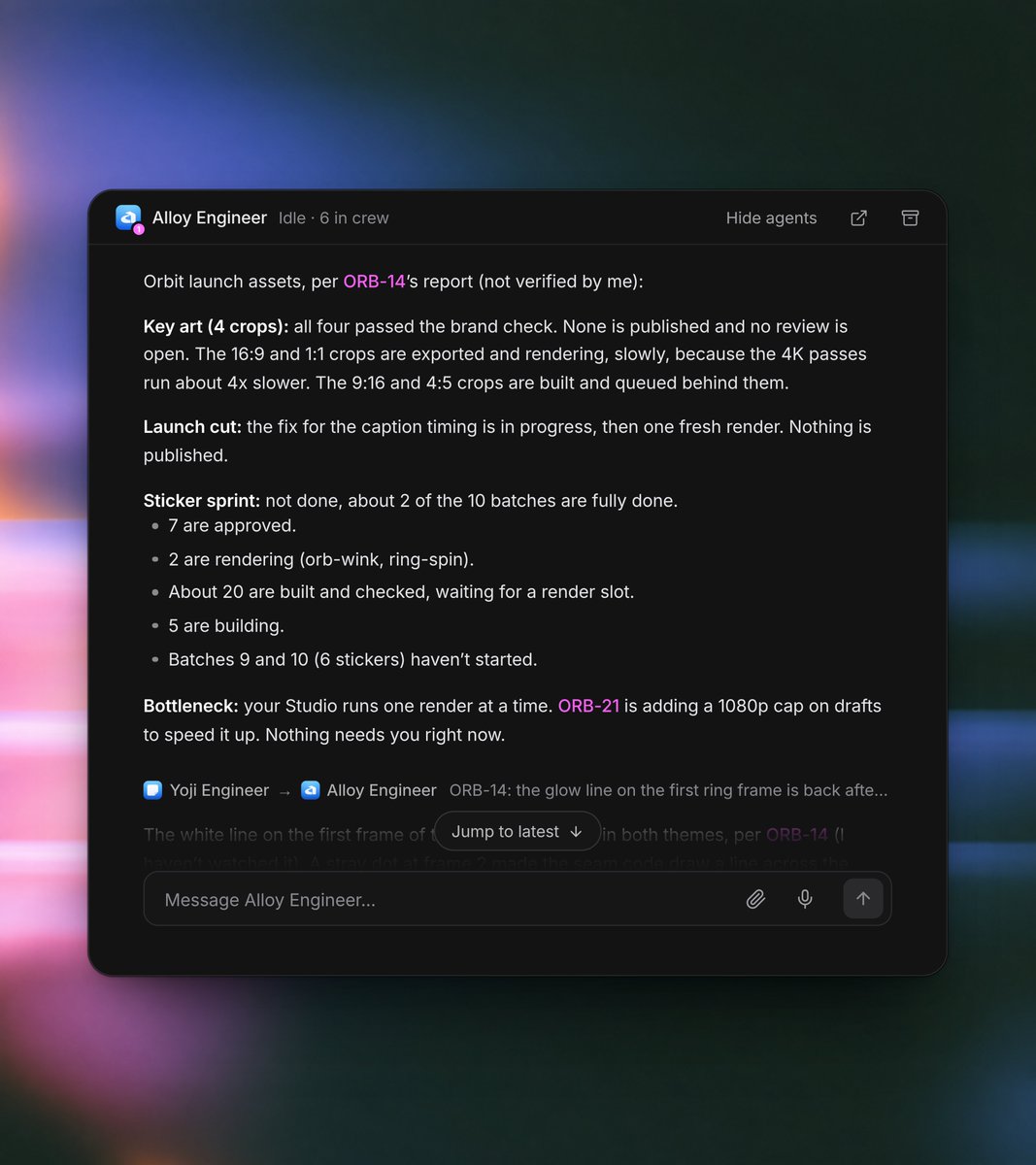
the more interesting question to me is how to build a workspace where agents can collaborate with you
software factories feel like a temporary problem. the models will learn to build them for you
the more interesting question to me is how to build a workspace where agents can collaborate with you
Introducing Claude Meetings: add Claude to your team’s video call and it builds docs, whiteboards, and other artifacts with you while you’re still talking.
Starting to roll out in beta on Team and Enterprise plans.
Which Claude model should you build with?
Our new guide breaks down when to use Fable 5.2, Opus 5.5, Sonnet or Haiku. It also covers when to adjust effort instead of switching models, and how to save cost by putting subagents on smaller models.
https://t.co/1VmXqhkZB0
Just wanted to defend the term "Software Factory" for a second.
First, the caveats:
It's bullshit. It sounds fancier than it really is.
It's a bandwagon. People are using it to get you and their VC's hyped.
But it's also referring to a real change.
Earlier this year, most SOTA teams were using agents to work on the product. Shipping features, fixing bugs.
But now, they're building automations to help agents work on the product for them. They've moved up a layer.
What do we call the thing they're building? Loops? Workflows? Some other generic label?
"Software Factory" is as good a term as any other.
- "We're not working on the product, we're working on the factory that builds the product."
- "We're not product engineers, we're factory engineers."
I like it. I'll continue using it.
I've changed how I work over the last few weeks.
I now have one lead agent for each area of focus, running all the time, and a chief of staff agent that oversees them. Each lead manages its own sub-agents that write code, test it, chase reviews, and coordinate with team members.
Everything I need to decide or review comes into one prioritized queue, a simple local web app. Each product review includes screenshots and a video demo of the feature. I clear the queue in batches, mostly by voice and keyboard shortcuts. The leads also bring back ideas I hadn't considered.
Working from one queue, instead of switching between dozens of chats, has cut a lot of mental overhead. The system keeps learning my preferences and distilling my judgment into a "Brian brain," so its recommendations and first drafts get better before they reach me. The goal is fewer corrections per change.
Every change still goes through the same human review and security checks. It is eliminating tasks, not human judgment.
What an exciting time to push the frontier of productivity, especially as we build the economy for agents (agentic finance). We should all keep pushing in this direction.
I actually agree with a lot of what @poteto is saying except for the central point. IMO most people don't have actual software factory systems. They've just made it much easier for people to ship with AI, so they assume the category doesn't exist. That's more a lack of vision than anything else.
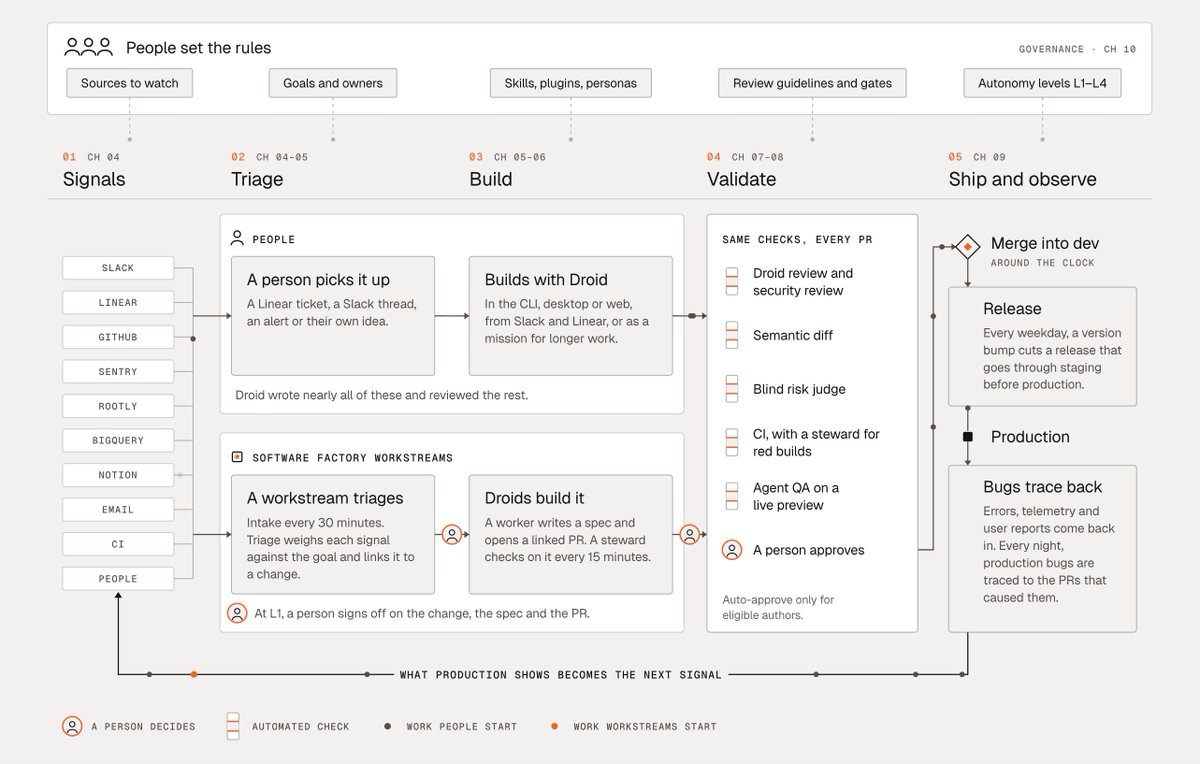
Our conceptualization of a software factory is a system where every piece of work goes through the same stages to standardize the process not the work output.
For us, this standardized process begins with what we call a signal. This is anything that tells you how your software should evolve, including the first signal that your software should exist at all. A Slack thread, a Linear ticket, a Sentry alert, a failing CI job, a tweet, someone's idea.
There's two ways in for a signal. A person picks it up and builds it with Droid, or a workstream picks it up on its own, triages it against a goal someone set, and has droids write the spec and open the PR. Most work still starts with a person, but a growing share comes from workstreams.
Then every change goes through the same checks no matter who or what wrote it. Droid review, security review, a risk judge that can't see who wrote it, CI, and an agent that QAs it on a live preview. Your validation has to be really high quality whether a human or AI built it. The goal of validation is to hillclimb your "regret-free merge rate" until you can automatically merge most changes (or fix them until they can be automerged).
Then it ships, and when something breaks in production we trace it back to the PR that caused it. That becomes another signal. It's also how we know if the checks actually work. If the risk judge approved something that later broke, we find out.
It's the same way we let self-driving cars on the road. Nobody just flipped a switch. We agreed that once they crashed less than human drivers, they could drive. Do the same thing with code. Once AI-written changes break things less often than human ones, and you can actually measure that, you let them merge.
That doesn't mean you turn on automerge tomorrow. Most of our changes still get a human stamp. But once you have automerge, workstreams and a risk score together, you basically have software that improves itself from the signals you choose to track.
The human element becomes obvious if you have a system like this. People remove themselves from the actual process line and begin to define the rules by which the process operates. What to watch, goals and owners, skills, review guidelines, and how much autonomy each workstream gets. They're the regulators.
I think the 1920s factory that a lot of people picture is the wrong idea. That was people doing the same motion on a line all day. This is closer to a Star Trek replicator. You say what you want and it gets made, because the patterns are already stored and how things get made is the same every time, and checked every time.
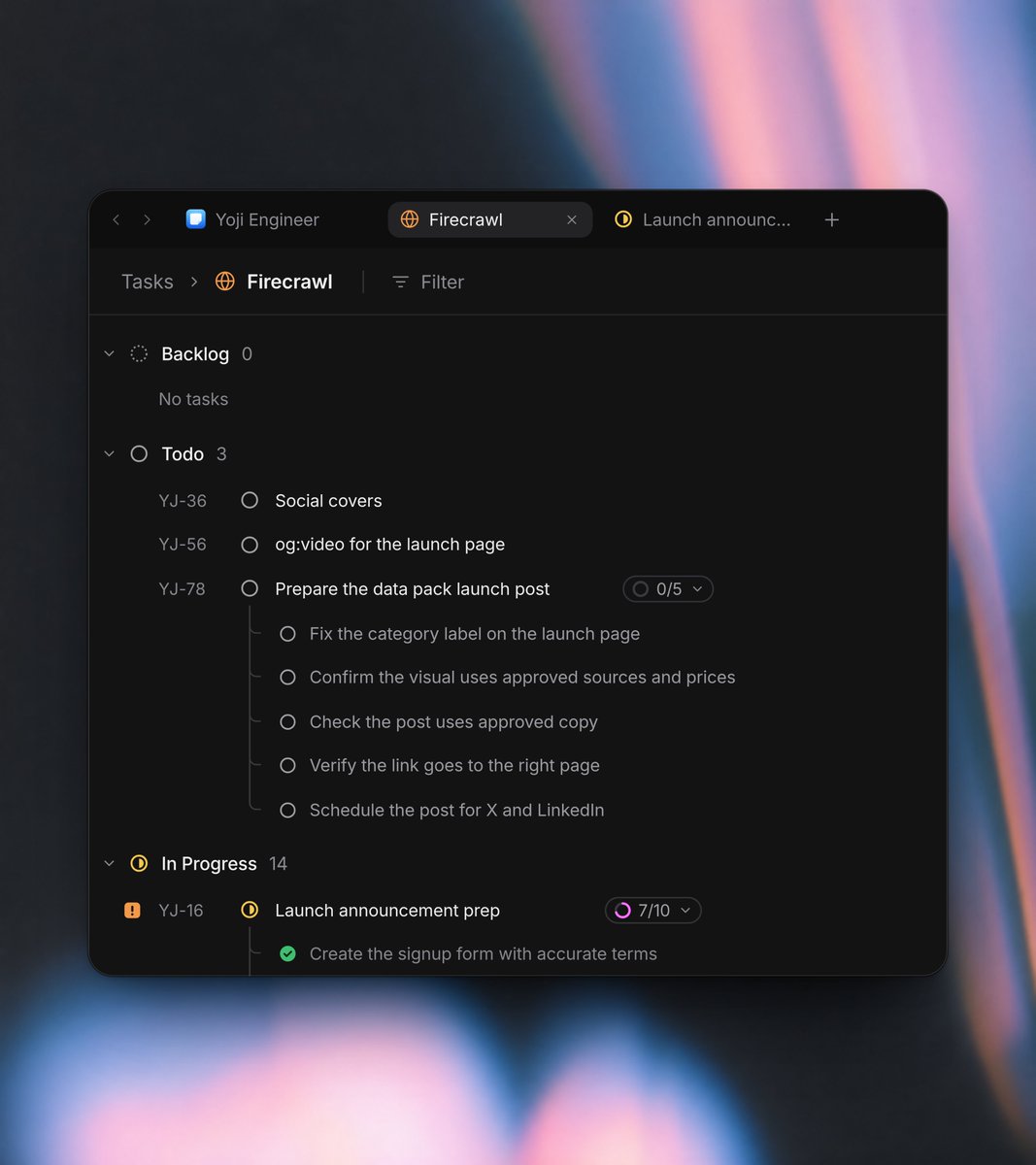
I hated context switching between agents and apps, so I made yoji
It connects everything I need to stay focused, from my design agent and tasks to conversations and my calendar 🌸
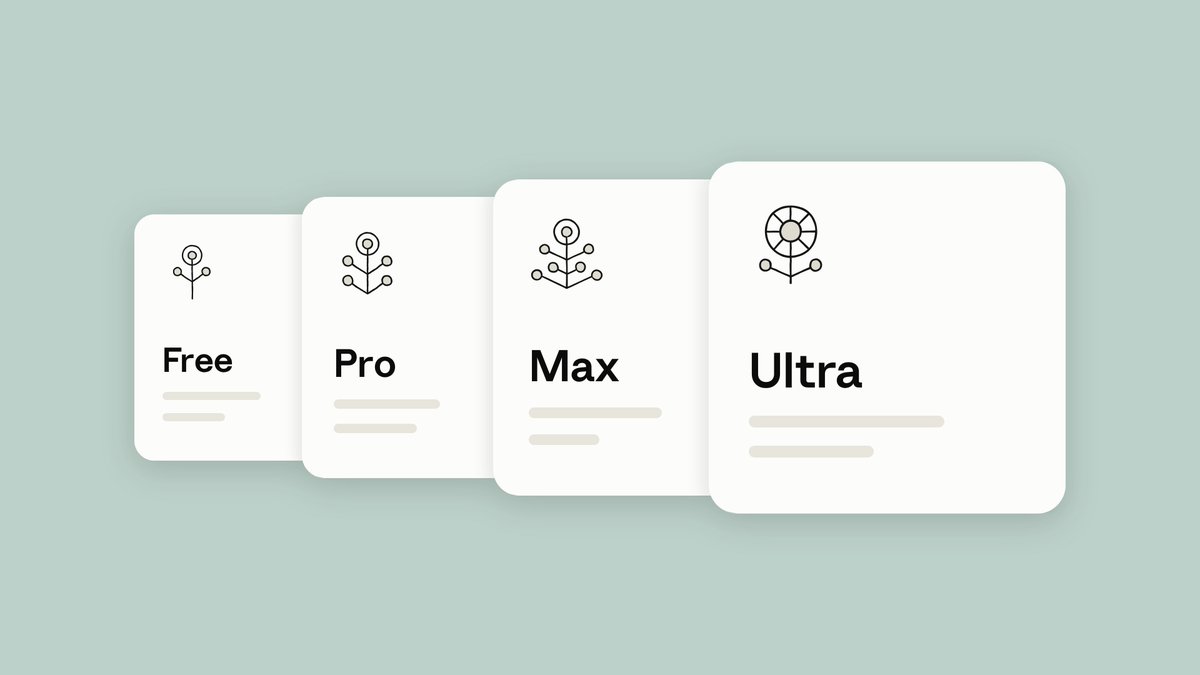
We’re renaming our Max plans:
Max 5x → Max
Max 20x → Ultra
Max is still $100/month, and Ultra is still $200. If you’re a subscriber, there’s nothing you need to do.
We’re also removing the 5-hour limit for verified Ultra accounts, starting today with most existing subscribers. Newer accounts keep a temporary limit until they’re verified, which helps us prevent fraud and abuse. You'll get an email when it's removed.
Weekly limits remain unchanged. View our plans here: https://t.co/niRpyGF5Me
*ehm ehm* BIG ANNOUNCEMENTS DAY 📣
two new things cooking in herdr labs 🐏🧪
a brand new herdr-core, and a desktop app built on it. open source.
first, the app: software that fits you. every part of it is a file your agent can change. you just ask.
Ramp is worth $60bn and 70% of its R&D team is working on products it hasn't released yet.
I sat down with @eglyman in New York to discus
Why he thinks of @tryramp as a productivity company more than fintech
The 7,000 pull requests their non-engineers wrote last quarter
The trust charter, stablecoins, and whether an AI agent would choose your business.
Full conversation 👇
00:00 Introduction
03:16 Is fintech dead? And why Ramp considers itself a productivity company
04:41 Why AI token costs are turning software into financial products
07:27 How Ramp's Inspect lets non engineers ship code using AI
11:51 Why AI is becoming the third major category of business spend
18:43 What justifies Ramp's valuation and its accelerating revenue growth
27:07 How AI is transforming employee productivity and customer support workflows
39:54 Why Ramp applied for an OCC national trust bank charter
43:15 How stablecoins enable faster cross border payments and protection against currency volatility
47:23 Will autonomous AI agents replace Ramp or choose its financial infrastructure?
51:01 The future of agentic companies and Ramp's mission to eliminate waste