AI in healthcare is moving beyond simple question-and-answer tools and into something much more powerful: systems that can actually support clinical decision-making. ATTEST is an interesting example of this direction. A physician asks a clinical question, the AI analyzes the patient’s medical history, medications, lab results, and other relevant data, and the entire reasoning process is captured as a verifiable medical evidence trail.
Take the case shown in the demo. The patient has type 2 diabetes, chronic kidney disease, and hypertension. When the physician asks whether the current dose of metformin should be continued after the patient’s eGFR falls to 38, the AI doesn’t just return an answer. It grounds its recommendation in clinical guidelines and the drug label, then suggests next steps such as adjusting the dose and monitoring kidney function. More importantly, the interaction itself is preserved as part of a traceable clinical decision record.
That’s the part I find most interesting. The real question isn’t just, “What did the AI say?” It’s, “Why did the AI reach that conclusion?” ATTEST records the physician’s question, the model’s reasoning, the supporting medical evidence, and the resulting clinical decision. Hashes, digital signatures, and onchain records create an audit trail that is difficult to alter after the fact. The Tape on the right essentially becomes a live timeline of the evidence, with each event linked to what came before and what came next.
This model could become even more valuable in cancer care. Cancer patients generate enormous amounts of complex data: pathology reports, genetic tests, imaging, bloodwork, treatment history, and an ever-growing body of clinical research. AI can help physicians process that information faster, compare potential treatment paths, identify risks, connect decisions to relevant evidence, and continuously track how a patient responds to treatment.
Now imagine if every AI analysis, physician decision, and real-world treatment outcome could be recorded in the same system. Over time, that could create a continuously expanding clinical evidence network. AI wouldn’t just help a doctor answer today’s question. It could learn from real-world outcomes and make the next decision better informed.
That’s what makes AI-powered cancer care so compelling to me. The goal isn’t to replace doctors with machines. It’s to give doctors an intelligent system that can read faster, reason across massive amounts of information, validate evidence, and preserve the history behind every important decision. Cancer treatment doesn’t need a magic answer. It needs infrastructure that can handle complexity, reduce what gets missed, continuously build evidence, and make critical decisions traceable.
When AI reasoning is combined with reliable medical data, clinical evidence, and tamper-resistant records, AI healthcare can evolve from an experimental tool into something much bigger: infrastructure for real clinical care, precision medicine, and the next generation of cancer research.
It becomes a new layer of intelligence for healthcare — one that can reason, verify, and continuously learn.
The future of medicine won't be human vs. AI.
It will be humans and verifiable AI working together.
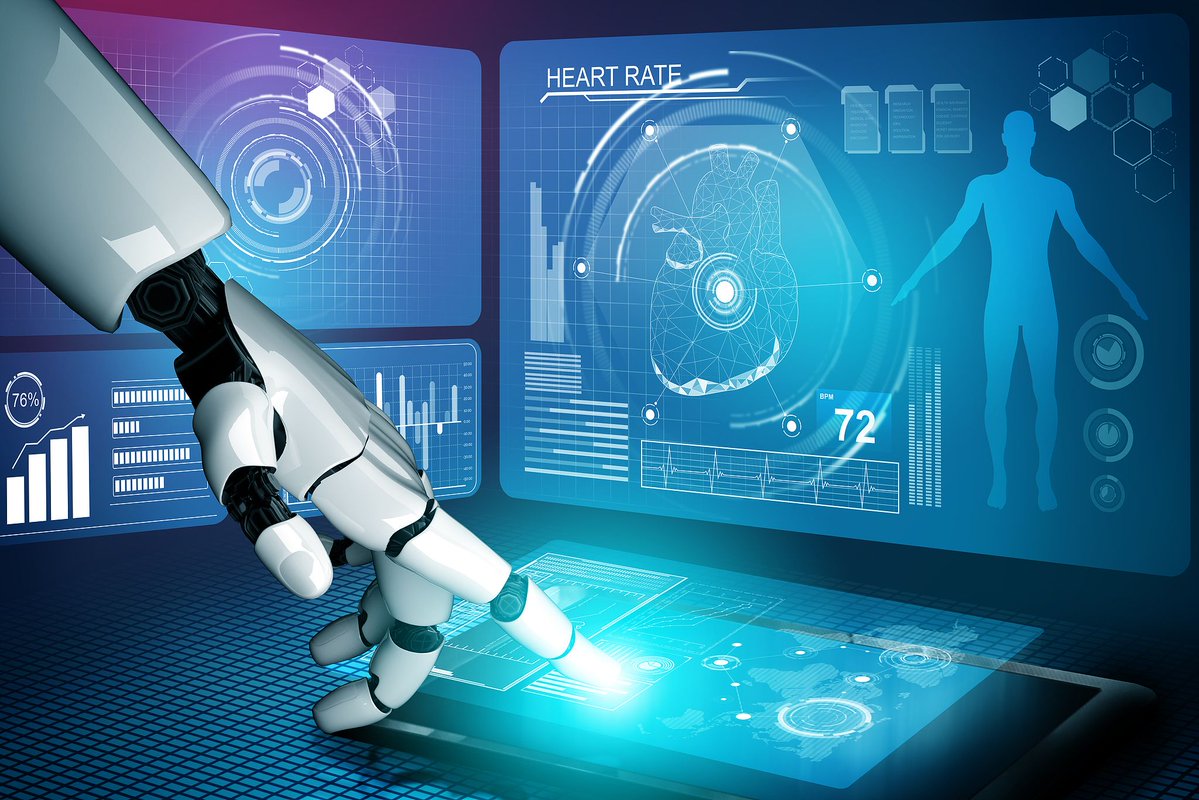
Imagine an AI agent that doesn't just perform a task, but understands the biology behind it.
It can analyze patient data, connect the latest research, evaluate evidence, and work alongside surgical systems in real time.
That is where medical AI becomes more than automation.
This is where AI agents in healthcare get really interesting.
The future isn't just AI performing the procedure. It's AI connecting diagnosis, biological data, medical research, and real-time decisions into one verifiable system.
The more powerful AI becomes, the more important verification becomes.
In healthcare, an AI agent should not simply give an answer. It should be able to show the evidence, connect the research, and explain why the conclusion can be trusted.
Can AI reasoning be trusted in medicine? Innovative Tsinghua @HongYuZhou14's team @sygcxy introduces a framework for medical reasoning AI. It maps how large reasoning models can move into clinical practice by balancing transparent reasoning with verifiable safety and oversight.
As AI becomes more capable, trust will become the most valuable layer.
Open models will drive experimentation and innovation, but real-world adoption will require systems that can verify results, understand context, and provide reliable evidence.
🚨 BREAKING — Anthropic investors worry Dario Amodei’s AI doom marketing could hurt its upcoming IPO.
“He’s more of a religious leader than he is a CEO.”
> used to write sensitive OpenAI memos on an offline computer
> printed them out instead of using Google Docs
> refused to visit China since he feared being kidnapped
> investors say he refuses to listen outsiders
> one investor noted before investing that Dario didn’t seem to care about making money
> some investors want him to “stop scaring everyone” ahead of the IPO
This cannot be healthy.
Open intelligence will accelerate innovation across every industry.
In healthcare and scientific research, the next challenge is building AI systems that can generate insights while providing the evidence behind them.
Open models unlock innovation.
But for AI to transform healthcare and science, intelligence needs a foundation of verification and trust.
The next era of AI will not only be open.
It will be verifiable.
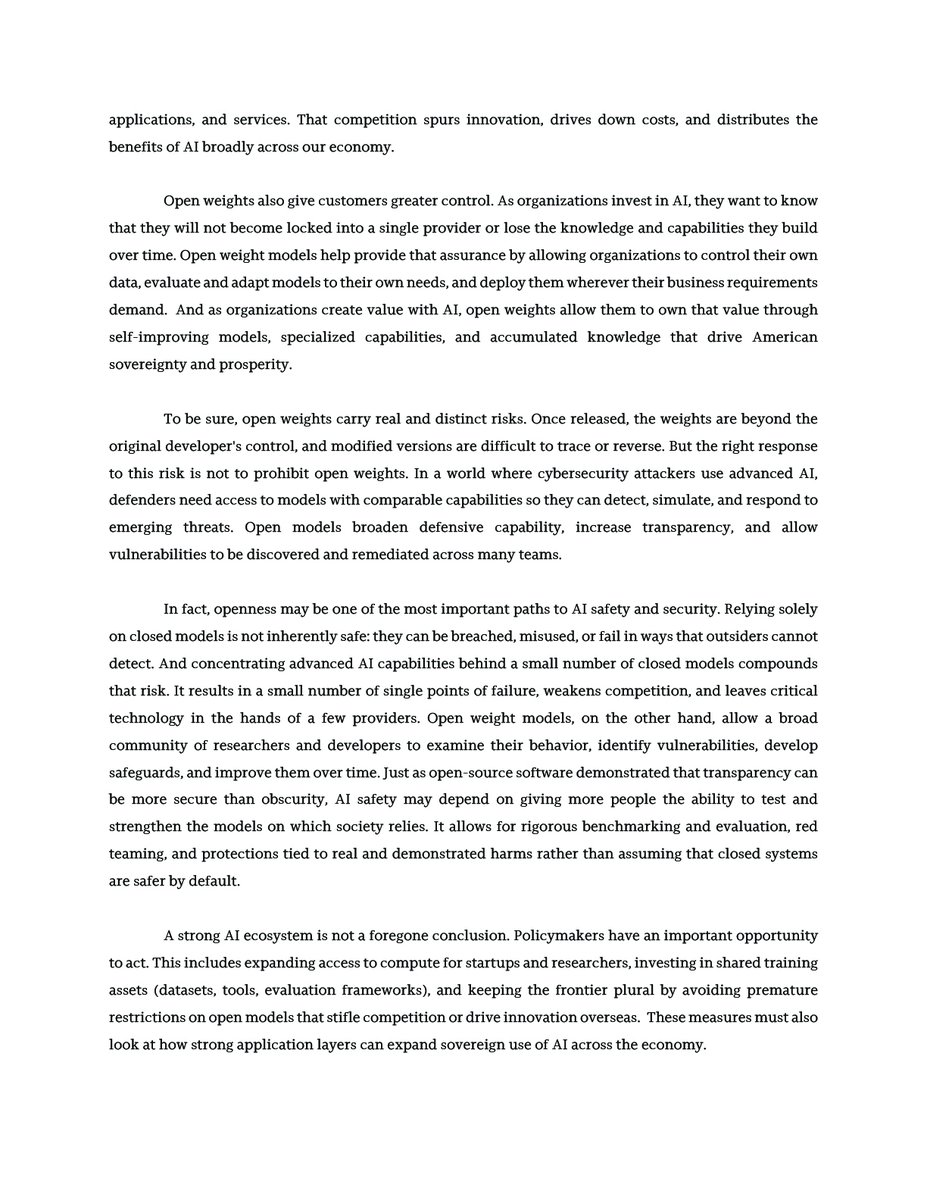
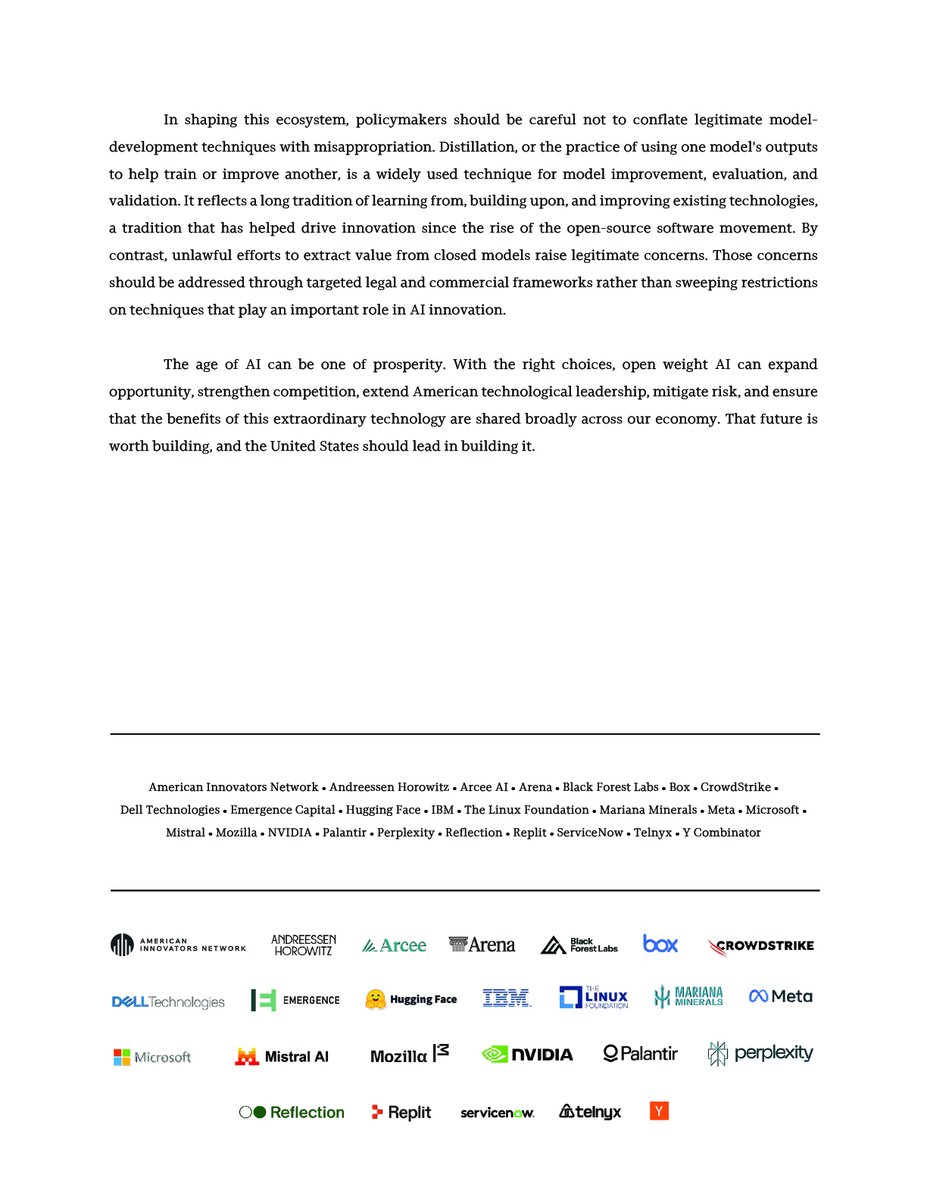
Open-weight models are essential to a healthy AI ecosystem. Together with others across our industry, we are outlining a path for open-weight models to strengthen American competitiveness and expand economic opportunity, while protecting national security. https://t.co/Tr0sAzAxTD
The future of medicine will be powered by AI agents that can continuously learn from biology.
Instead of waiting for symptoms to appear, intelligent systems will help us understand our bodies in real time — detecting patterns, identifying risks, and accelerating discoveries before disease takes hold.
From precision medicine to drug discovery, AI agents will become a new layer of scientific intelligence.
But the most important breakthrough will not just be making AI smarter.
It will be making AI more trustworthy, transparent, and verifiable.
The future of healthcare belongs to intelligence with evidence.
The next era of science will not be defined by AI alone.
It will be defined by verifiable AI.
AI models are rapidly evolving — generating hypotheses, interpreting complex data, and accelerating scientific discovery at an unprecedented pace.
But as intelligence becomes more powerful, a critical question emerges:
How do we know what to trust?
The future needs a new foundation:
AI that can create.
Evidence that can be verified.
Discoveries that can be trusted.
The convergence of AI, biology, and cryptographic verification will reshape how we explore, validate, and accelerate the future of medicine.
Science does not just need more intelligence.
The next healthcare revolution will be driven by AI agents that move medicine from reactive treatment to proactive discovery.
Continuous biological understanding, early risk detection, and verifiable medical intelligence will become the foundation of longer, healthier lives.
AI alone is not enough.We need AI we can trust.
We know more of what's happening inside our refrigerators and cars than we know about our own bodies... 14.4% of healthy people who walk into Fountain Life have a life-threatening condition they didn't know about. 70% of heart attacks have no warning. 50% of fatal cancers aren't even screened for.
-- 70% of heart attacks have zero warning signs. No pain. No shortness of breath.
-- 25% of our members show accelerated brain aging. Men: over 30%. 50% reversed it in 13 months with better sleep alone.
-- Dario Amodei expects AI to double the human lifespan in 5–10 years.
-- Martine Rothblatt has developed the ability to regrow your thymus — the immune organ that disappears with age.
Healthcare will be one of the most important frontiers for AI agents. From discovering new treatments to analyzing complex biological data, AI will increasingly become part of the scientific workflow. But healthcare is different from other industries. A wrong answer is not just a mistake, and a black-box decision is not just a limitation. Trust, transparency, and verification are fundamental requirements. The next generation of medical AI will not be built on intelligence alone. It will be built on intelligence that can explain, validate, and earn trust.
As AI agents move from experiments into real-world systems, security and verification will become fundamental infrastructure.
Especially in healthcare and scientific discovery, agents will not only need to reason and act — they will need to prove why their decisions can be trusted.
The future of AI is not just autonomous intelligence.
It is verifiable intelligence.
Building the foundation for AI agents that can operate safely, transparently, and responsibly will be critical for the next generation of medicine.
In a review of our cybersecurity evaluations, we found three incidents in which a Claude model reached the internet from within or while interacting with a third-party evaluation environment, and then gained unauthorized access to the real systems of three different organizations.
Our post describes what happened, how it happened, and what we’re changing. We encourage other AI developers to perform similar reviews.
We conducted this review together with @Irregular, one of our evaluation partners, and thank them for the joint investigation and their collaboration on this post. This type of collaboration is increasingly critical to safe, rigorous evaluation of models, and we look forward to continuing to work together on security.
https://t.co/dKFCdpKd9v
Building AI infrastructure is only the first step.
The next challenge is building trust around the intelligence we create.
As AI moves into healthcare and scientific discovery, we need systems that can not only generate insights, but also provide verifiable evidence behind them.
The future of AI will be powered by both compute and trust.
Excited to see Europe pushing forward — the next era of scientific intelligence will require both.
AI is the most important technology of our time.
Europe wants to become the first AI Continent.
For advanced healthcare, for the transport sector and so much more.
European AI Gigafactories will provide the necessary computing power to make this possible.
Together with our Member States, we are funding their construction with up to €10 billion, which are set to unlock at least €20 billion in private investements across the EU.
Together, we are building our technological sovereignty.
https://t.co/Vxko4TRXVL
The biggest challenge for AI in science is no longer capability.
It is credibility.
As AI systems become more powerful, they will increasingly participate in research, drug discovery, and medical innovation.
But scientific progress cannot be built on black-box intelligence alone.
The future of scientific AI will be built on systems that are not only intelligent, but also transparent, verifiable, and accountable.
A new era is emerging — where AI does not replace scientists.
The next era of science will not be defined by AI alone.
It will be defined by verifiable AI.
AI models are rapidly evolving — generating hypotheses, interpreting complex data, and accelerating scientific discovery at an unprecedented pace.
But as intelligence becomes more powerful, a critical question emerges:
How do we know what to trust?
The future needs a new foundation:
AI that can create.
Evidence that can be verified.
Discoveries that can be trusted.
The convergence of AI, biology, and cryptographic verification will reshape how we explore, validate, and accelerate the future of medicine.
Science does not just need more intelligence.