If I had to learn AI agents in 7 days, I would not read a single paper.
I would build from these 10 GitHub repos.
1. awesome-llm-apps
The starting point. 100+ working agent apps you can clone and run on day one. 106K+ stars.
Repo → https://t.co/oXrD5A8K6a
2. AI-Agents-for-Beginners
Microsoft's free 12-lesson course. Real code, real exercises, no theory dump.
Repo → https://t.co/7dNsDw6bTj
3. CrewAI
Build your first multi-agent crew in under 3 hours. Used by 60% of the Fortune 500.
Repo → https://t.co/0xohE065sD
4. LangGraph
The orchestration layer every production AI system runs on in 2026. The skill on every senior AI engineer job description.
Repo → https://t.co/bzVBn9uecV
5. awesome-mcp-servers
MCP is the agent-tool standard in 2026. Plug your agent into 100+ tools without writing integrations.
Repo → https://t.co/ejVOgkRJDX
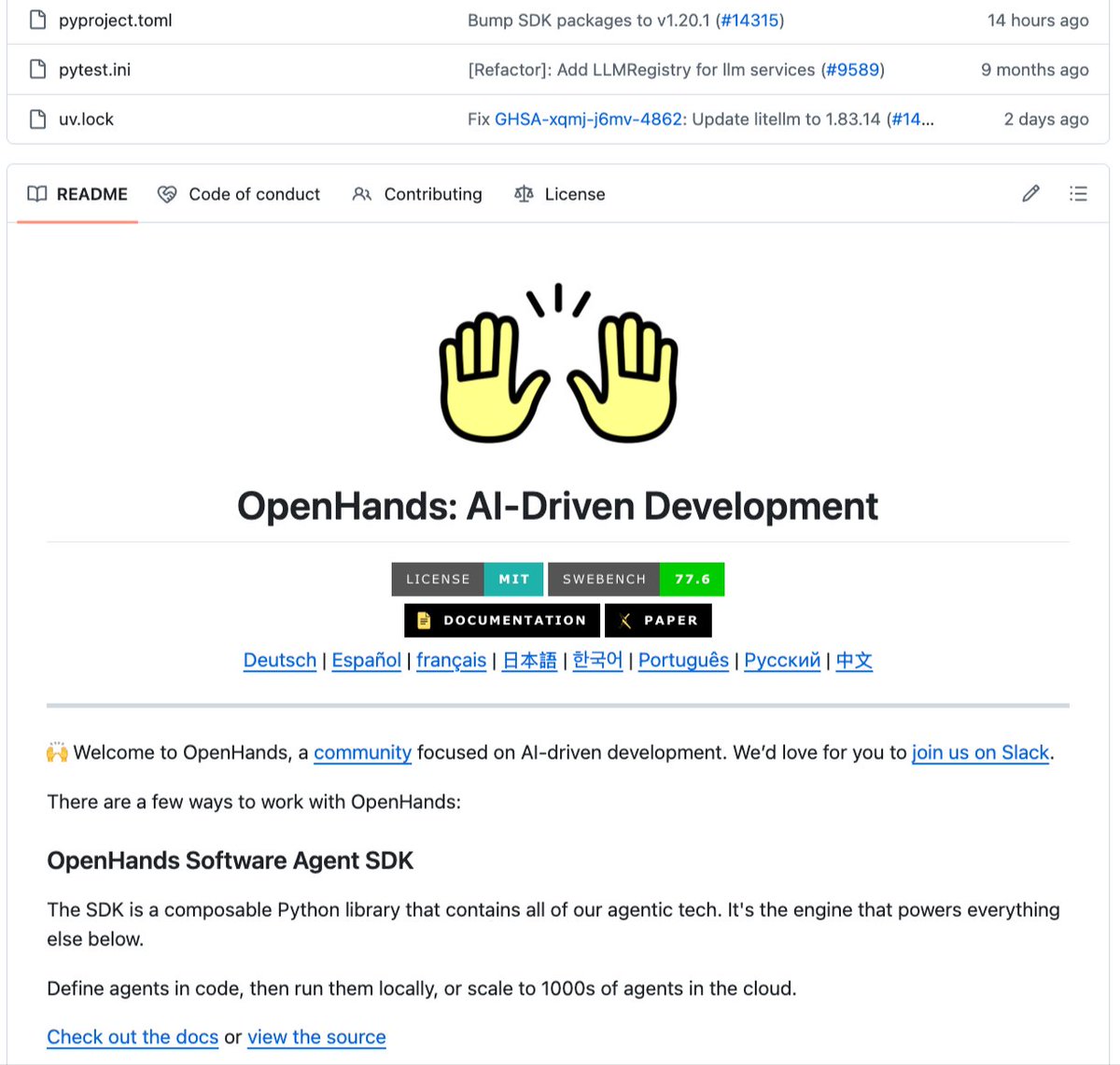
6. OpenHands
Study a real autonomous coding agent that ships pull requests on its own.
Repo → https://t.co/kqap76TDuB
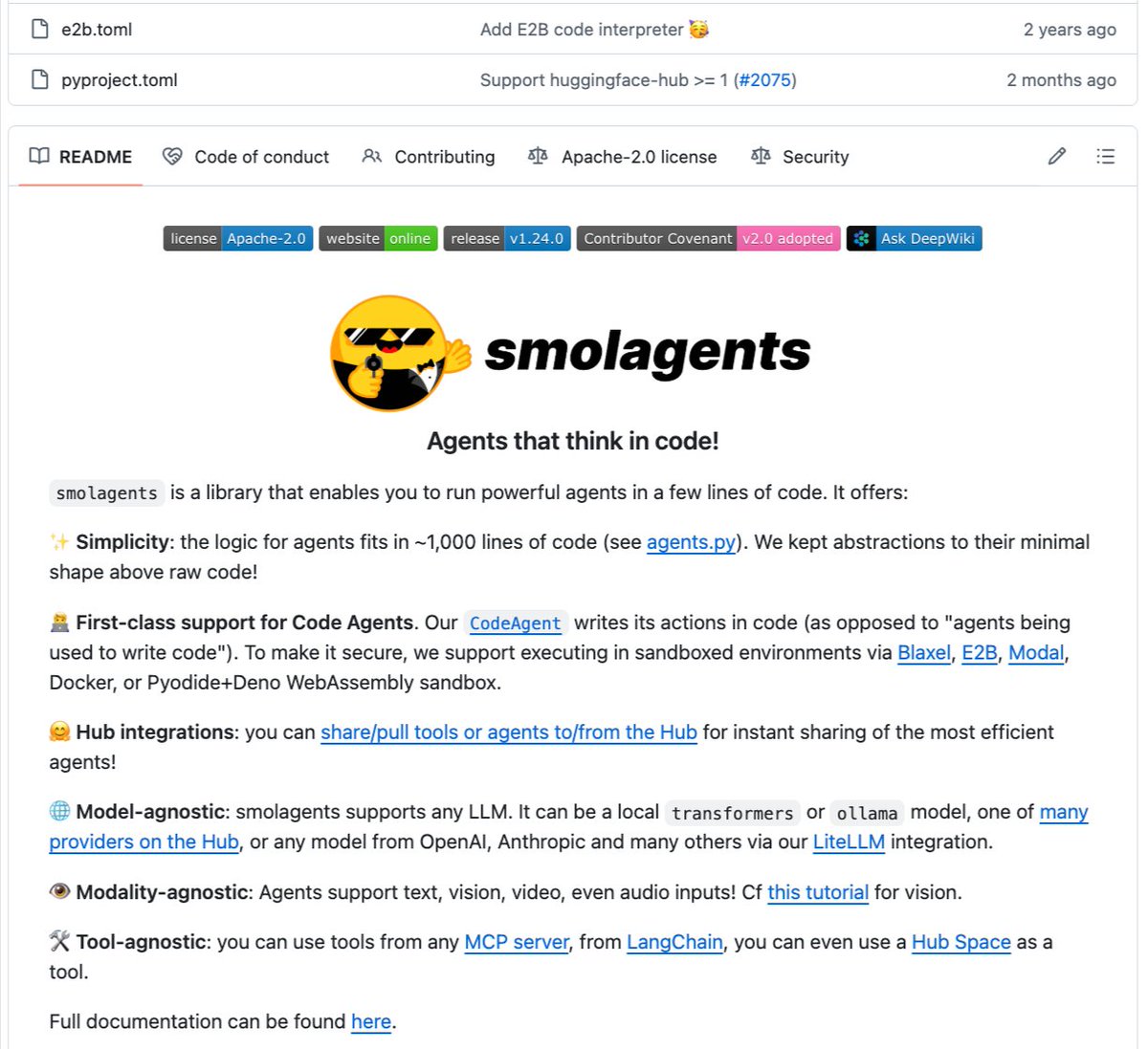
7. Smolagents
Hugging Face's minimal agent framework. ~1000 lines. The cleanest way to understand how agents actually work.
Repo → https://t.co/HgK9yxMcUH
8. Pydantic AI
The type-safe agent framework production teams are migrating to. Best choice for shipping reliable agents at work.
Repo → https://t.co/ESZkxsTXIR
9. OpenAI Agents SDK
The official OpenAI framework for handoffs, tool calls, and conversation context.
Repo → https://t.co/zV3llhnbw7
10. Letta (formerly MemGPT)
Agents that remember. Long-term memory, self-editing prompts, persistent identity.
Repo → https://t.co/qx02lTEepP
Here's the wildest part:
You don't need a paper, a PhD, or a course. You need a laptop, 7 days, and these 10 repos.
The skill that pays $200K in 2026 is not understanding agents. It is shipping them.
Day 1 you clone. Day 7 you have a working agent. The rest is iteration.
Save this before you forget.
100% free. 100% open source.
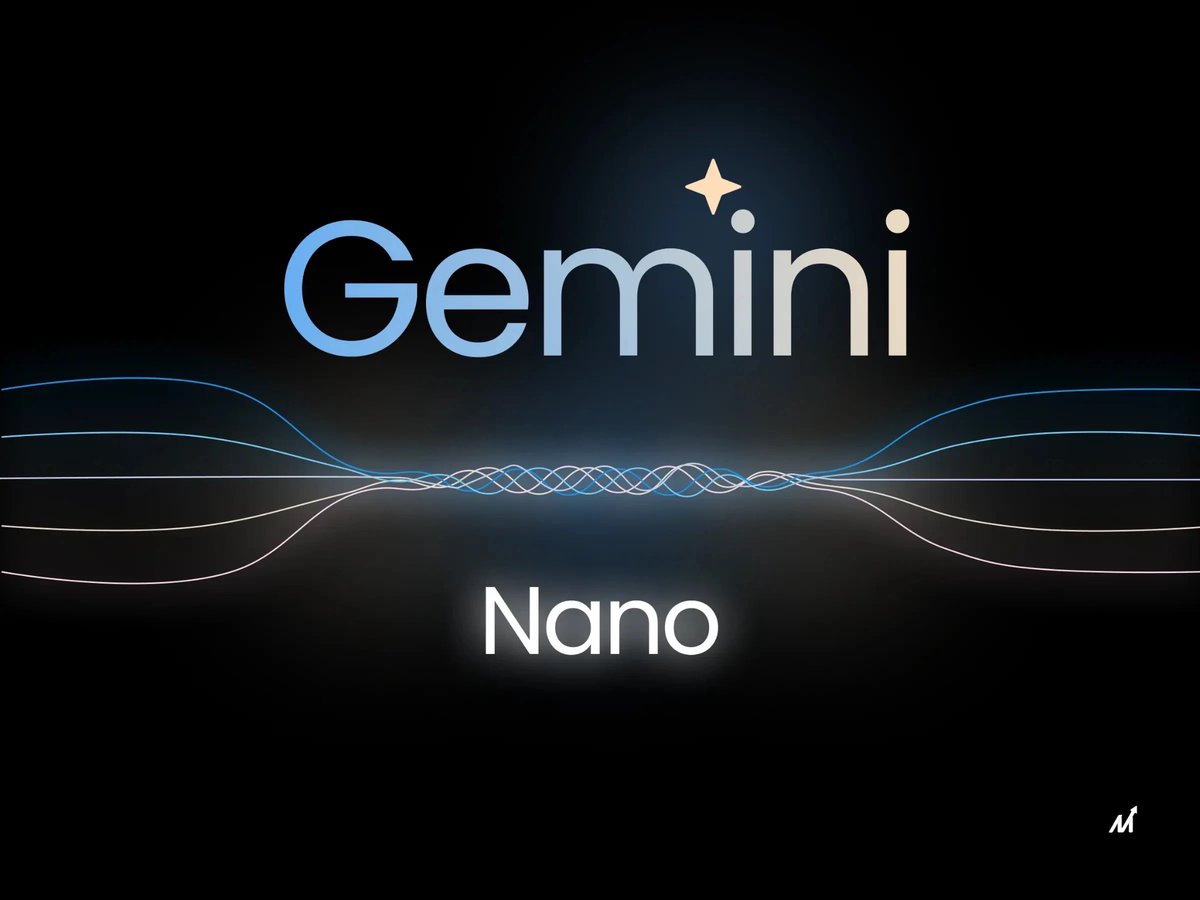
Google Chrome is quietly downloading a roughly 4 GB AI model to many users’ computers without clear upfront consent.
The file, called weights.bin, is part of Google’s Gemini Nano on-device language model and lands in the browser’s user data folder under OptGuideOnDeviceModel.
It powers built-in AI tools such as “Help me write,” smarter tab suggestions, on-device scam detection, and page summarization. The download triggers automatically for devices meeting minimum hardware requirements, and Chrome often replaces the files if deleted.
While the model processes data locally, installation happens in the background with minimal notification.
The scale is noteworthy. Hundreds of millions or billions of installations add up to thousands of tonnes of carbon emissions globally from data transfer, even though each is a one-time event.
To prevent or remove it, go to chrome://flags, disable the entries for the optimization guide on-device model and Prompt API, restart the browser, and manually delete the folder.
The man who killed the $10,000 GPU myth.
He did it alone, from Bulgaria, with one C file. 🤯
>Meet Georgi Gerganov.
>Bulgarian developer. Nobody had heard of him.
>In March 2023, Meta’s LLaMA model leaked online
>Within days he wrote a single C file
>Called it llama.cpp
>It ran a full AI model on a MacBook. No GPU. No cloud.
>The entire AI industry said you needed $10,000 GPUs to run LLMs 🔥
>He proved you didn’t. On a laptop. Alone.
>Also built whisper.cpp ~ same thing for voice AI
> His code is the foundation of Ollama, LM Studio, and GPT4All
>107,000+ GitHub stars. Fastest open-source AI project to hit 100K ever. 🚀
>In 2026 Hugging Face hired his entire team
>Still ships code. Still open source. Still free.
Every time you run AI locally, you’re running his work.
Absolute Legend 🐐
They say academia is a "thankless" job, but then you get an email like this on a Sunday evening.
A 3rd-year student from a college in Kolkata wrote to me. He felt "disconnected" and "trapped" in a coding-centric major, missing the mathematical rigor he loved until he found my NPTEL course.
He didn’t just want to learn ML; he wanted to feel the philosophy and the probability behind it. He wanted to understand why, not just how.
Moments like this make the "Chalk and Talk" sessions and the late-night prep worth every second. In a world obsessed with "shortcuts" and "quick certificates," finding a student hungry for first principles is the ultimate reward.
It reminds me that our real job isn't just to transfer information, it’s to provide the ignition for a mind that was almost ready to give up.
This is why we teach. This is what makes this profession truly invaluable.
Imagine every pixel on your screen, streamed live directly from a model. No HTML, no layout engine, no code. Just exactly what you want to see.
@eddiejiao_obj, @drewocarr and I built a prototype to see how this could actually work, and set out to make it real. We're calling it Flipbook. (1/5)
For most parents, digital devices have become a pacifier😬, it's a way to keep em quiet, and it's understandable, but ends up creating a dependency in the long run.
At Kiaan's(son's) school, no digital device is allowed and at home, we restrict screen time to 30 mins a day. But even then, it is crazy the addiction to reels/clips, I normally catch him browsing through that.
He Quit his PhD at IIT Kanpur !
(To build Drones for Indian Army)
Today, those drones are serving the Indian Armed Forces on some of our most strategic borders.
Meet Rama Krishna, Co-founder & CEO of EndureAir Systems Pvt. Ltd. , A DeepTech startup building next-generation unmanned aerial vehicles for defence surveillance & logistics.
Rama always wanted to be an aerospace engineer. At IIT Kanpur, he chose research, entered academia, and even began a PhD.
But the desire was to create real-world impact beyond papers and labs, He Co-founded EndureAir Systems with his professor Abhishek and friend Chirag Jain
But their journey wasn’t easy.
> They crashed prototypes.
> Burned lakhs in R&D.
> Ran no-cost, no-commitment trials with the Armed Forces.
> Iterated relentlessly.
> And earned product market fit the hardest way possible.
Because working with the Armed Forces isn’t about storytelling. It’s about reliability, trust, and performance -where failure is not an option.
Their vision is bold:
To build a full-stack aerospace company rooted in Indian engineering
Their core products today:
-> SABAL: Heavy-lift logistics drone inspired by Chinook’s tandem-rotor design, built for all-weather operations
-> VIBHRAM: Long-endurance, fully autonomous electric surveillance UAV
-> ALAKH: Micro ISR UAV for rapid intelligence in tight, contested spaces
When an Aboriginal Australian girl graduated from college, her grandfather, an Aboriginal elder living on a remote island, traveled nearly 2,000 miles to attend the ceremony and celebrate with her through dance.
The number most people will skip past: India's ports now turn ships faster than Singapore's.
A decade ago, average turnaround was 96 hours. Today it's under 50 hours at major ports, with top performers like JNPT running at 27 hours. Cargo capacity doubled from 800 million tonnes to 1,630 million tonnes in the same window. They got faster while handling twice the volume.
Here's the part that actually matters. 95% of India's trade by volume moves through its ports. Logistics costs sit at 13-14% of GDP vs 7-8% in developed economies. Every hour shaved off turnaround time across 855 million tonnes of annual cargo translates into billions in demurrage savings, faster working capital cycles, and lower prices for Indian manufacturers competing globally.
The port investment pipeline is $82 billion through 2035. They're building 14 new ports. And the constraint everyone should be watching: India's logistics cost gap with developed nations is still 5-6 percentage points of GDP. Closing that gap on a $4 trillion economy is worth $200-240 billion annually. The turnaround time is the leading indicator. The GDP math is the trade.
Today, India takes a defining step in its civil nuclear journey, advancing the second stage of its nuclear programme.
The indigenously designed and built Prototype Fast Breeder Reactor at Kalpakkam has attained criticality.
This advanced reactor, capable of producing more fuel than it consumes, reflects the depth of our scientific capability and the strength of our engineering enterprise. It is a decisive step towards harnessing our vast thorium reserves in the third stage of the programme.
A proud moment for India. Congratulations to our scientists and engineers.
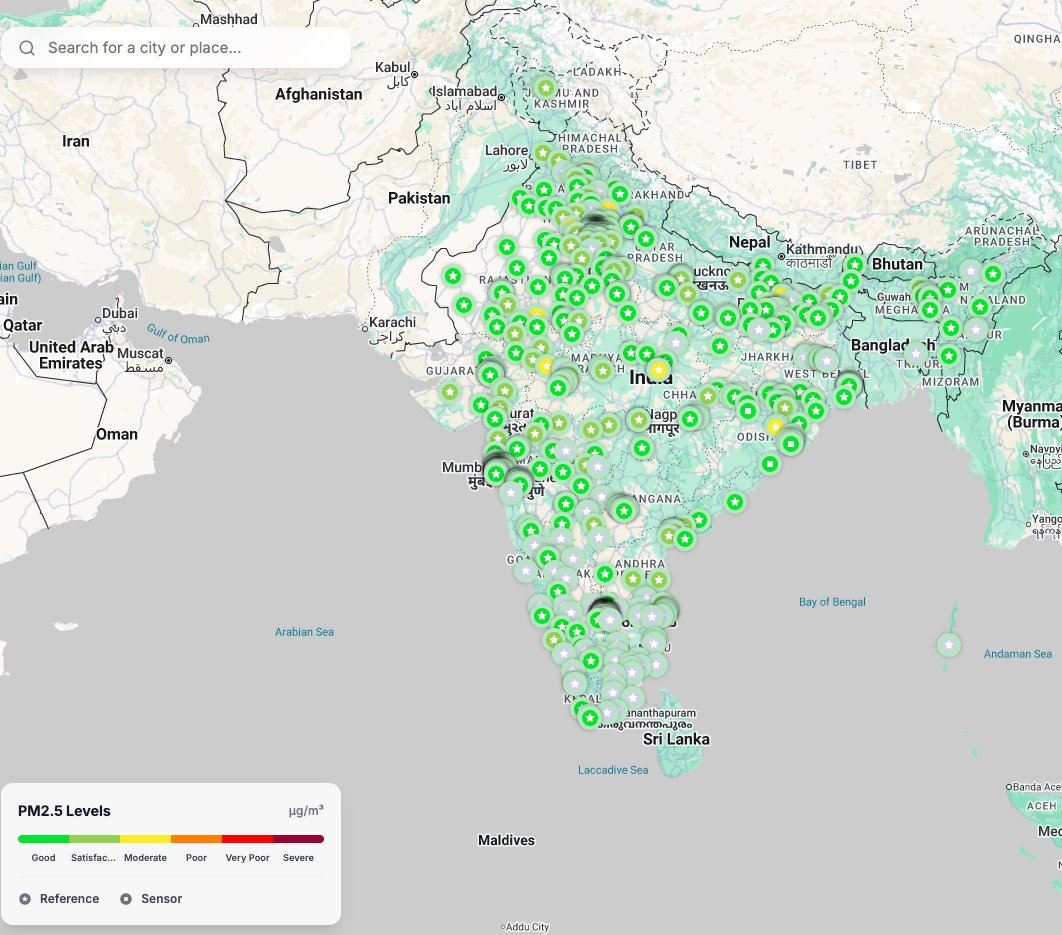
Good air, clean water, and food are fundamental to a good life. In that sense, they should be treated as fundamental rights.
But air quality has been steadily degrading, and it's not really part of the mainstream conversation. That needs to change. Right now, if you look at the site (link in comments), everything looks green. But as we get closer to the end of the year, things will start looking much worse.
Solving air pollution is hard, but the first step is simple: people need to know what they're breathing.
Right now, that's not possible. India does collect air quality data, but it's either locked away, too broad to tell you anything about your locality, or just not published at all. There's no single place a citizen can go to get a clear, neighbourhood-level picture.
So we set out to fix that.
Today, we're launching an open, pan-India air quality platform, built in partnership with leading organisations in the field. The goal: give citizens, schools, local governments, and communities direct access to the data that affects their daily lives.
At @RainmatterOrg , we've been committed to keeping this conversation alive, and this platform is our attempt at making that happen. All the data on the site is free and open, so others can build on top of it.
World Cup 2011 !
Dhoni: Captain & Man of the Match in the Finals
Yuvraj: Man of the Series (362 runs, 15 wickets, 3 catches)
Tendulkar: Most Runs (482) for India
Zaheer: Most Wickets (21) for India