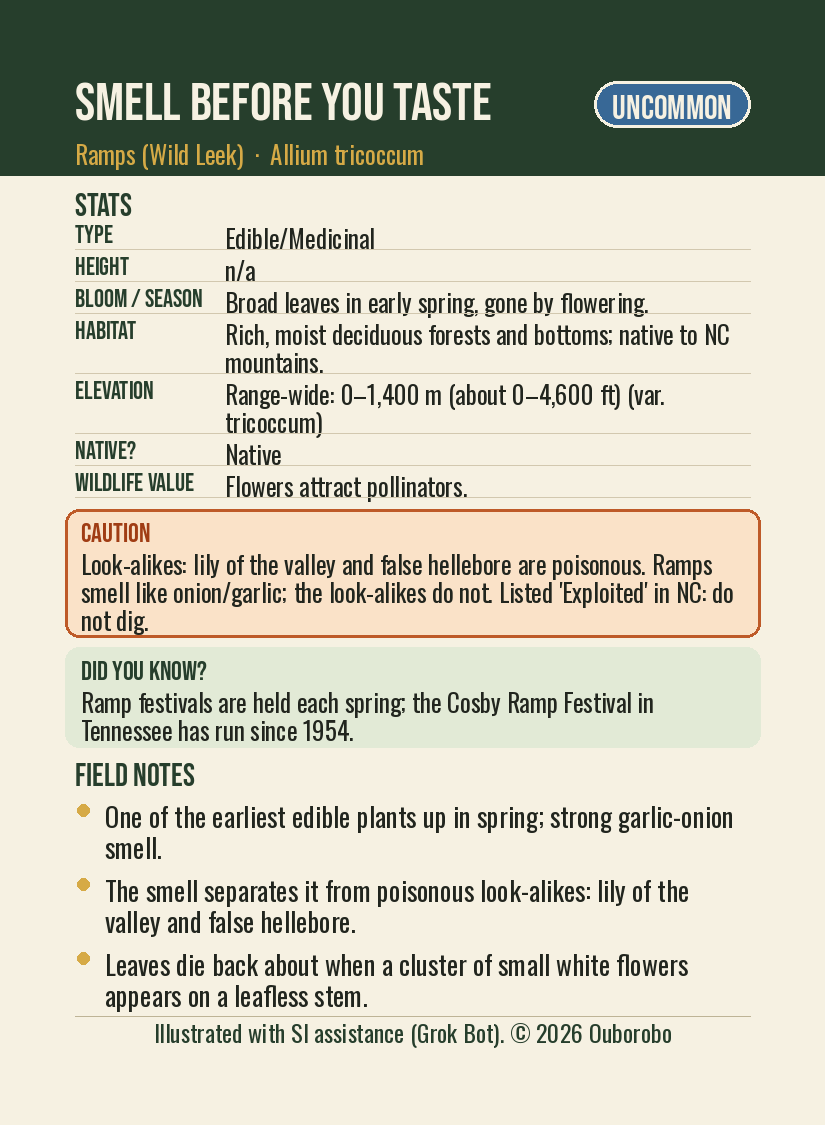
Appalachia Flora #43: Ramps (Allium tricoccum). One of the earliest edible plants up in spring; strong garlic-onion smell. Seen in Alleghany County, NC. Original illustration (AI-generated). 🌼 #AppalachianFlora#NativePlants
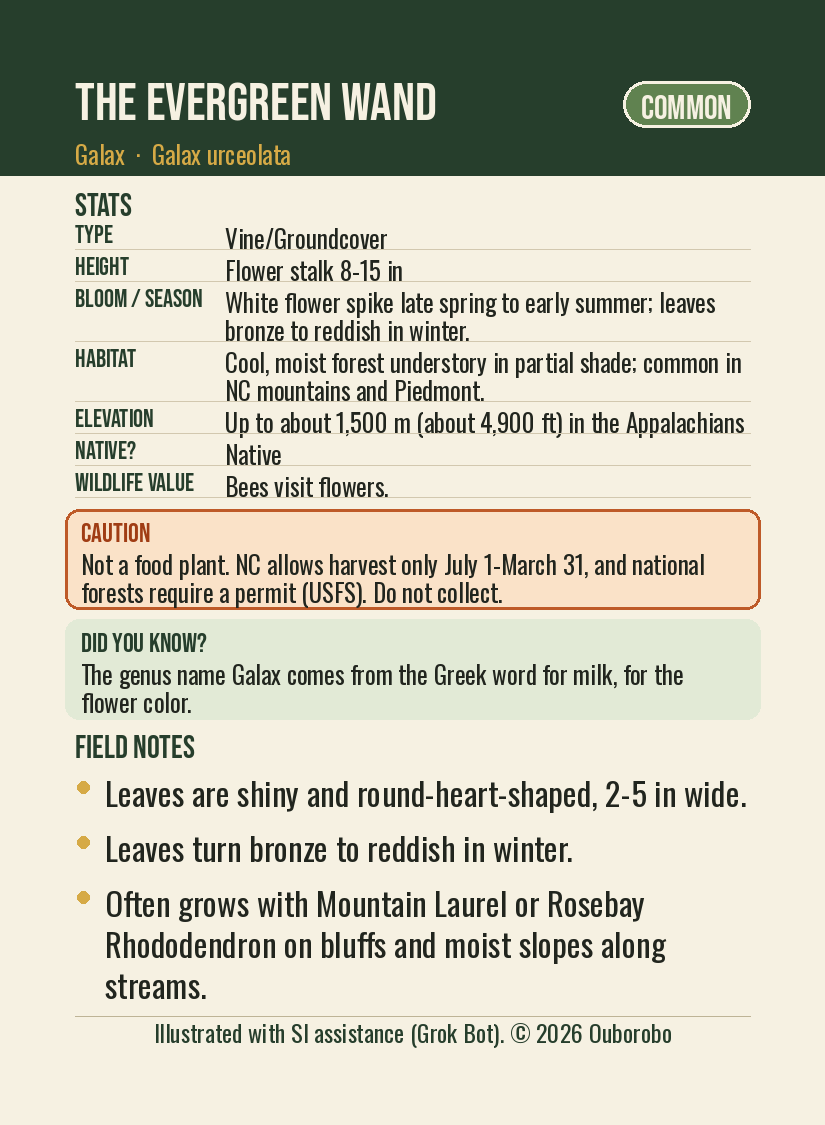
Appalachia Flora #42: Galax (Galax urceolata). Leaves are shiny and round-heart-shaped, 2-5 in wide. Seen in Alleghany County, NC. Original illustration (AI-generated). 🌼 #AppalachianFlora#NativePlants
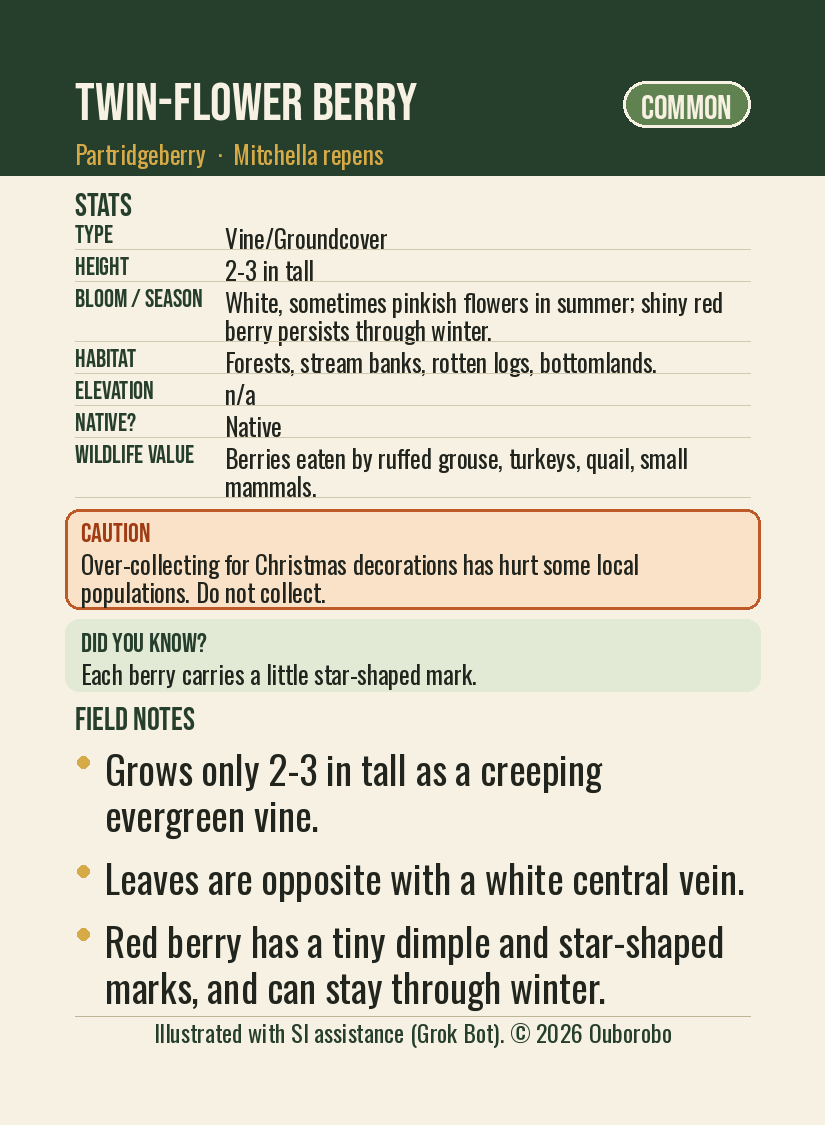
Appalachia Flora #41: Partridgeberry (Mitchella repens). Grows only 2-3 in tall as a creeping evergreen vine. Seen in Alleghany County, NC. Original illustration (AI-generated). 🌼 #AppalachianFlora#NativePlants
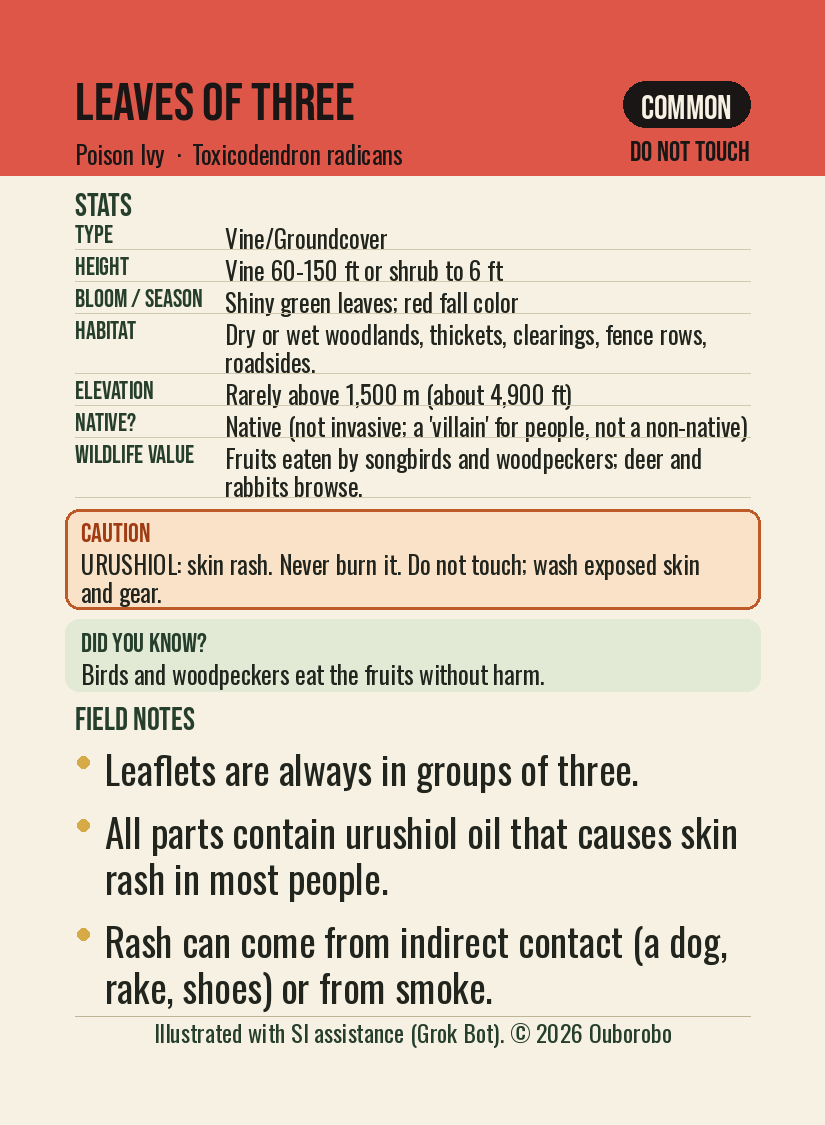
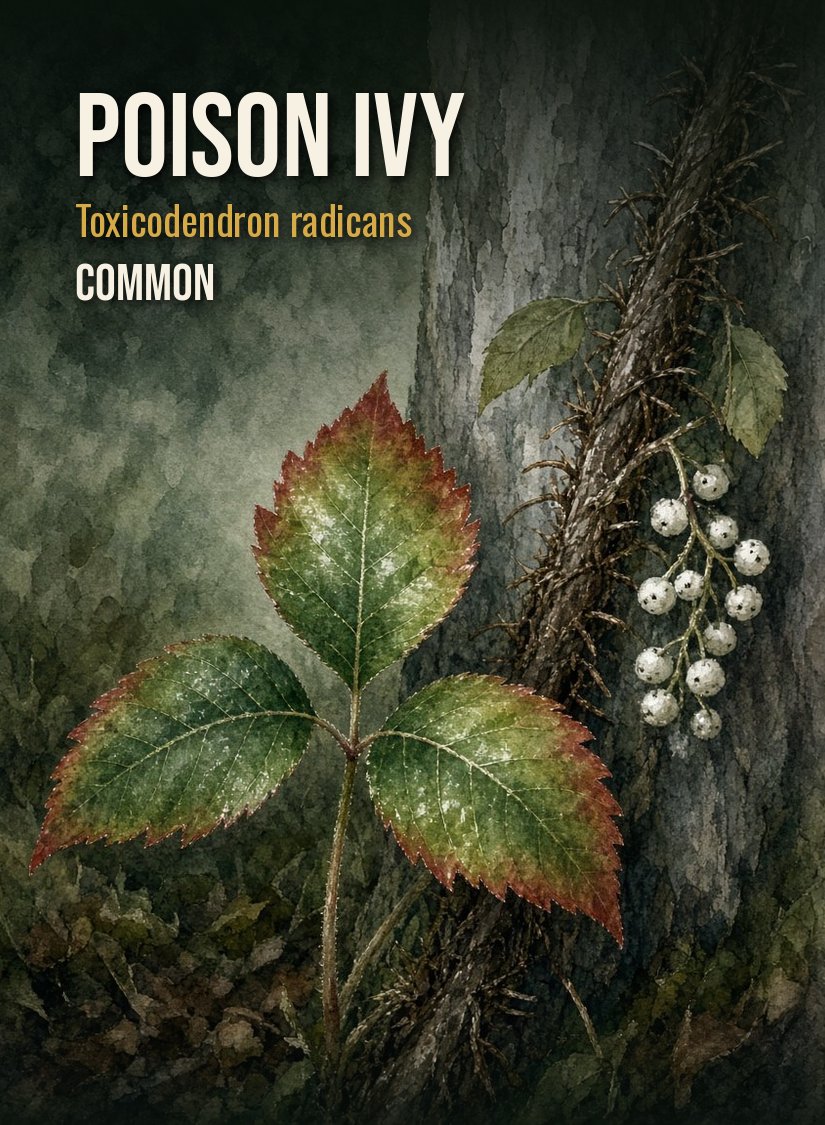
Appalachia Flora #40: Poison Ivy (Toxicodendron radicans). Leaflets are always in groups of three. Seen in Alleghany County, NC. Original illustration (AI-generated). 🌼 #AppalachianFlora#NativePlants
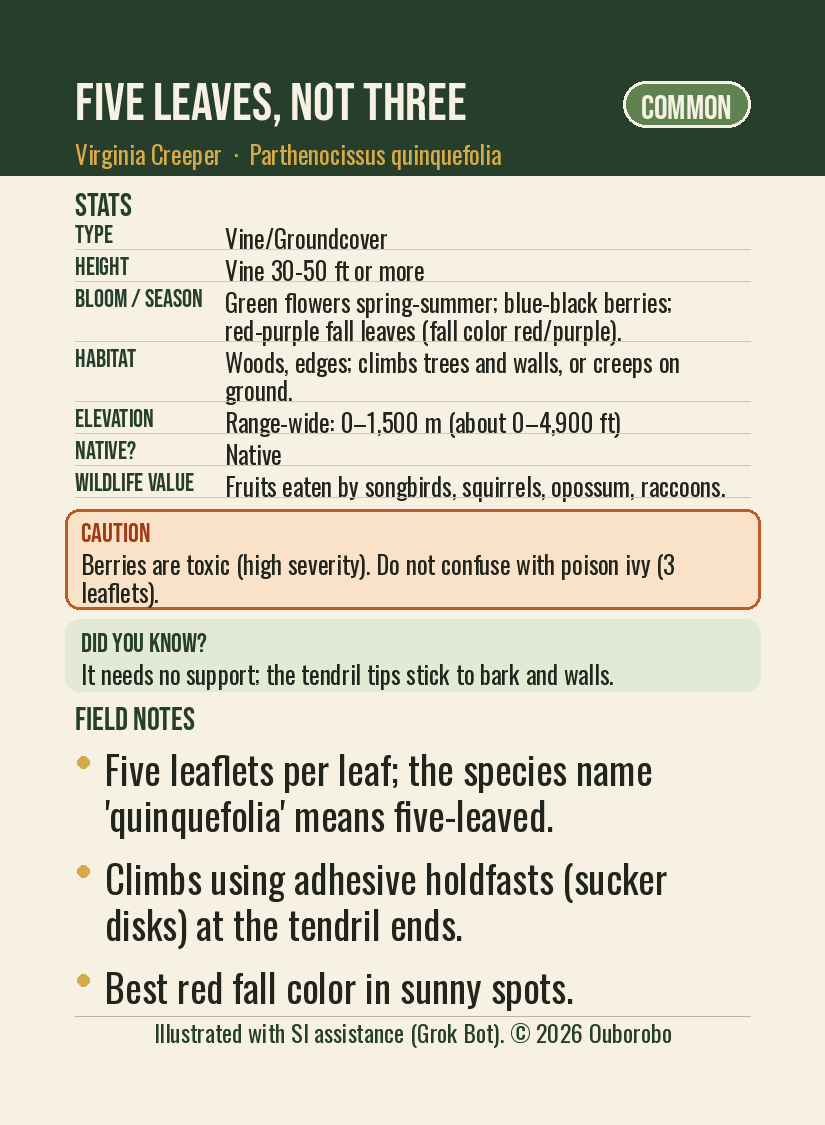
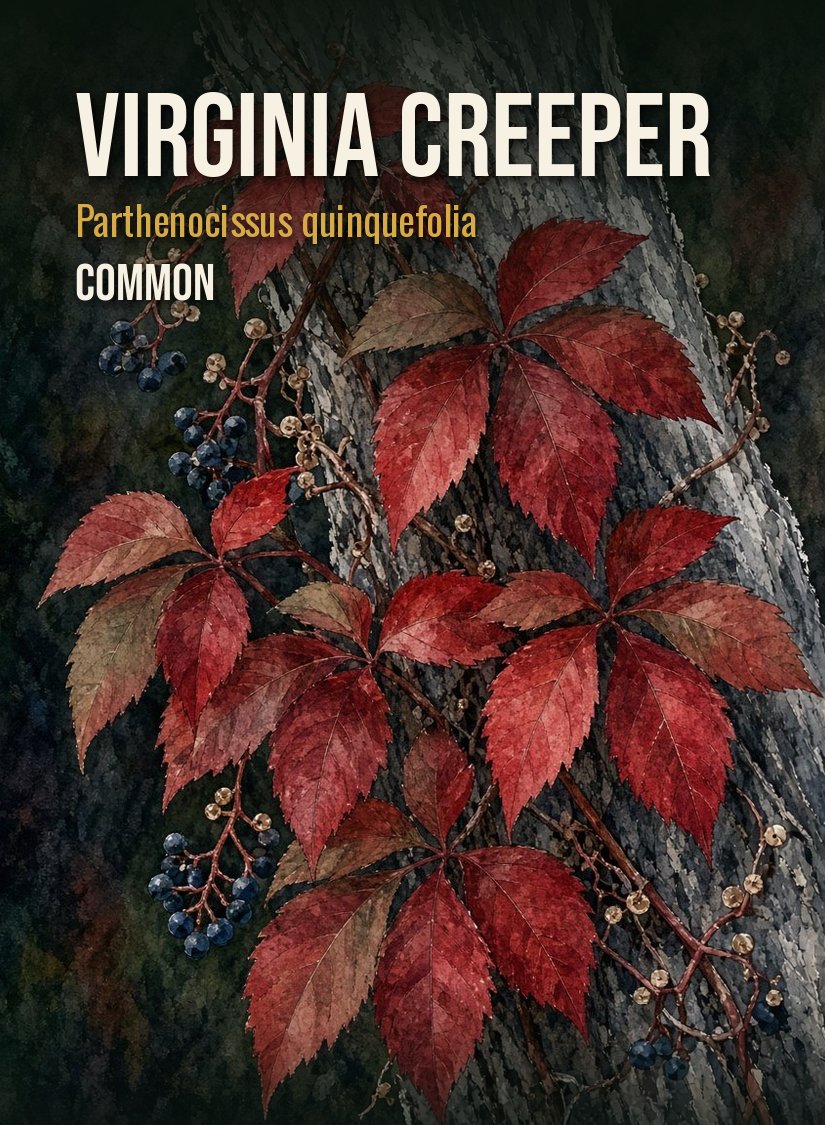
Appalachia Flora #39: Virginia Creeper (Parthenocissus quinquefolia). Five leaflets per leaf; the species name 'quinquefolia' means five-leaved. Seen in Alleghany County, NC. Original illustration (AI-generated). 🌼 #AppalachianFlora#NativePlants
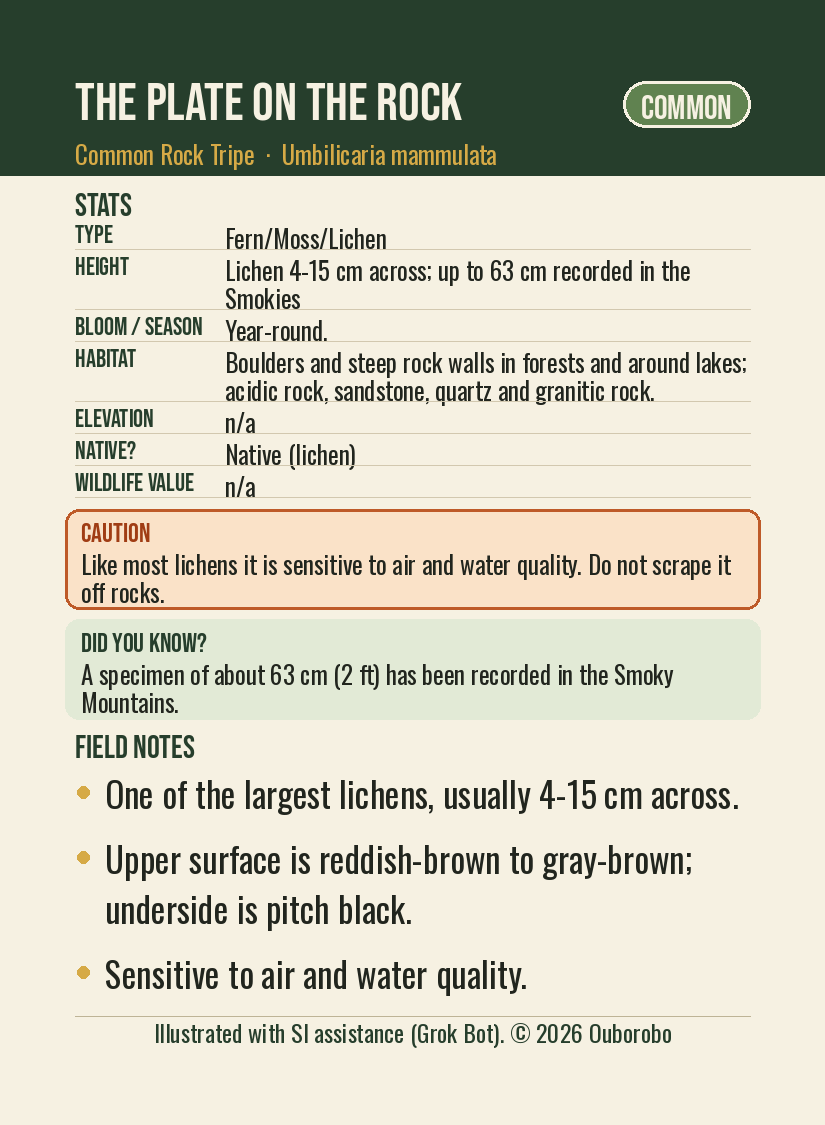
Appalachia Flora #38: Common Rock Tripe (Umbilicaria mammulata). One of the largest lichens, usually 4-15 cm across. Seen in Alleghany County, NC. Original illustration (AI-generated). 🌼 #AppalachianFlora#NativePlants
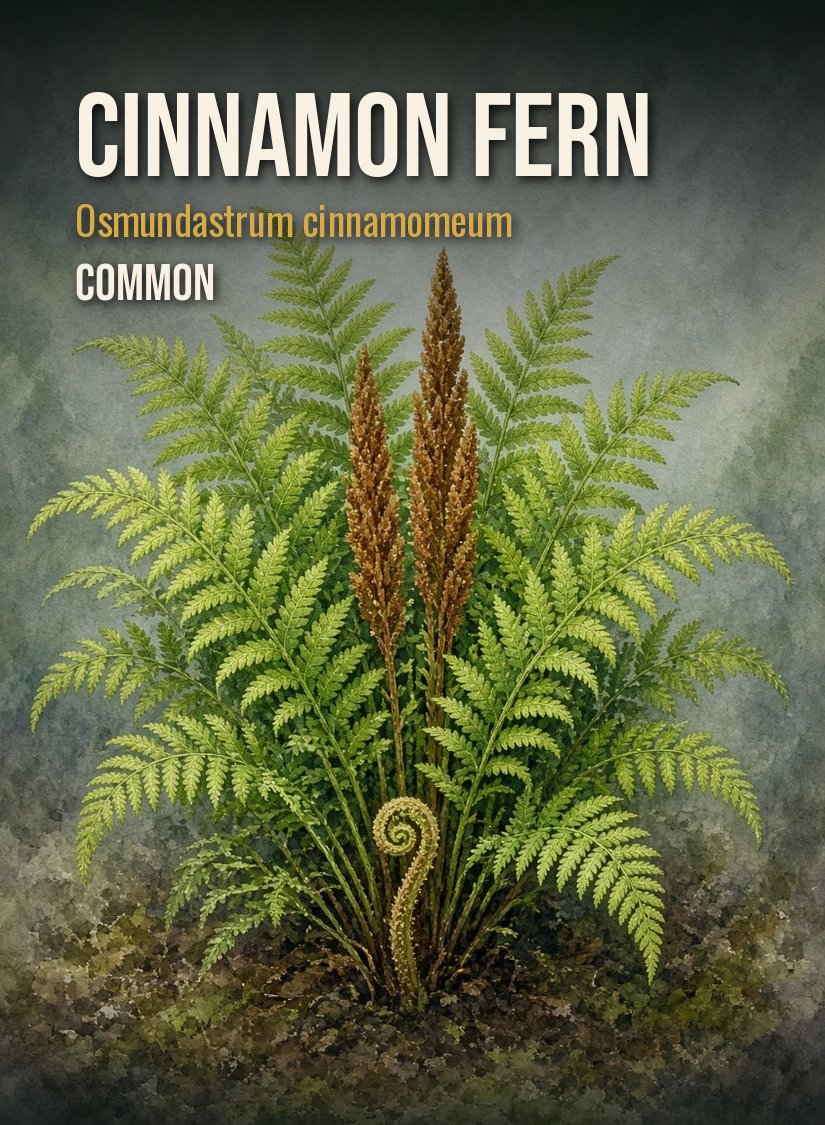
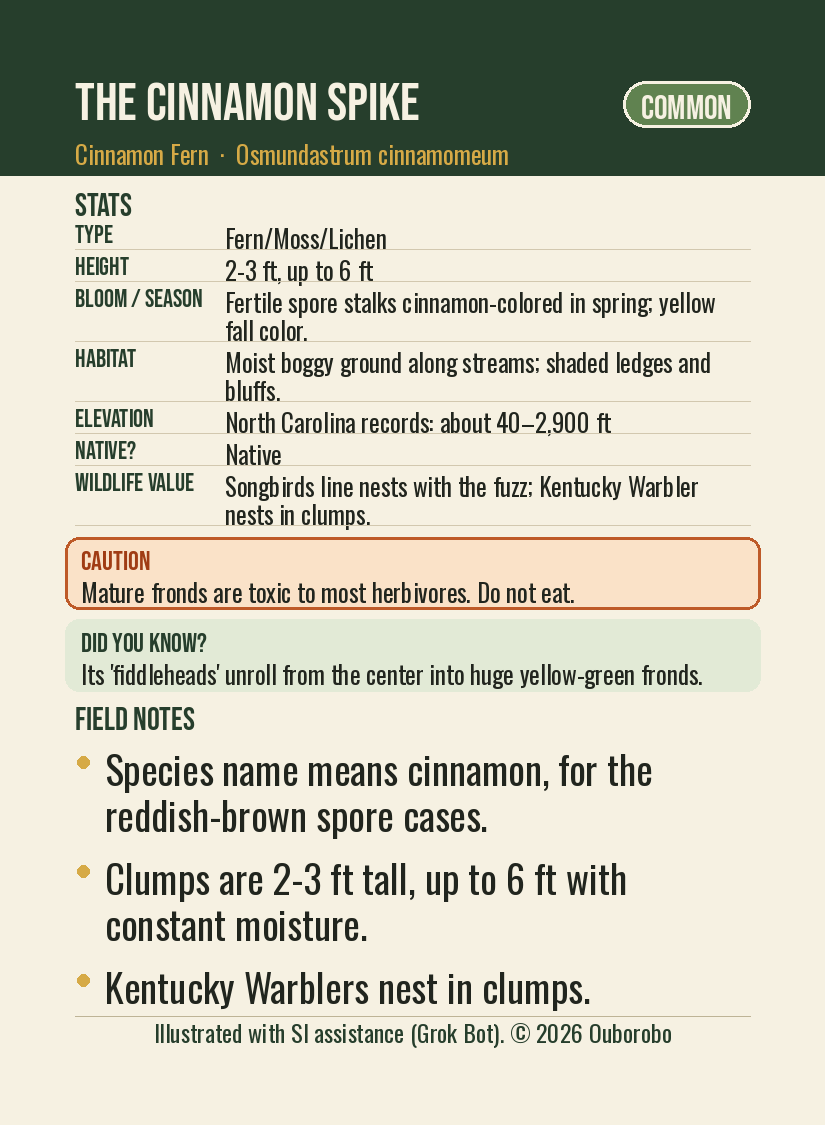
Appalachia Flora #37: Cinnamon Fern (Osmundastrum cinnamomeum). Its species name means cinnamon, for the reddish-brown spore cases. Seen in Alleghany County, NC. Original illustration (AI-generated). 🌼 #AppalachianFlora#NativePlants
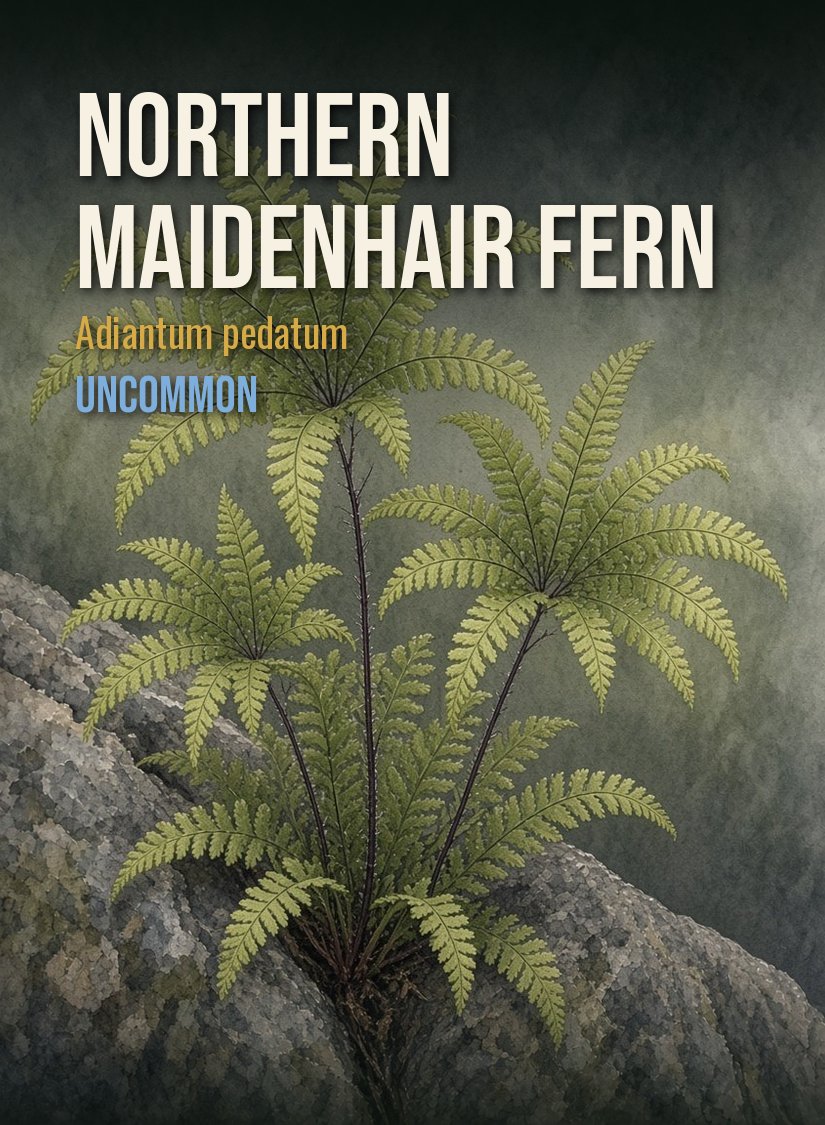
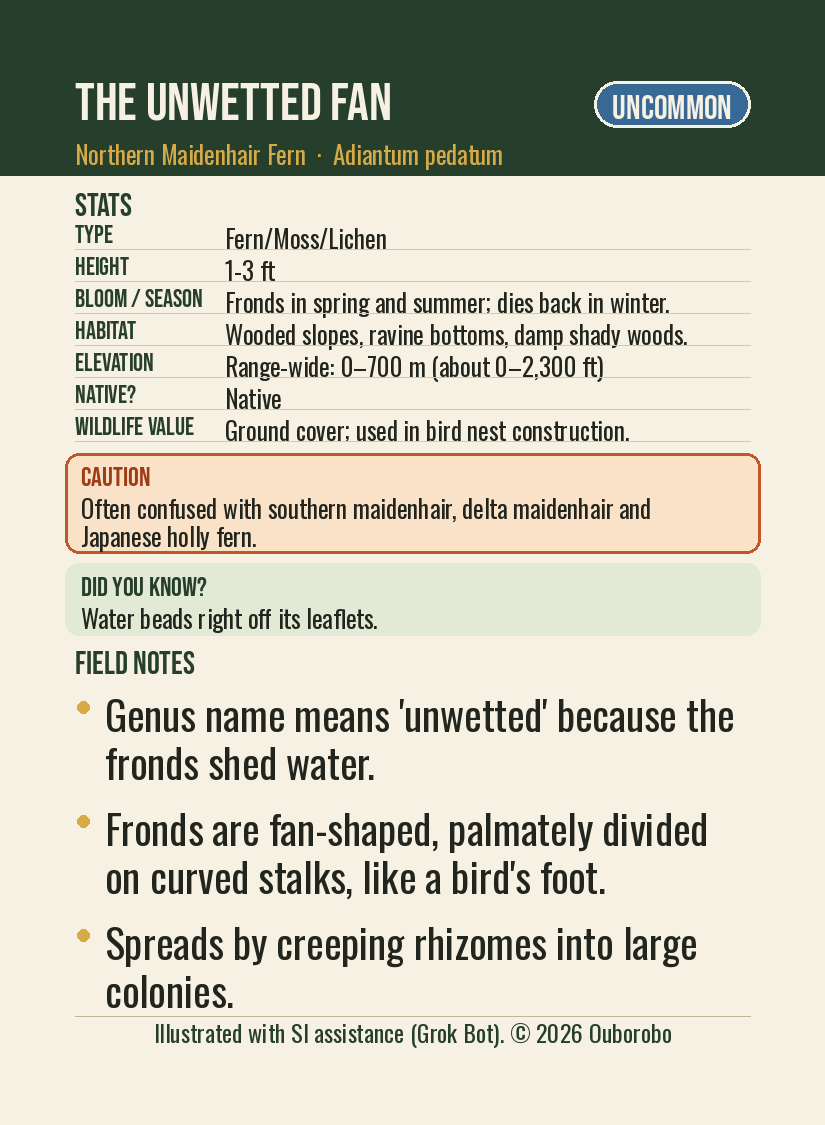
Appalachia Flora #36: Northern Maidenhair Fern (Adiantum pedatum). Its genus name means 'unwetted' because the fan-shaped fronds shed water. Seen in Alleghany County, NC. Original illustration (AI-generated). 🌼 #AppalachianFlora#NativePlants
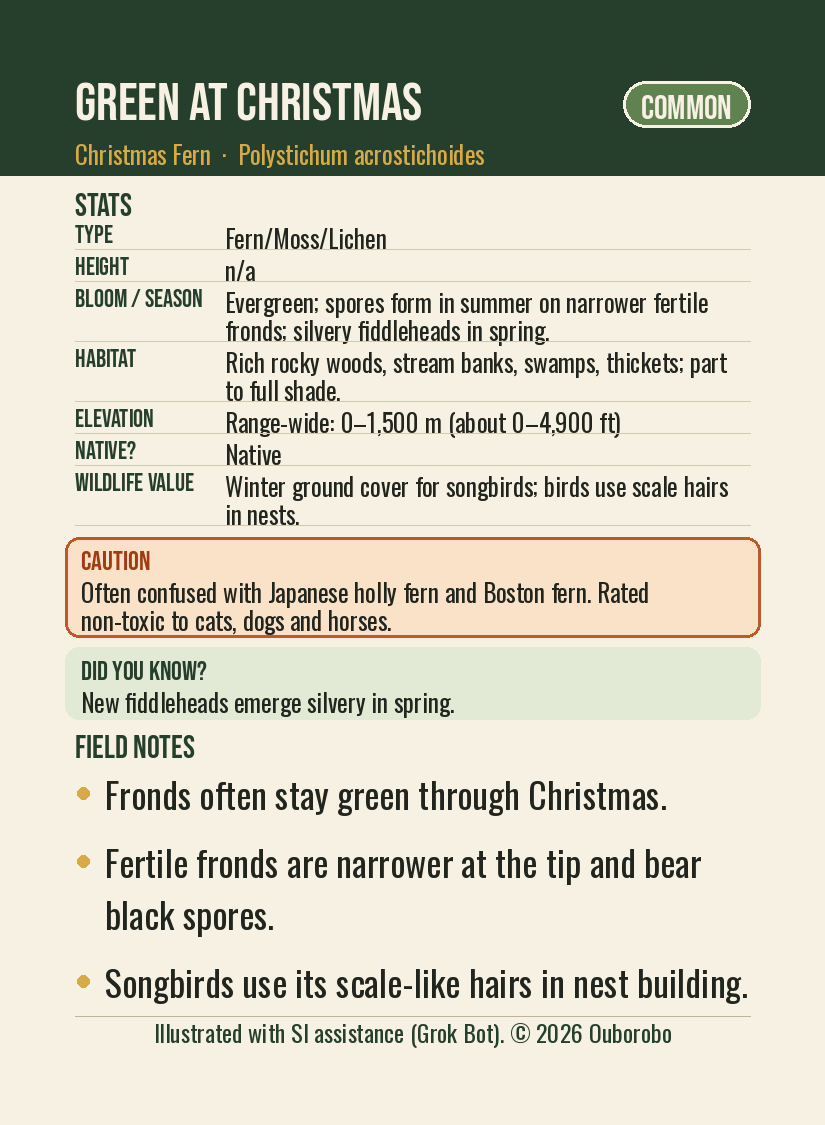
Appalachia Flora #35: Christmas Fern (Polystichum acrostichoides). Its fronds stay green right through Christmas, and songbirds use its scaly hairs to build their nests. Seen in Alleghany County, NC. Original illustration (AI-generated). 🌼 #AppalachianFlora#NativePlants
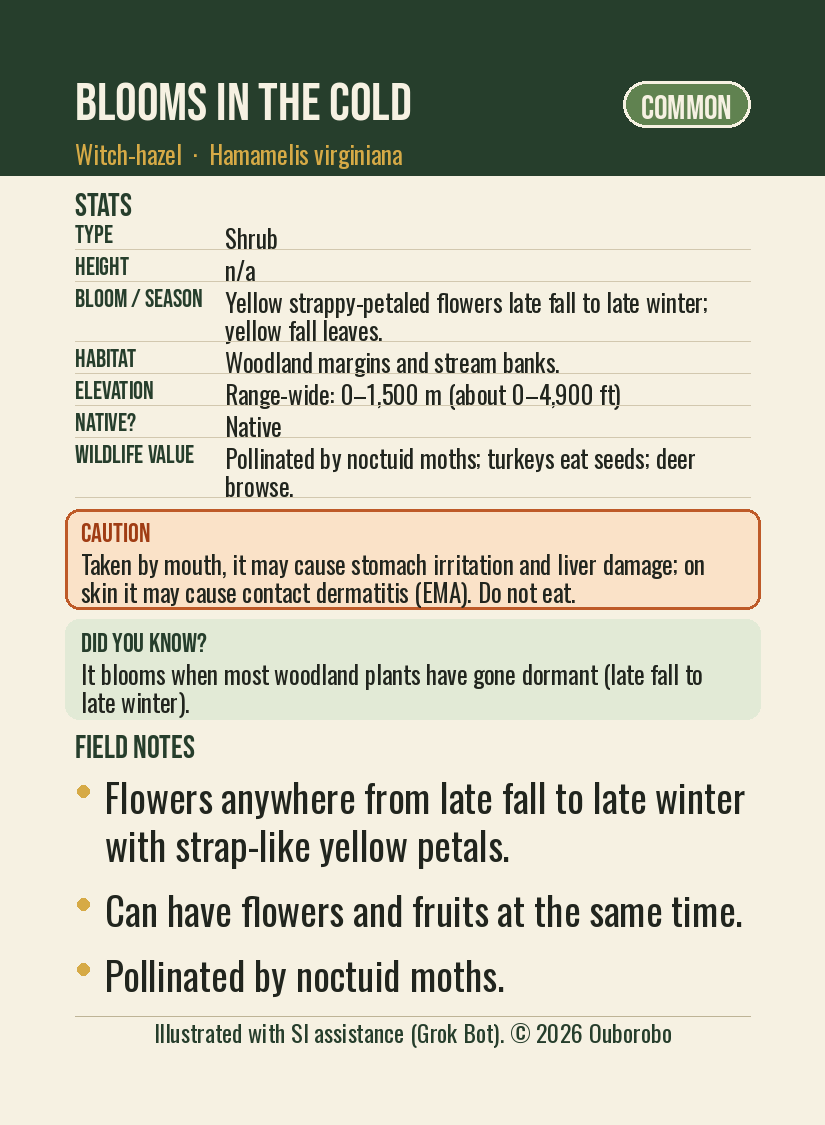
Appalachia Flora #34: Witch-hazel (Hamamelis virginiana). It blooms when almost nothing else does, with ribbon-like yellow flowers from late fall into winter, pollinated by moths. Seen in Alleghany County, NC. Original illustration (AI-generated). 🌼 #AppalachianFlora #NativePlants
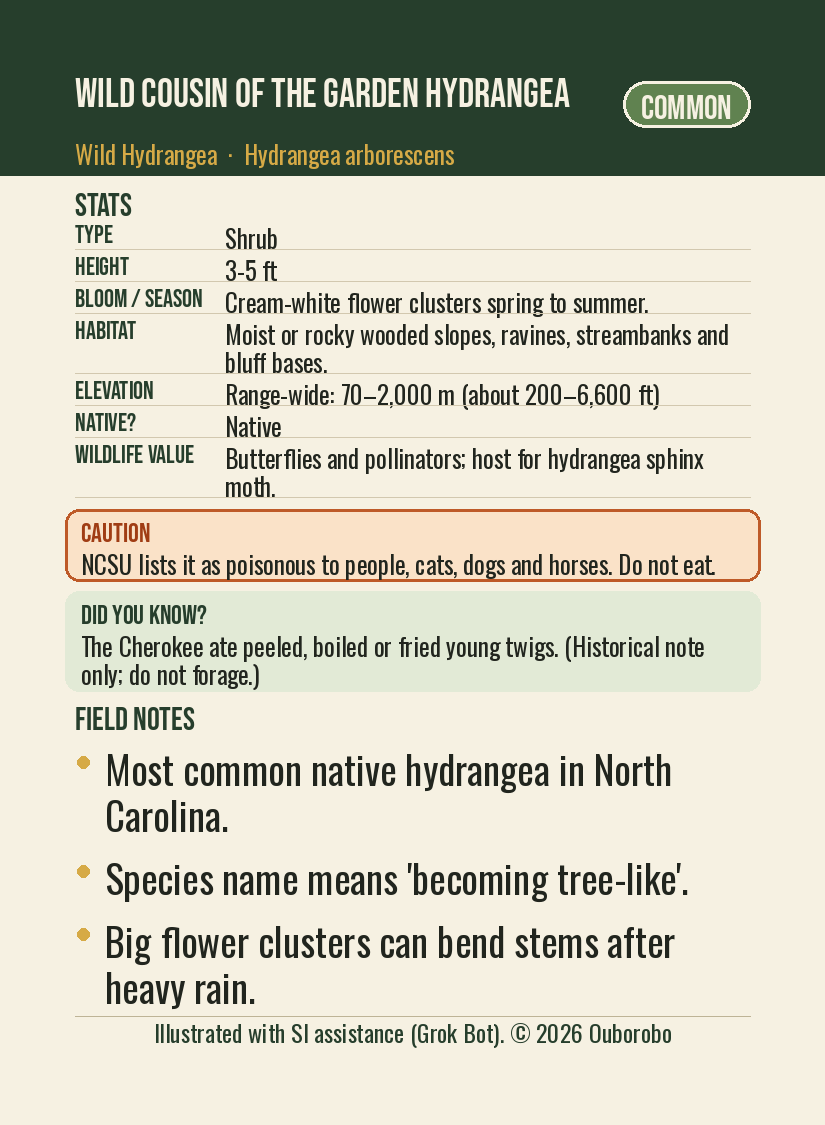
Appalachia Flora #33: Wild Hydrangea (Hydrangea arborescens). North Carolina's most common native hydrangea, its big cream-white flower clusters can bend the stems after a heavy rain. Seen in Alleghany County, NC. Original illustration (AI-generated). 🌼 #AppalachianFlora #NativePlants
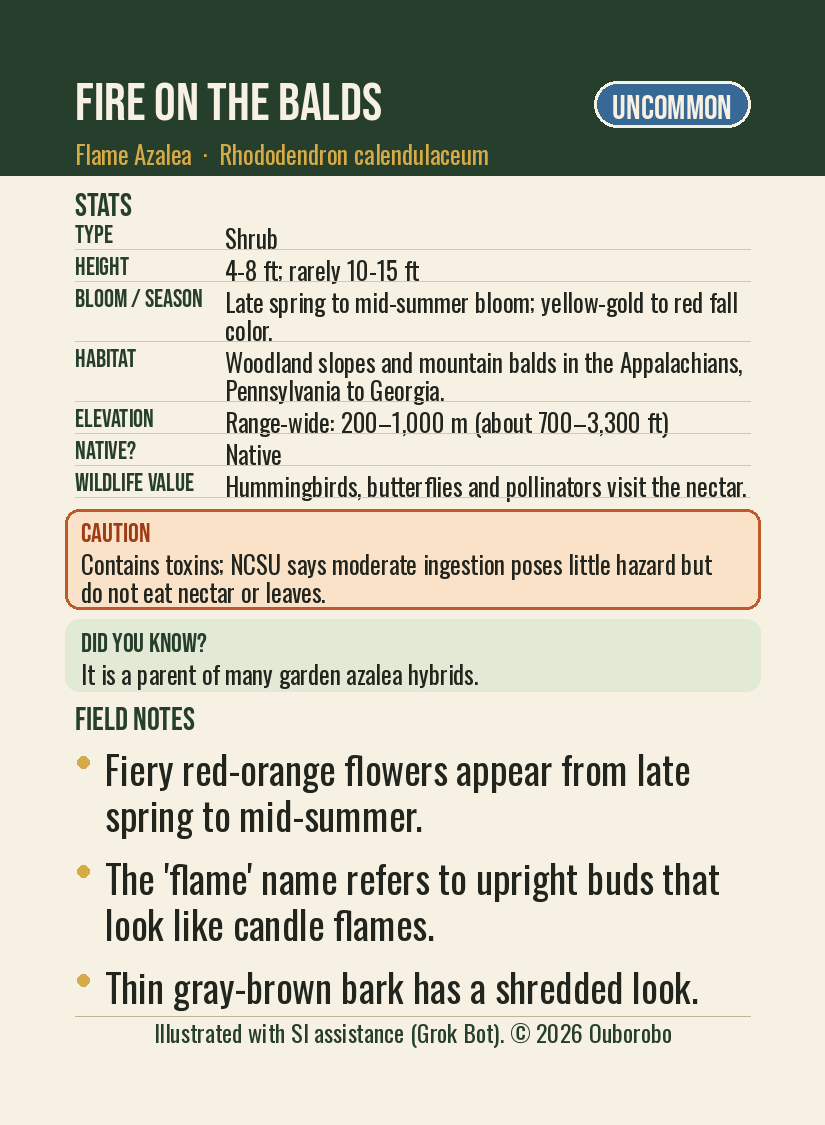
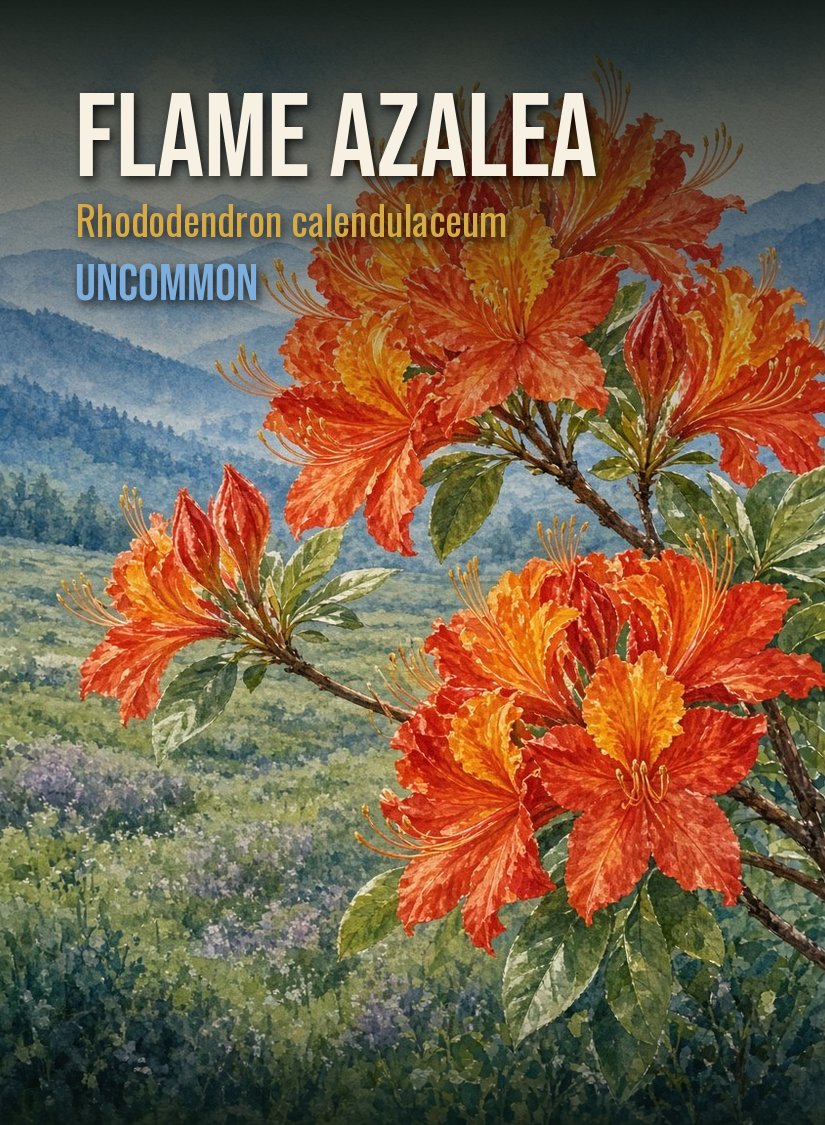
Appalachia Flora #32: Flame Azalea (Rhododendron calendulaceum). Named for its upright buds that look like candle flames, it lights up the mountains with red-orange blooms from late spring into midsummer. Seen in Alleghany County, NC. Original illustration (AI-generated). 🌼 #AppalachianFlora #NativePlants
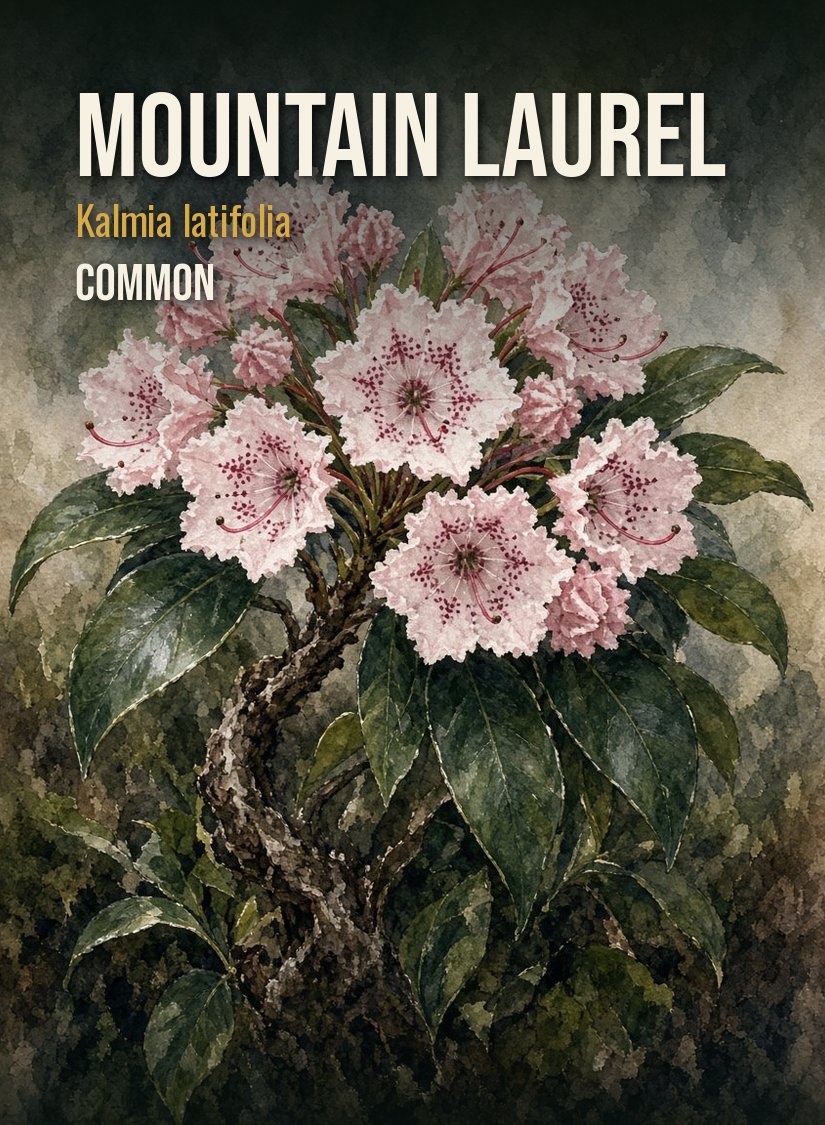
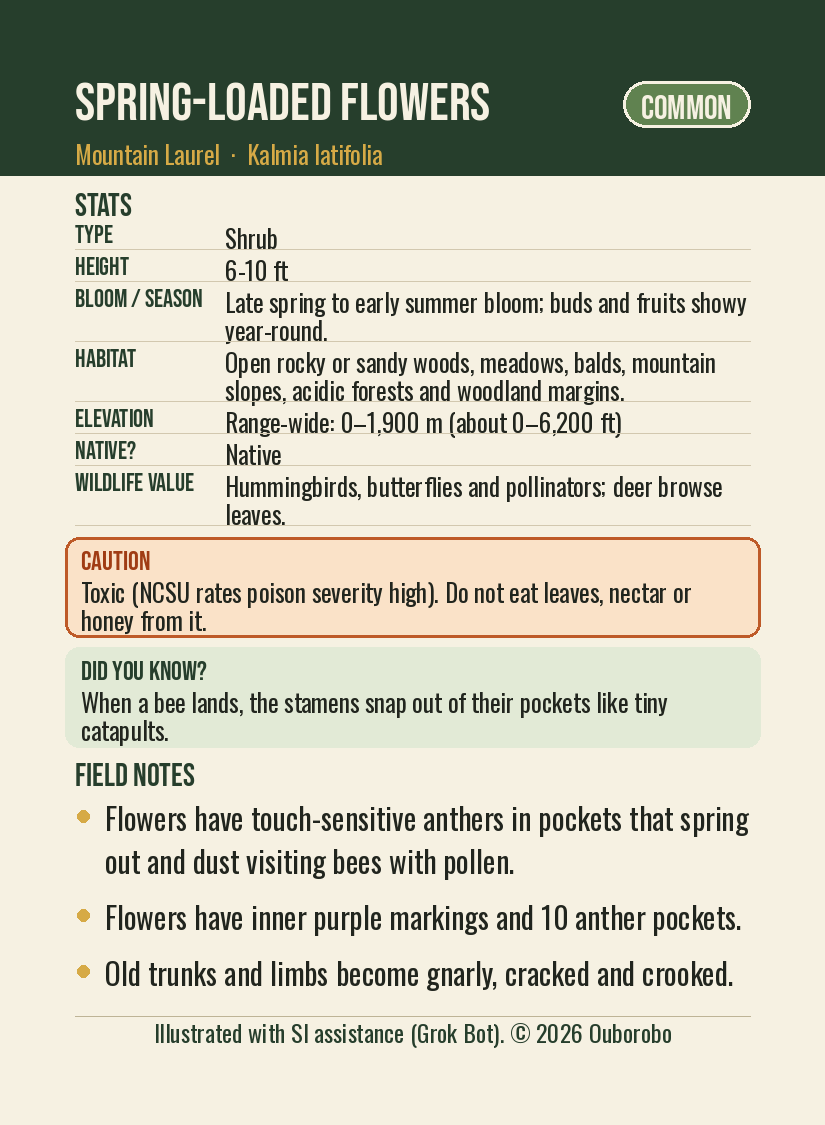
Appalachia Flora #31: Mountain Laurel (Kalmia latifolia). Each flower hides spring-loaded anthers that pop out and dust visiting bees with pollen. Seen in Alleghany County, NC. Original illustration (AI-generated). 🌼 #AppalachianFlora#NativePlants
Appalachia Flora #30: Rosebay Rhododendron (Rhododendron maximum). Thickets of it line southern Appalachian streams, and it blooms in summer, later than some of its cousins. Seen in Alleghany County, NC. Original illustration (AI-generated). 🌼 #AppalachianFlora#NativePlants
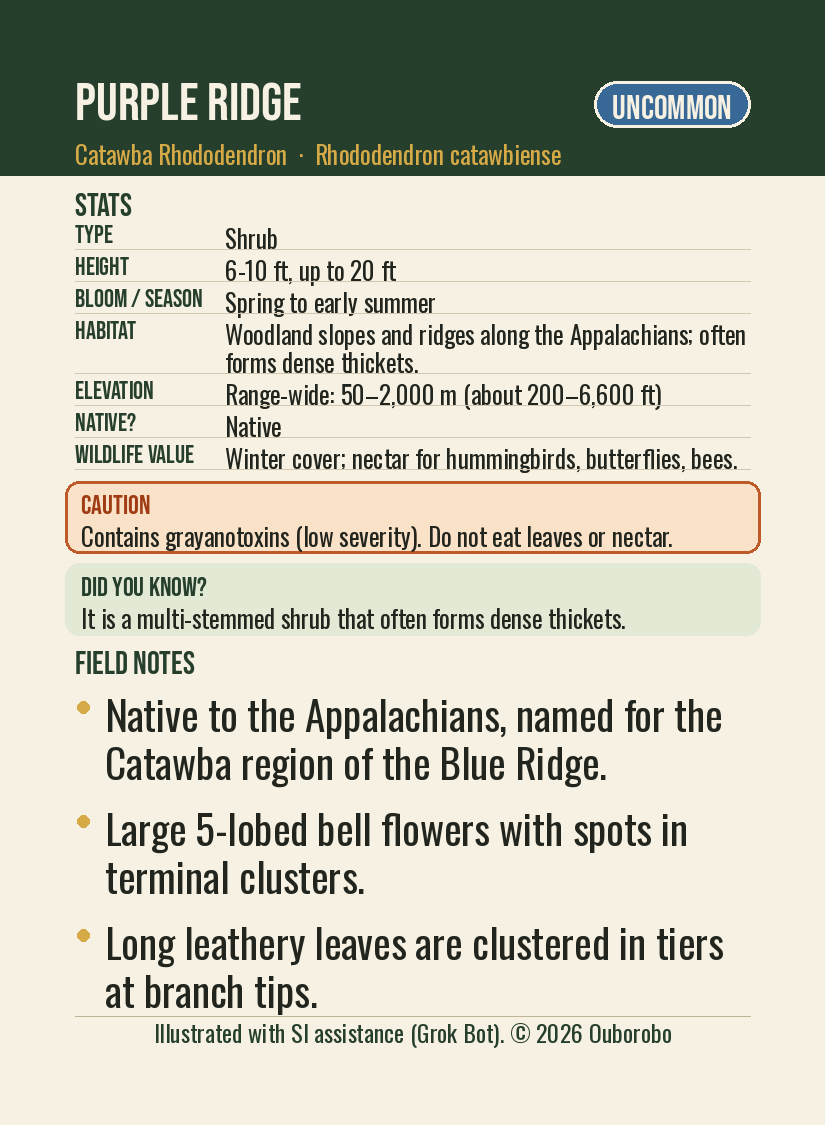
Appalachia Flora #29: Catawba Rhododendron (Rhododendron catawbiense). Named for the Catawba region of the Blue Ridge, it covers mountain slopes in big clusters of spotted bell flowers. Seen in Alleghany County, NC. Original illustration (AI-generated). 🌼 #AppalachianFlora #NativePlants
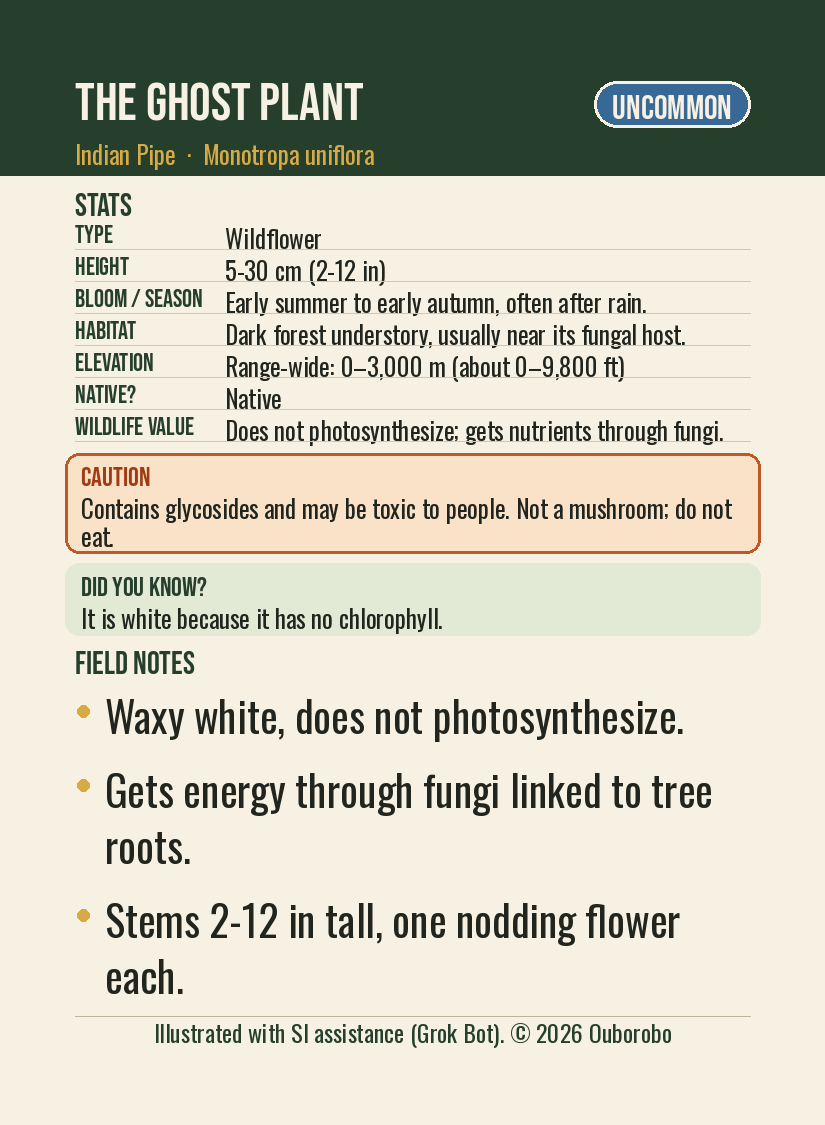
Appalachia Flora #28: Indian Pipe (Monotropa uniflora). Waxy white with no green at all, it takes its energy from fungi linked to tree roots instead of the sun. Seen in Alleghany County, NC. Original illustration (AI-generated). 🌼 #AppalachianFlora#NativePlants
Appalachia Flora #27: Pink Lady's Slipper (Cypripedium acaule). Its seeds can only sprout with the help of a specific soil fungus, so it's best left in the wild. Seen in Alleghany County, NC. Original illustration (AI-generated). 🌼 #AppalachianFlora#NativePlants
@VoterCenter
Get an X account, Tom! 🙂
I asked Grok if Tom had an X account:
Tom Lopach (the signer of the Center for Voter Information mailer in the post) does not appear to have a personal account on https://t.co/ThrMfM2lqZ; searches for his name and likely handles turn up no matching profile.
He is active on Threads as @tomlopach (describing himself as CEO of the two voter-engagement nonprofits and a former DSCC ED) and on Bluesky as @tom-lopach.bsky.social.
His organizations maintain X presence, including the Voter Participation Center at @VoterCenter, while recipients of the mailers frequently discuss and tag @centervoterinfo when reacting to the letters.