@JamaleIjouiher in species such as Oviraptorosaurid and even Confuciusornis, If we only look at the this, it is not closely related to “undewater”. This is more likely to be related to the number of teeth, predation, etc. In contrast, the trigeminal nerves of ornithischian aren’t so developed
@JamaleIjouiher In fact, the trigeminal nerve of T.rex (especially the mandibular and maxillary branches) was also very sensitive, which should be a common feature of theropod . Even the nerves of Sinovenator also abundant - on the contrary, there was a significant reduction in teeth
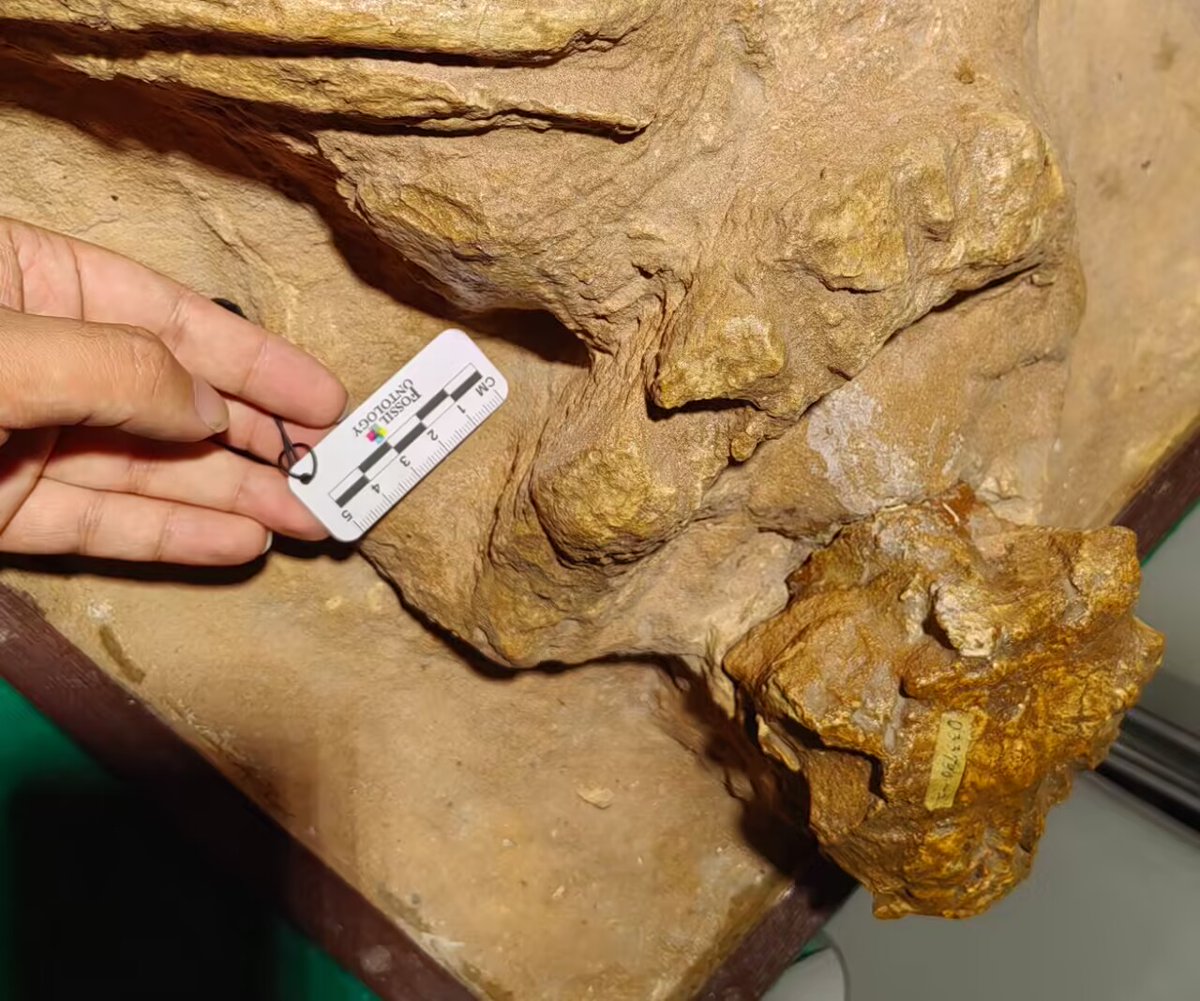
The morphology of the cervical half-ring may vary significantly among different individuals of Ankylosaurs, and 16855 serves as an intriguing example
#ankylosaur#dinosaur#fossil
@TwitiGalli In abstract “Nodosaurid dinosaurs …… with rare occurrences in South America and Asia”,members of the Nodosaurid in South America are more likely to belong to the Parankylosauria
Um novo anquilossauro nodossaurídeo (Dinosauria: Ornithischia) da Formação Hikagenosawa do Cretáceo Superior no Japão revela padrão de dispersão dos anquilossauros nodossaurídeos asiáticos https://t.co/tKZ98JfvZD
Henan has yielded fossils suspected to be of Protoceratops—in fact, ceratopsia are not exclusively found in Inner Mongolia in China. However, it has not undergone thorough investigation. The ceratopsians from Henan only Mosaiceratops has been formally designated.
#fossilFriday