The AU Intra-ACP Climate Services and Related Applications (ClimSA) Programme supports the Implementation of the Global Framework for Climate Services in Africa
🌍 State of the Climate in Eastern Africa 2025
A year of record heat and uneven rainfall drove disasters, hunger, land conflict, and displacement across Eastern Africa, and exposed major gaps in climate preparedness.
Full report now available — click below to download and read.
📄 State of the Climate in Eastern Africa 2025, ICPAC
▶️ https://t.co/DSG6nILiQI
#EastAfrica #ClimateAdaptation #FoodSecurity #ClimateResilience
⚠️ When we know El Niño is coming, why wait for its impacts?
⏱️ Translating forecasts into early warnings creates opportunities for #AnticipatoryAction, helping protect vulnerable communities and avert humanitarian crises before impacts escalate.
➡️ https://t.co/Kb2iqTuRPG
📰 GHACOF74 PRESS RELEASE
The Greater Horn of Africa is expected to experience a wetter-than-normal October – December (OND) 2026 season as El Niño strengthens.
The regional downscaled rainfall forecast indicates an increased likelihood of wetter-than-normal conditions in the Greater Horn of Africa, with a 90% chance of enhanced rainfall over southern Ethiopia, central to southern Somalia, and north-eastern Kenya.
The forecast also indicates a high chance of seasonal rainfall exceeding 400 mm in parts of central to southern Somalia, central parts of Kenya, the Lake Victoria Basin region, Burundi, western Rwanda and western Tanzania.
Read more ➡️ https://t.co/tPtBevZfJc
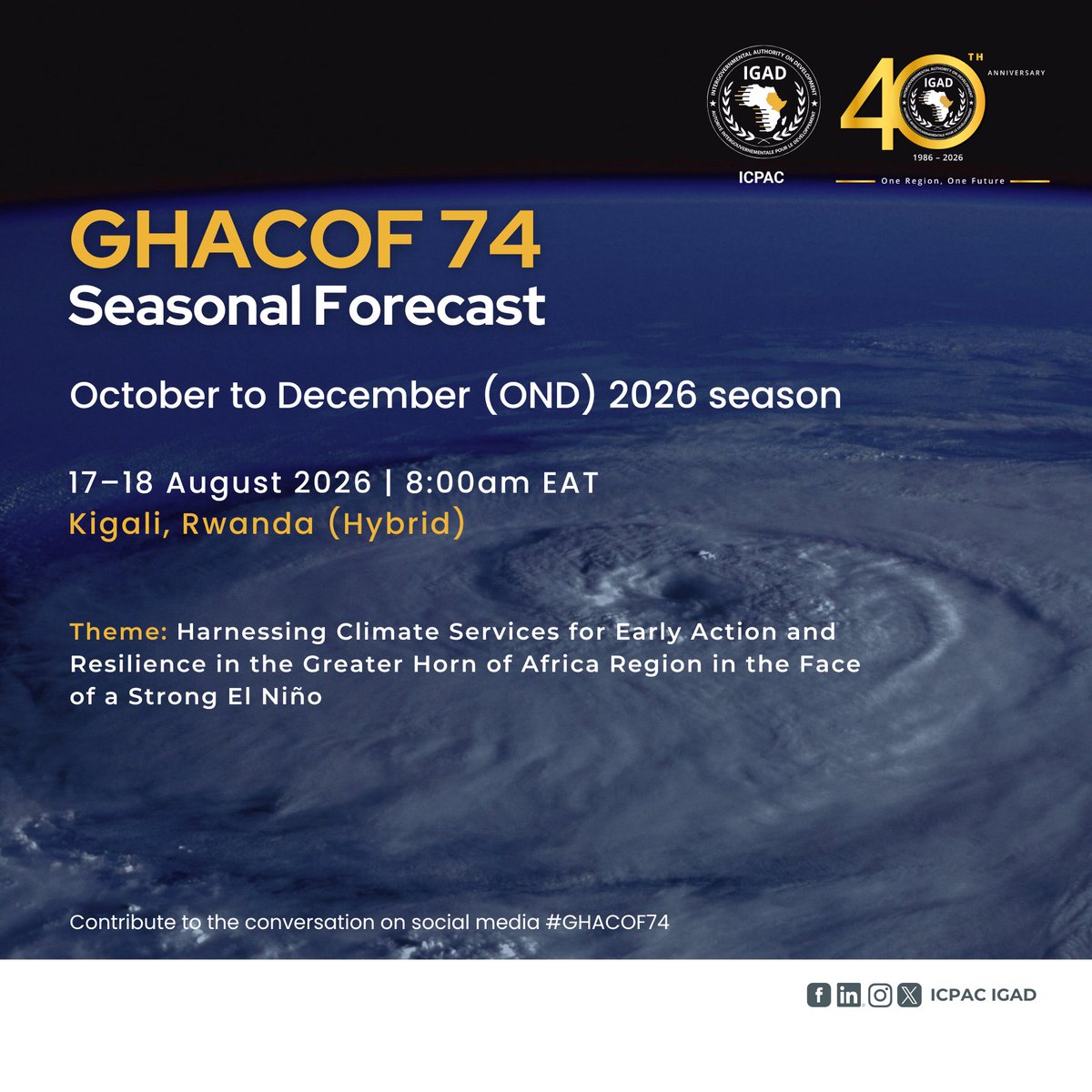
GHACOF 74 is here!
Registration for the 74th Greater Horn of Africa Climate Outlook Forum (GHACOF 74) is now open for self-sponsored and virtual participants.
🗓️17–18 August 2026
📍 Kigali, Rwanda & virtual on Zoom
Register ▶️https://t.co/xiyNpXZLYj
Be part of the discussions on the seasonal forecast and advisories for the October–December (OND) 2026 season. ⏳ Registration for self-sponsored participants closes on 3 August 2026.
#GHACOF74
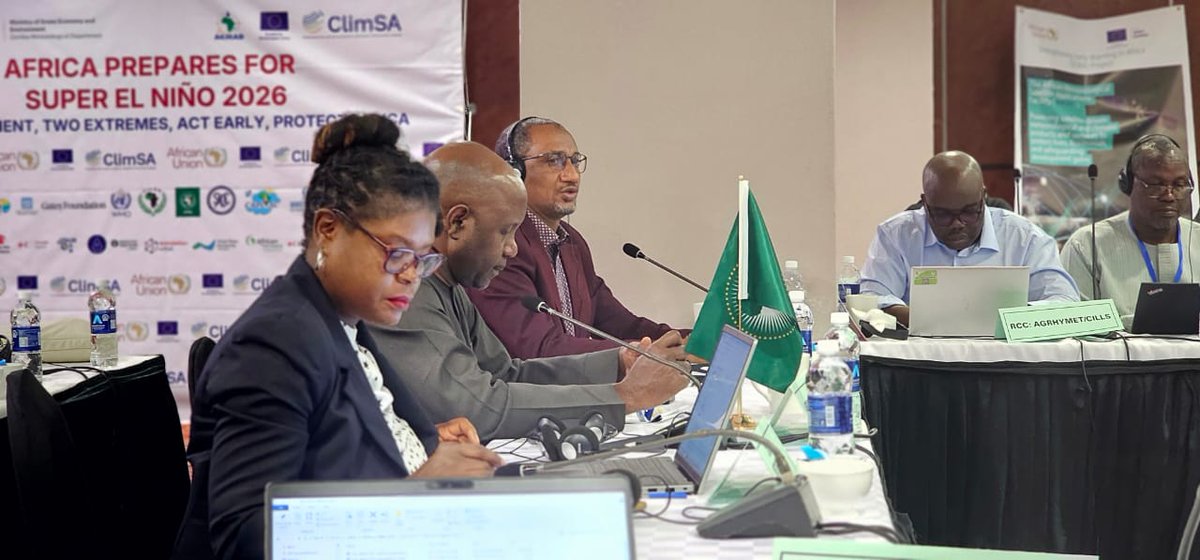
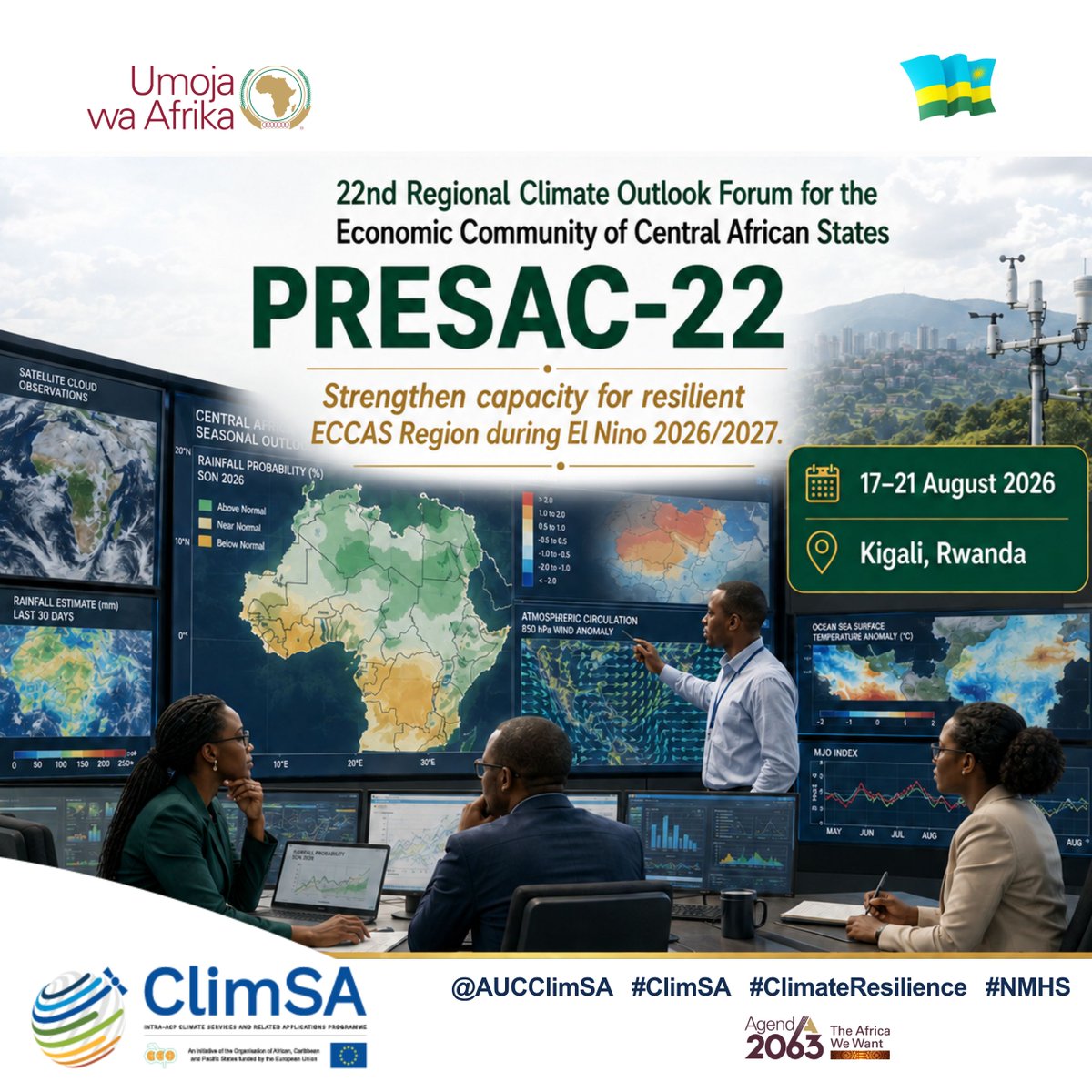
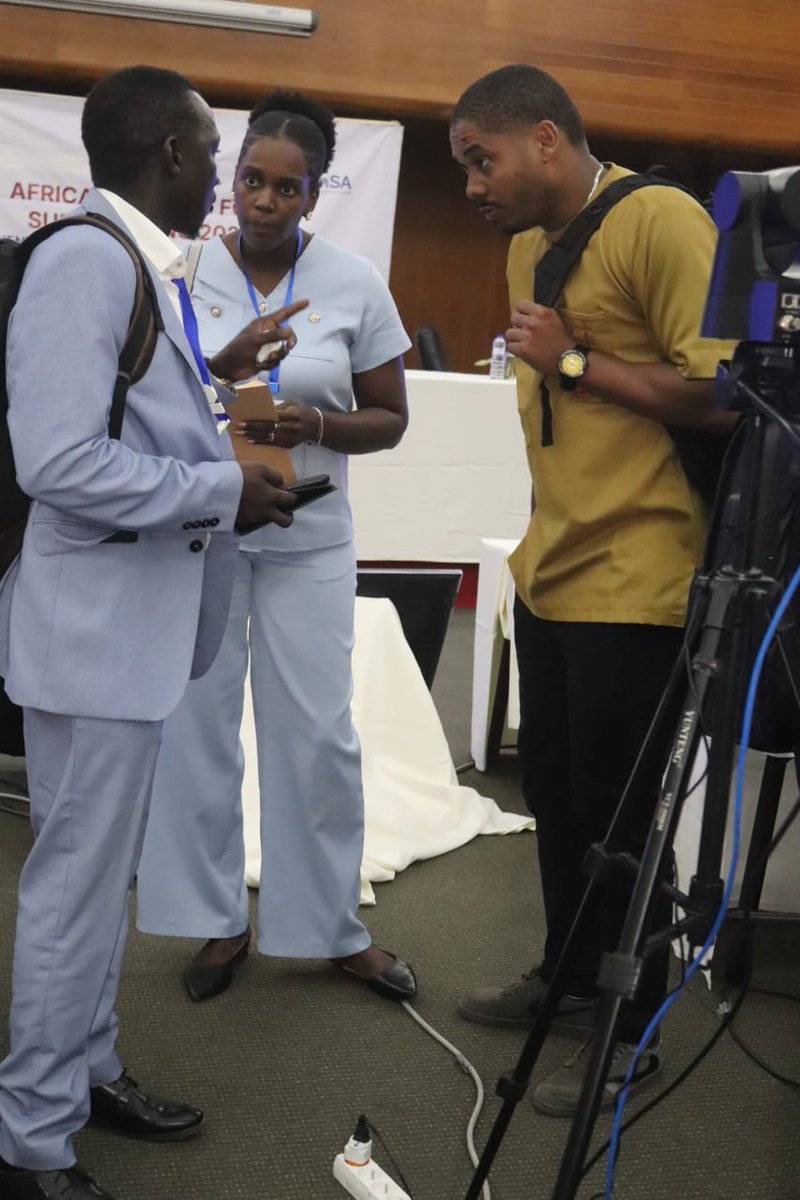
#ThisWeek#ClimSA facilitates the ECCAS 22nd Regional Climate Outlook Forum for the 11 Central African Countries.
The gathering allows for technical session to Strengthen UIPs, Enhance Data Sharing & Ensure Climate Services inform the planning especially for this Super #Elnino
#PRESAC22 is not just another forecasting meeting.
It is a platform connecting climate science to preparedness in key sectors agric,health,#water & #DRR
Through @AucClimsa ECCAS continues to strengthen regional systems that contribute to Central Africas Early Warnings. #ElNiño
Tomorrow @AU_DARBE convenes its ExtraOrdinary Sitting of the Specialized Technical Committee on Agriculture, Rural Development, Water & Environment (#STC_ARDWE), on Africa’s Preparedness & Response on the Anticipated #ElNiño 2026-2027.
#ClimateResilience#ClimSA#EW4A#AMHEWAS
ℹ️📹 Depending on whether we're in an #ElNiño, #LaNiña, or neutral phase, East Africa typically sees different impacts, and these impacts can even work in opposite directions across different seasons. So the effect of an #ElNiño or #LaNiña can look very different in the June-to-September period compared to other times of year.
What's especially remarkable this year isn't just how confident we are that #ElNiño will develop, or how likely it is, but also how strong it could turn out to be, explains Stefan Lines, Science Manager (Seasonal & Sub-Seasonal) at the Met Office.
📜🌍The Roadmap & Sustainability
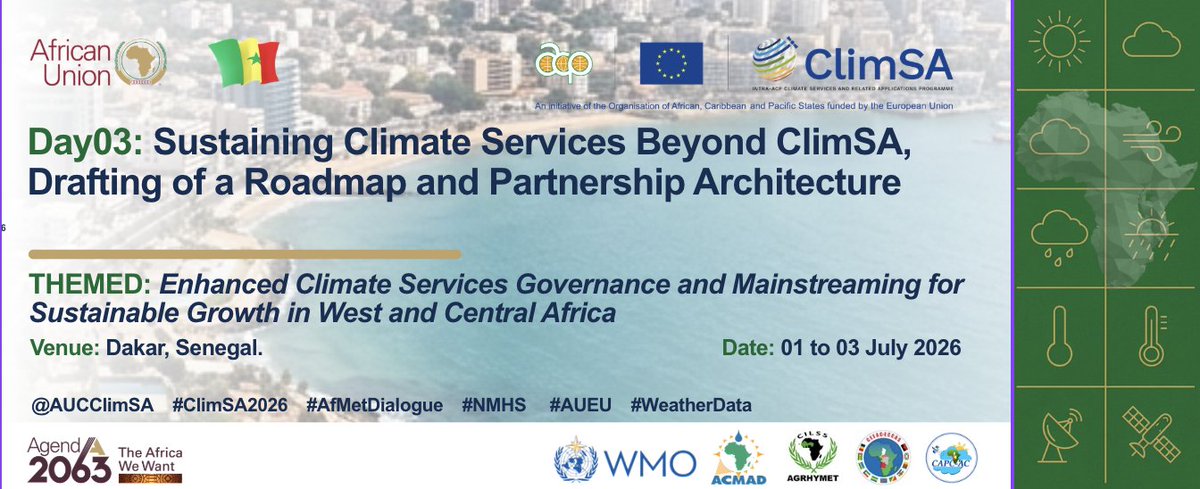
The final day of the #DakarDialogue focuses on the future. As the @AucClimsa program nears its conclusion, delegates are establishing a concrete Sustainability Roadmap to ensure African owned climate services thrive. #ClimSA2026
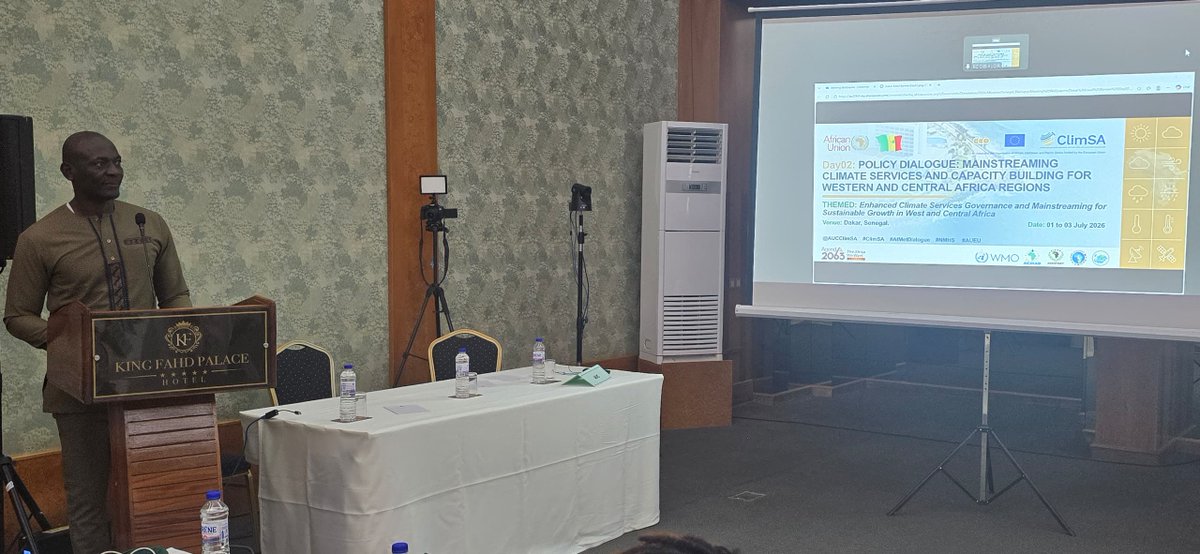
Day2 in #Dakar@AucClimsa focuses on the #LastMile. 📡Infrastructure like PUMA2025 stations is vital, but its true impact is unlocked through User Interface Platforms that translate raw data into life saving, community level advisories📊#ClimateServices#DakarDialogue#ClimSA2026
Weather & Climate variability know no borders.
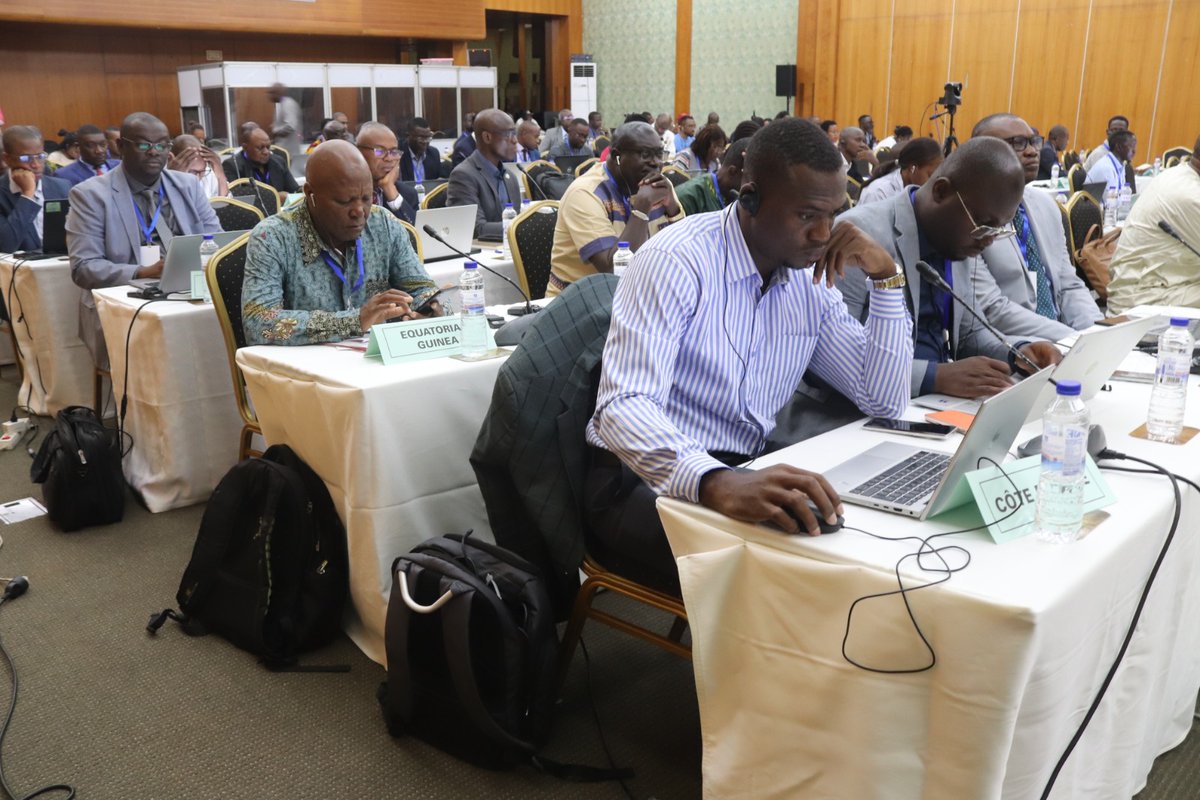
Today, @ECOWAS & @ECCAS Commission experts take center stage to coordinate cross regional data policies, seasonal forecasts, & #earlywarning systems aligned with the @_AfricanUnion Met Strategy 2021-2030. #ClimSA2026#DakarDialogue
🌍 HAPPENING NOW: @_AfricanUnion & the Gov of Senegal @meteosenegal officially launch the Policy Dialogue on Climate Services in Dakar! Over 120 leaders & users are converging to transform how to utilizes weather & climate data for sustainable growth. #ClimSA2026#DakarDialogue
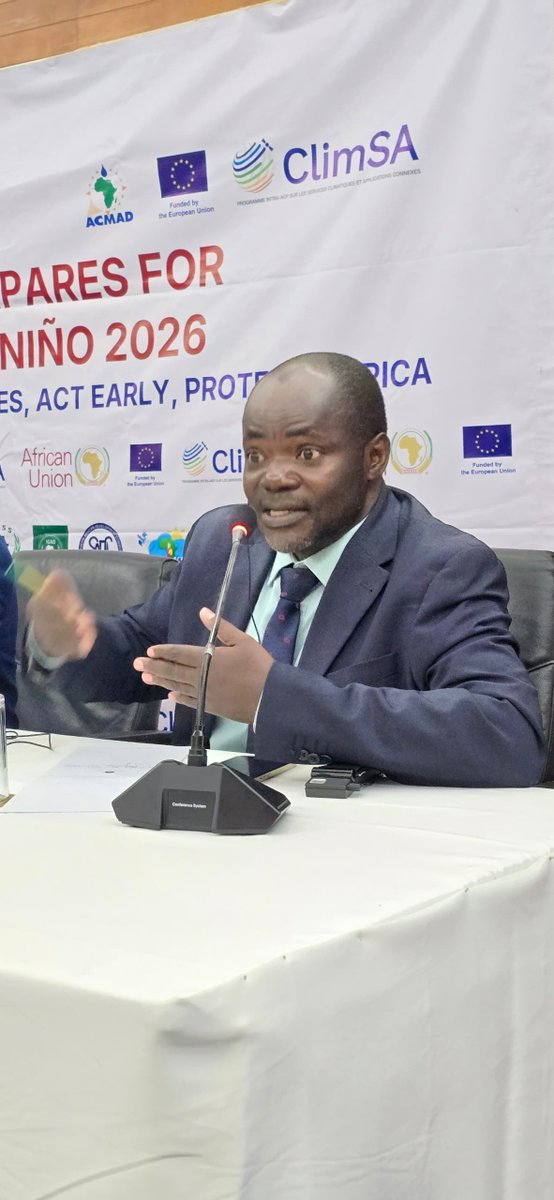
El Niño is not simply a weather event, it is a multi-sectoral risk affecting agriculture, water resources, food security, public health, energy production and national economies.
Countries expecting drier conditions should already be implementing drought preparedness measures. These include promoting drought-tolerant crops, supporting irrigation where possible, conserving water resources, protecting livestock, strengthening food security planning and advising farmers based on seasonal forecasts.
@AU_DARBE
Day02 at #ACCOF21 the road towards producing a consolidated continental outlook. Today Weather & climate experts harmonize information based on the regional outlooks. The Continental Climate Outlook Statement when released, will guide decision makers on the upcoming #ElNino2026
Day3 #ARCCOF21 discussed on strengthening Africa's climate information architecture. Experts reviewed the Draft Continental Sectoral Climate Bulletins Framework to ensure climate information is timely, actionable and tailored to sectoral needs. #ClimateServices#EarlyWarnings
Day3 technical sessions at #ARCCOF21 shaped the future of climate services in Africa. Discussions include the Continental White Paper on Climate Information for Decision Making, validation of the Climate Service Continental Working Group Road Map to strengthen. #ClimateAction
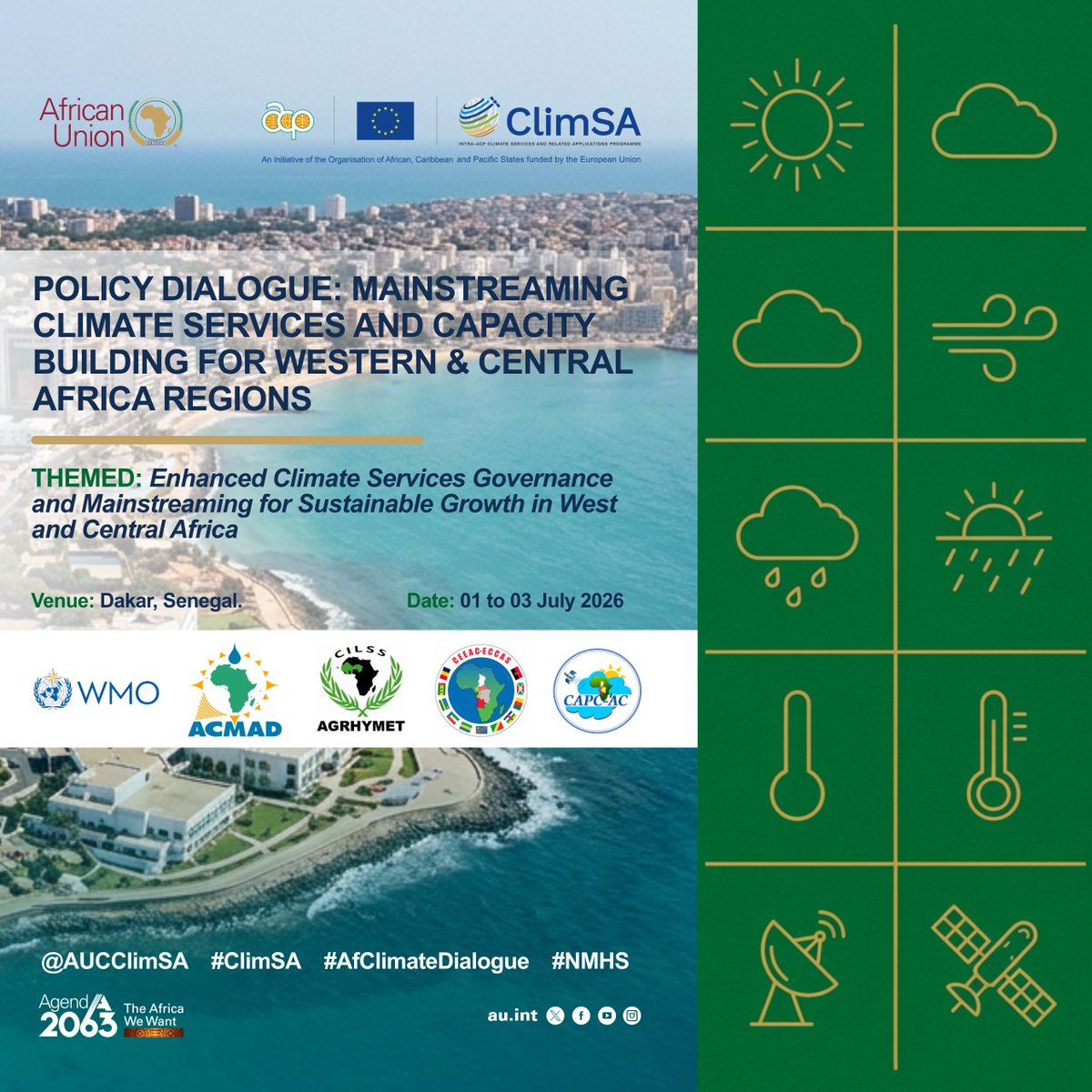
🌍 West & Central Africa face rapid climate shifts, with Sahel warming 1.5x faster than the global mean. From 1-3 July in Dakar, the @_AfricanUnion & partners convene the Policy Dialogue on Mainstreaming Climate Services. #ClimSA2026#ResilientAfrica
📢 Our article on Why Impact-Based Forecasting is the Future of Climate Resilience in East Africa is out.
👉🏾 For years, weather forecasts in East Africa have focused on measurements such as rainfall 🌧️☔️ amounts and temperature 🌡️🪭 levels. While these figures are important, they do not always answer the question that matters most to communities and decision-makers: What will the impact be?
👉🏾 As climate-related hazards become more frequent and severe, there is a growing need for forecasts that go beyond predicting weather to explaining its consequences for people, livelihoods, infrastructure, and ecosystems.
👉🏾 Impact-based forecasting bridges this gap, turning climate information into actionable insights that support early action and strengthen resilience.
🌍For East Africa, this shift from forecasting hazards to forecasting impacts is essential for building a more climate-resilient future.
Read our article ▶️ https://t.co/evYyPW8LZl
#ClimateResilience #ImpactBasedForecasting #EarlyWarningSystems #ClimateServices #DisasterRiskReduction #Adaptation #EastAfrica #ClimateAction #WeatherForecasting #Resilience #ClimateRisk #SustainableDevelopment
The #StateOfClimateInAfrica2025 report sends a clear message: Africa needs stronger early warning systems and climate services.
At #ACCOF21, #ICPAC demonstrated how its operational climate monitoring platforms and Multi-Hazard Situation Room are already supporting anticipatory action, disaster risk reduction and climate-informed decision making across the region.
Together with @WMO, @AfricanUnion@UNDRR_Africa@IFRCAfrica and partners, we're building climate resilience. @IGADsecretariat@IGAD_Spokes
#EarlyWarningsForAll #ClimateAction #ClimateResilience #DisasterRiskReduction #StateOfClimateAfrica #ACCOF21 #ElNiño
#Tomorrow at #ARCCOF21, @AU_DARBE in collaboration with the Republic of Zambia, @WMO and Africa’s Regional Climate Centres, will officially launch the 2025 State of Africa’s Climate Report.
This Provides critical insights into past climate trends to strengthen preparedness and climate informed decision making.