Learn, Connect, Create
• Learn coding with our resources and community
• Connect with top talent or career opportunities
• Create your own audio plug-in
Our new book "The Complete Beginner's Guide to Audio Plug-in Development" is here!
"How do I create my own audio plug-in?"
Anyone who has ever asked that question knows that the answers are complex. Audio programming is an amazing intersection of code, math, and creativity, and one of the most challenging parts is just getting started...
...until now!
This is a new collaboration with @mhollemans that's designed specifically for people who are getting started - no coding experience necessary!
Our favorite part about this book is that it TRULY takes you from the beginning and shows you not only how to get started, but also provides a foundational understanding of how plug-ins work.
This is an ideal book for...
• Sound designers
• Music producers
• Developers from other areas in software
• Audio developers seeking a better understanding of how things work
Here are just a few of the subjects we cover:
• Downloading your first IDE (both Windows & Mac)
• Getting started with the JUCE Framework
• Starting C++ from the very beginning
• Introduction to digital signal processing
• Creating your first audio plug-in
• Creating a custom look and feel
• Debugging techniques
• How to release your plug-in
...and much more!
Find out more here: https://t.co/Kcdo7DCnxy
Get the book here:
AI has transformed audio software...or has it?
In my recent Audio Engineering Society talk, we walked through some of the seismic shifts in our industry, from the very beginning at Bell Labs to MIDI to JUCE, and now LLMs.
Each shift made building cheaper and faster. And now, more people are building plugins than ever.
But there are some things that don't change. The most successful plugins we've helped develop came from clients with three things:
✅ Great taste
✅ A trusted audience
✅ A product that helps others get that taste into their music
Amongst all the noise, I'm seeing some standout products and perspectives that have amazed me.
As for me, I'm all in on human creativity. In fact, our upcoming adventures are all about putting amazing creators in the spotlight, and I can't wait to tell you all about them.
The tools have helped us create faster, but the formula for success stays the same.
Watch the full talk here: https://t.co/D0Jyd7k9ef
What are you building right now?
How can you ship high-quality plugins when you’ve already got a full-time job?
Today at 12:30pm ET / 5:30pm UK, I’m sitting down with Simon Weis, founder of Darkpalace Studio.
By day he’s a physics PhD writing HPC software for automotive and CAD. At night he builds plugins like Piranha and Parrot - which received 3rd place in the KVR plugin challenge this year!
We’ll get into:
✅ Building plugins around a day job
✅ How Darkpalace Studio got started
✅ Winning 3rd place in the KVR Developer Challenge 2026
Going live today and open to everyone.
See you there: https://t.co/XDYA9508kY
I built Aurora - A free, open-source audio plugin that lets you design how you see sound.
Waveforms, spectrum analysis, stereo imaging + music-reactive 3D. Customize the colors, layouts, and how it all moves.
https://t.co/wQCu2CRRrv
🎤 ADCx Gather Speaker: Joshua Hodge
Know Your Worth: Pricing Work When the Rules Just Changed
https://t.co/X1RmrQ95DI
🎟️ Join us online October 16. Registration is FREE! https://t.co/eTgqPjNHMv
#audio#developer#programmer#programming#AI#coding
I can't believe this worked...
Gemini 4 Argon made a Jupiter/Moog combo synth in under 30 minutes.
It's all in a single HTML file, and you can play with it here: https://t.co/8nmGXCxBmd
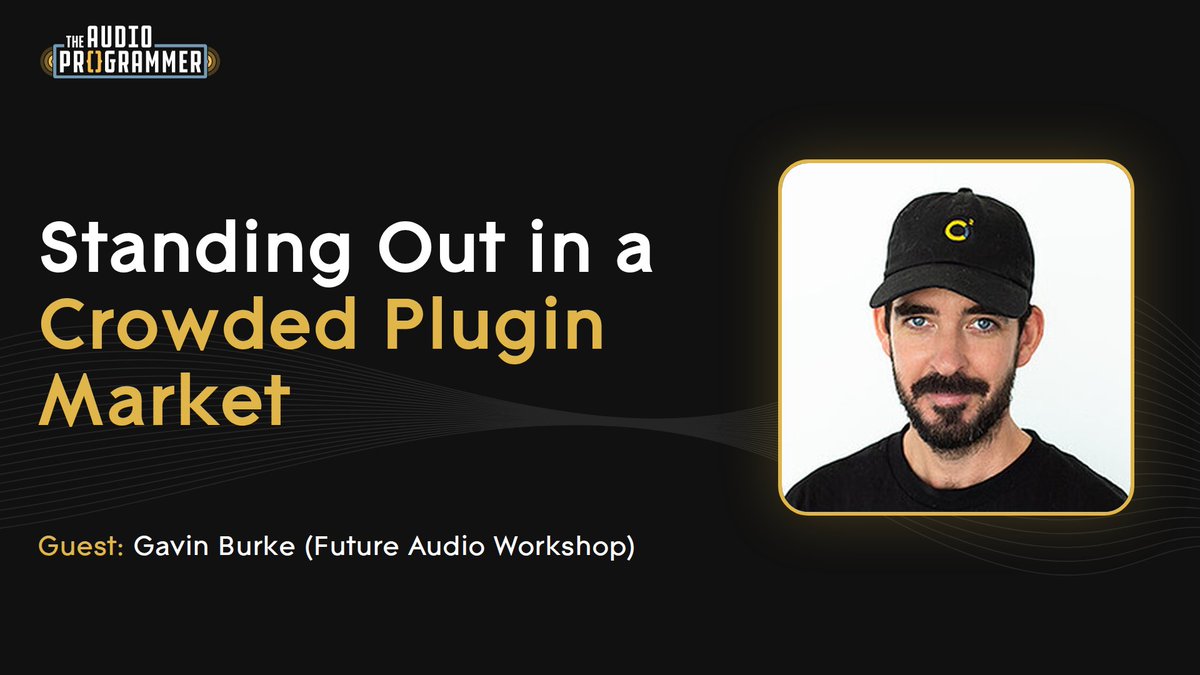
How do you get your plugin noticed in a market that's saturated more than ever before?
Join us this Tuesday for a live conversation with the legendary Gavin Burke.
Gavin is the creator of SubLab (Plugin Boutique's all-time best-selling synth) and founder of Future Audio Workshop.
He was also one of Arturia's first employees in 2005, and later CTO at Output as one of the architects behind Arcade.
We'll discuss:
✅ How to get noticed in a saturated market
✅ How SubLab got built and how it sold
✅ Early days at Output as CTO at a fast growing music tech company
✅ Where an indie developer should put their time in 2026
We'll be taking your questions live.
Free, online, open to everyone.
Join live here: https://t.co/LhXf57gIWz
📢 ADC26 Online Volunteers Wanted!
Help support the ADC community during ADCx Gather and ADC26, and receive FREE online access to ADC26!
Apply by Sept. 27, for more info👇
https://t.co/IGObac2hdS
#audio#developer#programmer#programming#community#conference
Today, I'll be speaking online with the Audio Engineering Society about the past, present, and future of audio programming!
From Bell Labs to LLMs, we've come a long way since first getting sound out of a computer. And we'll be taking a look at patterns throughout history to help us learn where we can apply our focus for the next era of music computing.
(This was a talk that was rescheduled from July)
Catch us today at 2pm Est / 7pm UK. See you there!
Ctrl+F, but for sound 🔍🔊
SpotSound just landed on Hugging Face, give it a long recording and describe what you're looking for, and it will hand back the timestamps
▶️ on Spaces https://t.co/s6STHcV539
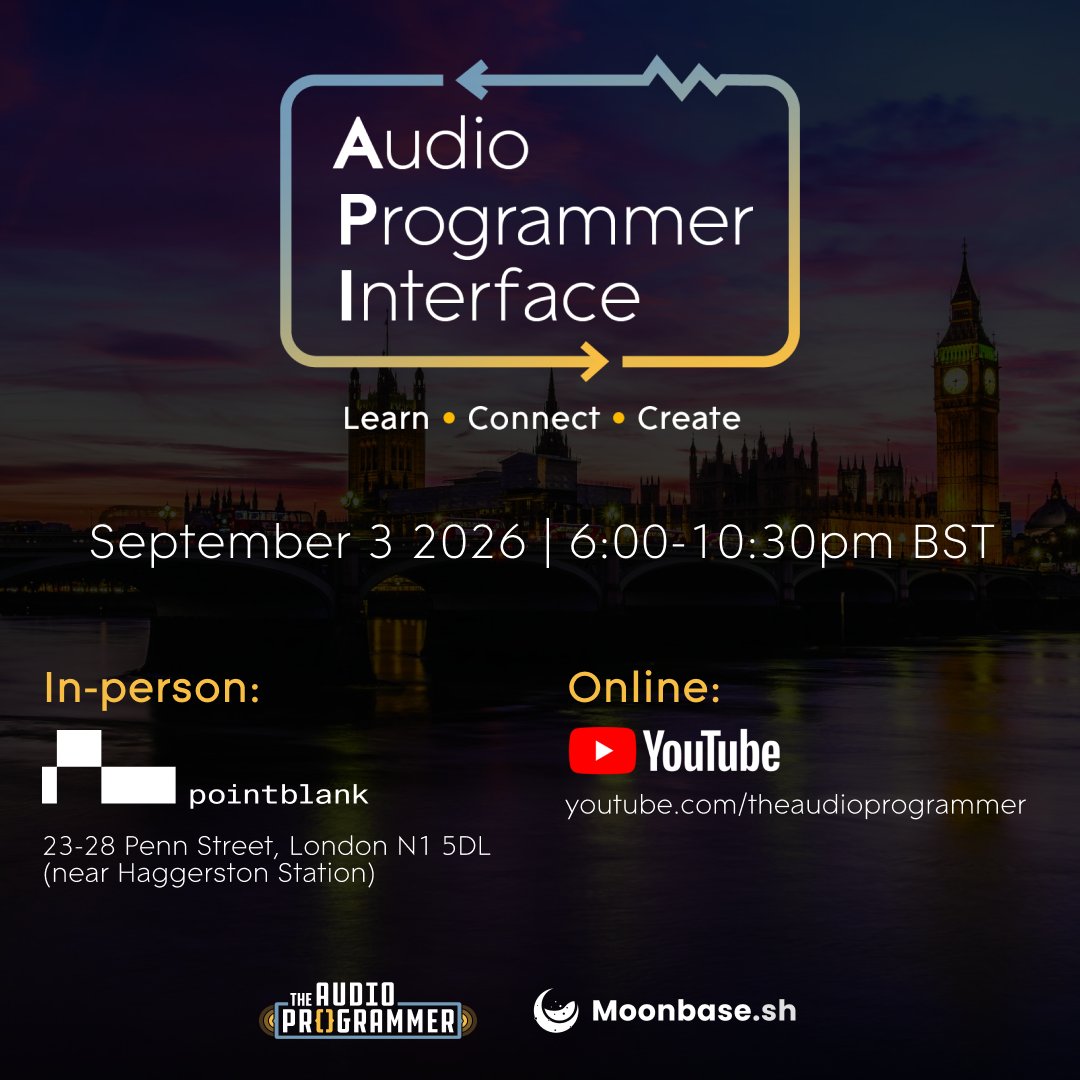
Audio devs, creators and music-tech builders in London! We’re getting together again for our next event, and you're invited.
Twice a year, we come together as a community to talk about where music and audio software is heading - from plugins and apps to the creative tools we use to build them.
And along with the talks and networking, we’re introducing something new called "Share Your Work."
Building a web app, plugin, hardware project, or something else entirely? We’d love for you to show the community what you’ve made. It’s an opportunity to put your work in front of the room and, through our livestream, the wider world.
Find out how to take part via the link below.
What the night holds:
✅ Talks from the people building tomorrow's audio tools
✅ A room full of creators who are energized about music and audio
✅ Pizza! 🍕
We'll be hosting the event in partnership with @Point_Blank Music School.
Can't make it to London? We'll be livestreaming on YouTube for the global community.
Registration is open now: https://t.co/fuYqVuwwne
Most developers can build the plugin. The hard part is getting anyone to care.
Tomorrow we're going live on why most audio plugins never sell, and what actually works.
We're sitting down with Dani Karanyi, founder of Karanyi Sounds. They're a boutique plugin brand with over 100,000+users, including Grammy-winning producers and composers scoring Netflix trailers. Dani approaches plugins as a producer first and a developer second, and he's going to show what that looks like when you're building a real business.
Here's what we'll get into:
✅ Why marketing is the harder half of the plugin business
✅ How positioning and sub-brands beat a feature list
✅ The real economics of your own store vs. resellers vs. regional distribution
✅ Launch mechanics: pricing, DLC, bundles and sale cadence
✅ The mistakes that cost him, and why most indie teams need marketing capability in-house rather than an agency
We're streaming live, so bring your questions. We'll be taking them in real time!
Join us here: https://t.co/2WT7fVJHIa
Connect with the global audio developer community.
Sponsor ADC Bristol 2026 and showcase your technology while supporting education, collaboration, and innovation.
Join Us! Nov 9-11 Bristol UK & Online
https://t.co/n2QJyMFVf2
#audio#developer#programmer#programming#coding
Building audio products that people love to use is tough...
Getting investment to build those products is even tougher.
I found someone who has done both!
Meet Max Shafer, Co-Founder of Just 4 Noise. They're an ethical AI audio company based out of Berlin.
I had a great conversation with him about the challenges of building an audio plugin company in this saturated industry, using AI in a way that doesn't repulse customers, and the journey of finding investment along the way!
https://t.co/K909IhdgKa
Isn't it just wonderful how we can talk to these ancient machines from half a century ago? Available now on GitHub, I've completely overhauled my old Atari 2600 MIDI interface as the "A26F-neo". Simpler hardware, better control, more samples. https://t.co/RBiTjiJpBc
This week I learned how to teach audio synthesizers how to program themselves using LAION-AI/CLAP audio embedding in my application https://t.co/hEiYeJyQQu