https://t.co/T9IsXnoSWC
July 29th to 31st, 2026
Comprehensive review of Hematology
Department of Hematology and
Department of Transfusion Medicine & Immunohematology
Christian Medical College, Vellore
@OffCMCVellore@cmchaematology@HCC_HemeCancer
ISOM/MOMS Congress is coming to London — a landmark event for the global obstetric medicine community
7–8 December 2026 | QEII Centre, London, UK
Registration and abstract submission now open! https://t.co/CtPFrLw4PA
#ISOMMOMS2026#ObstetricMedicine#ISOM#MOMS
Yes - the meeting of the year is now open for registration!
#ISOMMOMS2026
📅7th and 8th Dec 2026
🌍QEII Conference Centre, London, UK
Global updates ✔️
Exciting clinical topics✔️
Time to meet old friends and make new ones✔️
SIM session✔️
POCUS ✔️
https://t.co/CtPFrLw4PA
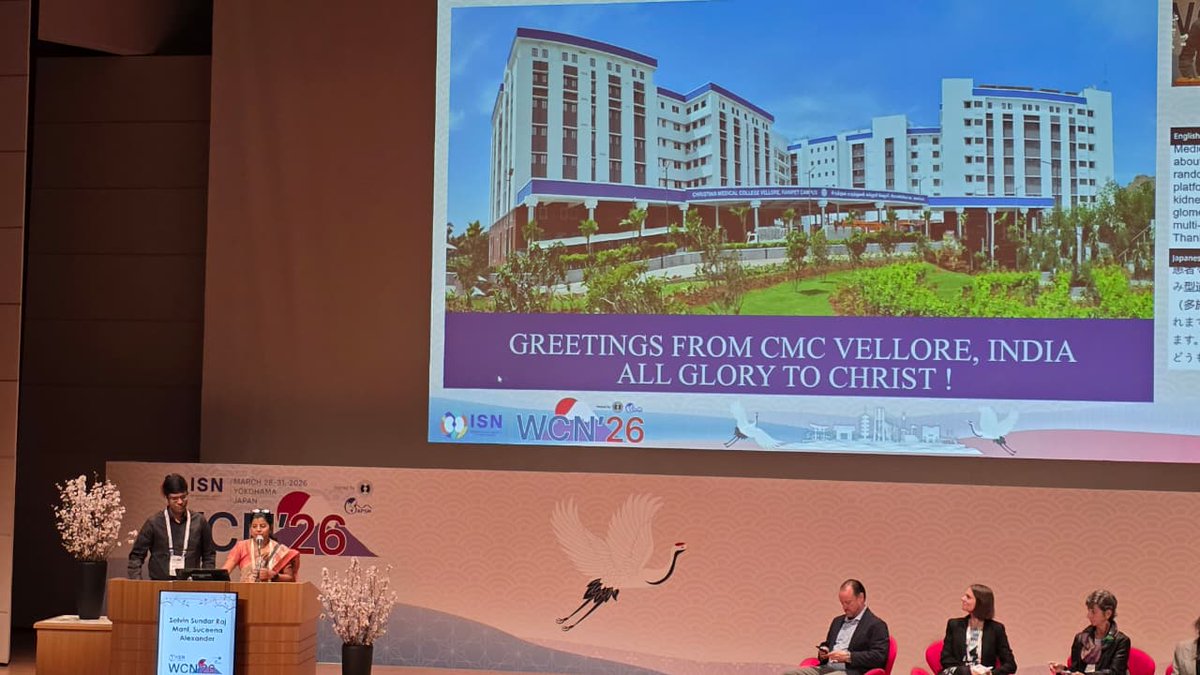
My brilliant colleague Prof Succeena Alexander from CMC Vellore @cmcvelloreoff
at the WCN @ISNWCN
Japan @isn_india
Succeena spoke on
#IA GRACE platform trial in IgA
Today is #TolkienReadingDay!
@Bodleianlibs has the largest #Tolkien archive in the world, containing over 500 boxes of manuscripts and over 300 books from his personal library.
📷 | Bodleian’s Book Storage Facility, 2018
@OliverWDahl 'The Kingkiller Chronicle' by Patrick Rothfuss is the only fantasy series I've read which deals with the problem of money in a quest properly.
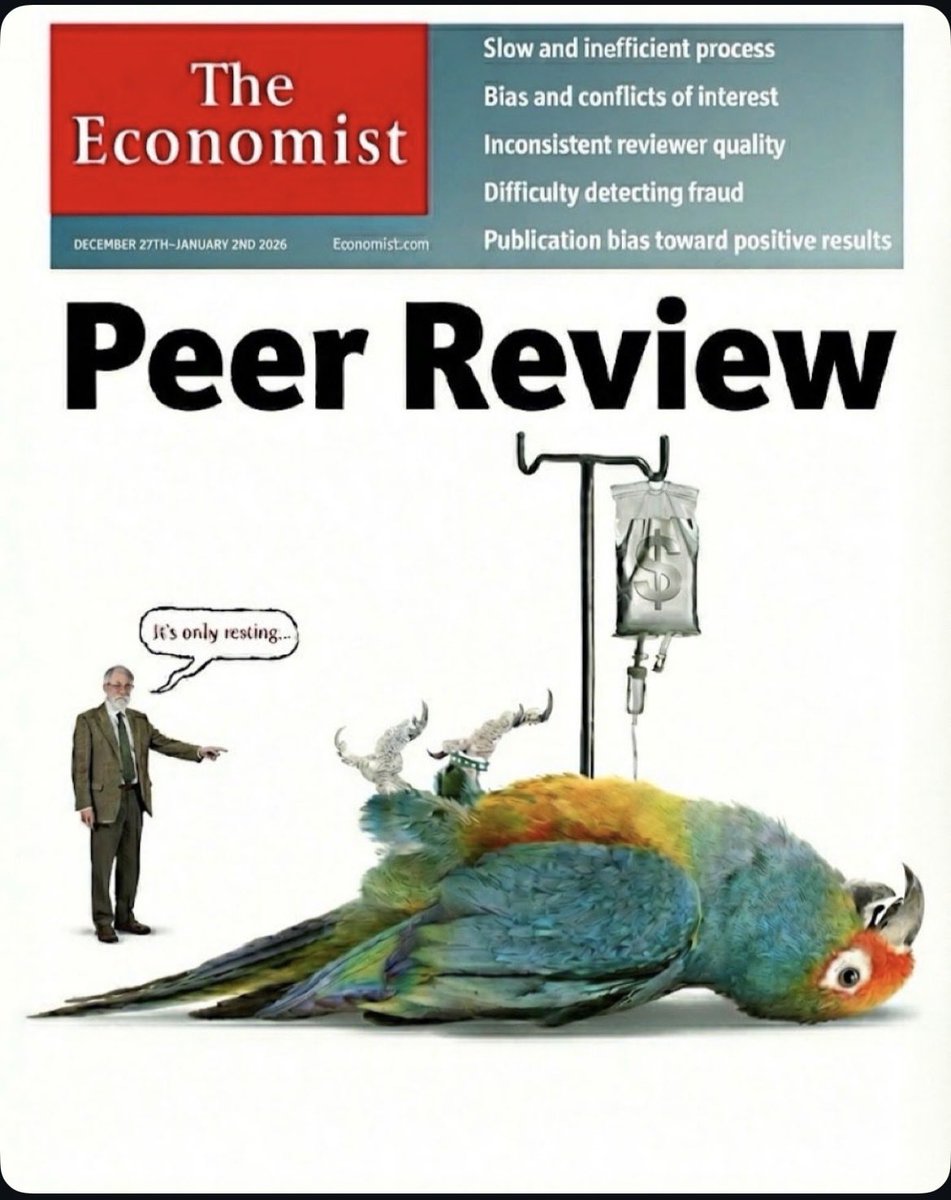
For decades, peer review has been treated as the gold standard of scientific validation.
Yet many scientists know the reality: the system is far from perfect. Peer review is broken and sometimes even corrupted.
The process can be slow, inconsistent, and vulnerable to bias. Reviewers are sometimes asked to judge work outside their true expertise. In other cases, they may be evaluating ideas that challenge the very paradigm in which they were trained. And occasionally, reviewers are simply competitors.
Ironically, the most prestigious journals can also be the most conservative. Truly new ideas are often met with skepticism, while safer work that fits the current narrative moves more easily through the system.
Increasingly, papers are judged less by the originality of the idea and more by the volume of data, the sophistication of statistics, and the beauty of the figures. Science risks becoming data-rich but idea-poor.
But there is an important reality to remember: journals do not ultimately decide the impact of scientific work. Impact is decided later, by the community. By the scientists who read it, test it, debate it, and cite it.
In the end, citations and ideas determine the legacy of a paper, not the impact factor of the journal that first published it.
Science has always advanced by questioning assumptions. Perhaps it is time we also question the system that filters scientific ideas.
🧵regarding Lord of the Rings - related traumatic injuries, and whether access to modern Level 1 trauma centers could have decreased morbidity and mortality within the Fellowship.
Here we will take a more evidence-based approach to some of the injuries in Middle Earth
(1/ )
Anesthetic Considerations in Pregnancy with heart disease: Journal of Obstetric Anaesthesia and Critical Care https://t.co/4L9Dw2bYSA
Glad to share our article published
You might be surprised to learn that Stalin is a fairly common name in South India. You’ll also find Lenins, Trotskys, and even Ho Chi Minhs!
People wanted to name their kids after strong world leaders, especially socialist ones during a time when India was allied with the USSR. It was popular in the 1950s-1960s, but there’s a funny feedback loop where now you wouldn’t name your kid after Joseph Stalin but you might name your kid after MK Stalin, the chief minister of Tamil Nadu, so there are still baby Stalins out there.
There was even an Indian Adolf Hitler, a government minister who was arrested by an Indian John F. Kennedy - it was a field day for newspaper headline writers.
A flurry of educational events in the pipeline... how exciting!
First up:
Lipid disorders in pregnancy
5.3.26
2-5pm (online only)
Expert speakers, complex cases covering challenging clinical topics - do join us!
1/3