Introducing Cosmos: the Unified Agents Platform for software teams.
Orchestrate a fleet of agents across your entire software development lifecycle, as a single organizational system instead of disconnected workers.
It's changed how our own engineering team works, with throughput up 3x.
See it live this Friday, June 5 at 10am PT. Full walkthrough of Cosmos, plus how our own team at Augment uses it.
Try Cosmos today: https://t.co/IVMEHbs7kU
Register here: https://t.co/KxbRAmiYp4
Introducing Cosmos: the Unified Agents Platform for software teams.
Orchestrate a fleet of agents across your entire software development lifecycle, as a single organizational system instead of disconnected workers.
It's changed how our own engineering team works, with throughput up 3x.
Cosmos runs in your environment or ours, supports the models you choose, and provides the observability, auditability, and human oversight required to deploy agents at scale.
Learn more: https://t.co/HjvzP1Av6F
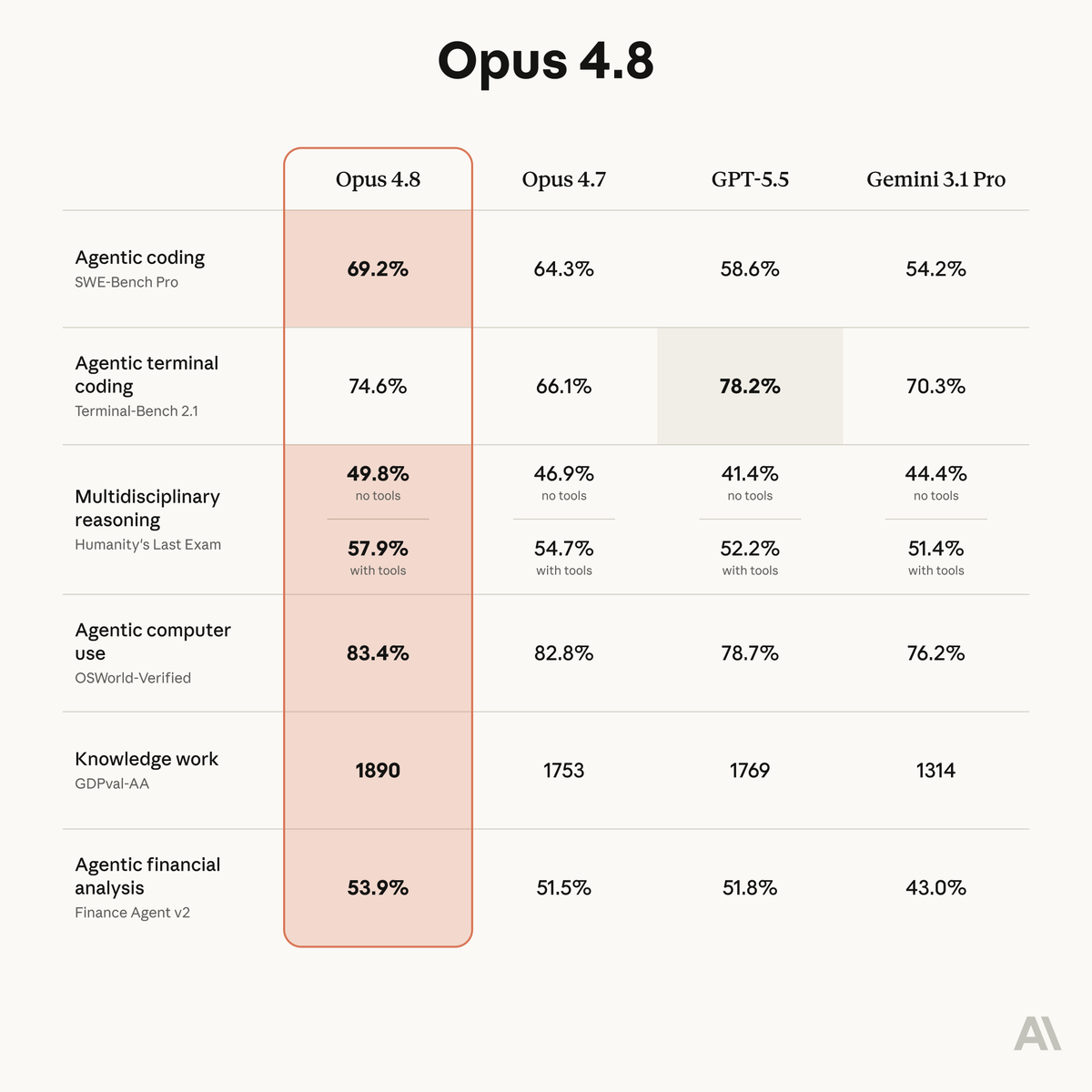
Opus 4.8 is now available in Cosmos.
In our evals, the model demonstrates strong performance on long-running tasks - including multi-hour executions and ticket-to-PR workflows with minimal intervention.
Use Cosmos and Opus 4.8 on your most complex @Linear tickets or challenging @getsentry issues!
Introducing Claude Opus 4.8: it builds on Opus 4.7 with sharper judgment, more honesty about its own progress, and the ability to work independently for longer than its predecessors.
Available today at the same price.
I'll be giving a talk at the Engineering Leadership Live event in San Francisco.
The talk is titled: AI-Native Engineering Leadership
I'll be sharing:
- What does it mean to be an AI-native engineering leader
- What has changed from 1-2 years ago
The team building Codex at @OpenAI has a front row seat to how engineering organizations are changing, as agents become part of the team.
Join a live fireside chat on Thursday, May 21 at 10 AM PT with @TheRohanVarma, Product Lead for Codex, OpenAI, and Vinay Perneti, VP of Engineering, Augment Code, as we discuss:
· How the Codex team builds software end to end with agents
· What's actually shifting inside engineering orgs adopting them
· Which change management tactics are working, and which aren't
If you lead an engineering team and are trying to make sense of this moment, this is the conversation for it.
Register today:
https://t.co/F17goLEl56
The demand for engineering managers is actually surging in the agentic coding era. Agents can write a lot of code, but that code still needs someone to set the direction, review the output, and maintain system coherence.
Our VP of Engineering @VinayPerneti shared his perspective with @TheLeadDev 's @SageLazzaro in the piece, and it's worth a read for any engineering leader thinking through what their role looks like in an agent-first world.
Read the story: https://t.co/8LF7GggcP1.
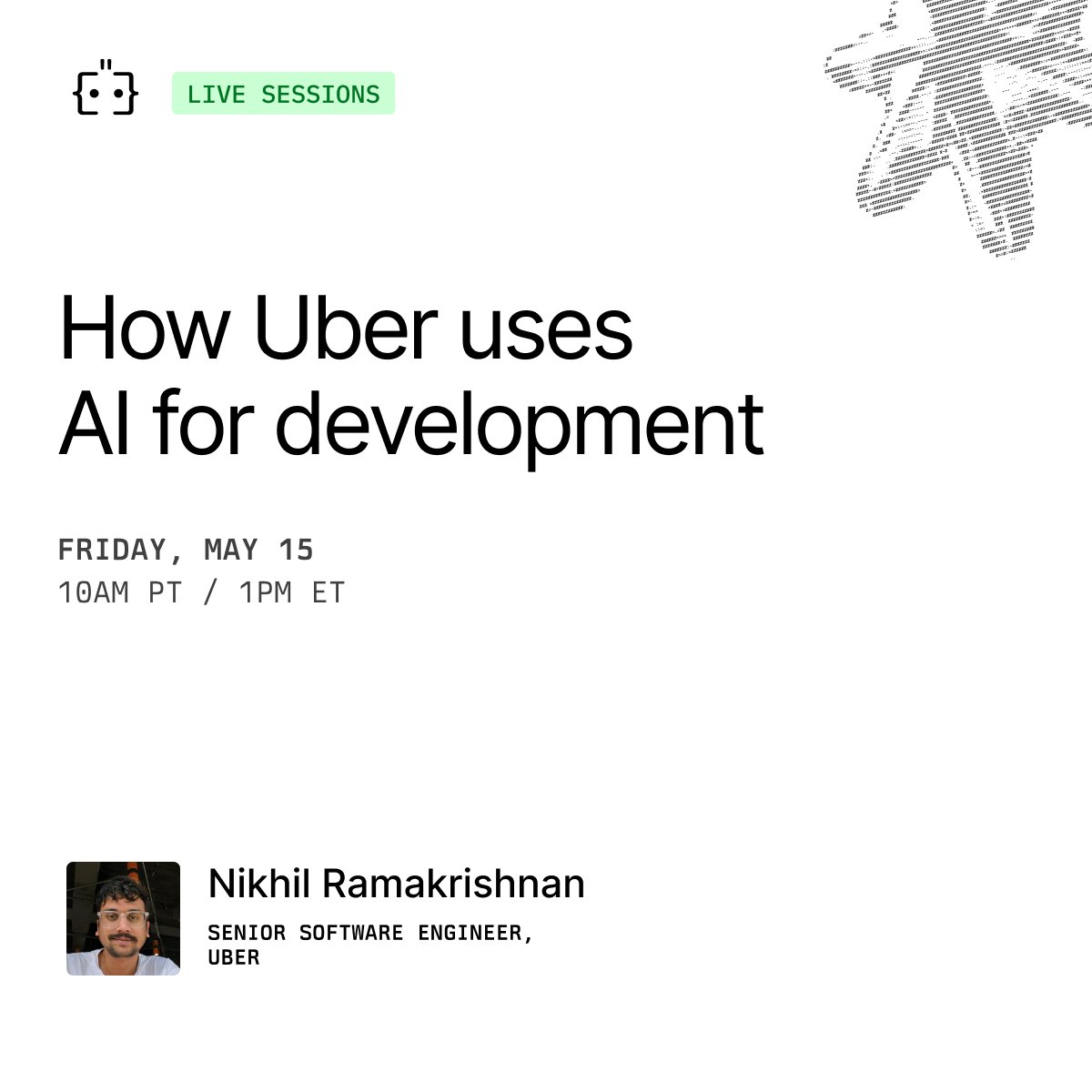
Uber's internal agent platform now generates 11% of all PRs across the company.
Join a live conversation on Friday, 5/15 at 10 AM PT with Nikhil Ramakrishnan, Senior Software Engineer at Uber. In our discussion, he will uncover the platform foundation and reveal how engineering work at Uber has actually changed.
See how Uber built their agentic developer platform, and how engineers actually use it.
Register today:
https://t.co/Ssf7ABgoA4
"Excited, anxious, invigorated."
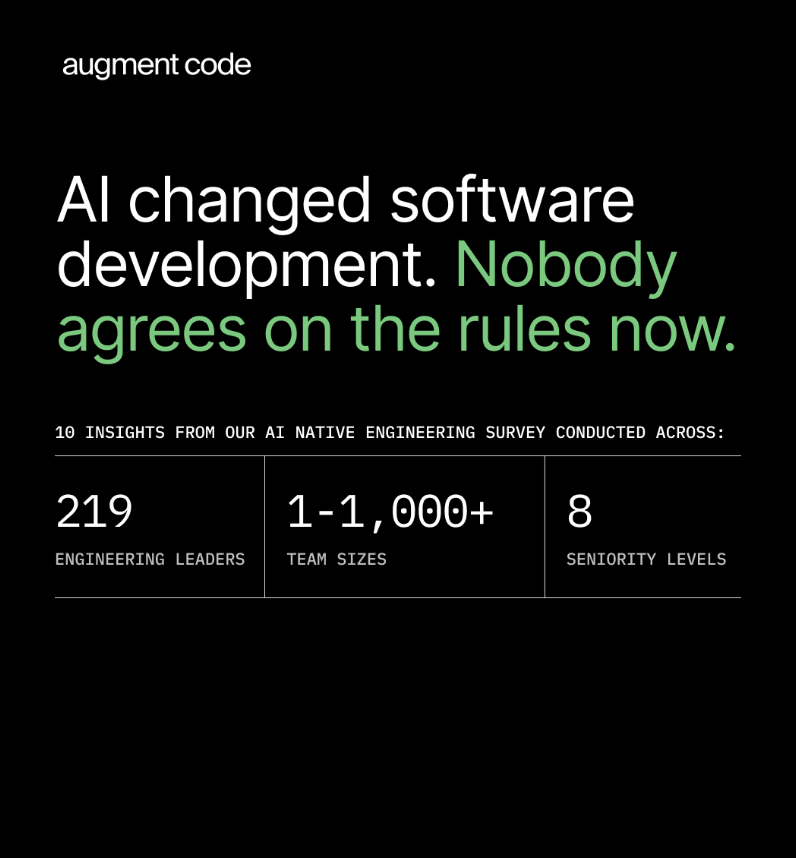
That's how one engineering leader described going AI-native. We asked 218 others how they feel.
The results? Remarkably consistent:
"Insecurity, mistrust, hope."
"Optimistic, excited, threatened."
It's the same people, holding many feelings at once.
That's the baseline running through our new report, The State of AI-Native Engineering in 2026, co-authored with @VinayPerneti and @EmmaStarks.
The engineering leaders we spoke to ranged from managers to CTOs, overseeing teams of 1 to 1,000+ engineers. The sample skews AI-forward.
Here’s what they told us.
→ 48% of their code is now AI-generated.
→ 55% are concerned or very concerned about losing shared understanding of the codebase.
→ 63% say their engineers are raising fears about skill relevance to their managers.
→ At the largest teams (201-1,000 engineers), that last number rises to 89%.
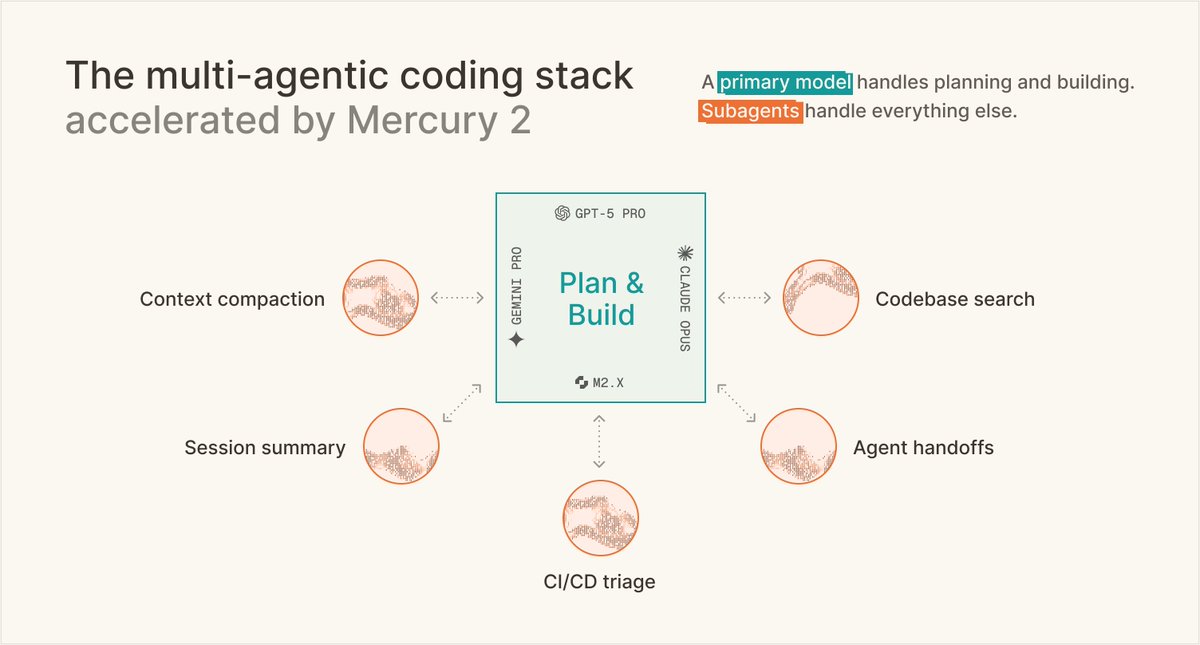
At @augmentcode , we took a counter-intuitive bet on our AI architecture.
Instead of using the primary coding model to preserve KV cache (the industry standard), we used Mercury 2 by @_inception_ai as a dedicated subagent.
The payoff for our users:
82% faster context compaction,
90% lower summarization costs,
<1s tool-search summaries,
30% lower LLM spend via Prism routing
Read the full story here: https://t.co/UN7xxX8Ap6
@augmentcode rebuilt their context compaction layer around Mercury 2. 82% latency cut. 90% cost cut. Comparable quality to Opus 4.7. Running in production today.
"We took a counter-intuitive bet. We decoupled summarization entirely, offloading it to Mercury 2 as a dedicated subagent. Mercury 2 is the highly efficient engine powering our most critical workflows."
-@RustagiAnkur & @jm1234567890, Members of Technical Staff at Augment Code
The subagent layer needs the most efficient model. Full methodology and eval setup in the writeup.
https://t.co/LPVTdaMjli