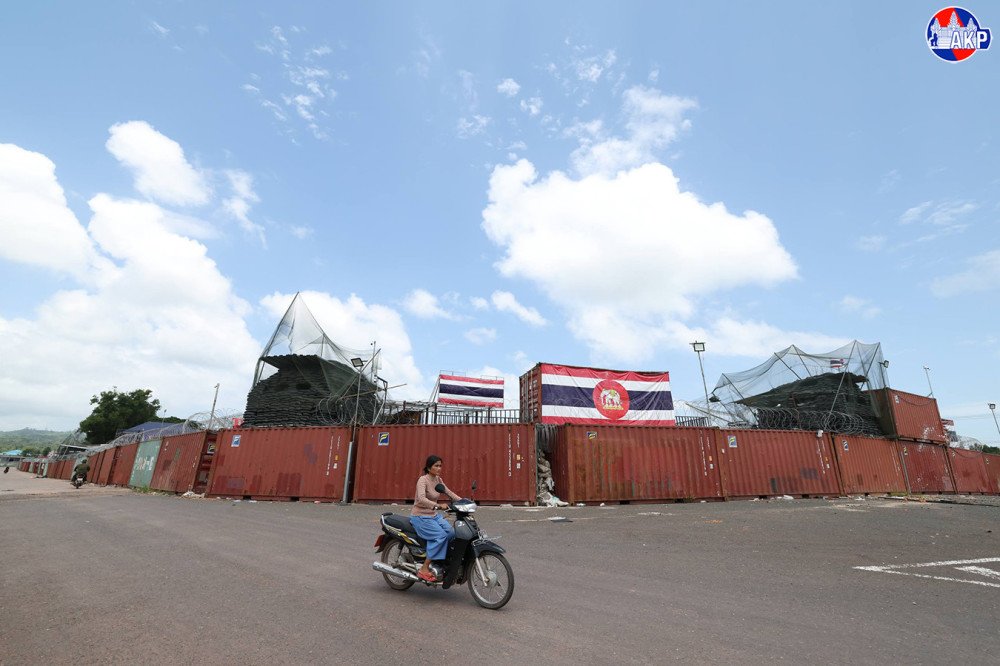
Cambodia has lodged another protest against Thailand’s installation of barbed wire at two border pillars in Oddar Meanchey and Banteay Meanchey provinces on July 5 through July 9.
https://t.co/6supfjpe8f
It has been a year since three of Cambodia’s Khmer Rouge-linked memorial sites were escribed on the UNESCO list of World Heritage Sites.
https://t.co/SyJZ34Ulfp
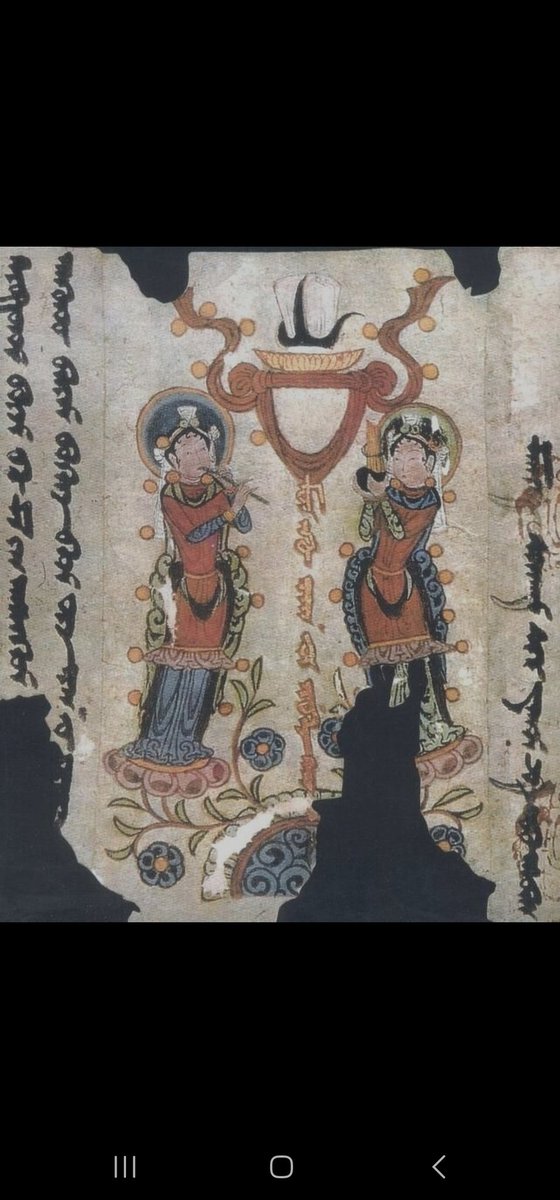
Lost Manichaean text found in a Buddhist Stupa cave in Xinjiang province of China.
The text was written in Sogdian by a man named Šahryār Zādag.
The text itself is made up of a series of poems and songs and is very music oriented in nature.
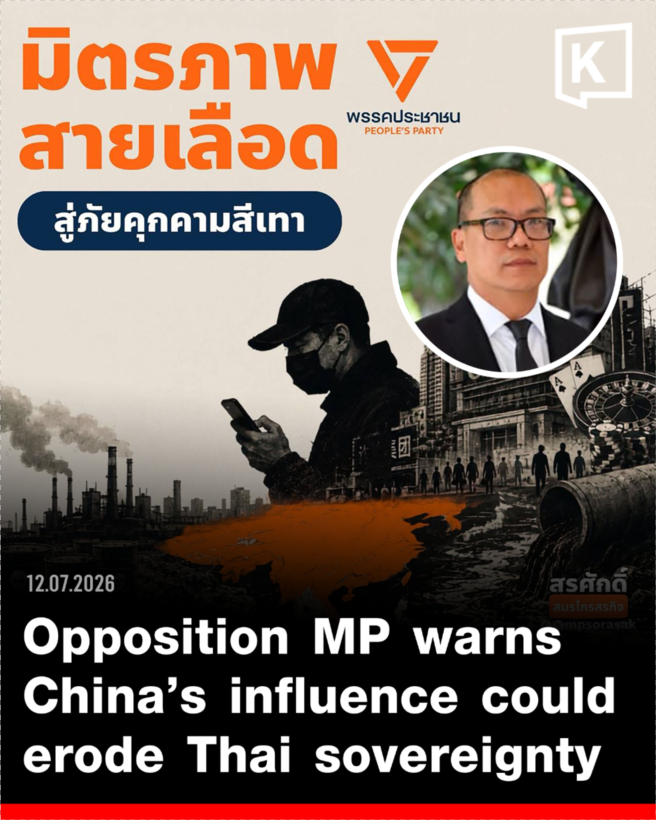
Main opposition People’s Party MP Sorasak Samonkraisorakit warned on Sunday that Thailand should avoid becoming politically subservient to China.
In a lengthy Facebook post, Sorasak argued that Thailand must distinguish between cultural and commercial ties with Chinese people and political influence linked to the Chinese state.
He raised concerns about China’s political model, alleged influence networks, arms supplies in the region and the environmental impact of Chinese-linked mining activities in Myanmar and Laos.
Sorasak said Thailand needs a foreign policy firmly grounded in the rule of law to protect its sovereignty and national security.
His full remarks are in the first comment.
#ThailandNews #China #ChinaInThailand #SorasakSamonkraisorakit #PeoplesParty
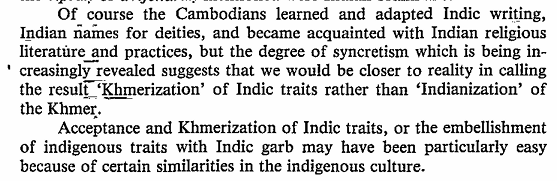
It would appear that pop-cultural conceptions of the 'Indianisation (Hindu-Buddhist-ification)' of SEA are stuck back in Majumdar's times when land was conceived as a sort of 'colony' of the subcontinent.
Academics however have already moved past that:
As an agricultural civilization, Javanese have devised elaborate and detailed calendar based on monsoon called Pranata Mangsa (ꦥꦿꦤꦠꦩꦁꦱ) currently we are in the Ketiga (ꦏꦠꦶꦒ) which coincide with dry season where southern cold and dry winds from Antarctica and Australia blew to the north.
Filipino workers in Saudi Arabia subjected to widespread abuse, report says
Amnesty International finds foreign domestic staff regularly exploited and unable to leave
https://t.co/njDM2Cqp8I
When Filipinos think of Taiwan, they usually think of overseas jobs, milk tea, or a neighbor just across the Luzon Strait.
Few realize that for 16 years, part of Taiwan was actually governed from Manila.
From 1626 to 1642, northern Taiwan—then known to Europeans as Formosa—was administered as part of the Spanish East Indies, the vast colonial territory centered in the Philippines. While Taiwan was never geographically part of the Philippine archipelago, it was politically and administratively tied to Manila, making it one of the most fascinating yet forgotten chapters of Philippine history.
The story began with a rivalry between two European empires.
In the early 1600s, Manila was one of Spain’s richest colonies because of the Manila-Acapulco Galleon Trade. Chinese merchants regularly sailed to Manila carrying silk, porcelain, and other valuable goods, exchanging them for silver from Mexico.
Everything changed in 1624 when the Dutch East India Company established a powerful base in southern Taiwan. From there, Dutch ships threatened the sea routes supplying Manila, prompting Spanish authorities to launch a military expedition from the Philippines to secure northern Taiwan.
On May 5, 1626, ships departed Manila carrying Spanish officials, Mexican soldiers, missionaries, and hundreds of native Filipino troops. Their destination was the island now known as Taiwan.
The expedition established Fort San Salvador in present-day Keelung as its main military headquarters. Three years later, another fortress, Fort Santo Domingo, was built in Tamsui to strengthen Spanish control over northern Taiwan.
Although the colony flew the Spanish flag, its lifeline was Manila.
Orders came from the Governor-General of the Philippines. Funding came from Manila’s treasury. Supplies crossed the Luzon Strait from Philippine ports. Even the colony’s defense depended heavily on Filipinos.
Historical records show that many of the soldiers defending Spanish Formosa were recruited from Pampanga and Cagayan. These Filipino warriors guarded forts, built stone fortifications, crewed ships, and fought alongside Spanish and Mexican troops against Dutch attacks and local conflicts.
In many ways, Filipino blood helped sustain Spain’s foothold in Taiwan.
Life, however, was far from easy.
The colony suffered from food shortages, disease, delayed supplies, and repeated Dutch assaults. Some Filipino soldiers reportedly deserted because of hunger and poor treatment, even joining the Dutch, who offered better conditions.
After years of struggle, the Dutch launched a major offensive in 1642. Following a six-day siege, the weakened Spanish garrison surrendered, ending Spain’s presence in Taiwan.
The Dutch then took control of the island, bringing an end to the brief period when part of Taiwan was administered from Manila.
The episode is often oversimplified online as “Taiwan was once part of the Philippines.”
Historians caution that this is not geographically or politically accurate in the modern sense. Taiwan was never part of the Philippine archipelago. Rather, northern Taiwan was an overseas dependency of the Spanish East Indies, whose capital was Manila. In practical terms, it was governed from the Philippines, funded by Philippine revenues, and defended in part by Filipino soldiers.
It is a reminder that Manila was once more than just the capital of the Philippines. During the Spanish colonial era, it served as Spain’s principal political, military, and commercial hub in East Asia, projecting its influence far beyond the islands that now make up the Philippine nation.
(✍️: Top Dagohoy)
#radarPHLifestyle #radarPH
Every morning, the sound of motorcycles, school bells and construction replaces the chaos that once defined Cambodia’s largest displacement site along the Thai border.
https://t.co/KuJkAFdN59
The Philippines’ defense minister has rejected recent claims by Chinese scholars that Batanes, its northernmost province, belongs to China, describing the assertions as “baseless” and “ludicrous.” https://t.co/2eFAZahejM
70k baht to obtain Thai nationality for Chinese infants
.
Thai police have uncovered a network that advertised childbirth packages in China.
.
With 70 thousand baht, Chinese children are able to obtain Thai nationality by paying Thai men to falsely acknowledge paternity.
.
A hospital employee and a district official allegedly helped process the illegal registrations. Investigators found 164 cases involving Chinese nationals with no prior antenatal record naming a Thai father.
#TheNationThailand #CitizenshipFraud #Chineseacam #กุมารจีน #พ่อทิพย์
2025 was Cambodia’s hardest tourism year in a decade. But the one part of Cambodia’s tourism that needs fixing is also the easiest to fix. https://t.co/rXYWFuZh9m
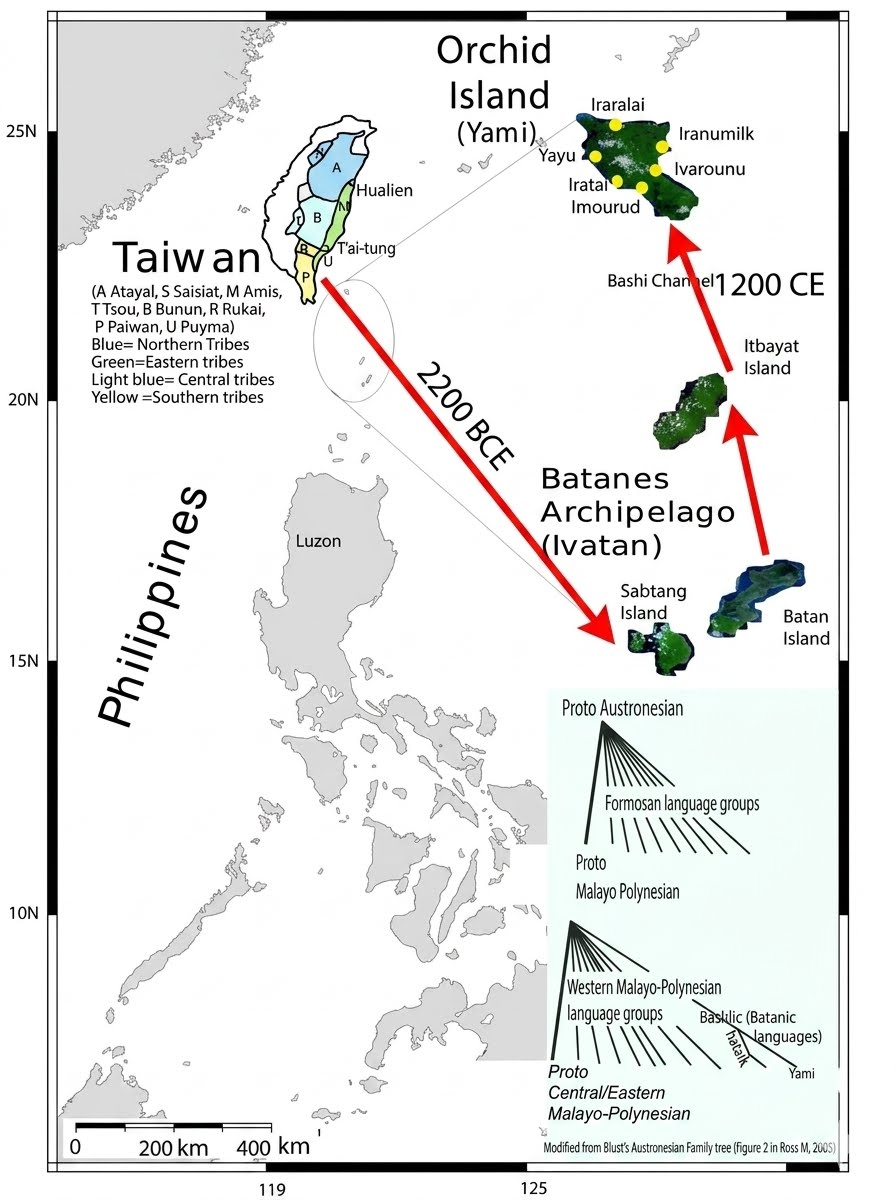
Mind-blowing twist to the "Out of Taiwan" Austronesian Expansion:
After the Formosan peoples migrated south from Taiwan to Batanes ~2200 BCE, the Ivatan migrated back NORTH to settle Lanyu (Orchid Island) ~1200 CE and became known as the Tao (aka Yami)
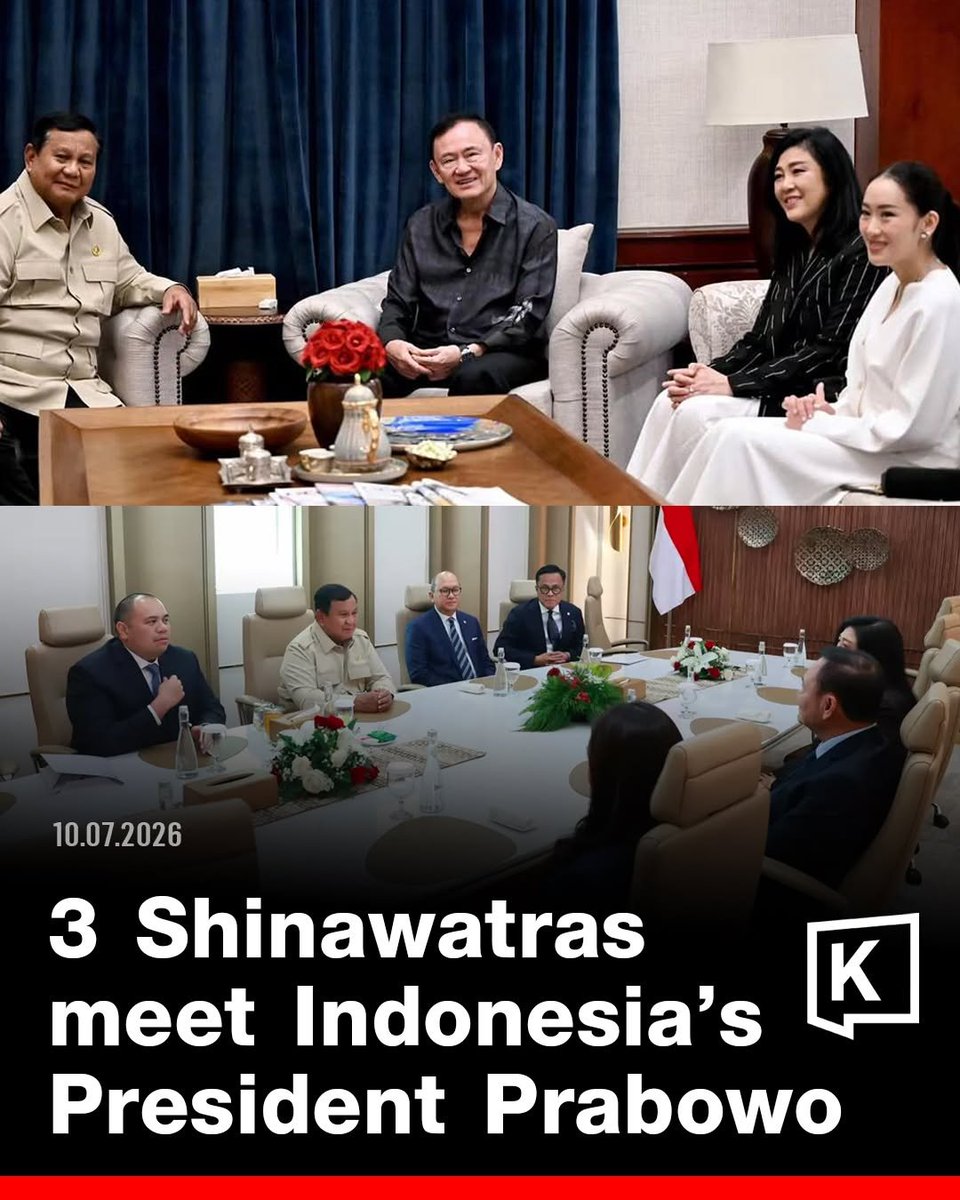
Three Shinawatras met President #Prabowo in Jakarta.
Former Thai prime ministers Thaksin, Yingluck and Paetongtarn #Shinawatra gathered at the Indonesian leader's private residence for discussions on regional and global developments.
#Thailand#Indonesia#Diplomacy#Politics
The foreign ministers of the Association of Southeast Asian Nations (ASEAN) will hold an informal meeting with their Myanmar counterpart this weekend, for the first time in five years. https://t.co/fAplwDvDbY