Let's ignore the clear ignorance regarding 'Prot' theology for a moment...
In the Sacrifice of the Mass, the priest offers the bread and the wine unto Almighty God. He begs the Lord to accept the sacrifice, so that:
unto us it may become the Body and Blood of thy most dearly beloved Son, our Lord Jesus Christ.
That is, not dead flesh, but the living Body and Blood of the same Christ who mediates and intercedes for us before the Father in heaven.
This offering and pleading for acceptance continues until the epiklesis, where the priest prays:
We humbly beseech thee, almighty God, to command that these gifts be borne by the hands of thy holy Angel to thine altar on high, in the presence of thy divine majesty: that so many of us as shall partake at this altar of the most sacred Body and Blood of thy Son, may be filled with all heavenly benediction and grace.
Here, we see that if the sacrifice is accepted, then the elements are brought up to the heavenly high altar and there transubstantiated and brought down to us (or, rather, we ascend into the heavenly court).
Therefore, if the sacrifice were to not be accepted, then the Bread and the Wine would not become His living Body and Blood. So, what is happening in these supposed miracles?
Instead of receiving the living flesh of Our Lord, they are given dead flesh: only dead bits and pieces of body and blood. What could be a better sign of the Lord's rejection of your sacrifice than *that*?
It makes sense that historically these kinds of Eucharistic miracles occur to priests who doubt the Real Presence. It shows divine rejection of their sacrifice for their impiety.
This considered, it seems odd to trot out your sacraments of divine wrath as a proof of divine approval.
@Tawadros15 I’m not sure you understand the rubrics in play here. The cope is used for services before Mass, like Matrimony. The Ministers then change their vestments to Eucharistic vestments (the chasuble) for Mass. If you read Ritual Notes or Fortescue, you would know this.
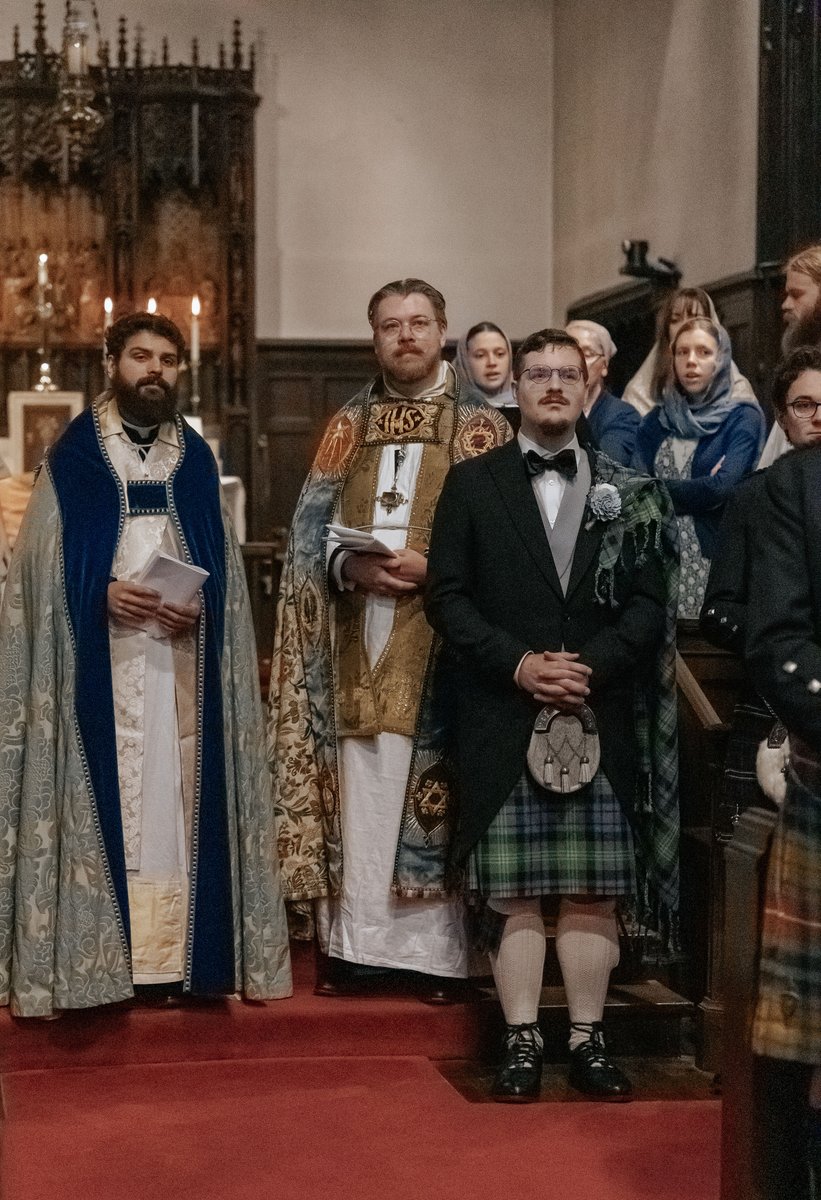
@Hleowstede@NiceColorsss@AppyOrtho Apparently! You would think that one of these online personalities would grant me the courtesy of explaining why they think my wedding was a ‘LARP’.
But it doesn’t really matter. I’m married and pray from the BCP every day with my wife! ✝️📖
@_heretichunter@PatriarchPius 1549 BCP Matrimony
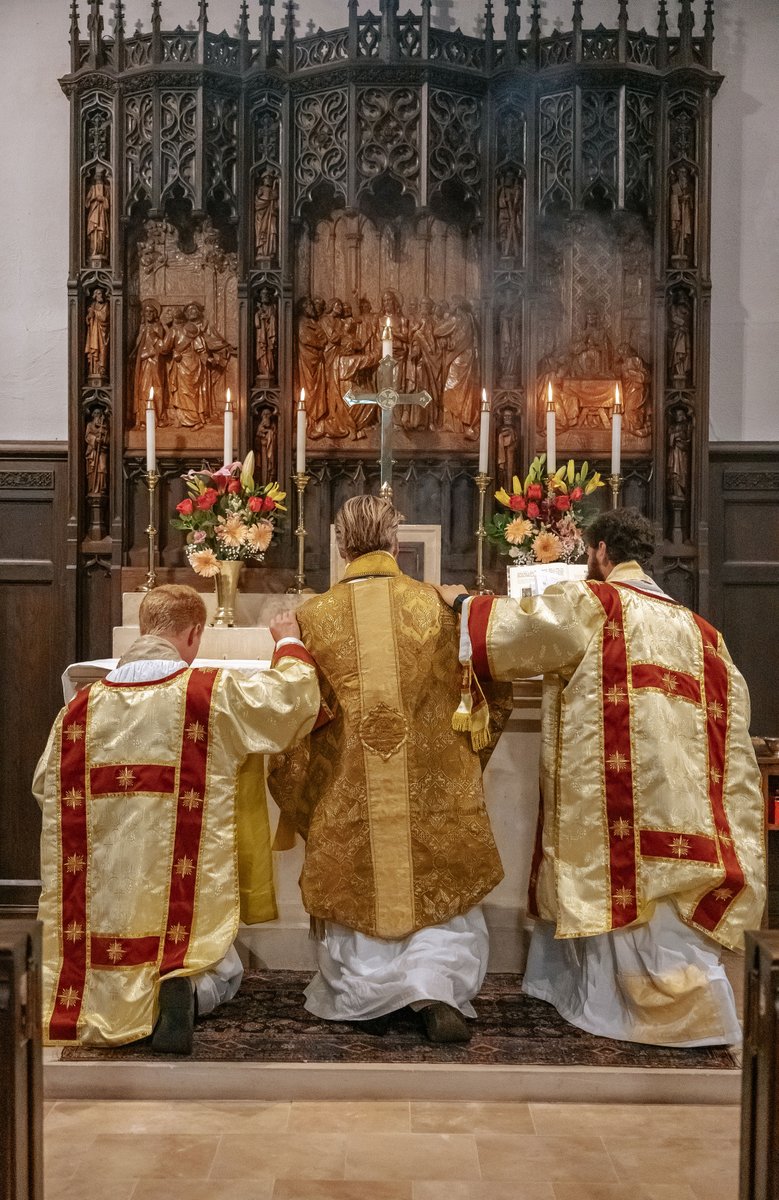
Roman Mass
(To be clear, I would’ve preferred a BCP Mass, but the Abbot wasn’t familiar enough with it.)
@HabemusMalleum@DotyFr20509 In the Rite itself, after the Bride and Bridegroom exchange vows, the priest joins their hands, blesses them, and solemnises the marriage.
This shows what our catechisms teach: that the priest is the proper minister of the Sacrament.
@BostonConvert We received this Bible as our family Bible, and we've been very happy with it. I read from it during Mattins and Evensong at the house every day. (Look at Amazon and Christianbook for better prices.)
https://t.co/xD3cKZ5GLH
A Western Rite Orthodox wedding & nuptial High Mass, concelebrated between AWRV clergy and our brother Heiromonk James of Botel Abbey (Scotland): A 🧵
A Western Rite Orthodox wedding & nuptial High Mass, concelebrated between AWRV clergy and our brother Heiromonk James of Botel Abbey (Scotland): A 🧵
@AnglicanAkatosh What do you think are the worst examples of the Nestle-Aland 28 going with Alexandrinus and Varicanus over and against the papyri and other early manuscripts?
Marriage is an honourable estate instituted of God in paradise, in the time of man’s innocency, signifying unto us the mystical union that is betwixt Christ and his Church: which holy estate, Christ adorned and beautified with his presence, and first miracle that he wrought.