Dr. @harryistepanian, a renowned expert in Iraq’s electricity sector, presented on both the technical and non-technical challenges of the sector.
The discussion centered around the topics covered in Harry’s most recent article, which is published in the 2nd issue of IEO.
In this video, Dr. Nathaniel Switzner talks about the importance of our most recent roundtable discussion، which centered around the current geopolitical risks that the international oil companies (IOCs) are facing in the #Kurdistan region and the rest of #Iraq.
#Energy#Oil
Our center hosted a roundtable discussion on the current geopolitical risks that the #IOCs are facing in the Kurdistan Region and the rest of Iraq.
We had a fruitful discussion spanning pipeline and infrastructure challenges, security concerns, and ongoing regional conflicts.
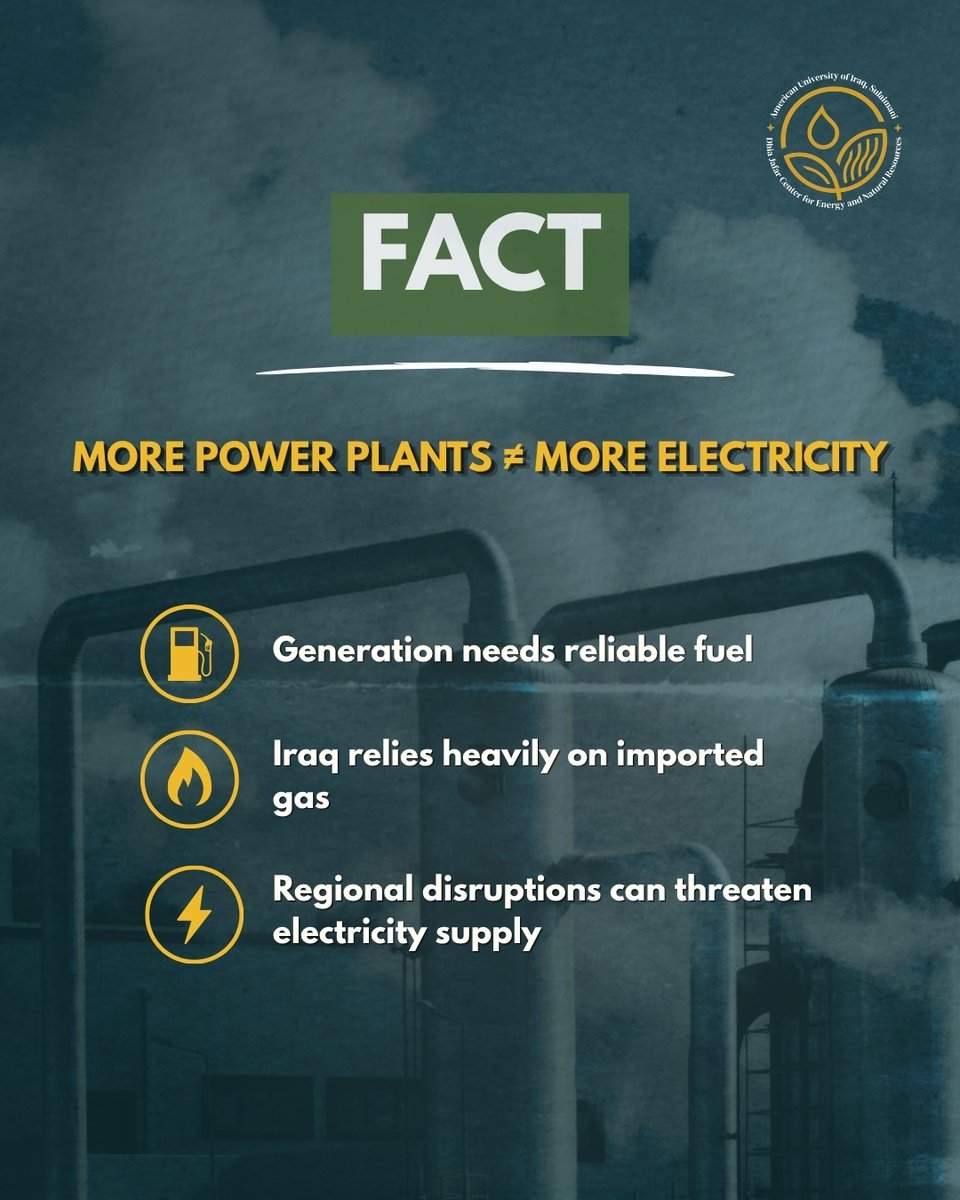
Will building more power plants solve Iraq's electricity problem?
In this article, @harryistepanian tells us that the issue is more complex than that. Read the full piece here: https://t.co/iHqNcspmia
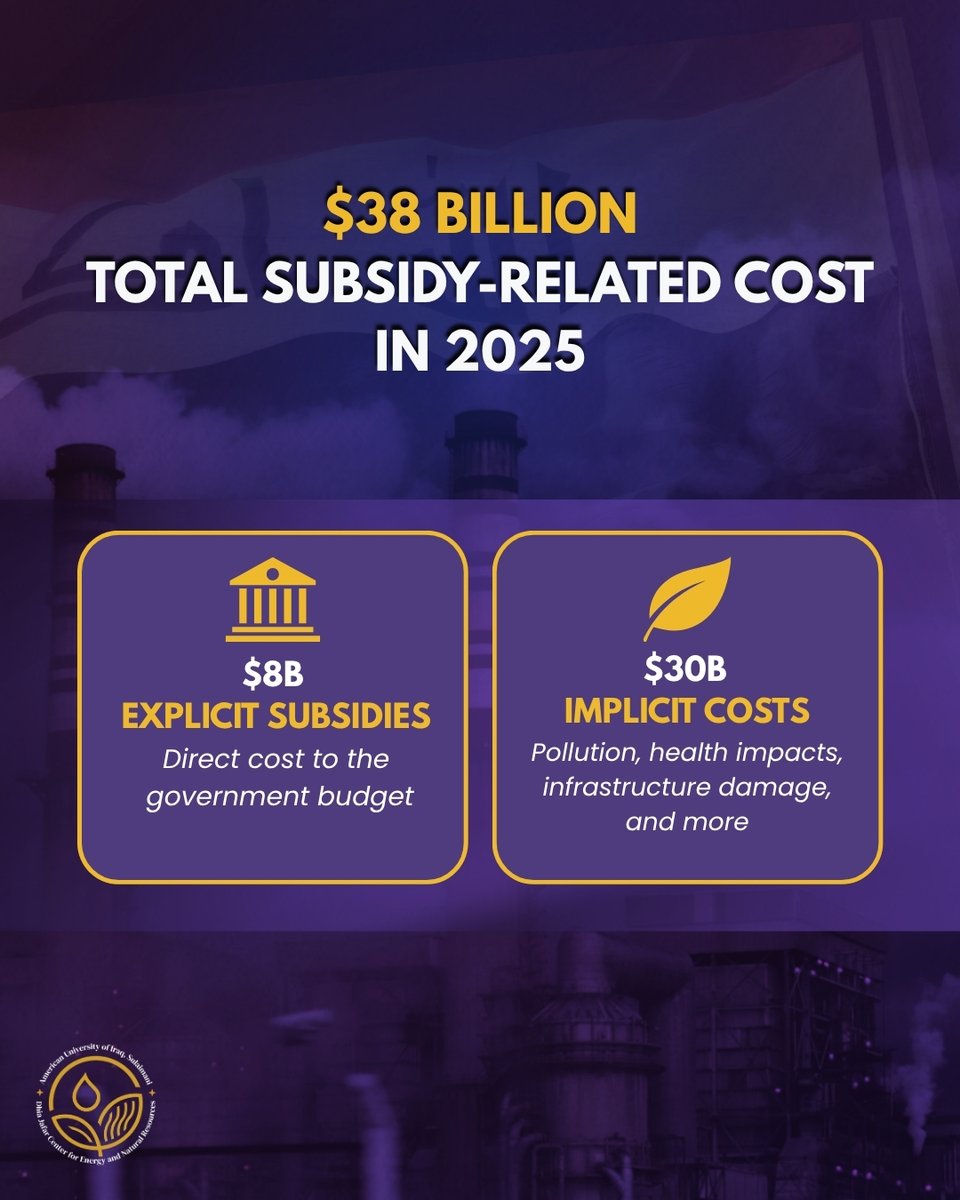
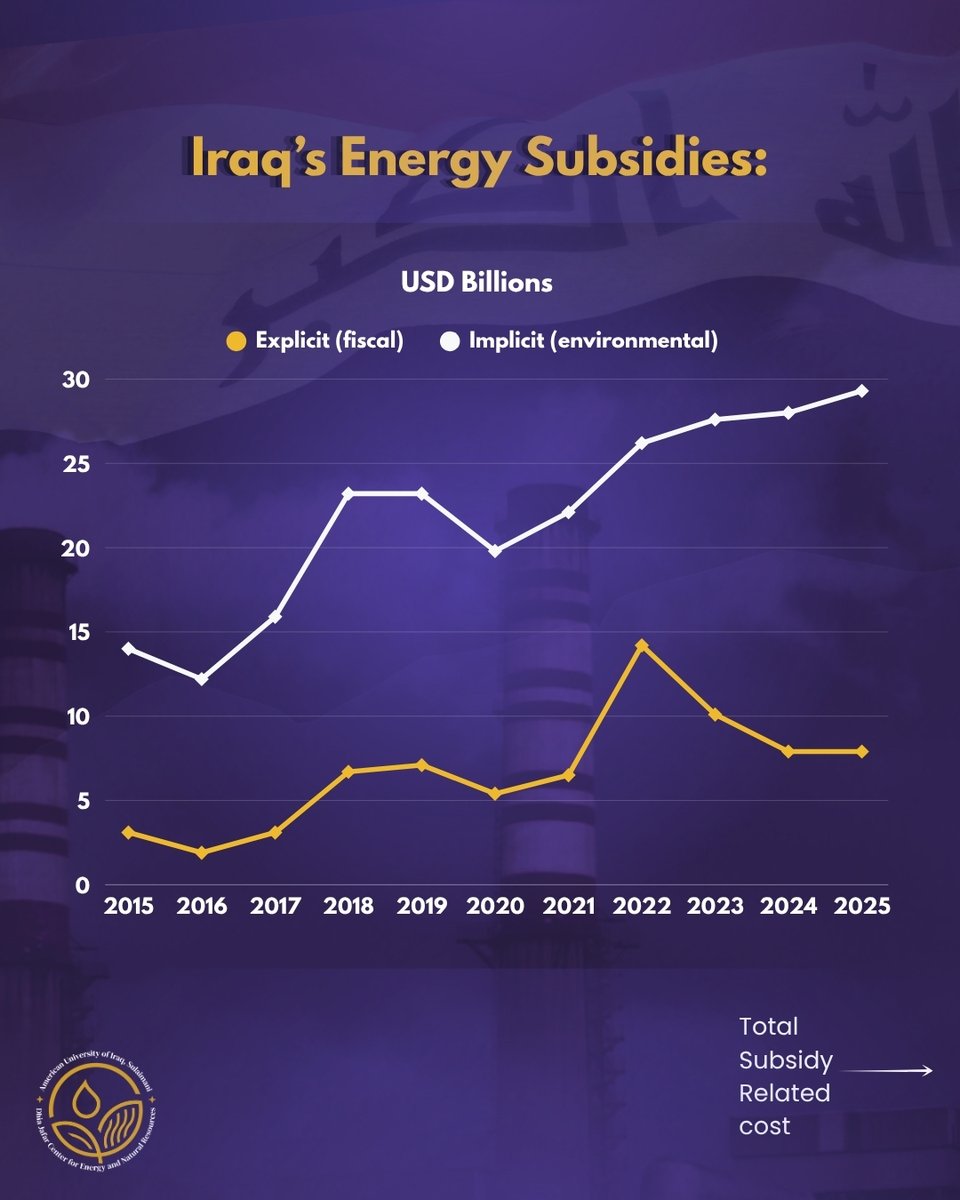
➡️ Iraq’s energy subsidies carry substantial hidden costs. In “Energy in Numbers” the IEO Editorial Team examines the fiscal, #social, and #environmental costs of Iraq’s energy subsidy system.
Read the full analysis on the cost of Iraq’s energy subsidies: https://t.co/3Wzui2L9bJ
In “Buying Time: How Baghdad Managed Iraq’s Oil-Fiscal Crisis,” @MohammedHkalari explores how Iraq’s heavy reliance on oil exports left its public finances highly exposed to disruptions in oil revenues.
Read more here: https://t.co/8M8ueaG30X
Kavi O. Ali, a research assistant at the Dhia jafar Center for Energy and Natural Resources, discusses the center’s mission and pillars of work, which are conducting research, collecting data, engaging the public and stakeholders, as well as building capacity amongst students.
Iraq’s oil exports rely heavily on a narrow set of routes.
In “Diversifying Iraq’s Oil Export Corridors: Strategic Lessons from the Strait of Hormuz Crisis” Dr. @ShwanSharey, Babo Bahman, and Mustafa Ahmed talk about the risks and the need for greater diversification.
Why hasn't Iraq fixed its chronic electricity shortage?
In his article, @harryistepanian examines the structural causes of Iraq’s persistent power deficit, including inadequate supply, poor management, and inefficient tariff collection.
Read more here: https://t.co/iHqNcspmia
📢Announcing Issue 2 of Iraq Energy Outlook.
👉Explore the forces reshaping Iraq’s energy landscape, from electricity and oil exports to fiscal pressures and new strategic partnerships.
Read more at https://t.co/o9XXptMVEM
Iraq Energy Outlook | August 2026
Water and energy are inseparable, and so is Iraq’s future.
The @auisenergy brought together leading experts for a roundtable on the Water–Energy Nexus, featuring Dr. Abdulmutalib R. Sarhat, to explore sustainable solutions for Iraq’s future.
#AUIS#Energy#Water#Resources
Iraq Energy Outlook examines how the Runaki project is reshaping electricity in the Kurdistan Region through smart meters, digital billing, and tariff reforms—improving pricing, efficiency, and reliability. 🔗 Link in bio.
Kavi O. Ali, Research Assistant at the Dhia Jafar Center, manages the Kurdish edition of our quarterly magazine and supports interdisciplinary research, community engagement, and research coordination across Kurdistan, the U.S., and Europe.
Dr. Shwan Sharey, Research Fellow at the Dhia Jafar Center for Energy and Natural Resources, discussed the opportunities and challenges of the natural gas sector in the Kurdistan Region and Iraq, focusing on production, exports, and energy security in an interview with Kurdsat.
Summer electricity demand in the Kurdistan Region reaches ~6,500 MW, but supply is only ~4,500 MW—resulting in load shedding. Learn more in the first issue of Iraq Energy Outlook. 🔗 Link in bio.
In an interview with @Rudaw, Dr. Shwan Jamal Azeez of the Dhia Jafar Center at AUIS discussed the outlook for oil and gas production in the Gulf, including Iraq and the Kurdistan Region, following the reopening of the Strait of Hormuz. #DhiaJafarCenter#EnergyResearch#OilAndGas
Introducing the Iraq Energy Outlook—AUIS’ new quarterly report covering Iraq’s oil, gas, electricity, and renewable energy sectors. Now available in English, Kurdish, and Arabic. Read the first edition here: https://t.co/srfaeoTsED
Mohammed Hussein, researcher at the Dhia Jafar Energy & Natural Resources Center, recently provided expert analysis to @Rudawkurdish , giving a brief on the center's overall vision.
A comprehensive look at the geopolitical & economic dynamics shaping Iraq's oil & energy sector.