FTX collapsed in November 2022, it was the second-largest crypto exchange on the planet. SBF was on magazine covers, he testified to Congress.
Today he’s serving for 25 years and here's a quick timeline of how it actually happened.
November 2, 2022. CoinDesk publishes a leaked balance sheet of Alameda Research (SBF’s trading firm). It shows $5.8 billion in FTT, FTX’s own token.
Translation: Alameda’s “assets” were mostly fake collateral printed by the affiliated exchange.
November 6. Changpeng Zhao, CEO of Binance, tweets that Binance will sell its FTT holdings. The price of FTT starts collapsing.
November 8, FTX customers try to withdraw, withdrawals freeze and then SBF tweets “assets are fine.” They are not fine.
By November 11, FTX files for bankruptcy, about 130 affiliated companies go with it, approximately one million customers can’t get their money out. It turns out FTX had been quietly lending customer deposits to Alameda, about $8 billion of customer funds had been used to plug Alameda’s trading losses. The fraud wasn’t sophisticated, it was just a slush fund.
SBF was convicted on all seven counts in November 2023 and sentenced to 25 years in March 2024, he’ll be out around 2044 with good behavior.
The brutal lesson: “not your keys, not your coins” wasn’t a meme. It was a balance sheet, centralized exchanges with affiliated trading desks have a structural conflict of interest. The next collapse will have a different name and the same mechanism.
Follow @auritrack for the parts of finances lessons schools skip.
Terra Luna’s UST stablecoin went from $1 to $0.01 in 4 days in May 2022. About $60 billion in value vanished.
The founder, Do Kwon, called critics “poor” on Twitter weeks before the crash, he was arrested in Montenegro carrying fake passports. Confidence is the fastest thing to evaporate.
Sam Bankman-Fried’s net worth went from $26 billion to $0 in 10 days in November 2022. FTX users lost about $8 billion, the company sponsored a Super Bowl ad with Larry David literally saying “don’t be like this guy” about a man who doubts FTX. The market does have a sense of humor.
In 2008, Zimbabwe printed a 100 trillion dollar note, yet it couldn’t buy a loaf of bread. Inflation hit 89.7 sextillion percent at its peak.
People paid for groceries by weighing cash, not counting it. The note now sells on eBay as a novelty for about $40.
Argentinians don’t really save in pesos, they convert paychecks to dollars within hours, then to crypto, then to property.
The country has had so many currency collapses that “trusting the local money” is treated as a beginner mistake.
Different currency, same lesson everywhere.
The phrase “it’s only $9.99 a month” has cost more money than any single market crash in history. Multiply it by 12 and then by however many apps live on a phone.
Planet Fitness charges $10 a month, sounds harmless. They have 19.7 million members, their internal data shows only about 18% of members use the gym more than once a month. The business model isn’t fitness, it’s people forgetting they signed up.
How $9.99 a month for “just one app” became the most profitable business model of the last decade. The math behind subscription creep
Adobe had a very huge effect on Photoshop boxed sales in 2013, same software, now $20.99 a month forever. Revenue went from $4.4 billion to over $21 billion in ten years. The product didn’t change, the billing did.
Companies Learned Something Brutal:
- People fight a $200 charge
- People ignore a $9.99 one
So they sliced everything into $9.99s.
Spotify, Netflix, Hulu, Disney+, Max, Apple TV+, Peacock, Paramount+, Audible, Kindle Unlimited, NYT, WSJ, Substacks, Notion, Dropbox, iCloud, Google One. Add a gym membership and a meal kit and you’re at $400 a month before rent.
The Trick: every individual service feels reasonable, the bundle feels invisible, banks don’t surface the total and apps don’t show what else you’re paying but you have to add it up yourself. Most people are off by 60% when asked to guess their monthly subscription spend. Banks reviewed this in 2024, off by $130 a month on average.
The fix isn’t dramatic. Pull last month’s statement, highlight every recurring charge, cancel three. Most people save $80+ a month with that one exercise.
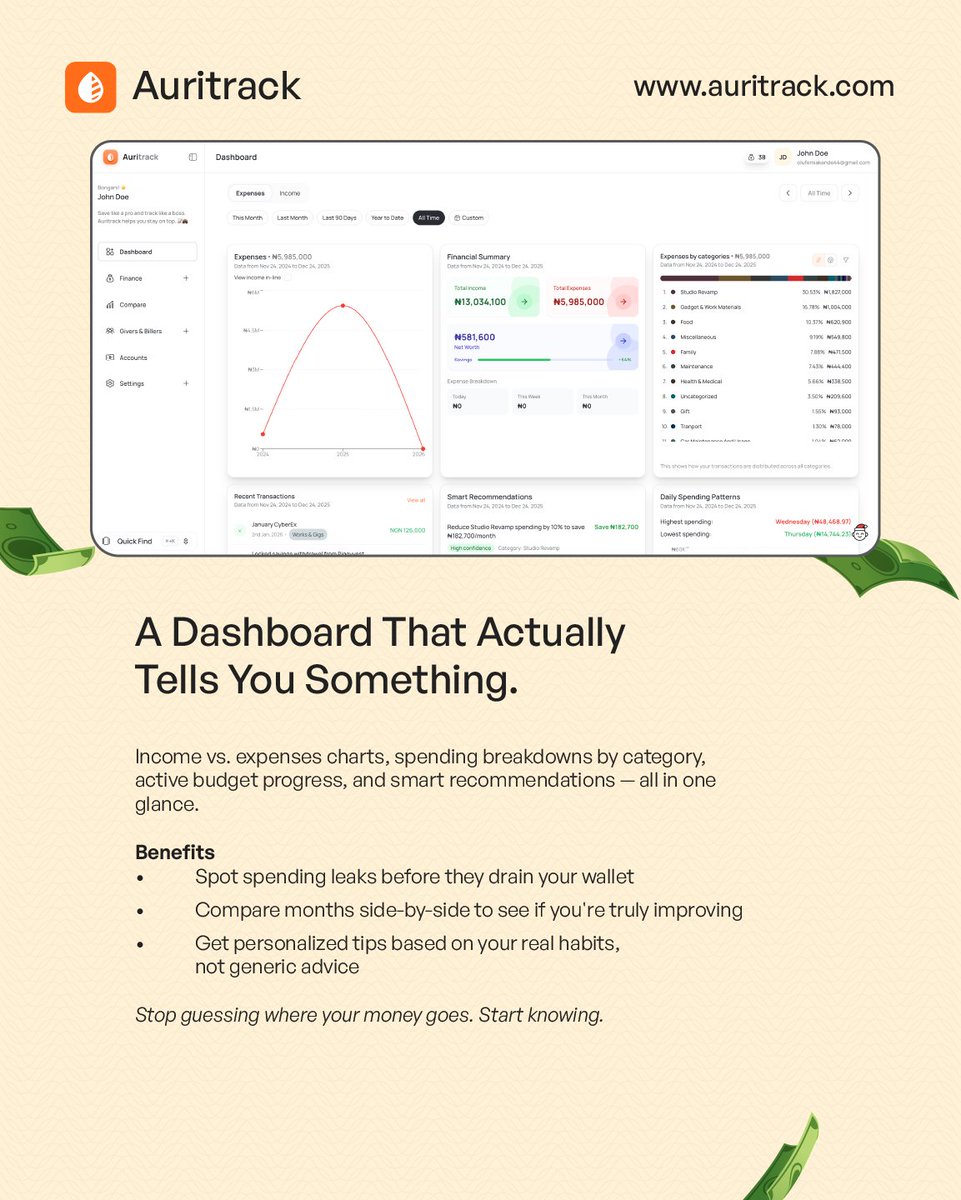
Auritrack does this automatically, every recurring charge gets a tag, the forgotten ones get flagged.
Follow for more money stories.
Netflix has 325 million subscribers. The average household pays for 4.5 streaming services, that’s roughly $66 a month, or $792 a year, just to watch shows. Cable was supposed to die because it was too expensive.
The replacement quietly cost more.
In Weimar Germany, 1923. A wheelbarrow of cash for a loaf of bread, the most famous hyperinflation in history.
Here’s how a country’s money died in real time.
After WWI, Germany owed massive reparations under the Treaty of Versailles, instead of raising taxes, the government printed money to pay debts. Classic mistake.
In 1922, one US dollar = 7,400 marks, by November 1923, one US dollar = 4.2 trillion marks. The currency lost 99.99999% of its value in about 18 months. Workers got paid twice a day so they could spend the money before lunch made the bills worth less.
Restaurants stopped printing prices on menus. Waiters announced the new prices every 30 minutes.
People burned cash in fireplaces because it was cheaper than buying firewood. Kids stacked banknotes into pyramids as toys, the end came when Germany introduced the Rentenmark, backed by mortgages on land and industry. Confidence returned almost overnight.
Money is psychology with a paper backing, same script ran in Hungary 1946 (worst ever, prices doubled every 15 hours), Yugoslavia 1994, Zimbabwe 2008, Venezuela 2018, and Argentina almost every decade.
Hard assets, productive businesses, and foreign currency held value through every single one, cash didn’t.
Auritrack won’t print your money, it just makes sure the version you have is doing something. Follow for more.