Former German Nazi concentration & extermination camp Auschwitz. Official account. We commemorate victims, educate about history & preserve the authentic site.
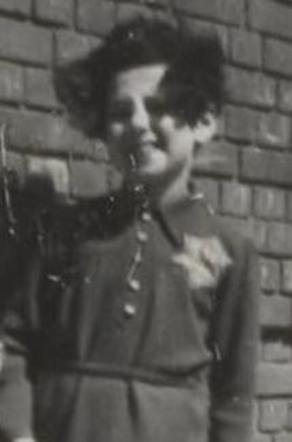
3 September 1933 | Dutch Jewish girl, Marianne Keizer, was born in Amsterdam.
In April 1944, she was deported from #Westerbork to #Theresienstadt ghetto and on 12 October 1944 deported to #Auschwitz. She was murdered in a gas chamber after the arrival selection.
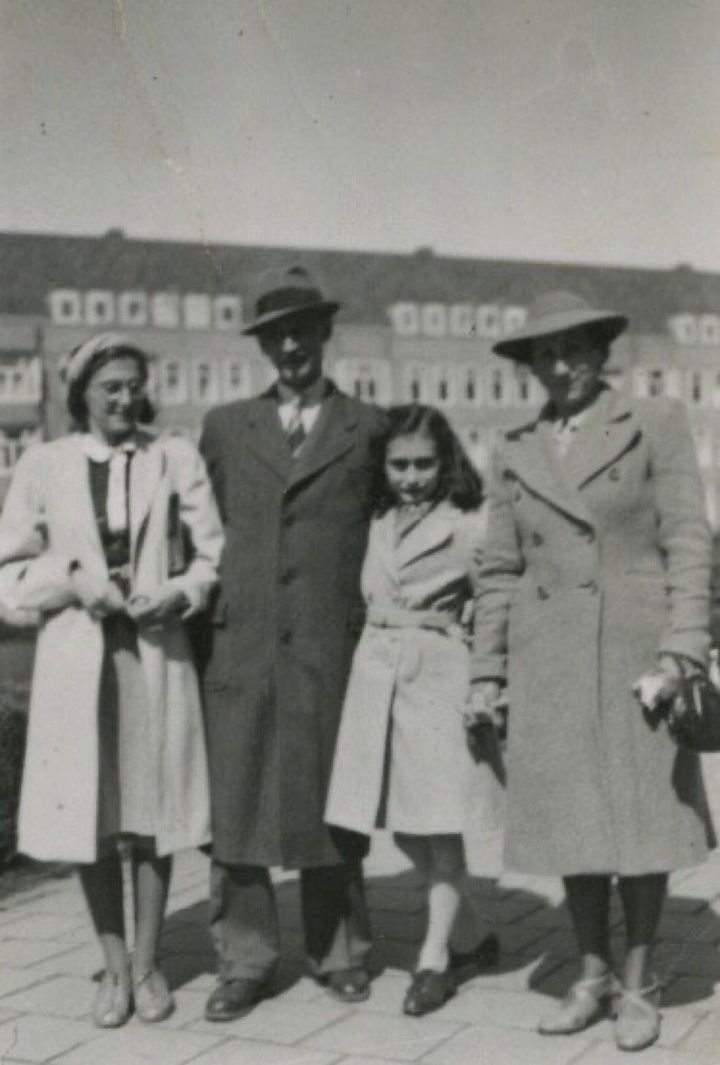
3 September 1944 | The last transport of Jews left #Westerbork camp in the German-occupied #Netherlands to the #Auschwitz camp. 1,019 people were deported, among them Anne Frank, her sister Margot and their parents Otto and Edith.
#AnneFrank
3 September 1925 | A Pole, Bronisław Pragłowski, was born in Ropczyce.
In #Auschwitz from 27 July 1942.
No. 53302
He perished in the camp on 15 October 1942.
3 September 1919 | A Polish Jew, Sam Weinreich, was born in Łódź.
His mother and several siblings died of hunger in the ghetto created by the Germans in the town they renamed Litzmannstadt. In 1944, Sam was deported to #Auschwitz. He survived.
We understand the immense emotional sensitivity surrounding the victims of Auschwitz, and it is crucial to approach the topic with the utmost respect and consideration.
At its core, Auschwitz was a place of unspeakable dehumanization, torture, and murder. 1,3 million people were deported to the camp by Nazi Germany and 1,1 million people - 90 percent of whom were Jews - were murdered there during 4,5 years of its operation. It is essential that we never lose sight of this universal truth.
When discussing the fates of those persecuted in Auschwitz, we employ different terminology to honor the diverse experiences and uncertain circumstances surrounding their deaths.
One term we utilize is "murdered" when we have explicit knowledge that an individual was tragically killed in a gas chamber. This term serves to acknowledge the horrifying reality of those who were chosen for extermination in this manner. We also specify when we know that a prisoner was shot, killed with a phenol injection, hanged or was murdered in different ways.
However, it is important to recognize that our understanding of the specific circumstances of death for many people deported to Auschwitz is limited. In cases where we lack precise information regarding the fate of an individual, we employ the term "did not survive." This phrase serves as a way to convey the uncertainty surrounding the person's destiny, encompassing the possibilities of being selected for extermination, registered as a prisoner within the camp, or later transferred to another camp, where their ultimate fate remains unknown.
Furthermore, when we are aware that someone died as a registered prisoner of Auschwitz, but the circumstances of their death are unknown, we employ the term "perished."
This term recognizes the tragic loss of life within the camp, acknowledging that these individuals died while under the oppressive conditions of Auschwitz. "Perished" emphasizes the human toll and the profound suffering endured by those who lost their lives in the camp, while respecting the absence of precise knowledge about the specifics of their passing.
3 September 1912 | A German Sinti woman, Rosa Groß, was born in Bochum.
In #Zigeunlerlager (Gypsy camp) in #Auschwitz II-Birkenau from 12 March 1943.
No. Z-2459
She perished in the camp on 18 July 1943.
3 September 1941 | Following the information from the Gestapo about the transfer to Auschwitz of a large transport of Soviet prisoners of war—officers and political commissars previously selected in POW camps by special Gestapo units—the SS camp authorities decided to kill them using Zyklon B gas in the basement of Block 11. This became the first large-scale execution using this pesticide in this German Nazi camp.
It was also decided to take this opportunity to kill bedridden prisoners, patients of the camp hospital. SS-Hauptsturmführer Dr. Siegfried Schwela ordered a selection in the hospital, during which about 250 Polish prisoners were chosen. After some time, orderlies were told to lead them—or carry some on stretchers—into the basement of Block 11. There they were crammed into several cells. About 600 Soviet POWs were then also driven into the cells.
The SS men threw Zyklon B into the cells, then closed and sealed the doors. The basement windows were covered with earth. The action took place late in the evening, after the camp command had announced a ban on prisoners leaving the blocks and moving around the camp (the so-called Lagersperre).
The following afternoon, after confirming that all the people were dead, all doors were opened and the window seals removed in order to ventilate the rooms from the remaining gas. After the evening roll call, another Lagersperre was declared.
At night, Rapportführer Gerhard Palitzsch summoned 20 prisoners from the penal company, all the orderlies from the hospital blocks, and two prisoners—Eugeniusz Obojski and Teofil Banasiuk—who worked as corpse carriers to the mortuary and transporters of corpses to the crematorium. They were brought to the courtyard of Block 11. They had previously been told they were being assigned to “special work” and were forbidden under penalty of death from speaking to anyone about what they would see. At the same time, they were promised an increased food ration after completing the task.
The prisoners were divided into four groups. One group, wearing gas masks, carried the bodies to the ground floor; the second stripped them; the third carried them to the courtyard of Block 11; and the fourth loaded them onto handcarts. The bodies of the prisoners selected in the camp hospital were dressed in underwear, while the bodies of the POWs were in uniforms, in the pockets of which were found documents, family photographs, money, cigarettes, and various small items. Camp dentists, under SS supervision, extracted dental gold from the mouths of the dead. The handcarts loaded with corpses were then pulled to the crematorium by prisoners harnessed to them. This took two consecutive nights.
Watch a short video about Block 11 where this execution took place: https://t.co/Nf2ozhXD6f
After this mass execution, the SS decided to create the first permanent gas chamber of Auschwitz in the morgue by the crematorium of the camp. Learn about this building: https://t.co/VnecFqcVDr
3 September 1935 | A Jewish boy, Lorand David, was born in Târgu Mureș in Romania.
In June 1944 he was deported to #Auschwitz and murdered in a gas chamber.
---
▶ Gas chambers and crematoria of the Auschwitz camp: https://t.co/Tx6rSvPyZL
3 September 1935 | An Italian Jewish girl, Sissel Vogelmann, was born in Torino.
In January 1944 she was deported to #Auschwitz together with her parents Schulim and Anna. On 6 February she and her mother were murdered in a gas chamber. The father survived.
3 September 1927 | French Jewish girl, Suzanne Buch, was born in Paris.
She was deported to #Auschwitz from Pithiviers on 7 August 1942. She did not survive.
3 September 1902 | A Pole, Ignacy Szczykutowicz, was born in Piotrowice.
In #Auschwitz from 1 September 1942.
No. 62649
He perished in the Mauthausen camp on 24 December 1943.
3 September 1909 | A Czech Jewish woman, Truda Broková, was born in Prague.
She was deported to #Auschwitz from #Theresienstadt ghetto on 6 October 1944. She did not survive.
3 September 1897 | A German Jewish woman, Hedwig Juliusburger, was born in Allenstein (Olsztyn).
On 26 February 1943 she was deported to #Auschwitz from Berlin with her husband Alfred and son Klaus. They did not survive. The other son Gert perished in Auschwitz on 12 June 1944.
2 September 1889 | A Czech Jew, Leo Geiger, was born in Plzeň.
Deported to #Auschwitz from #Theresienstadt ghetto on 15 December 1943. He did not survive.
2 September 1924 | Polish Jew, Jozef Fidelman, was born in Warsaw. He emigrated to France.
He was deported to #Auschwitz from #Drancy on 24 July 1942. He did not survive.
2 September 1944 | A transport of Jews deported from the Litzmannstadt ghetto arrived at Auschwitz.
After the selection made by SS doctors, a group of men was registered in the camp, among whom was Ruben Gelbart (No. B-8326).
His mother, Freidel Gelbart (née Korzec), who was born in Warta, was most likely murdered in a gas chamber.
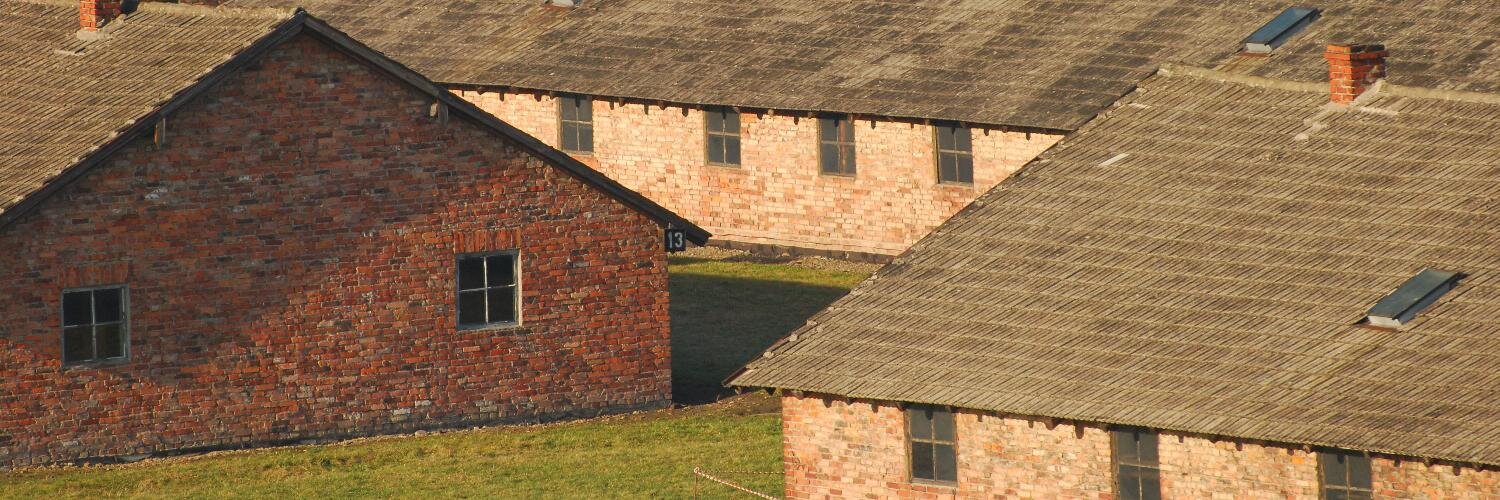
📷 Blocks for prisoners at the Auschwitz I camp. The two-storey blocks were officially intended for approximately 700 prisoners. However, at times the number rose to as high as 1,200.
▶ Watch a short video about blocks at Auschwitz I: https://t.co/IK3FhMeSsF
---
Photo: https://t.co/OfLjNb7VOG
2 September 1932 | A Jewish boy, Dov Imre Berkovits, was born in Șimleu Silvaniei in Romania.
In May 1944 he was deported to #Auschwitz and murdered in a gas chamber.
---
▶ A short video showing the ruins of gas chamber and crematorium III: https://t.co/PA4s3aXN1V
2 September 1906 | A Dutch Jew, Salomon Munnikendam, was born in Amsterdam.
In #Auschwitz from 14 December 1942.
No. Unknown.
He perished in the camp on 23 February 1943.
2 September 1910 | A Polish Jew, Aron Gutter, was born in Szczakowa.
In #Auschwitz from 24 February 1942.
No. 25210
He perished in the camp on 14 March 1942.
---
📖 Jewish prisoners at KL Auschwitz: https://t.co/WjqF9riy8m