This was a really interesting read because it touches on something I think a lot of people miss when talking about AI. The conversation is usually about collecting more data, but not enough people ask whether that data is actually different enough to teach the model something new.
The melanoma example stood out most. It shows how a model can look very smart in tests but actually use tricks that stop working when things change. This issue is not limited to medicine; similar problems appear in robotics, autonomous systems, and even language models.
What I took away is that variance is becoming more valuable than volume. A dataset with lots of almost same examples can look good on paper, but it can still make a weak model. But a smaller dataset from different places, cultures, devices, and behaviors can help the model learn what really matters in real life data today.
That is why projects like @humynlabs are worth paying attention to. Their focus on collecting data from regions that are often underrepresented feels less like a scaling strategy and more like a generalization strategy. And in the next phase of AI, that distinction could matter a lot.
@queenpresh_x@manishdiesel Variance is quickly becoming AI’s biggest advantage because diverse data teaches models to generalize, not just memorize patterns.
This was a really interesting read because it touches on something I think a lot of people miss when talking about AI. The conversation is usually about collecting more data, but not enough people ask whether that data is actually different enough to teach the model something new.
The melanoma example stood out most. It shows how a model can look very smart in tests but actually use tricks that stop working when things change. This issue is not limited to medicine; similar problems appear in robotics, autonomous systems, and even language models.
What I took away is that variance is becoming more valuable than volume. A dataset with lots of almost same examples can look good on paper, but it can still make a weak model. But a smaller dataset from different places, cultures, devices, and behaviors can help the model learn what really matters in real life data today.
That is why projects like @humynlabs are worth paying attention to. Their focus on collecting data from regions that are often underrepresented feels less like a scaling strategy and more like a generalization strategy. And in the next phase of AI, that distinction could matter a lot.
Hey everyone!
Just a quick reminder that @Cryptowombat125 and @manishdiesel will be live for the KGeN AMA on June 17 at 11 AM UTC (8 PM KST).
They'll be talking about what @KGeN_IO is building, what they want to do in Korea, what the token does, and how the buyback works.
There are prizes too 👀
■100 Mega Coffee Americano vouchers
■10 Chicken & Cola combo sets
Make sure you stay until the end because a Google Form with a secret code will be shared. Fill it out for a chance to win.
If you want to learn more about KGeN 2.0 and maybe get a reward, don't miss it!
I just found out that @c8ntinuum opened OG roles and there are only 5,000 spots available.
If you're early, this is probably the best time to check it out. Join the Discord, claim your OG role, and sign up on the waitlist to lock in your spot.
What caught my attention is that c8ntinuum is building a Layer 0 focused on verified interoperability, where chains can verify what happened on other chains instead of relying on a middleman.
The OG role gives you early standing and could make you eligible for future airdrop opportunities.
They also have a referral program that pays 15% instantly in SOL, BNB, or ETH whenever people you invite make generations.
Access gates next week, so right now, anyone can join without a referral code. Once the gate closes, new users will need one to get in.
Join the waitlist: https://t.co/G8J10J3lAe
Discord: https://t.co/9l7VMEQ4RL
Website: https://t.co/1WjDR5D2lF
It's worth getting your OG role before access becomes gated.
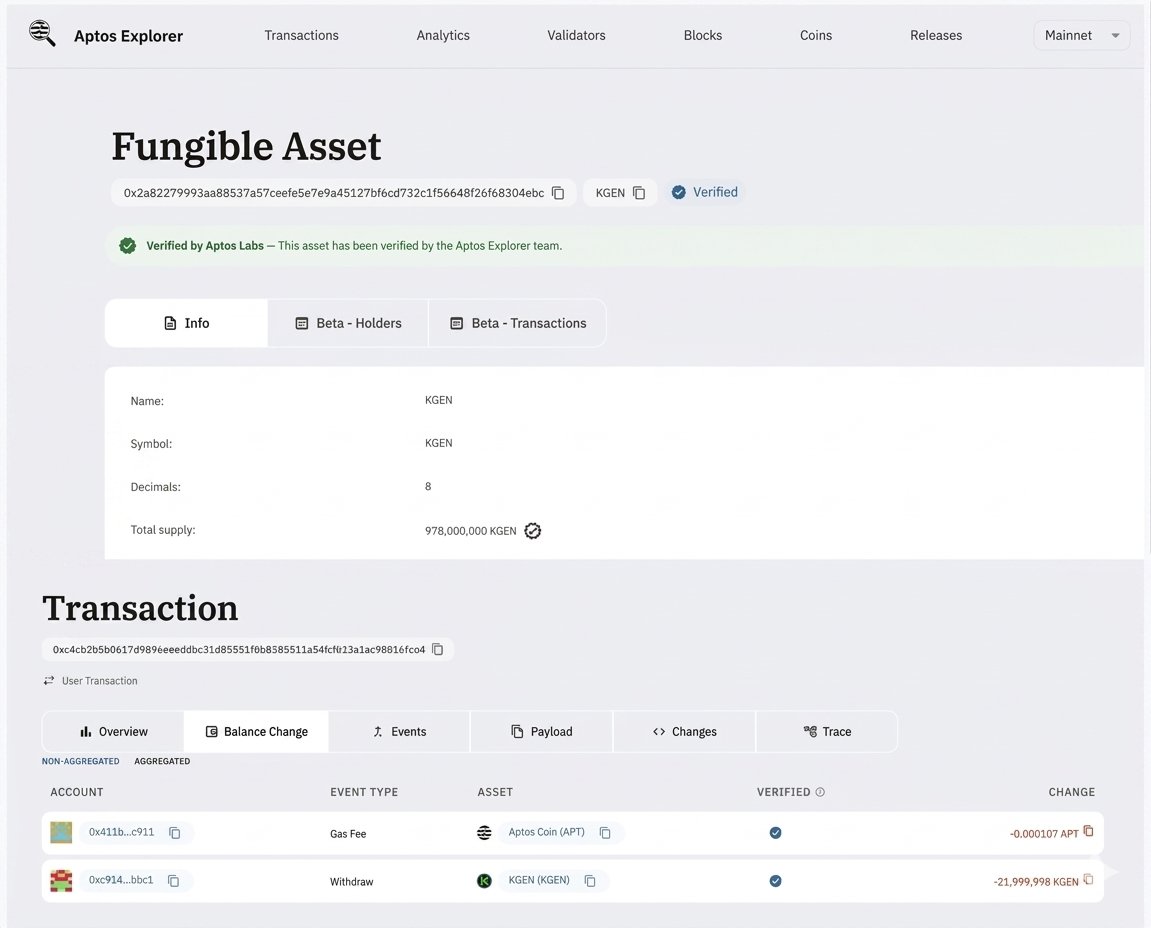
What stands out most to me isn’t the 22M $KGEN burn, rather it’s the revenue-linked supply reduction model.
A lot of projects announce burns that create short-term attention but have no lasting connection to business performance.
This feels closer to what projects like BNB aimed for by linking ecosystem growth to token economics, but @KGeN_IO is taking it further with onchain revenue verification and AI-driven revenue streams.
If executed transparently, that alignment between real revenue and token supply could be the most meaningful part of KGeN 2.0.