🇦🇷⚡️ Argentina’s trade performance continues to impress.
April’s merchandise report revealed a US$2.7bn surplus, following a US$2.5bn surplus in March and setting new records for the month since 1990.
This strong result was driven by a sustained surge in exports and subdued imports, propelling the YTD surplus to US $8.3B —up sharply from just US$1.3bn a year ago.
Energy balance contributed $1.1B to the YTD rise, while the non-energy saw a $5.8B improvement, mainly explained by higher agro-related exports (+$2.7B) and mining (+$1.5B).
On the energy trade balance, the sum over the last twelve months has reached a record high of US$9.1bn, with the three-month moving average annualized pace accelerating to $12.2B, up from $10B in December.
In volume terms, export performance was mixed: energy exports rose by 11.4% m/m, and industrial manufacturing (including mining) increased by 7.3% m/m, while primary and agro-manufacturing volumes fell.
Notably, export volumes are 34% above the 2016-2019 monthly average, though still 8% below the most recent peak in December 2025, suggesting further gains are possible.
Via JPM
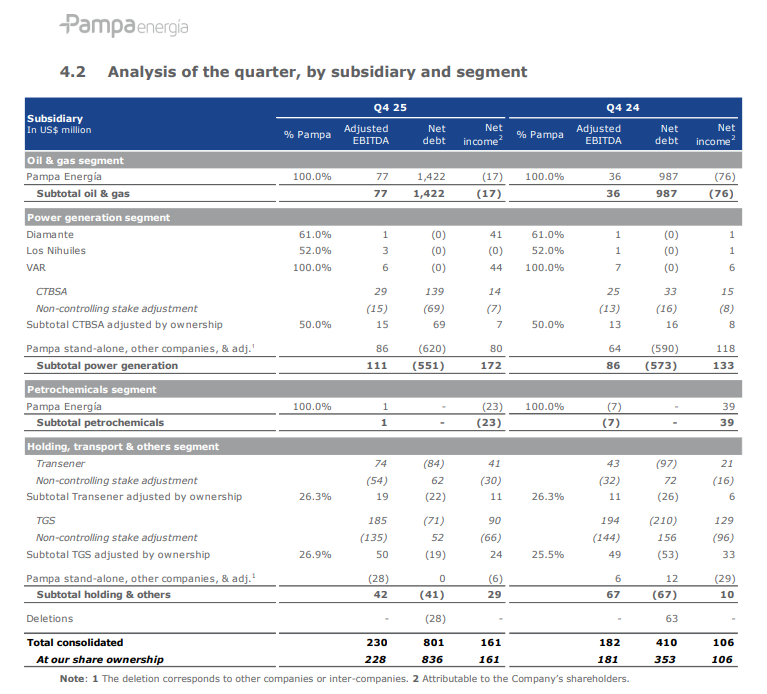
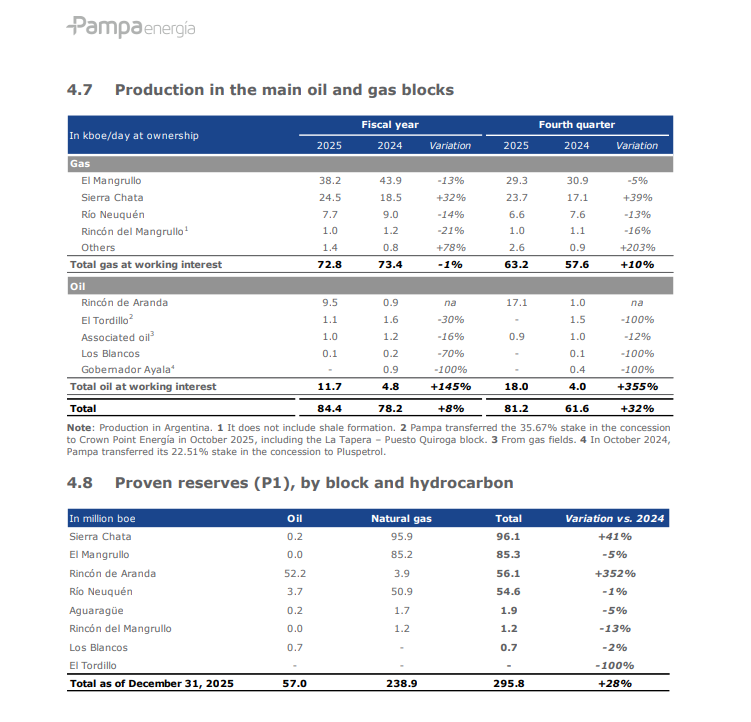
🚨🇦🇷 Pampa Energia $PAM Earnings report Q4/FY 2025 is out:
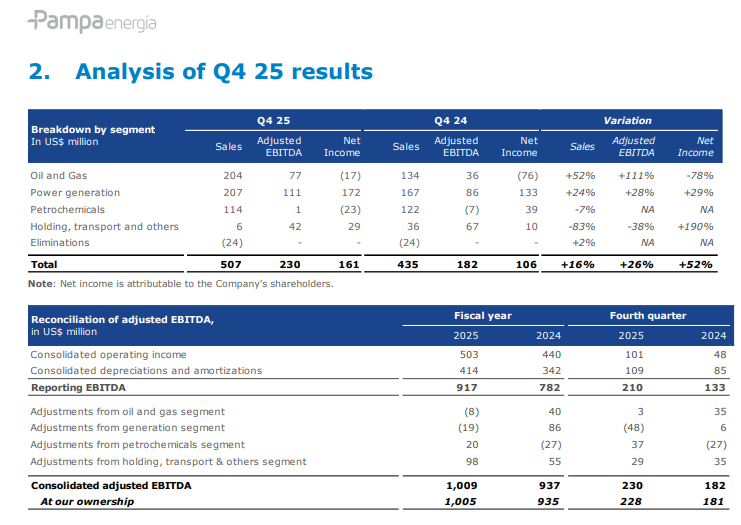
▶️Reported record sales of US$507 million in Q4 (+16% YoY) driven by higher crude oil production at Rincón de Aranda, improved spot prices and higher gas exports to Chile.
▶️Adj EBITDA reached US$230 million in Q4'25, a 26% YoY increase, mainly reflecting the growing contribution from Rincón de Aranda.
▶️Net income attributable to shareholders was US$161 million, 52% higher than Q4'24.
▶️Net debt decreased to US$801 million as of December 2025, compared to US$874 million as of September 2025.
▶️Q4'25 was marked by sustained shale oil growth at Rincón de Aranda and strong performance across thermal power plants.
▶️Oil production reached 18.2 kbpd in Q4 25 (4.5x vs. Q4 24, +4% vs. Q3 25), driven by RdA, which averaged 17.1 kbpd in Q4 25 (+16.1 kbpd vs. Q4 24, +2.7 kbpd vs. Q3 25)
▶️Lifting cost p/boe decreased 8% to US$8.0 p/boe produced in Q4 25 vs. US$8.7 in Q4 24, explained by rising production at Rincón de Aranda and higher gas demand.
▶️Proven reserves (P1) grew 28% YoY, mainly driven by Rincon de Aranda.
$PAM
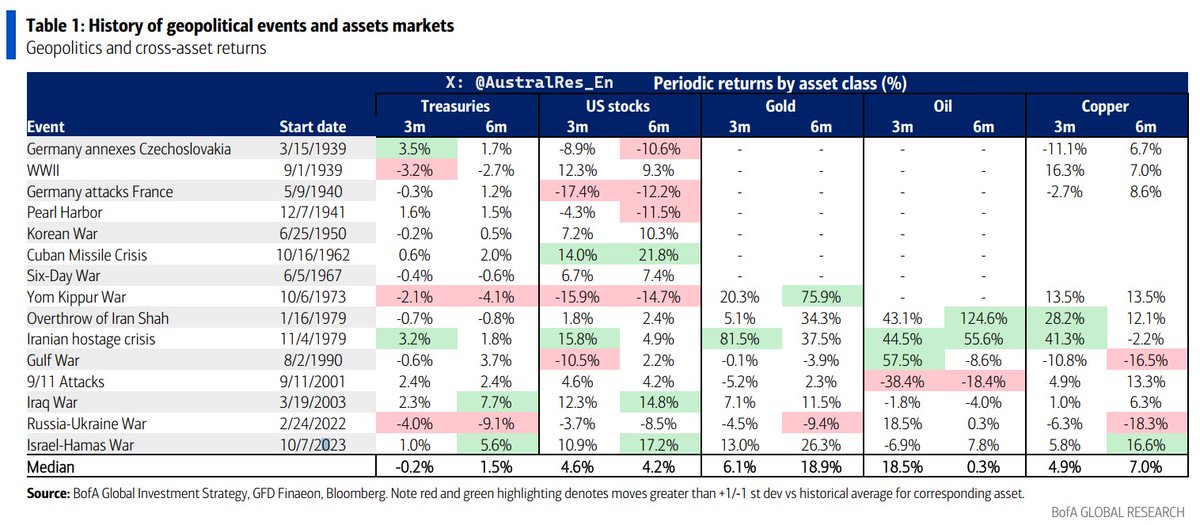
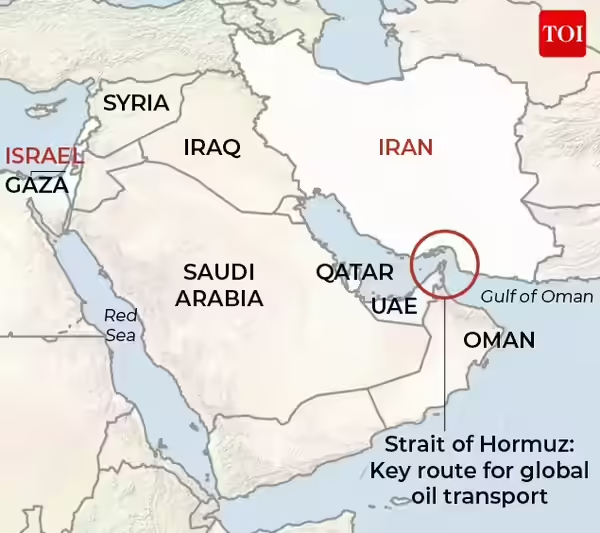
🛢️💥 As new geopolitical shocks unfold in the Middle East, the risk of higher oil prices and stronger demand for safe-haven metals like gold and silver is rising.
US and Israeli strikes on Iran, plus Iranian missile strikes across the Gulf, have put key oil exporters and routes back in the geopolitical spotlight.
There is still no confirmed damage to major oil or gas facilities, but some tankers have paused voyages through the Strait of Hormuz, a corridor that handles about 20% of global crude flows.
History shows that whenever big producers are at risk or shipping lanes look unsafe, oil prices tend to spike first and calm down only when supply fears ease.
Brent was already up roughly 20% this year into the low‑70s on war risk; a contained conflict could lift prices into the 80s, while a prolonged disruption might push crude back toward 100.
On the other hand, gold and silver tend to benefit from flight‑to‑safety flows, especially if investors fear higher inflation from expensive energy and fiscal deficit.
In short, the real question for oil markets now isn’t “if” geopolitics matters again, but how far this risk premium will run before the shooting stops.
We are witnessing history before our eyes.
#oott #Iran #Israel #MiddleEastCrisis
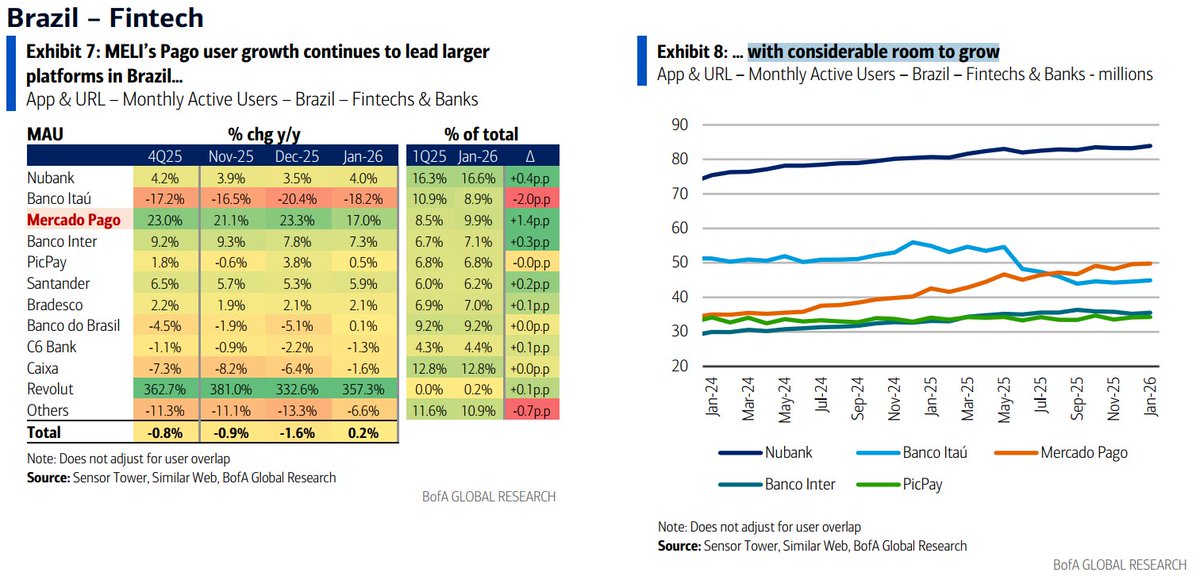
��🇷 Mercado Pago appears to be the fastest growing major fintech platform in Brazil, with still considerable room to grow as $MELI's fintech arm reached ~50M MAUs.
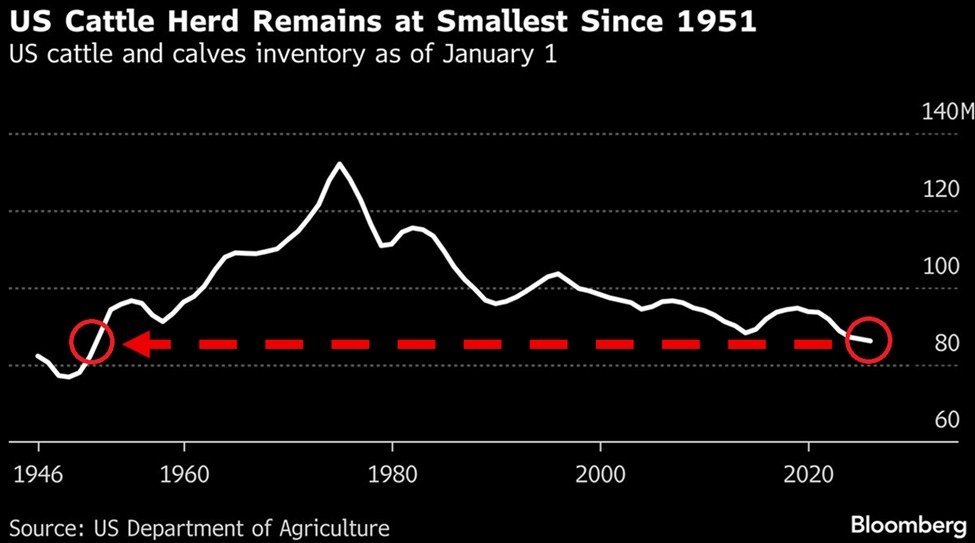
🇦🇷🇺🇸🥩 Argentina to the rescue as the US faces a major cattle shortage.
US cattle and calves inventory have dropped to around 85 million heads, the lowest level since 1951, pushing beef inflation to unprecedented levels.
The US is now looking to ease price pressures by quadrupling its beef imports from Argentina.
As the US herd is unlikely to recover until 2028, this creates a unique window of opportunity for Argentina to step in and fill the gap.
This comes in a much more favorable context, with trade opening up and higher livestock prices, which could greatly benefit a country that urgently needs dollars.
📈🇧🇷💸 EM is leading global equity returns YTD, with Brazil topping the Latam regional table at roughly 20% gain as Brazilian equities appear to be in the early stages of a major breakout, supported by strong foreign inflows (+2.4B).
On FX, the Brazilian real ranks among the best‑performing currencies against the US dollar so far this year, with BRL up about 4.6% versus USD in 2026 and trading near its strongest levels since mid‑2024.
At the sector level, leadership has flipped as Energy and a commodities‑tilted Materials complex take the lead, reflecting a clear rotation away from crowded tech and consumer discretionary names.
$EWZ $XLK $XLC #USDBRL
Stanley Druckenmiller Q4 13F is out
One of his largest new bets was on Brazil via $EWZ (shs + calls) 🚀🇧🇷
It also increased significantly its position in Argentina’s energy flagship $YPF 🚀🇦🇷
The Golden Age of Latin America is here 🫡
🇦🇷⚒️ Lundin Mining just announced Vicuña integrated technical study results:
▶️ Base-case scenario that establishes a world-class project: NPV8% of $9.5 billion after-tax and the IRR to 14.8% with a payback of 8.4 years. At $4.60/lb copper, $3,300/oz gold and $40/oz silver. Stage 1 capex = $7.1 billion
▶️ At spot copper, gold and silver prices ($6.00/lb copper, $5,000/oz gold and $80/oz silver), the NPV8% increases to $28.8 billion and the IRR to 25.5% with a payback of 5.4 years.
▶️ Resource growth: The updated Mineral Resource grew significantly compared to the previous estimate.
- Contained copper of 14 Mt M&I
- Contained gold of 36 Moz M&I
- Contained silver of 729 Moz M&I
▶️ Average annual production of 400,000 tonnes copper, 700,000 ounces gold and 22 million ounces silver over the first 25 full years of operation.
Benefits to Argentina and Chile
"The development of the Project is expected to provide substantial economic benefits to Argentina and Chile, both locally and at a national level. Vicuña will be one of the largest foreign direct investments in Argentina in the last 10 years and will be a meaningful contributor to gross domestic product.
It is estimated that during production, the Project will contribute about $965M annually and $69 billion over the LOM in taxes and royalties to the Argentinian economy. During construction, employment including employees of the Company and contractors is estimated to average 5,500 direct workers and 19,000 indirect workers.."
🇦🇷🔥
$LUN.TO $BHP
https://t.co/EE32wGcoS0
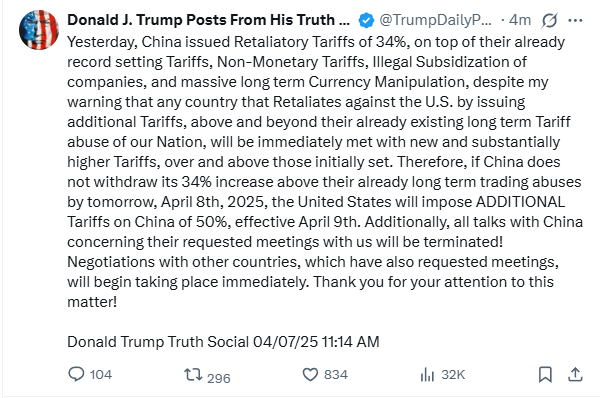
🚨🇺🇸🇨🇳| Trump en Truth Social: Si China no retira su aumento arancelario del 34% antes de mañana, 8 de abril, Estados Unidos impondrá "aranceles ADICIONALES a China del 50%, a partir del 9 de abril".
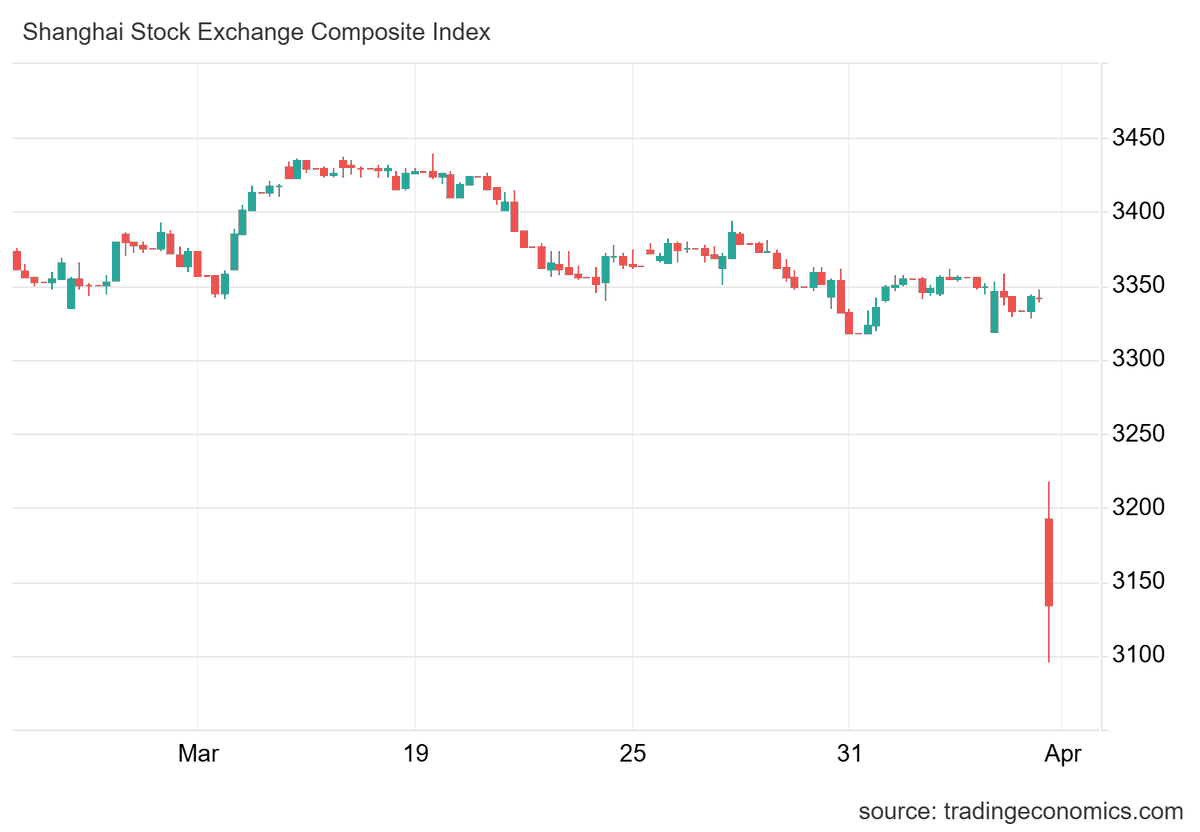
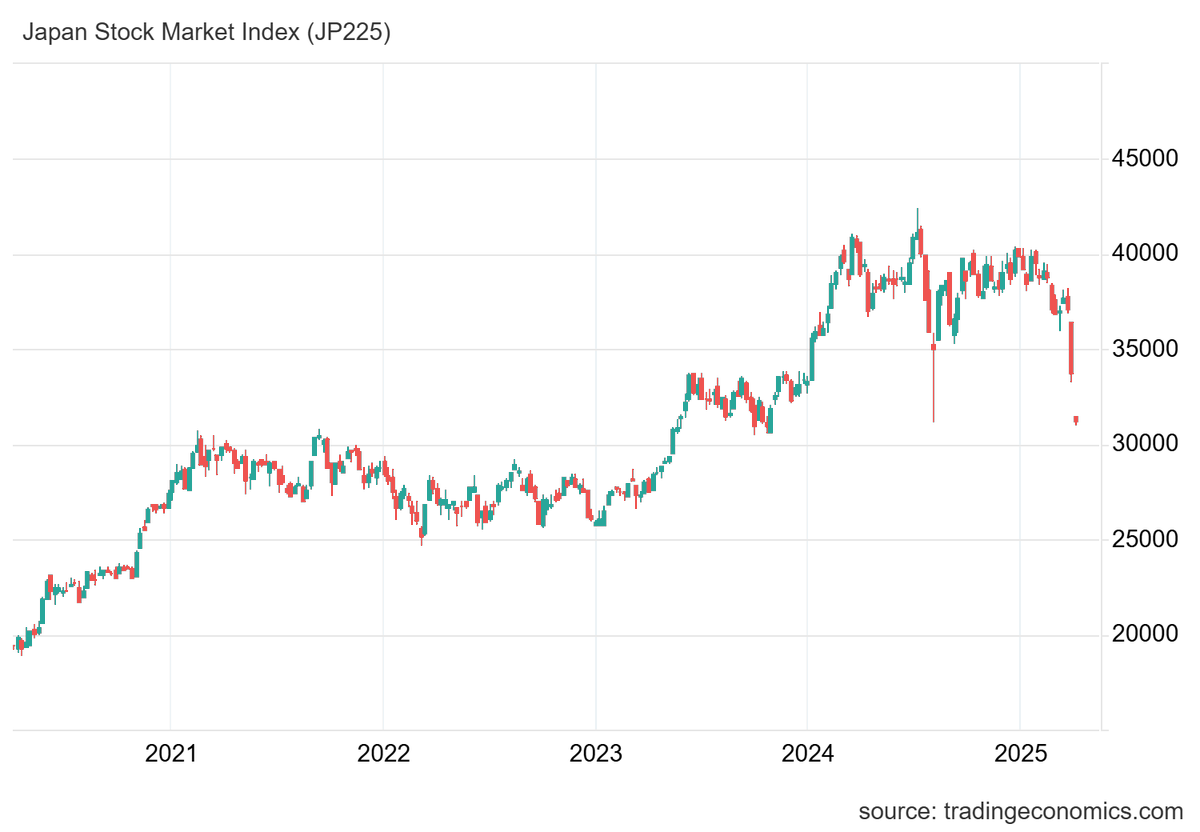
🚨 | Cierres Asia
📉 Hang Seng de Hong Kong: -13,2%
📉 Shanghái: -7,3%
📉 Shenzhen: -9,7%
📉 Nikkei Japón: -7,8%
📉 Sensex de India: -3,3%
📉 Kospi de Corea del Sur: -5,6%
🚨 | Cierres Asia
📉 Hang Seng de Hong Kong: -13,2%
📉 Shanghái: -7,3%
📉 Shenzhen: -9,7%
📉 Nikkei Japón: -7,8%
📉 Sensex de India: -3,3%
📉 Kospi de Corea del Sur: -5,6%
🚨🇯🇵| El #Nikkei extiende su caída ahora hasta un 8%, a su nivel más bajo desde octubre de 2023. El índice bancario del Topix se desploma un 14,7% al inicio de la semana en Asia..
The country is 100% behind the president on fixing a global system of tariffs that has disadvantaged the country. But, business is a confidence game and confidence depends on trust.
President @realDonaldTrump has elevated the tariff issue to the most important geopolitical issue in the world, and he has gotten everyone’s attention. So far, so good.
And yes, other nations have taken advantage of the U.S. by protecting their home industries at the expense of millions of our jobs and economic growth in our country.
But, by placing massive and disproportionate tariffs on our friends and our enemies alike and thereby launching a global economic war against the whole world at once, we are in the process of destroying confidence in our country as a trading partner, as a place to do business, and as a market to invest capital.
The president has an opportunity to call a 90-day time out, negotiate and resolve unfair asymmetric tariff deals, and induce trillions of dollars of new investment in our country.
If, on the other hand, on April 9th we launch economic nuclear war on every country in the world, business investment will grind to a halt, consumers will close their wallets and pocket books, and we will severely damage our reputation with the rest of the world that will take years and potentially decades to rehabilitate.
What CEO and what board of directors will be comfortable making large,
long-term, economic commitments in our country in the middle of an economic nuclear war?
I don’t know of one who will do so.
When markets crash, new investment stops, consumers stop spending money, and businesses have no choice but to curtail investment and fire workers.
And it is not just the big companies that will suffer. Small and medium size businesses and entrepreneurs will experience much greater pain. Almost no business can pass through an overnight massive increase in costs to their customers. And that’s true even if they have no debt, and, unfortunately, there is a massive amount of leverage in the system.
Business is a confidence game. The president is losing the confidence of business leaders around the globe. The consequences for our country and the millions of our citizens who have supported the president — in particular low-income consumers who are already under a huge amount of economic stress — are going to be severely negative. This is not what we voted for.
The President has an opportunity on Monday to call a time out and have the time to execute on fixing an unfair tariff system.
Alternatively, we are heading for a self-induced, economic nuclear winter, and we should start hunkering down.
May cooler heads prevail.
🚨🇯🇵| El #Nikkei extiende su caída ahora hasta un 8%, a su nivel más bajo desde octubre de 2023. El índice bancario del Topix se desploma un 14,7% al inicio de la semana en Asia..
🚨🇯🇵| Los futuros del #Nikkei acaba de suspender su cotización tras alcanzar su límite a la baja. El índice japonés cerró el viernes en su nivel más bajo en ocho meses.