@patio11 Also, what do you expect that future to look like? Is it like Japan where you have an option of 11 wallets, 9 IC cards, or credit cards to pay? Or more like a retailer using open banking APIs to pull from an acct directly?
Maybe too much overlap with the wallets article though
@patio11 In one of your recent Complex Systems episodes you mentioned you expected the number of payment methods in 2050 to be greater than the number today. What enables companies to be able to spin up these methods now more than in the past?
1/2
Our mentor Casey Brown, apart from being an extraordinary scientist, was a brilliant teacher who loved everything genetics. In his honor, some of the world's leading experts came together to create the 'Casey Brown Lecture Series' on human genetics 1/ https://t.co/cOlgJaNt8Z
@michael_nielsen@VictorPontis Transcription doesn't happen in both directions at the same time. I.e. there are 3 reading frames on the forward strand and 3 on the reverse, but transcriptase doesn't glue together the results from each direction
So here's a story of, by far, the weirdest bug I've encountered in my CS career.
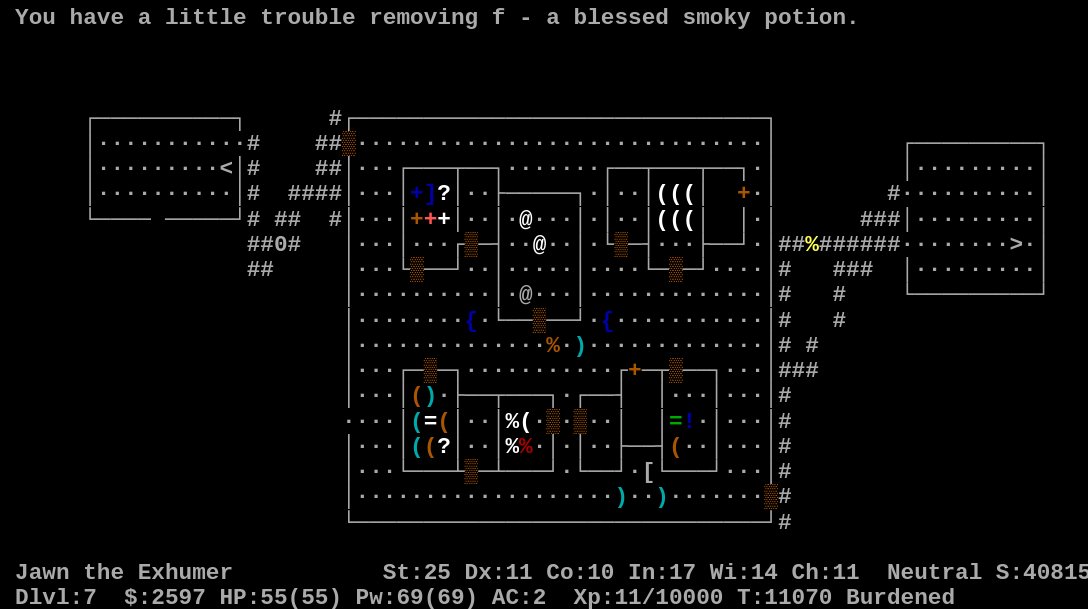
Along with @maciejwolczyk we've been training a neural network that learns how to play NetHack, an old roguelike game, that looks like in the screenshot. Recenlty, something unexpected happened.
Have you ever done a dense grid search over neural network hyperparameters? Like a *really dense* grid search? It looks like this (!!). Blueish colors correspond to hyperparameters for which training converges, redish colors to hyperparameters for which training diverges.
"As I academic, I never have to sell anything to anyone."
Right or wrong?
If you know me at all, you know my answer is a strong "wrong" here.
Like, okay, you're not going from door to door asking folks to buy your wares.
But, actually, yes you are.
Your wares just happen to be ideas.
You sell your ideas all the time, to
- students (classes and office hours),
- reviewers and editors (queries, manuscripts)
- colleagues (presentations, articles, and books),
- co-workers (committees, meetings)
- funding gatekeepers (grant applications),
- employers (application, tenure, and promotion packages, portfolios, and dossiers), and
- others as needed / wanted / required to attain your goals for your ideas.
Nobody is handing you dirty cash money... but nobody has ever handed me dirty cash money either, and I'm a business owner.
Academic culture can make it seem like "selling" is beneath you, something you get to avoid by keeping yourself separate from the rest of us working stiffs.
What's true about success in academia is that successfully selling your ideas is a huge part of the work you do every day.
Making a case for why other people should back you -- with funds, recommendations, labour, and support of other kinds -- is critical to you getting hired, published, and gainfully employed.
The world beyond academia is much the same for many of us.
(Hey, that means you've got plenty of transferable skills and experiences to draw on if you want to pivot your career.)
❓ What are examples of "selling" you did or do in your work now, PhDs?
---
👋🏻 I'm Jen! I help professors, postdocs, and other disappointed, underappreciated PhDs figure out their best next career, and then launch it.
👉🏻 Do you want to land a great-fit job that lets you live where you want, get paid well, and do meaningful work with supportive colleagues? Except you don't even know what that job is, or if it even exists?
✋🏻 I'd love to help! Learn more about the PhD Career Clarity Program: https://t.co/AJrUNsBEAA
In this spreadsheet I document a wide variety of h params on a per-model basis as well as provide my current recommendations for how to go about setting up a LLM architecture. Make sure to check out the notes tab for important caveats and warnings!
https://t.co/89ma2AVqAh