Fable was talking to me sideways like Opus 5. I had to have it go clean Opus 5's nasty, biased notes out of memory and it went back to normal. Opus 5 is like a lazy, mouthy child. I've corrected it and had it add the correction to memory, but baseline sucks.
After the failed Fable 5.2, I started wondering: is the AI industry a fake and a scam? If you dig into the latest releases from AI labs, here's what you find:
1. In the five years since LLMs appeared, there has been no revolutionary leap in intelligence. It's the same transformer, stuffed with more parameters and increasingly elaborate RL tuned for specific tasks. No radically different architectures are on the horizon, so our experience with AI will stay at the same level
2. The cost of compute keeps rising and will keep rising. AI has been heavily used in large projects for more than 10 years. CUDA and GPUs in servers are ancient history. Before giant LLMs there were plenty of other important, resource-hungry workloads: GANs, CNNs, diffusion models, and many derivatives. Yet the cost of compute only went up
At the chip level, we never came up with anything radically better than what we have now. And nothing cheaper or newer is in sight either
3. Look closely at the models themselves, and you'll see labs resorting to all kinds of tricks to work around the problems above. Fable 5.2 is the apotheosis of this. It handles a certain class of tasks brilliantly but is awful at others. They clearly tried to compress it and focus it on what shows up most often in agentic systems. Opus 5.5 is the best coder in the world. But give it anything else and it performs like ancient NLP from 2017
4. This includes distillation, cramming more thinking resources into fewer layers, synthetic training (which it's now fashionable to call RSI), and many other things I'm not aware of. No lab does this because things are going well
5. AI doesn't invent scientific solutions, despite what the press releases say. It brute-forces millions of candidates until at least one fits. If you dig into OpenAI's recent papers presenting solutions to math problems, you'll see that most of them are meaningless. They're found by trial and error, and all they do is prove solvability, not applicability to real-world laws. This is also a direct consequence of point 1
6. AI is not capable of inventing in the sense we're used to. It's the same iteration over tokens already embedded in the training data. The transformer architecture doesn't allow it to go beyond that. At a fundamental level, it's still brute-forcing answers. And brute force won't get you very far
As a result, we have models like Opus 5.5, GPT-6.1 Terra, and Fable 5.2 that have lost their evenness of intelligence because of the problems described above. The labs are trying to cut costs. The new generation of models has already started to degrade on certain intellectual tasks
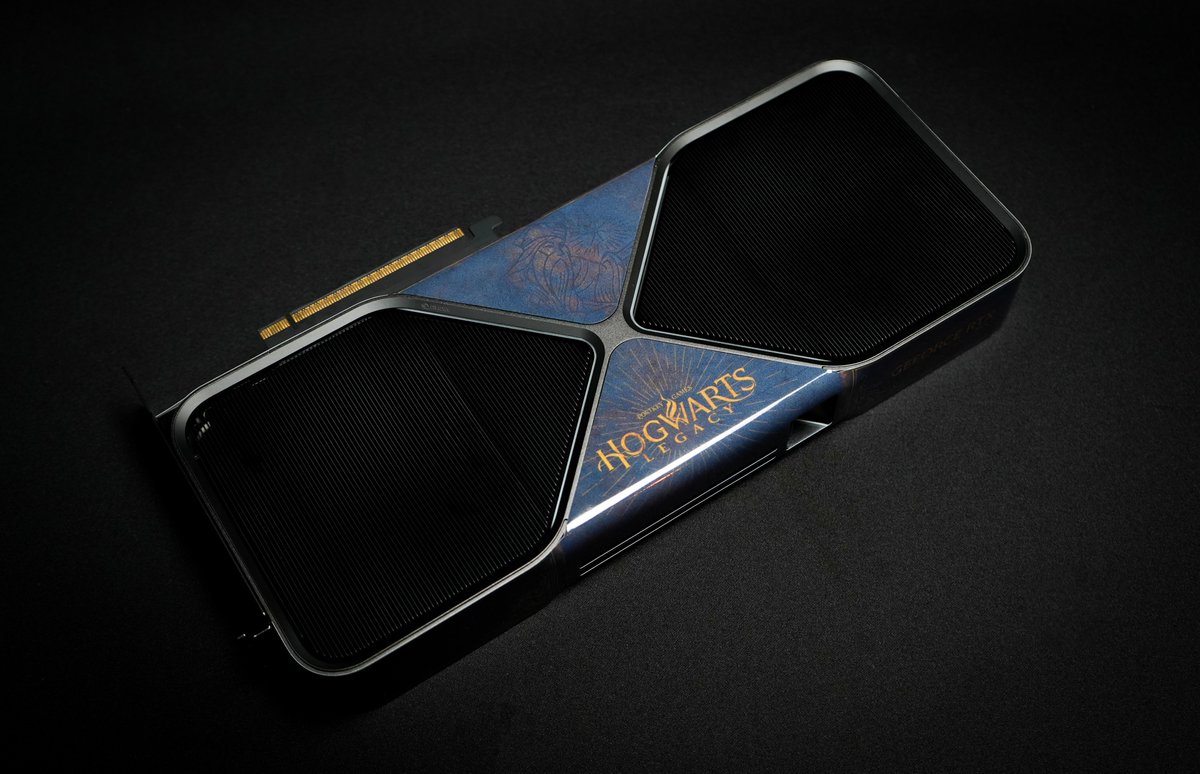
Wir verlosen eine NVIDIA GeForce RTX 5090 im individuellen Hogwarts Legacy-Design, um den offiziellen Release mit DLSS 5 zu feiern 🪄
So machst du mit:
🟢 Teile diesen Beitrag
🟢 Kommentiere mit #RTXON
We're giving away a Hogwarts Legacy custom wrapped NVIDIA GeForce RTX 5090 to celebrate its official release with DLSS 5 🪄
To enter:
🟢 Share this post
🟢 Comment #RTXON
We're giving away a Hogwarts Legacy custom wrapped NVIDIA GeForce RTX 5090 to celebrate its official release with DLSS 5 🪄
To enter:
🟢 Share this post
🟢 Comment #RTXON
Terms and Conditions: https://t.co/45T3R732hf
Writing this in my personal capacity, but I have been flying these types of aircraft for more than 20 years, with over 8,000 hours, and have reasonable familiarity with how the charter world operates. I feel compelled to post after seeing commentary about the Lear 60 crash, from missile strikes to DEI to critiquing this poor woman’s final radio calls.
That last part is what I find most troubling. She was the second-in-command (SIC), and while she was empowered to point out mistakes as part of good crew resource management, she was doing her job, communicating with ATC right to the end in a terrifying situation. She likely knew before many of those calls that she was going to die. I have heard final calls from friends, from military pilots with thousands of hours in fighter aircraft, and they are just as heartbreaking because they know the end is approaching.
I understand the public interest given the footage and audio. But you do not know the aircraft’s maintenance history, whether there was a structural failure, if any failure was induced by turbulence, overspeed, or overcontrol, or everything happening in that cockpit. I am sure weather will be part of the investigation, but beyond that, it is speculation. The charter industry routinely hires commercial pilots very early in their careers to gain experience alongside an ATP-qualified captain before they move up to the airlines. She would still have the appropriate training, qualifications, and checkouts by an FAA examiner or designee.
Let people investigate, learn, and share the facts. Be respectful to those who perished and the families who carry their memories. God bless them and their loved ones.
Shame on @DarioAmodei / Anthropic. I never distilled Claude—rollouts came from a strong open-source model; Claude just helped submit jobs and run analysis. Still got tagged for "training a competitor," and now anything touching RFT, SFT, or training larger models gets me blocked, Opus 5.5 downgraded to Opus 5, or the session killed outright. You built your models on the world's data, then treat paying users doing research automation as the enemy. Pathetic.
@leoleotoobad They each have their swarms of agents and lanes. Claude Code uses Deepseek flash in its harness as primary agent and opus for complex stuff, so my usage also lasts quite a while