I was flying from Dulles to Denver when I learned the FAA had paused departures nationwide. As a pilot, I knew crews and controllers had backup procedures to keep aircraft already in the air safe.
When I spoke with USA TODAY, I wanted to know what failed. As we modernize air traffic control, we also need to ask what happens when the new equipment fails. Can the backup take over, and how much traffic can it safely handle? We can test that before the next outage.
Article via The News Tribune: https://t.co/zvTayYQioz
#AviationSafety #AirTrafficControl #GroundStop #FAA
Now that it’s National Aviation History Month, it is worth remembering that aviation history is not just in dusty archives. It is actively being made by pilots flying on the line today.
MSU Denver RED highlighted Captain Chresten Wilson, an MSU Denver alumna who recently became the most senior pilot at United Airlines. She is the first woman to hold the top spot on United's seniority list in the airline's history.
Spending over 40 years in the cockpit and commanding international wide-body flights is an incredible achievement. For our students in the aviation department, her career shows exactly what steady dedication and technical discipline can build over a lifetime in the air.
Read her story here:
https://t.co/1sGC86kGPg
#AviationHistoryMonth #WomenInAviation #AviationLeadership #MSUDenver #JeffPrice
“You’re in aviation? Oh, are you a pilot?” When we think of aviation careers, most people think of pilots. However, there is an entire industry beyond the cockpit.
Airplanes cannot get off the ground without the solid efforts airport operations, air traffic controllers, safety managers, and regulatory experts working behind the scenes. We wrote Landing An Aviation Career to give people an honest, realistic roadmap of how the entire industry functions, and yes, including pilots!
For professors, mentors, and industry veterans guiding newcomers, the print edition is a handy desk reference to help them map out a long-term career.
https://t.co/pI36nLWpij
#AviationCareers #AirportManagement #AviationEducation #Mentorship #JeffPrice
In case you missed my article in The Conversation following the FlyDubai incident, it touches on one of the toughest problems in aviation security: what happens when a risk comes from inside the cockpit itself?
After 9/11, the industry successfully hardened flight decks against outside intruders with reinforced doors, air marshals, and crew defense training. That made flying significantly safer. But defending against an insider threat is an entirely different operational challenge.
Vetting, mental health screening, and reporting programs provide important layers of protection, but ultimately, commercial aviation still relies on fundamental trust in the pilots at the controls.
Here is my breakdown of how cockpit defenses evolved and where the operational limits lie:
https://t.co/zLFtVuOuWU
#AviationSecurity #FlightSafety #CockpitSecurity #RiskManagement #JeffPrice
Security rules only work when they reflect what we actually deal with on the airfield and in the air. As threats evolve, our textbooks and training have to keep pace.
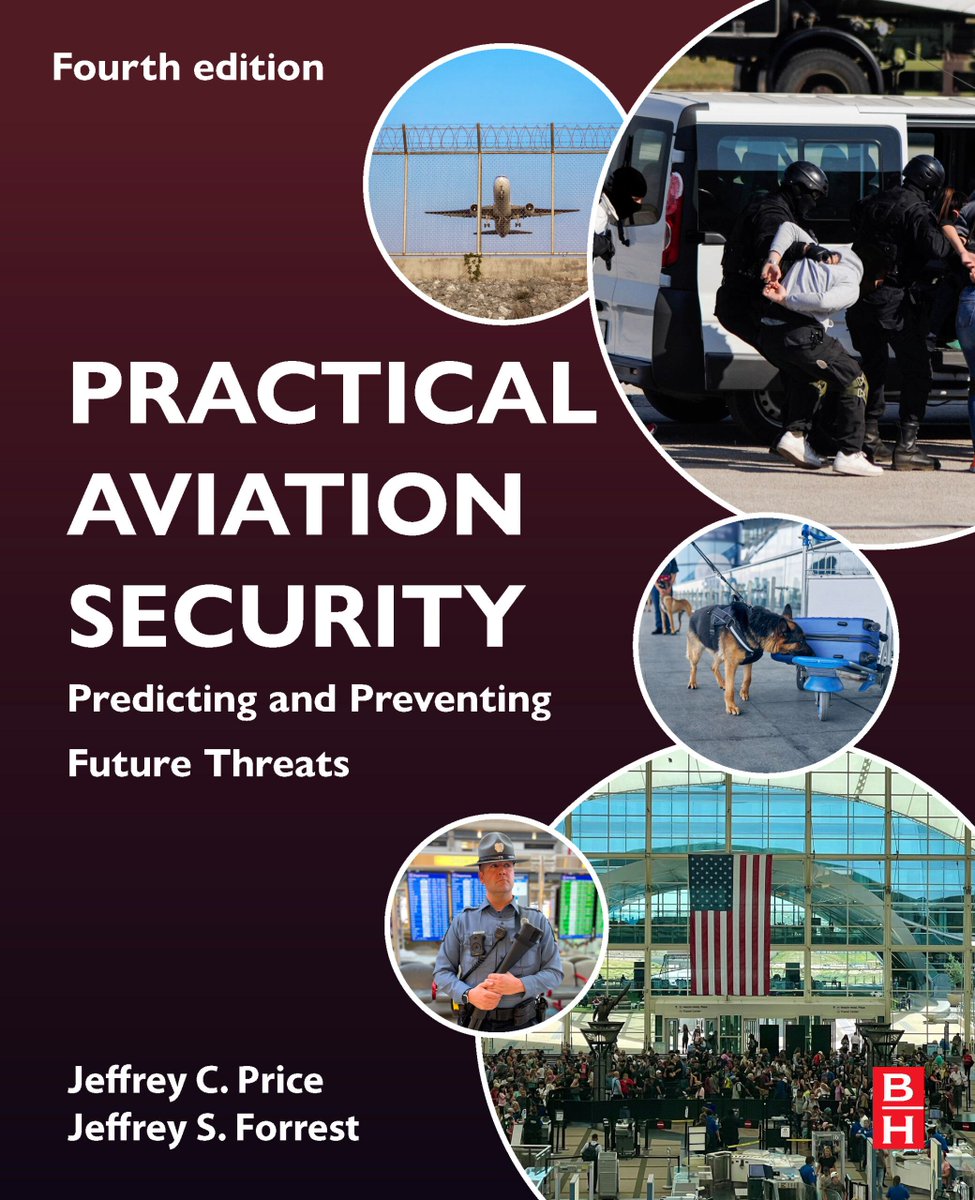
That was the goal when Dr. Jeffrey Forrest and I updated Practical Aviation Security for its 4th edition.
Along with updates to checkpoint design and perimeter security, we added comprehensive chapters on asymmetrical threats. That includes cybersecurity risks to aircraft and navigation systems, Counter-UAS (drone defense), and urban air mobility.
Whether you are running an airport security program, training front-line staff, or teaching the next generation in the classroom, having a guide grounded in real-world practice makes a huge difference.
https://t.co/VkcQIwzQgI
#AviationSecurity #AirportOperations #Cybersecurity #CounterUAS #JeffPrice
Managing an airport system like Chicago's, balancing the distinct demands of O'Hare and Midway while moving over 100 million passengers a year, requires constant juggling between long-term construction projects and daily operational flow.
In a recent Q&A with AAAE’s Airport Magazine, Chicago Department of Aviation Commissioner Michael McMurray shares some great insights on leading that system. His focus on workforce culture, modernization, and steady infrastructure planning gives a grounded look at what it takes to run major commercial hubs.
Worth reading for airport directors, planners, and anyone studying large hub governance:
https://t.co/OA2TuEdCK8
#AirportManagement #AviationLeadership #AirportInfrastructure #AAAE #JeffPrice
TSA's decision to pause the nationwide rollout of its "Gateside by TSA PreCheck" program, scaling back from an expected 300+ airports down to just 13 pilot locations, is a classic example of customer service running into operational reality.
Letting non-ticketed PreCheck members visit the gate to see off family or meet arrivals is a great perk and reminds us of the days before 9/11. But from an airport management and security perspective, funneling non-travelers into the sterile concourse may put pressure on checkpoint lanes, and concourse capacity.
Before programs like this can expand everywhere, airports need the physical checkpoint space and staffing to support them without slowing down security lines. This pause is a healthy reminder that terminal access policy cannot outpace front-line capacity. I see this as a valid benefit and additional revenue source for several airports, but each airport must evaluate their own capabilities and space planning.
https://t.co/2PdCwe0j9n
#AviationSecurity #TSA #AirportOperations #AirportManagement #JeffPrice
Happy Halloween to everyone traveling or working on the front lines today!
While passengers might be traveling with costume props or unusual items in their luggage this week, Halloween is a fun reminder of what TSA officers and airport security teams face every single day: identifying anomalies under X-ray imaging and separating harmless oddities from genuine risks.
To all the airport staff, flight crews, and security personnel working through the holiday to keep us moving safely—thank you for keeping the operations quiet and spook-free.
#HappyHalloween #AviationSecurity #AirportOperations #TravelTips #JeffPrice
Managing an airport during normal daily operations takes skill; managing one during a full-scale emergency takes preparation, clear protocols, and strong multi-agency coordination.
In Practical Airport Operations, Safety, and Emergency Management, we focus on bridging textbook regulatory mandates with actual ground realities. From airside inspections and Part 139 compliance to handling crisis response alongside local emergency services, this text was built to serve as a practical desk reference for active practitioners and a foundational guide for students.
If you are looking for a comprehensive operational reference for your airport staff or course syllabus, take a look:
https://t.co/cEVyfDaU2Y
#AirportOperations #AviationSafety #EmergencyManagement #AirportManagement #JeffPrice
Running an airport that handles over 57 million passengers a year takes an extraordinary balance of airside efficiency, landside infrastructure, and constant operational adaptation.
In a recent Q&A with Airport Magazine, James Chrisley, Director of Aviation at Harry Reid International Airport (LAS), shares great insights on leading one of the nation's busiest origin-and-destination hubs. He touches on everything from managing rapid passenger growth and major capital projects to fostering strong staff retention.
It’s an insightful read for any airport management professional or rising student looking to understand what it takes to direct a top-tier global gateway:
https://t.co/znUYhsRpzT
#AirportManagement #AviationLeadership #AirportOps #AAAE #JeffPrice
When students or career-changers ask me how to break into aviation, many immediately think about becoming a pilot. But aviation is a much bigger industry than the flight deck.
That’s why we wrote Landing an Aviation Career: From Pilots to Managers to Air Traffic Controllers — a career guide for people who want to build a future in aviation, whether that means becoming a pilot, working in airport management, air traffic control, aerospace, airline management, or one of the many other careers that keep this industry moving. This book is about more than finding an aviation job. It’s about understanding the career paths, making smart choices, getting your foot in the door, and building a career that lasts.
Inside the flight deck or outside of it, aviation has a place for you. This book helps you find it.
And for everyone who prefers a physical book on their desk or in their classroom, I’m glad to say the print edition is officially out.
Whether you’re mentoring someone or plotting your own next move, check it out here:
https://t.co/pI36nLWpij
#AviationCareers #AirportManagement #AviationEducation #JeffPrice
When explosive ordinance disposal teams were called to an Alabama airport after screeners spotted historic Civil War cannonballs in a passenger's checked bag, it made for a wild news headline—and a classic operational case study.
Travelers often don't realize that historical munitions, even vintage ones, can contain active black powder or present significant density anomalies under X-ray imaging. When an unexploded ordnance risk is flagged, it triggers immediate safety protocols, bag freezes, and bomb squad sweeps that temporarily disrupt terminal flow.
It’s an unusual story, but a great reminder of why clear passenger education about restricted items remains essential for smooth airport operations.
https://t.co/VGJnSunHzC
#AviationSecurity #TSA #AirportOperations #TravelSafety #JeffPrice
The recent attacks on the King Khalid International Airport in Riyadh, in Saudi Arabia, and continued drone attacks related to the war in Iran on other airports, has brought the question of whether current airport security measures are enough to protect the traveling public.
The answer, largely enough, is no - at least not from a regulatory perspective and particularly not in the U.S. Transportation Security Regulations primarily require airports to implement measures to protect access to commercial airline passenger flights, not aerial defense from outside threats, such as drones and ballistic missiles. In the US, air defense has been the role of the US military, but with the advent of drone warfare, this role may be changing. I recently completed an interview for @CNBC which you can review below.
https://t.co/JHp0Fzy3ou
#AviationSecurity #AirportOperations #AirDefense #JeffPrice
A Reflection on 25 Years of Post-9/11 Aviation Security
Twenty-five years after September 11, 2001, aviation security in the United States looks dramatically different—from the creation of TSA and reinforced flight decks to advanced CT screening and biometric identity verification.
The system is far from perfect, and it continues to navigate questions around efficiency, privacy, and federal oversight. But the aviation environment today is undeniably stronger than it was on September 10, 2001.
The most vital lesson from the past quarter-century is that security must continuously evolve because threats continuously evolve. Distance from the event must never become complacency.
I reflected on what the industry got right, where challenges remain, and what comes next:
https://t.co/3ylV5YYMhP
#AviationSecurity #TSA #AirportOperations #PublicPolicy #JeffPrice
Aviation security rules only work if they reflect the actual threats we face on the ground and in the air. As technology, threat vectors, and regulations evolve, keeping our educational and operational frameworks current is essential.
That is why Jeff Forrest and I expanded and updated Practical Aviation Security: Predicting and Preventing Future Threats for its 4th edition.
Beyond updating checkpoint screening processes and physical public-area security, this expanded edition includes dedicated chapters on asymmetrical threats—specifically cybersecurity risks across aircraft and navigational systems, drone defense (Counter-UAS), and urban air mobility.
Whether you are instructing the next generation of industry leaders or managing security protocols on an active airfield, having an up-to-date, real-world reference makes all the difference.
The 4th edition is available now on Amazon:
https://t.co/zjg4vFEkDq
#AviationSecurity #AirportOperations #Cybersecurity #CounterUAS #JeffPrice
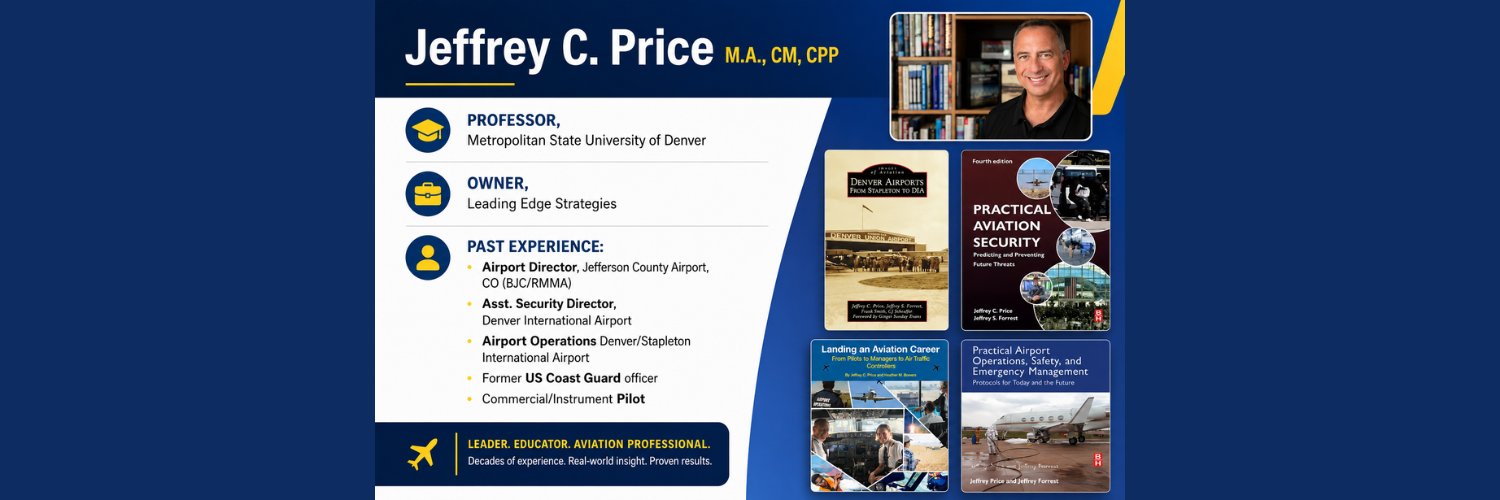
For those I haven't connected with recently, welcome! I’m Jeff Price.
I’ve spent the last 25+ years immersed in aviation security, airport management, and academic research—serving as a Professor at MSU Denver, authoring several industry textbooks (including Practical Aviation Security), and consulting with airports across the country through my firm, Leading Edge Strategies.
My goal has always been simple: taking complex federal regulations, security theories, and operational requirements and turning them into clear, practical strategies that airport managers and rising professionals can actually use on the airfield.
If you ever want to discuss airport operations, training, aviation jobs, or aviation security policy, feel free to reach out or visit the site to learn more:
https://t.co/O9gLG3jRj5
#AirportManagement #AviationSecurity #AviationEducation #LeadingEdgeStrategies #JeffPrice
Working at an airport and understanding how an airport works are two different things. The AAAE Certified Member (C.M.) program builds your knowledge across the airport industry and demonstrates a commitment to your profession.
Whether you work in operations, security, planning, administration, maintenance, or another airport function, the C.M. is a worthwhile investment in becoming a more well-rounded airport professional. Don’t just learn your job. Learn the airport.
The American Association of Airport Executives (AAAE) Loretta Scott CM Academy coming up this November prepares you to take the CM exam and obtain a valuable industry certification.
Check out the upcoming November for the next class:
https://t.co/1Zvqpb929E
#AirportOperations #AirportSecurity #AAAE #ProfessionalDevelopment #JeffPrice
As an educator, one of the most rewarding parts of my work is watching students step into careers across airport operations, air traffic control, and aviation security. But for many bright young professionals, financial barriers can make earning a degree a steep uphill climb.
Airport Magazine recently highlighted the impact of the AAAE Foundation, which has awarded millions of dollars in scholarships to support students pursuing airport management and aviation careers.
Programs like this do more than just help individual students—they ensure our industry continues to attract driven, diverse, and talented leaders to carry aviation forward.
Take a look at how the AAAE Foundation is helping build our industry's future workforce:
https://t.co/odFa72xTms
#AviationEducation #AirportManagement #AviationCareers #AAAE #JeffPrice
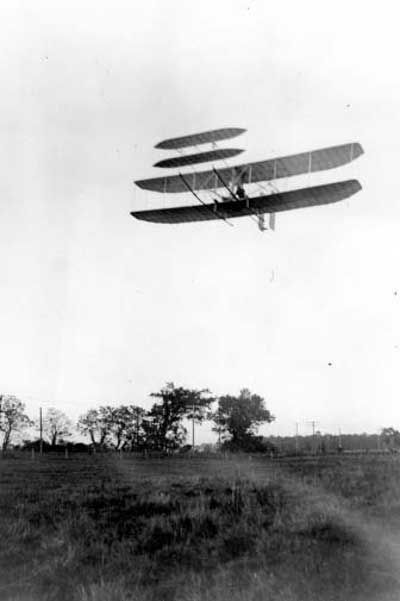
On October 5, 1905, Wilbur Wright flew the "Flyer III" for over half an hour at Simms Station in Dayton, Ohio—covering over 20 miles before running out of fuel. While the famous 1903 flights at Kitty Hawk got the initial headlines, it was these sustained flights in 1905 that turned a scientific experiment into a practical, controllable flying machine.
In airport management, we spend a lot of time focused on complex modern technology, but it’s always humbling to look back at the early milestones that laid the groundwork for today’s global air transportation network.
https://t.co/qDKmYbaEkU
Image: Wright brothers, Public domain, via Wikimedia Commons
#AviationHistory #WrightBrothers #AviationMilestones #Innovation #JeffPrice