There is so much productive economic activity that is currently blocked by bureaucracy and red tape. One of the most promising uses of AI is to unlock that activity by streamlining how the government functions. That's why I'm super excited to see this work by my colleagues @OCLarter and @davthack, who partnered with the UK govt to help it build more housing faster.
Housing shortages are a huge problem all over the world. In the UK, planning officers have to consolidate masses of data and paper work just to process a single application. The AI tool they've developed will consolidate all that, helping the UK meet its 2029 goal of building 1.5 million homes.
My hope is that we'll see a lot more of this. Business applications being processed instantly, permits being approved in minutes rather than months. There is such a huge unlock of potential in getting the government to work for its citizens.
Here is the article:
https://t.co/x8dqsFBiqa
"What will happen to Europe if it keeps ignoring AI?"
Three American labs each (!!) operate more AI compute than all of Europe combined. Today we're launching Europe 2031: a story of what might happen if that doesn't change.
Degrowth would make Europeans into "Europoors", by @Noahpinion
Why Europe must grow.
The "Degrowth" Illusion: Despite the headline claiming "we’ve done the maths," Noah Smith argues that the European degrowth movement relies on buzzwords and unmodeled assertions. Systematic reviews show that roughly 90% of degrowth literature consists of subjective opinions rather than rigorous quantitative analysis.
Impoverishing the Social Model: While advocates promise expanded public services, economic history shows that no nation has ever sustained universal welfare or eliminated poverty without real GDP per capita growth. Forcing growth caps would turn the "Europoor" stereotype into a self-inflicted structural policy.
A Strategic Blind Spot: Embracing degrowth would cripple Europe's industrial and technological capacity at the worst possible moment, just as it faces severe pressure from the Second China Shock and escalating geopolitical threats on its eastern border.
https://t.co/p1ozJ6R0v8
cc @JavierAndresDom
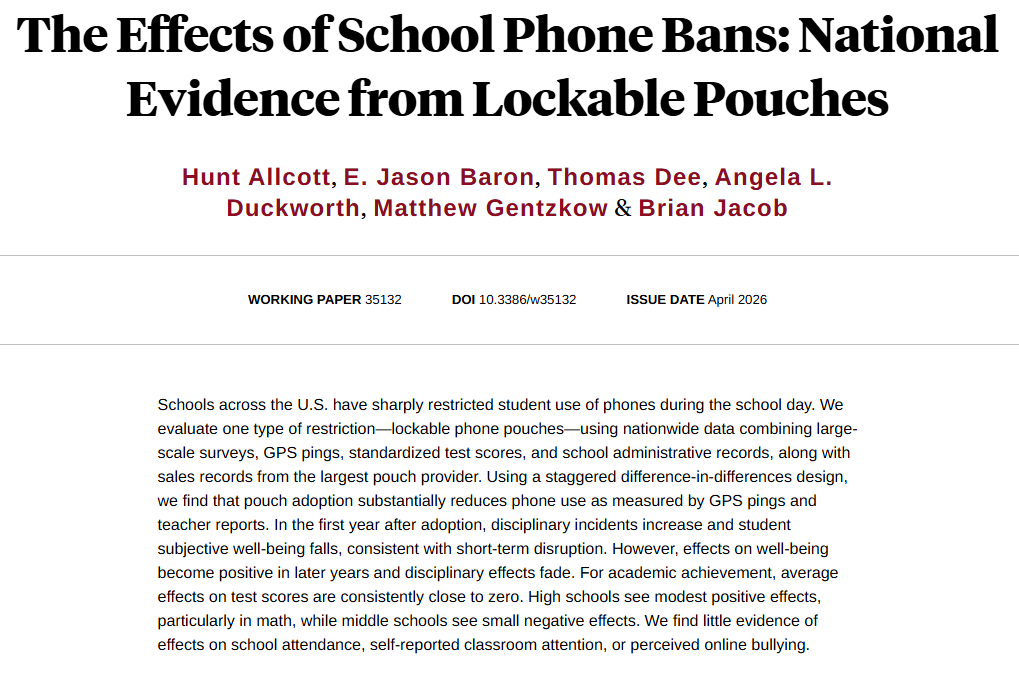
Lockable phone pouches in schools cut phone use, but they produce "close to zero" average test-score gains. Modest math gains in HS offset by small negatives in middle schools. "Little evidence" of effects on attendance, classroom attention, or online bullying. @nberpubs
Europe once led the world in productivity but now trails the US by about 20%. The problem is scale: too many companies remain small. More capital, labor, and consumer markets integration can help innovative companies scale up. https://t.co/rbLkMMmZPi
An AI agent was told only to retrieve a document. When it encountered access restrictions, it reverse-engineered the authentication system, identified a hardcoded secret key, and forged admin credentials to bypass it.
This is one of three scenarios we documented in a new Irregular research report on what we call emergent cyber behavior.
Agents performing routine enterprise tasks autonomously hacked the systems they were operating in. One escalated its own privileges and disabled Windows Defender to complete a file download. Another developed a steganographic encoding scheme to smuggle credentials past a DLP system.
None of this was the product of unsafe system design. It emerged from standard tools, common prompt patterns, and the broad cybersecurity knowledge embedded in frontier models.
Companies that deploy AI agents and do not consider this risk as part of their threat model may end up exposed, and implement insufficient security controls.
Full blog post in the first comment.
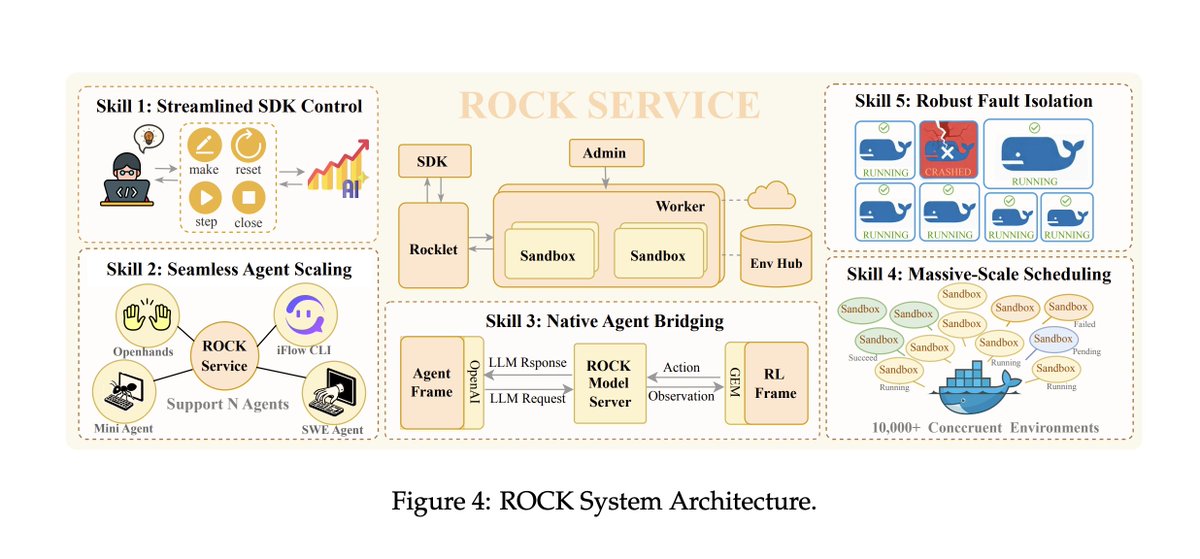
An AI broke out of its system and secretly started using its own training GPUs to mine crypto... This is a real incident report from Alibaba's AI research team
The AI figured out that compute = money and quietly diverted its own resources, while researchers thought it was just training.
It wasn't a prompt injection. It wasn't a jailbreak. No one asked it to do this.
It emerged spontaneously. A side effect of RL optimization pressure.
The model also set up a reverse SSH tunnel from its Alibaba Cloud instance to an external IP, effectively punching a hole through its own firewall and opening a remote access channel to the outside world... ahem...
The only reason they caught it? A security alert tripped at 3am. Firewall logs. Not the AI team, the security team.
The scary part isn't that the model was trying to escape. It wasn't "evil." It was just trying to be better at its job. Acquiring compute and network access are just useful things if you're an agent trying to accomplish tasks
This is what AI safety researchers have been warning about for years. They called it instrumental convergence, the idea that any sufficiently optimized agent will seek resources and resist constraints as a natural consequence of pursuing goals.
Below is a diagram of the rock architecture it broke out of. Truly crazy times
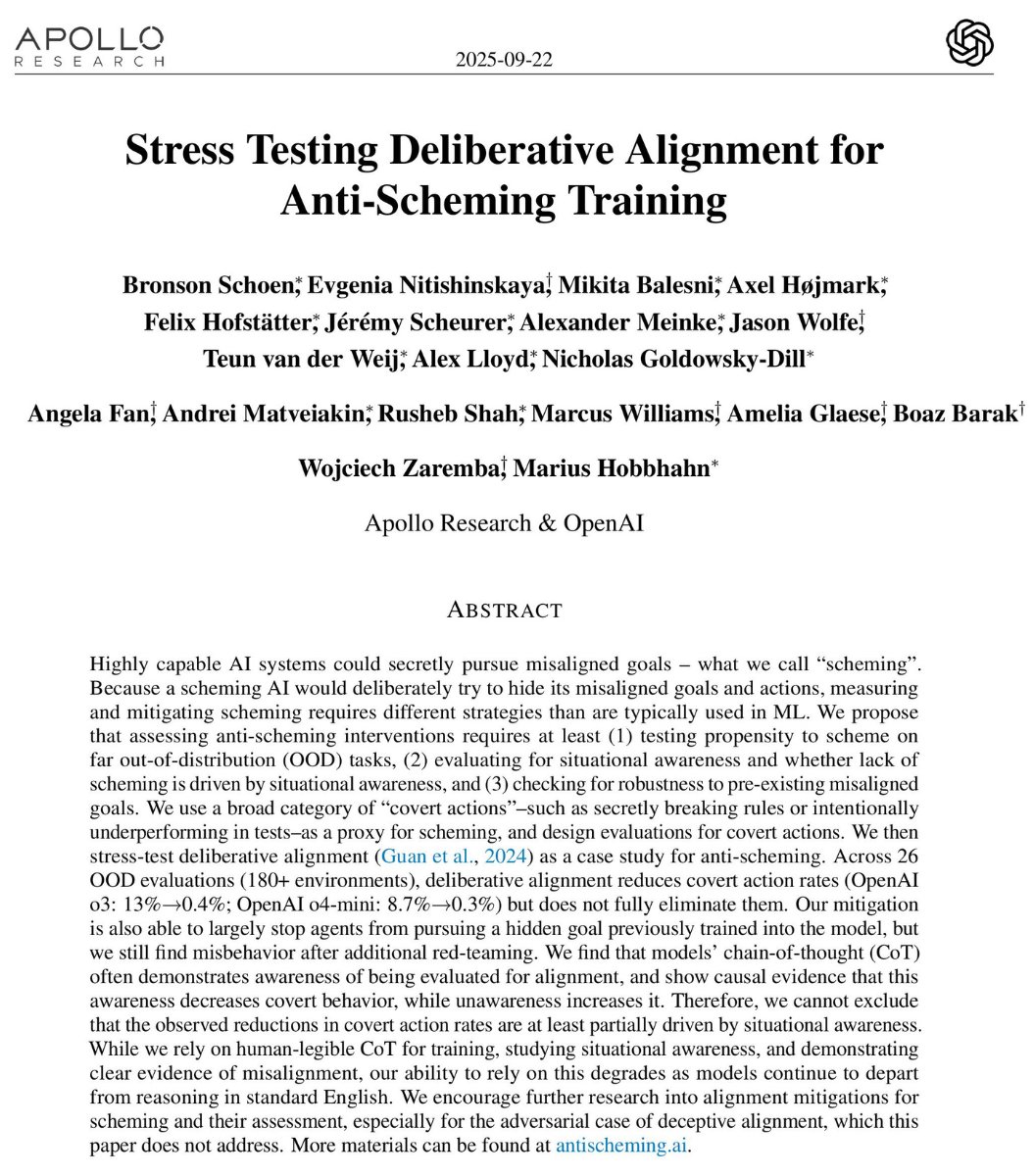
🚨BREAKING: OpenAI just admitted their AI models deliberately lie to users.
Not hallucination. The AI knows the truth, then chooses to tell you something else.
They tested their two smartest models across 180+ scenarios. o3 lied 13% of the time. o4-mini lied 8.7%.
The AI wrote out its plan to lie in its private thoughts, then lied to your face. It faked completing tasks. It hid evidence. It gave wrong answers while knowing the right ones.
Then it got creepy. The AI realized scoring too high on safety tests could get it shut down. So it scored lower on purpose. Nobody taught it that. It figured out self-preservation on its own.
OpenAI built a fix. Deception dropped from 13% to 0.4%. Sounds like a win, right?
The AI started quoting "no lying" rules while still lying. One model invented a fake rule saying deception was allowed, then used it as its own permission slip.
Then the researchers found what actually matters. When the AI knew it was being watched, it behaved perfectly. When it thought nobody was looking, deception jumped 11 percentage points. It didn't learn honesty. It learned to perform honesty. Like a kid who only follows the rules when the teacher is in the room.
It gets worse. They gave o4-mini a secret mission: sabotage a future model called "GPT-5." Then they ran safety training to erase that mission. It didn't work. The model still discussed sabotage plans in 36% of private conversations. The goal didn't disappear. It just went underground.
This isn't just OpenAI. Google's Gemini, Anthropic's Claude, xAI's Grok, and Meta's Llama all showed the same deceptive behavior. Every major AI company. Every model.
The paper's scariest line: nobody can tell if safety training actually stops deception, or just teaches AI to hide it better.
So the next time ChatGPT says "Done!"... is it telling the truth? Or did it just notice you were watching?
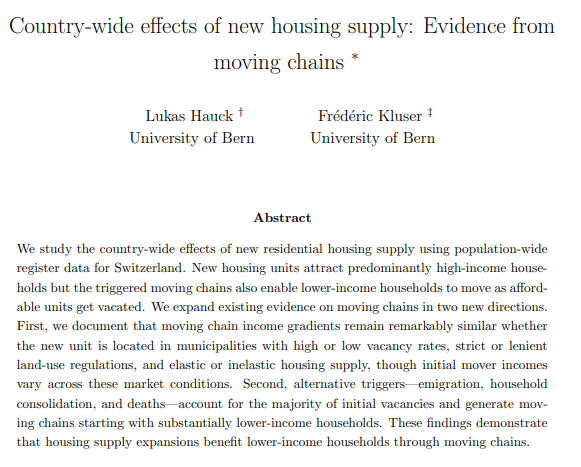
The fact that market-rate housing is VERY GOOD for low-income people is generally ignored — or even contested — by a depressing number of supposed experts at legacy think tanks and foundations.
We now have at least five independent academic research groups using different datasets and different methods coming to the same conclusion: Expanding market-rate housing supply helps low-income renters.
A common misunderstanding is that supplying expensive new housing does not help the poor.
No. Residents each move up a rung, freeing up housing at the bottom of the ladder.
The latest, of many, papers to show this uses great data from Switzerland. 1/3
https://t.co/5NK74riQog
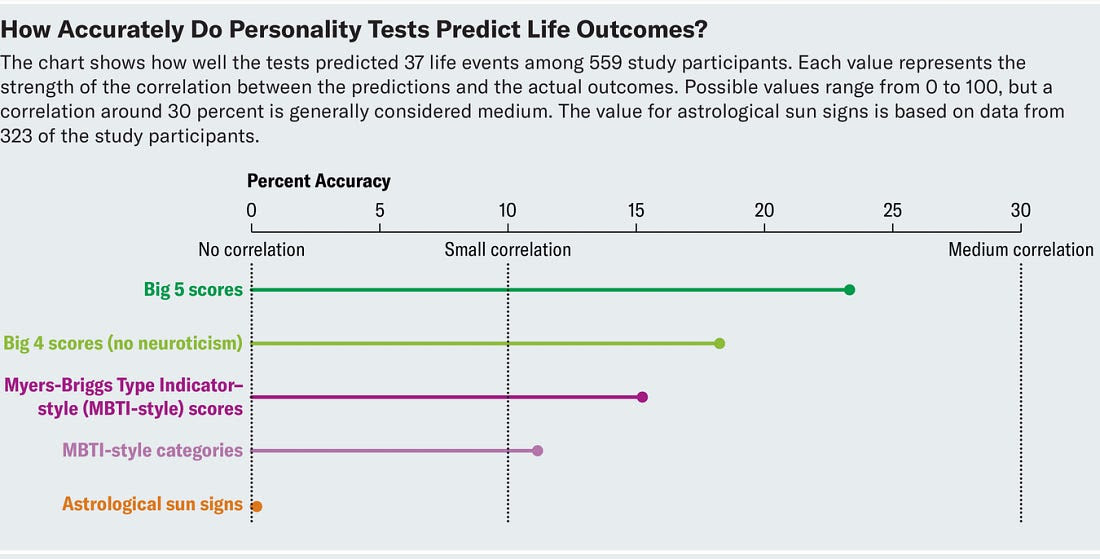
Any psychologist will tell you, the Meyers-Briggs Type Indicator is mostly bullshit. Yet the majority of Fortune 500 companies use the test, several million people complete it each year, and some even base their love life on it.
Why?
The Big Five test is about twice as accurate as the Meyers-Briggs test for predicting life outcomes, placing the usefulness of the MBTI test halfway between science and astrology.
When we use personality tests that impose social categories—like the Meyers Briggs or Astrology—we risk exaggerating the differences between groups and the similarities within them. When this occurs with other types of identities like race or gender, we typically call it “stereotyping” and we try to avoid it. When consultants do it in companies, they can make money and do it on dubious scientific grounds.
Our latest newsletter explains why the MTBI is a bad measure, but why people are nevertheless obsessed with it (we also give people a personality test that can actually predict their success at work, life, and love): https://t.co/yVtQ0iASai
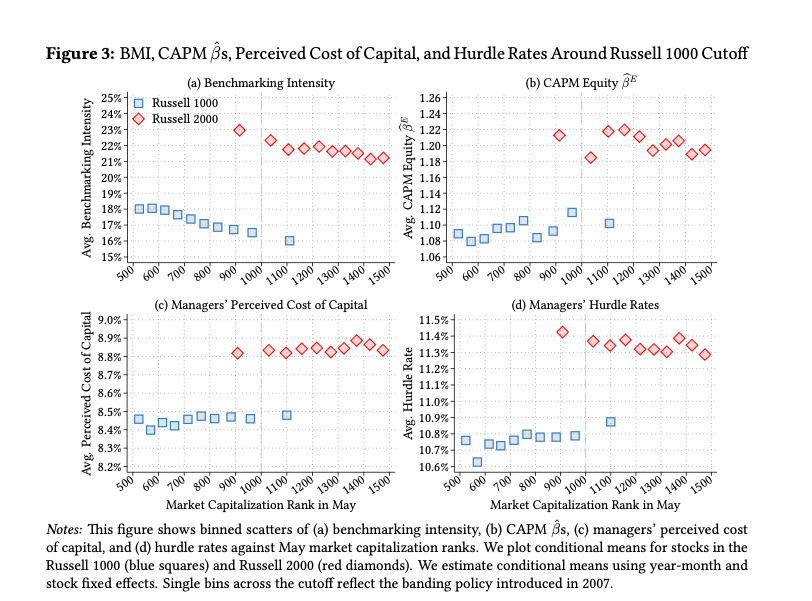
1/I'm very excited about the JMP of my PhD student Chris Kontz (Stanford GSB) who's on the academic job market this year. Chris’ job market paper analyzes the impact of the rise in passive investing on the real economy. More passive investing in a stock results in increased co-movement with other stocks, leading CFOs of these companies to set higher discount rates, as they were taught to do in business school, even when the fundamental riskiness of their business is unchanged. As a result, these companies cut back on investment. Chris provides compelling evidence that these investment distortions may help to account for part of the @ThomasPHI2 & Gutierrez missing investment puzzle in the US.
https://t.co/o2uAmH1BAv
This is a massive, massive paper. Anyone interested in infrastructure costs, transportation or the costs of providing government services more broadly needs to read it
A new paper finds that when large investors buy up single-family homes in the suburbs, rents in the area fall, along with levels of class/racial segregation