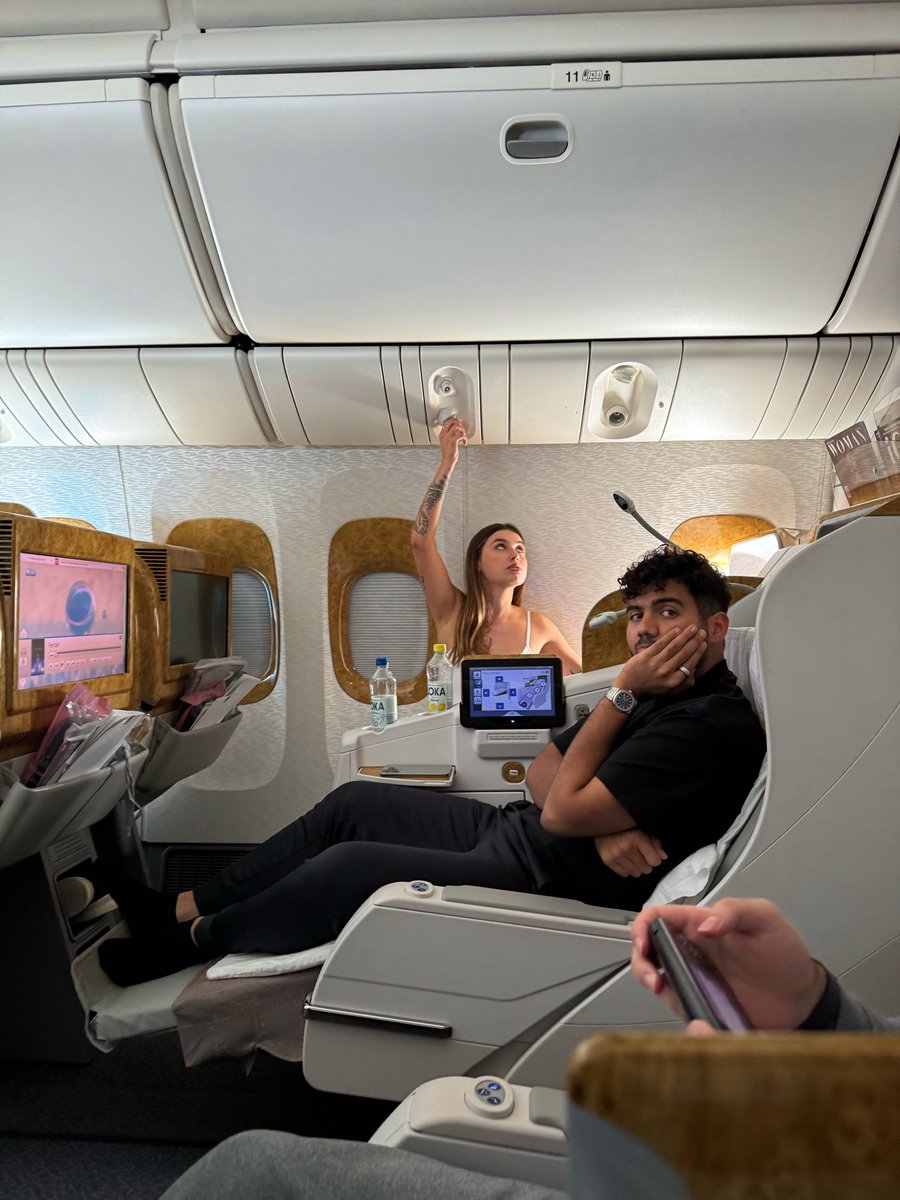
What you see of me online is nothing but smoke and mirrors.
It feels about time I shared the true story of how I went from a small town in India to building an 8-figure record label:
My early life was spent in Goraya, India. Growing up in a loving household with my parents and sister, my early years were shaped by the values of hard work, education, and spirituality.
My mother, a dedicated educator, owned a school where I attended kindergarten and elementary school. My father ran a pharmacy and later ventured into other businesses, instilling a mindset of entrepreneurship and resilience within me.
When I was 11, my family embarked on a life-changing journey to Italy seeking better opportunities. The transition was far from easy, with language barriers and cultural differences. We moved from city to city making it difficult for me to maintain friendships.
To make matters harder, my parents’ degrees from India weren’t recognised in Italy, which brought financial challenges to our household.
In those years I found solace and passion in creativity. At fourteen, I helped my parents at their grocery shop and internet café, immersing myself in the digital world. This led to a love for video games, where I met a fellow Indian gamer online who was also a musician and artist.
I brought his music to life through graphic design and video editing. Little did I know, this is where everything would change for me.
Taking a leap of faith, I started uploading his music—along with other artists’ songs—to a YouTube channel.
Within a year, the channel grew to 800 subscribers. By the second year, it reached 100,000.
I had a thirst for more.
By 19, this venture led to me earning my first million dollars. A long way from where my journey began.
With some poor investment advice, this quickly led to significant financial losses, and my parents began to doubt whether my chosen path was sustainable. Come to think of it, so did I.
Sticking with it, the streams turned from millions to billions.
My playlists had more followers on Spotify than Eminem. I had a successful record label showcasing a number of artists and just shy of 4 million YouTube subscribers.
I was living in a dream world.
Admittedly, new challenges presented themselves, and not just learning how to handle the scale of the operation.
I was thrusted into a life of abundance beyond my own expectations, figuring out who I was and what I valued along the way. Something that continues to evolve today.
From living in a house on the water in Stockholm, receiving 8-figure offers for my business, and throwing mid-six figure events, my story is being carved in real time.
I’m grateful for all the people I’ve had the pleasure of sharing it with.
Now I get to share it with you too.
The opposite of optimization is obsession.
Optimization finds the most efficient path. Obsession focuses on redefining what is possible.
Most people see Zegna's dominance, F.P. Journe's waitlists, Rick Rubin's platinum albums and assume these are efficiency masters who found the optimal path and scaled it.
The truth is the opposite. These makers deliberately choose the hard way when easier options exist.
Sartori sources wool from mills with two-year waiting lists. Not because supply chains force him to (standard mills deliver in 8 weeks). But because those specific mills produce fabric with a hand-feel that most test equipment can't measure but customers notice instantly.
Brunello Cucinelli built €919.5 million in revenue while employing full-time philosophers. His entire production stays in Solomeo, Italy, where labor costs significantly more than offshore alternatives. The result: 53.27% gross margins while competitors optimize their way to commoditization.
F.P. Journe makes fewer than 1,000 watches annually. Not becuase of capacity limits—but choice limits. The secondary market pays premiums because obsession creates the scarcity that optimization destroys.
Rick Rubin strips finished songs back to silence. Albums that sound complete to everyone else get rebuilt from nothing because something feels wrong. His production of multi-platinum albums like "Californication" exist because he obsesses over the song in ways most producers ignore.
I recognize this because I've made the same "irrational" choices within my events business.
For one event, we had 6 limos positioned outside the venue before a single guest arrived. Not just as transport to the afterparty, but as a visual statement. Costs 3x more. But when guests saw them, something shifted before they even walked through the door.
That's what obsession creates that optimization misses.
The pattern holds across every category: obsession-driven minds choose standards others avoid.
Optimization scales what works. Obsession discovers what's possible.
Fred Again turned his biggest weakness as a producer into the reason he sells out venues worldwide.
He couldn't afford proper studio time. So he made voice memos his signature sound. 500M+ streams later, producers who spent $50K on pristine acoustics are copying his iPhone recordings.
I've released 25,000 songs and watched hundreds of artists chase the same fantasy. Perfect vocal booths. Pristine acoustics. Six months in Abbey Road trying to capture "authentic emotion."
Fred captures it in 30 seconds on his phone—and sells more records than all of them combined.
Here's what most people miss about why it works:
"Marea (we've lost dancing)" went Platinum in the UK, it's built around a WhatsApp voice note sent by a friend. When you compress audio to send it over WhatsApp, the file loses data and picks up a subtle digital grain.
Most producers spend thousands removing it. Fred left it in and built the track around it.
Why? Becuase that grain is what a real moment sounds like to a listener. It's the audio equivalent of a pixelated photo—imperfect, but unmistakably real.
Listeners can't always explain why it hits differently. But they feel it. Performed emotion and captured emotion aren't the same thing, and people know the difference even when they don't know they know it.
Polish without purpose costs more than rawness with intention.
Fred proved that your biggest limitation can become your biggest differentiator—if you're willing to build your entire process around it instead of fighting it. While competitors spend six figures trying to sound expensive, he sounds real.
Real sells more.
The tier above five stars has no rating system because precision can't be quantified.
You either engineer every detail around the guest's unconscious experience, or you optimize for cost and call it luxury.
There's no middle ground.
The door handles have actual weight.
Run your hand along a Four Seasons door handle, then touch one at Hilton. The difference is $200 per handle versus $12.
Your unconscious mind recognizes quality before your conscious thoughts catch up.
This is why Aman charges $2,000/night.
They're not selling space or amenities.
They're selling the feeling of being in a place engineered around human comfort instead of operational efficiency.
The windows open.
This sounds trivial until you stay at a sealed Marriott, then check into Aman Tokyo.
Most luxury hotels trap you in climate-controlled boxes. Extraordinary properties let you control your environment completely.
Your body registers fresh air as freedom.
I've stayed in 50+ luxury hotels across 6 continents.
The difference between a $400 room and a $2,000 room isn't marble or thread count.
It's the result of small engineering details you'd never see or notice.
Here's what actually creates transcendent hospitality:
I learned to read people in a language I didn't speak. fifteen years later, that's still my biggest advantage.
September 2011. Somewhere in Northern Italy. 25 Italian ten-year-olds chattering around me in what might as well have been code.
Raised in Goraya, India, me and my family had just embarked on a life-changing journey to Italy seeking better opportunities.
I couldn't ask where the bathroom was. But I knew exactly who was about to get in trouble.
I could predict classroom dynamics with decent accuracy. Who the teacher would call on. Who was lying about homework. Which kids had formed alliances.
It's quite strange when you think about it, learning everything about your peers without understanding a word that leaves their mouth.
But when words are gone, everything else gets 10x louder.
Micro-expressions became my vocabulary. Voice tonality shifts. Body language. The 0.3-second pause that wreaks hesitation or lies.
Native speakers miss this because they're listening to words. They assume the content is in the conversation. I learned the conversation is in everything except the words.
By Christmas, I was operating at a level of social awareness that my Italian classmates would never develop. They were fluent in the language. I was fluent in the energy of the room.
15 years later, this translates directly to business advantage.
Every business deal, I might match a micro-expression when the CEO says "we're excited about this." Eye contact dropping. Financial concern, not excitement. I raise my walls.
Instead of pushing for close, an elephant in the room must be addressed.
The kid who had to learn without language developed a radar that most MBAs never build.
Every successful partner I know can speak fluently and control the room. Almost none can read them fluently. A gift I feel blessed to possess.
165,000 millionaires are projected to change countries in 2026.
Most people have no idea it's happening — and even fewer know where they're actually going.
A few things that surprised me when putting this together:
• Over 38,800 millionaires now call Miami home. Bezos and Zuckerberg are currently buying mansions on the same island.
• Monaco is where you go once you've already won. Not where you go to win.
• Cyprus (the one nobody is talking about) just passed the most aggressive wealth attraction reform in Europe.
Full breakdown is in the thread below ↓
You think the ultra wealthy live in New York. London. Paris.
Some do.
But the ones making the biggest moves right now? They've already left.
Here's the top 6 places they're going:
𝟲) 𝗖𝘆𝗽𝗿𝘂𝘀
Thanks for reading.
I built an 8-figure music label from scratch and host ultra-luxury events including F1 Superyacht weekends.
Follow me, @averyx99 for more.
You think the ultra wealthy live in New York. London. Paris.
Some do.
But the ones making the biggest moves right now? They've already left.
Here's the top 6 places they're going:
𝟲) 𝗖𝘆𝗽𝗿𝘂𝘀
The ultra wealthy don't make emotional decisions about where they live.
They make calculated ones.
The cities on this list aren't winning by accident.
They're winning because they understood something the others didn't:
The most powerful people in the world will always move to where they are valued most.