I missed this yesterday, but I’m going to explain in excruciating detail why no VC should ever give this person any money for this, because it is possibly the single dumbest thing I’ve ever heard anyone in the valley ever say & that includes Steve Ballmer. This person has no clue how restaurants work, and nobody will EVER use this, because it’s completely fucking insane 🧵
NEW: Anchorage Capital put in one of its hedge fund bros as CFO at J Crew, and many in corporate are not happy.
Our FT investigation into turmoil at the iconic retailer:
https://t.co/UrMMs2pw2M
This is a fantastic article
It reinforces a few things in my opinion
Frontier Model companies can no longer rely on tokenmaxxing behaviour from their enterprise clients. Efficiency does matter - and different models have different strengths- not a winner takes all approach.
OpenAI may have other monetisation avenues vs Anthropic which is more exposed to these large corporate shifts…because of their large consumer base- that will support ad and partnership supported monetisation models
Hyperscalers/ CSPs are the major beneficiaries of the move to diversify models - all roads lead to hyperscalers
And the cheaper intelligence per task gets the higher the worldwide adoption is going to be- this seems perennially bullish not only for hyperscalers selling compute but especially for power, utilities, transmission, energy storage
Not sure which semiconductor companies win/ lose but we need a fuck more of these things.
While investing in the likes of OpenAI and Anthropic continues to be risky- I think the CSP as well as power generation/ transmission assets remain fantastic ways to play this.
Jevons paradox in full display
A few days ago I posted about my life and career so far and one reply caught my attention.
He said his mother had recently passed, his father had left them and he needed help.
Below is what he DM’d me.
I offered to post his story in hopes someone from Australia could possibly help him.
It’s a remarkable story and if you are inclined or able to help, I’d encourage you to reach out to him.
@nonibeeny
—
Hi good morning, thank you so much for taking time out to just listen to my story and offer me some advice. I dont remember the last time anyone has done this for me.
I’m sorry in advance bc this might be really heavy to hear and if you feel uncomfortable by it you dont have to reply to me ill completely understand.
So i just turned 18 this year, this past year has been possibly the hardest year of my entire life. Life was normal, I was just like any other high school kid, had aspirations to become a dentist, always put in the work and studied really hard in school, and then last april my mum was diagnosed with a late stage terminal cancer. They thought she had maybe 2-3 years left. Around this same time, my dad walked out on us i guess because the news of my mum being sick was too much for him and it was easier to just run away. I have never heard from him since. Over the last year i started working two jobs most overnights just to help my mum pay for rent because she couldnt work, put food on the table for us and my two little sisters, and pay for her chemo which wasnt covered under australian healthcare for her. We were barely surviving pay check to pay check, werent really eating, but i poured my everything into just stepping up to be the man of the house while in my final year of high school. Gave up most of the aspirations i had of going to uni because i cant afford it and also my grades dropped a lot the final semester of hs due to working overnight shifts everyday before class.
And then in december i couldnt afford to pay for the chemo anymore and my mum shortly passed away. Doctors say it was a mix of all the stress she was under and stopping the chemo. Now its just me and my little sisters left. Ive been working overnight shifts at an amazon warehouse and mcdonalds during the day just to make ends meet and barely get by on rent and making sure at least my little sisters are fed and taken care of. But this week my entire team was laid off from the warehouse and now i have no way to pay my rent, im facing eviction, and i just feel so lost in life. I dont know what to do. No matter how much ive sacrificed my body, put aside my pride, put aside my own dreams and goals, to make sure the ppl around me are taken care of, i just cant catch a break. I have a week before i get evicted with no one else in my life to rely on and two little sisters and i just dont know what i should be doing at the moment.
Im so sorry if this was a lot heavier to read than you anticipated and im sorry for burdening you with my weight, but as someone who has beared the weight of this world and knows what its like to be a strong man for your family, i was wondering if you have any advice for me on what to do? I just dont know how long i can keep doing this.
Got reached out by a head hunter for a potential associate role at KKR APAC. Any thoughts?
For context, I am currently in an associate role in an LMM PE focused on SEA buyout.
Story time: When I first started in short activism as a CPA (you’d be surprised... basically no short activists doing accounting work actually have a CPA license, BTW), my boss sent me on a wild goose chase targeting GT Advanced Technologies $GTAT. They claimed to be making unbreakable sapphire screens for the next iPhone, but the CEO was dumping stock like crazy.
Boss’s orders: Camp out at their factory for a week and literally count cars in and out. (I was a pure spreadsheet junkie before this.) CEO goes on @CNBC defending his sales as a 10b5-1 plan (it wasn’t) and bragging that the factories were running day and night on the Apple deal. Reality? Max 10 cars all week. Then bam, random filing the next week, bankruptcy, stock to $0, most assets surrendered to Apple. Never seen anything like it. We’ve seen a lot of wild stuff in the short biz over the years.
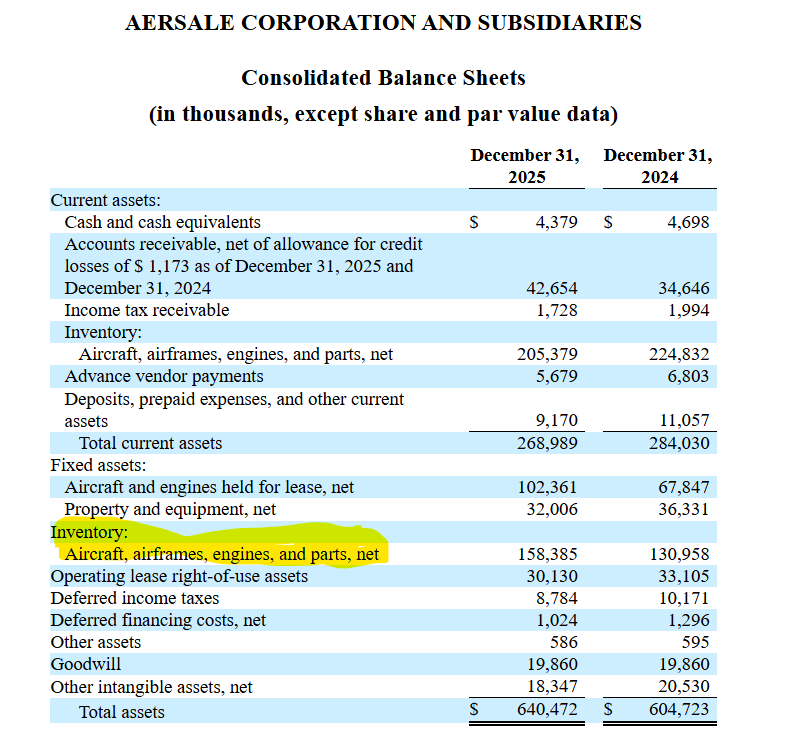
But with $EIF $EIF.TO, it’s the first time I’ve come across an accounting trick I genuinely haven’t seen anyone else pull. A direct peer like AerSale correctly moves aged inventory into long-term assets. Exchange Income Corp hides its aged-out inventory inside Capital Assets (dodging most DSI screens we use), then applies an obscure inventory valuation method I’ve never encountered before. Even as an accounting professor who’s seen pretty much everything. It lets them manufacture artificial margins.
Props to management for the creativity… but we believe it will reverse hard and end badly. Time will tell.
Would love to hear the craziest accounting gimmicks you’ve come across!
Citadel Securities published this graph showing a strange phenomenon.
Job postings for software engineers are actually seeing a massive spike.
Classic example of the Jevons paradox. When AI makes coding cheaper, companies actually may need a lot more software engineers, not fewer.
When software is cheaper to build, companies naturally want to build a lot more of it. Businesses are now putting software into industries and tools where it was simply too expensive before.
---
Chart from
citadelsecurities .com/news-and-insights/2026-global-intelligence-crisis/
The CEO of a $95 billion company just said something that should TERRIFY every software executive on the planet.
Patrick Collison, the man who built Stripe, went on TBPN last week and compared the entire software industry to frozen food.
His words: "Software has been created years beforehand, freeze-dried, and then prepared at the moment of consumption."
That era is ending.
His new model for software? Pizza.
Fresh pizza, made to order, right then and there.
Exactly what you need, the moment you need it.
That is the future Collison sees for all software.
What does that actually mean?
It means AI agents will build you custom software in real time.
No subscriptions, bloated dashboards and one size fits all.
Software cooked for you, that moment, then gone.
This is already happening.
Anthropic launched Claude Cowork in January.
Within weeks, $2 trillion in software stocks evaporated.
IBM had its worst trading day in 26 years, legalZoom dropped 20% and the entire SaaS sector is in freefall.
They're calling it the SaaSpocalypse.
The old software model was simple, spend millions building a product, sell it to everyone and collect subscriptions forever.
Fixed cost, infinite monetization and winner takes all.
That game created trillion dollar companies: Salesforce. Adobe, Oracle, Microsoft.
Collison says that game is now breaking.
Why? Because AI introduces real cost at every use.
Inference costs, custom creation costs, every single interaction has a price tag.
No more build once, sell forever and he called it the non-Walrasian software regime.
Translation: The winner take all economics that built Big Software are collapsing.
When every user gets custom software built on demand, there is no single winner.
There are thousands of winners or none.
Think about what this does to pricing.
No more $50/seat/month or enterprise contracts worth millions.
Instead, you pay per task, outcome and for what the AI actually built you.
The entire revenue model of SaaS is being rewritten.
Klarna already ripped out Salesforce and replaced it with AI.
Cursor ditched its paid CMS and built a replacement from scratch.
Companies are doing this now.
The dominoes are falling.
The entire industry is being rewritten in real time.
Imagine: Two animals run the exact same distance.
One chooses to. One is forced.
The voluntary runner gets healthier—better heart rate, blood pressure, glucose.
The forced runner? Gets sicker.
Andrew Huberman says the same rule destroys or upgrades your stress, your workouts, even your life.
And the craziest proof: People who watched hours of Boston bombing news coverage suffered MORE acute stress than those who were actually there.
Your mind doesn’t know the difference between experiencing and relentlessly consuming.
So… what “have-to” in your life are you ready to reframe as a choice?
This 1:58 clip just rewired my brain.
Good rule in investing (& life tbh) is don’t waste time w/ ppl who nitpick on your every exact word when your message is clear enough to anyone w/ even a modestly analytical brain (an ok assumption in this line of work?)
Effective way to filter out bullshit artists / ppl who add no value while trying to diminish your thoughts just bc they want to hear themselves talk & can’t push back w/ actual substance
I’ve found this Deep Research prompt to be a decent way to get up to speed on any company.
Very little focused on valuation, more of a holistic overview
I can’t for the life of me remember where I found the original seven-point framework/template but I fleshed it out to 13 to hit the areas I felt were important. If anyone recognizes it, please link/tag the creator
—————
Analyze [Ticker] using the 13-point framework below.
- Use only verifiable, factual information (annual reports, investor presentations, filings, earnings transcripts, and reputable financial sources).
- Be concise, analytical, and concrete, with no filler or marketing language.
Output format (exact structure required):
Executive Summary (about 150–200 words)
Summarize in plain English how this company makes money, its economic quality, and where its edge and risks lie.
End with one sentence that describes the business to an investor in one line.
1. What They Sell and Who Buys
* Describe the main products or services.
* Define target customers by type, segment, and geography, and why they buy, including the main pain point or motivation.
2. How They Make Money
* Explain the revenue model and pricing logic.
* Clarify whether revenues are one-time, recurring, transaction-based, or hybrid.
* Include key revenue segments and their share if available.
3. Revenue Quality
* Assess how predictable and diversified revenues are.
* Break down recurring versus one-off components, customer or segment concentration, and exposure to economic cycles.
4. Cost Structure
* Outline major cost drivers, such as COGS, labor, logistics, marketing.
* Include gross and operating margins where possible.
* Comment on scalability, fixed versus variable costs, and how margins move with growth.
5. Capital Intensity
* Describe the assets needed to run and grow operations.
* Include capital expenditure levels, working capital needs, and cash conversion efficiency.
6. Growth Drivers
* Identify the main levers for revenue growth, such as volume, pricing, product mix, geographic expansion, or acquisitions.
* Clarify whether each driver is structural and long term or cyclical and short term.
7. Competitive Edge
* Explain what protects the company’s economics from competition, such as brand, cost advantage, switching costs, regulation, network effects, data, or intellectual property.
* Discuss how durable and testable this moat appears, using financial evidence such as margins, ROIC, or customer retention.
8. Industry Structure and Position
* Describe the industry value chain and where profit pools sit.
* Explain market structure, for example fragmented or consolidated, presence of pricing power, and key regulatory factors.
* Place the company within this context, including market share, relative scale, and whether it acts as a price setter, a price taker, a niche specialist, or a platform.
9. Unit Economics and Key KPIs
* Present unit economics at the relevant level, such as per customer, store, device, transaction, or cohort.
* Include metrics such as CAC, LTV, churn or retention, ARPU, utilization, occupancy, and payback periods where applicable.
* Comment on whether these unit economics and KPIs are improving, stable, or weakening over time.
10. Capital Allocation and Balance Sheet
* Summarize historical capital allocation across organic investment, acquisitions, buybacks, dividends, and debt reduction.
* Describe balance sheet strength, including leverage, debt maturity profile, liquidity, and any major off balance sheet obligations.
* Assess whether capital allocation has likely created or destroyed value.
11. Risks and Failure Modes
* Identify key risks, such as competitive, technological, regulatory, macroeconomic, customer concentration, or currency exposure.
* Describe in simple terms how the equity story could fail, and what would need to happen for this to occur.
* Highlight areas where uncertainty is especially high or information is limited.
12. Valuation and Expected Return Profile
* Compare current valuation with the company’s own history and with peers, using the metrics that best fit this business, such as P/E, EV/EBIT, EV/Sales, FCF yield.
* Provide a simple scenario framework with bear, base, and bull cases, including rough assumptions and implied upside or downside.
* State explicitly what must be true for the current price to be attractive, fair, or expensive.
13. Catalysts and Time Horizon
* List near and medium term catalysts, such as product launches, margin inflection, regulatory events, refinancing, or index changes.
* Note any slow building catalysts, such as mix shift or operating leverage that accumulates over time.
* Explain the expected time horizon for the thesis to play out and how the market is likely to recognize the value if the thesis is correct.
Tone: Analytical, neutral, precise.
Goal: Produce a concise yet rich narrative that lets an investor understand how this business works, how resilient and valuable its economics are, and whether the stock looks attractive at today’s price.
One the most common questions I get on here is around management incentive programs- the sweat equity award for PE operators.
Makes sense... these programs are the #1 reason to be a private equity operator. They can be life changing (believe me).
But these incentive programs (which go by all kinds of acronyms: LTIPs, MIPs, MIEPs...) can be extremely complicated.
So below, I have compiled a list of questions to help you evaluate the equity opportunity.
These programs are often highly structured and complicated. It is important to realize that their value is not just in your ability or the company's potential - it also lies in how the program is structured.
The questions below are intended to help you evaluate the potential value an equity award when considering a role within a PE-backed portfolio company.
These questions will demonstrate you have some understanding of the mechanisms behind these programs and the key drivers behind creating value.
And, it forces the PE firm to reveal assumptions they may be glossing over.
Even if they get a little squirmy, they will be impressed with your understanding and it will likely increase your leverage.
Couple notes...
- I've added a 🔑 logo next to the ones I thought were most important
- Some questions are bigger than just the structure, but they will help you evaluate the value to you personally
- I've left some similar/repetitive questions in as they appear in a different context/section
Hope you find this helpful...
Comment with any additions and I will try to compile a follow-up to this so we all have a collective resource.
-----
1. Structure & Terms
Mechanics
- What form of equity am I receiving (options, profits interests, RSUs, phantom equity, direct units)? (helps understand tax implications) 🔑
- What is the total size of the management equity pool? Has it been reset before?
- How many executives participate in it, and how are allocations typically adjusted over time?
Vesting & Triggers
- Is vesting time-based, performance-based, or hybrid? 🔑 *beware time & performance based i.e. IRR and MOIC which can make hitting thresholds much harder
- What are the hurdles for each vesting tranche? 🔑
- Are the hurdles based on PE firm performance, overall performance, or something else? 🔑
- What are the specific time-based cliffs and intervals? 🔑
- What happens to unvested equity on an early exit, recap, or sale?
- Is there accelerated vesting on change of control or termination without cause? 🔑
Valuation
- What is my strike price or unit price at grant?
- How was that price determined (latest 409A or transaction value)?
- What is the expected range of unit prices at various IRR/MOIC outcomes? 🔑
- What is the window and process to exercise after departure?
- Are taxes due on exercise or only at liquidity? 🔑
Liquidity & Exit
- When can I actually convert equity to cash? Only at exit or also at recaps?
- Are management participants allowed to sell pro rata in secondary or recap events?
- Are there drag-along or tag-along rights for management?
- Is there any right of first refusal or forced sale language?
- What is the post-exit lockup, if any?🔑
Dilution & Co-Invest
- What is expected dilution from future issuances, M&A, or refresh grants? 🔑 (I like this question just to hear how the firm thinks about it)
- Will I have the option to co-invest cash alongside the fund? On what terms? 🔑 (you should be able to invest on same terms as PE firm, otherwise, don't do it)
- How are future refresh grants handled if the hold extends beyond the expected period?🔑
I built an analysis of the 50 best and WORST industries for acquisition in 2025.
50 industries. 20 factors. one ranking per industry.
To get a copy of the analysis, RT and comment "industries"