Last Thursday, I stood in the Oxford Union and delivered the closing argument in a fiery debate about Israel.
Arguing against the proposition that “Israel never truly wanted peace with Palestine,” my colleagues @emilykschrader, @HenMazzig, @EinatWilf and I entered the chamber knowing that we would be facing a largely hostile audience, but determined to make our case nevertheless.
By the end of the evening, we heard from several students that we had, in fact, changed their minds — a reminder that calm, substantive argument can still move people, even in the most challenging environments.
This is the text of my speech. I will share the video as soon as it’s available.
___________________
Madam President,
Members of the House,
Ladies and gentlemen,
It falls to me to bring our case, and this debate, to a close.
My colleagues have ably set out the long history of Zionist and then Israeli efforts to achieve peace with the Palestinians: the compromises proposed, the territorial concessions offered, and the repeated willingness of Israeli leaders and the Israeli public to take extraordinary risks in pursuit of that goal — risks all too often paid for in Israeli blood.
Our opponents, for their part, have offered a very different story. We have heard painful accounts of dispossession — and they are indeed painful, Dr. Karmi. We have heard selective readings of history and arguments that deny any genuine Jewish claim to the land that both peoples call home. We have heard contortions of logic and inversions of truth that seek to explain away every Israeli overture, every negotiation, every concession, as something other than it appeared to be.
And that brings us to the real question before this House tonight.
Because we are not being asked whether Israeli governments have fallen short in their efforts to bring about peace. Some have, while others — including those described earlier — have offered dramatic and far-reaching concessions to bring peace about.
We are not being asked whether Israeli and Palestinian leaders have, at times, missed opportunities that might have brought peace closer. They have.
We are not even being asked whether Palestinians — and Israelis — have suffered due to the absence of peace. They have.
No, the motion before this House tonight is far more extreme. It posits that Israel never wanted peace with Palestine.
Never.
Never?
Not Rabin?
Not Peres?
Not Barak?
Not Olmert?
Not the hundreds of thousands of Israelis who filled public squares in support of peace?
Not the millions who voted for leaders promising territorial compromise?
Not the Israeli parents of every generation who, knowing all too well the cost of war, hoped and prayed and dreamed that their children would be the first to finally know peace?
Never?
Ladies and gentlemen, our opponents have spent this evening asking you to believe something striking: that when Israelis spoke of and prayed for peace, they didn’t mean it. That when Zionist and Israeli leaders offered concessions for peace, they didn’t mean it. That when millions of Israelis voted for peace, they didn’t mean it, either.
This is not an argument about Israeli policy. It is an argument about Israeli motives, about the Israeli soul.
And the difficulty for our opponents is that they have chosen the wrong people.
Because there is no value more essential to the Jewish national soul than peace.
The Jewish tradition is suffused with the quest for peace. It courses through our religious texts, animates our prayers, and inspires our vision of a more perfect world.
It was the prophet Isaiah who envisioned a future in which peace reigned among nations, uttering those immortal words:
“And they shall beat their swords into plowshares, and their spears into pruning hooks; nation shall not lift up sword against nation, neither shall they learn war anymore.”
Every single day, for two millennia, Jews have ended their daily prayers with supplications for peace. The Talmud goes so far as to say that shalom, peace, is one of God’s names, elevating it from an earthly aspiration to the realm of the divine.
It is no surprise, then, that when the earliest Zionist thinkers contemplated the Jewish state they sought to create, they envisioned it at peace.
Socialists and liberals, revisionists and traditionalists, they differed profoundly in their visions of the state to be. Yet across those divisions ran a remarkably consistent belief: that the Jewish national home should one day live at peace with its neighbors.
That aspiration found perhaps its clearest expression in Israel’s Declaration of Independence, issued as five Arab armies advanced upon the nascent state.
Even in that moment of existential peril, Israel’s founders proclaimed:
“We extend our hand to all neighboring states and their peoples in an offer of peace and good neighborliness, and appeal to them to establish bonds of cooperation and mutual help with the sovereign Jewish people settled in its own land.”
And indeed, for generations of Israelis, that aspiration has been not merely a line in a founding document. It has been a sought-after reality, a national ideal, and a deeply personal hope.
I am a relic of the 1980s.
The first word I learned on my first day of primary school in Jerusalem was shalom, peace — an experience shared by all Israelis, including those in this room, on both sides of this debate.
I remember watching, wide-eyed, as Yitzhak Rabin and Yasser Arafat shook hands on the White House lawn, certain that a new era of peace was upon us.
I remember standing in a massive crowd with my father and younger sister as we were swept toward the gates of the Knesset, Israel’s parliament, to pay our respects to Rabin, felled by an assassin’s bullets in his pursuit of peace.
I remember the wave of Hamas suicide bombings that claimed the lives of hundreds of Israelis, including two young girls from my neighborhood — one year my junior — killed in a Jerusalem pizzeria.
And I remember how, even in the midst of that surge of murderous terror, even in the wake of a prime minister’s assassination, Israelis pivoted not to the right but to the left, electing a leader who had explicitly campaigned on a platform of territorial concessions for peace and granting Ehud Barak one of the largest margins of victory in Israeli history.
But Israel never wanted peace?
Never?
Really?
Ladies and gentlemen, that claim crumbles under the weight of documented history.
One can argue that peace has proven elusive.
One can argue that opportunities have been missed.
One can argue that terrible mistakes have been made.
One can even argue that, today, after October 7, the appetite for territorial concessions in the interest of peace is vastly diminished.
But to argue that Israelis never wanted peace is not a serious reading of history.
It is a denial of history.
Indeed, it requires us to believe that millions of people, across multiple generations, did not truly mean what they said — to one another, to their neighbors, and even to God — about one of their most heartfelt aspirations.
For if every expression of peace was merely a ruse, every offer a deception, every aspiration a lie, then we are left with a familiar accusation — that what Jews said was never what Jews meant.
But beneath much of what we have heard here tonight lies an even deeper, and darker, argument.
It is an argument that has animated not only some of the views expressed in this chamber, but too often the positions of Palestinian leaders throughout this conflict.
It is not really about peace negotiations.
It is not really about diplomatic proposals.
It is not really about Camp David or Oslo or Annapolis.
It is about legitimacy.
Because if one denies that the Jewish people have any genuine claim to this land, if one believes that Israel should never have come into being and should cease to exist today, then no Zionist or Israeli offer, no matter how sincere or expansive, can ever be enough.
Peace itself becomes impossible, because one side’s very existence is regarded as an affront, an injustice, a blight to be erased.
But that is not the motion before this House.
You are being asked whether Israel has ever truly wanted peace with Palestine.
And if millions of Israelis marched for peace, voted for peace, and were willing to take far-reaching and deeply painful risks for peace, then the answer to that question is self-evidently yes.
Ladies and gentlemen, the tragedy of this conflict is not that peace has never been sought.
The tragedy is that peace has been sought, and yet proven so painfully difficult to attain.
The tragedy is that two peoples with deep and abiding ties to the same land have so often found themselves unable to reconcile their competing aspirations.
That is a tragedy, and it is one that we should all hope and pray comes swiftly to an end, for the sake of all who live in that cherished land.
But it is not evidence that peace was never desired.
And it is certainly not evidence that an entire people spent generations engaged in an elaborate collective deception about one of their most deeply-held hopes — one that goes to the very depths of their national soul.
For all its mistakes, for all its failures, for all the opportunities lost along the way, Israel has wanted peace.
Jewish tradition says so.
History says so.
The lived experience of generations of Israelis says so.
And I hope this House will say so as well.
I urge you to reject the motion.
Thank you very much.
🎙️ I'll be on Israel's Channel 13 News in about 10 minutes, around 3 PM local time, to discuss President Trump's most recent comments about a potential return to military action in Iran.
Do tune in.
Israel played a key role in thwarting an ISIS terror plot targeting three Taylor Swift concerts in Vienna in 2024, saving hundreds of lives, former Mossad chief David Barnea reveals.
(TOI)
An interesting — and telling — episode took place in Gaza today.
The Israeli Air Force carried out an airstrike targeting a vehicle containing three people in the Tel al-Hawa neighborhood of Gaza City.
The IDF released a statement saying the three were terrorists belonging to Palestinian Islamic Jihad.
But Reuters — one of the largest and most respected news agencies in the world — went with another story.
“Israeli strike kills three in vehicle distributing aid in Gaza, witnesses say,” blared its headline.
The first paragraph of the news item cited “Gaza's health ministry and witnesses” as claiming that the vehicle was carrying “papers and food for the World Central Kitchen charity.”
“It was just about to stop to distribute the food and drink to children when it was hit by a missile,” claims a “Reuters witness” identified as Abu Zein Al-Daya.
Only in the second paragraph, a single line, do we discover that World Central Kitchen itself denied that it had anything to do with it.
“World Central Kitchen, an aid organisation that distributes food in the Gaza Strip, said, however, that the vehicle was not affiliated with it,” the article offers begrudgingly.
So you have both the IDF *and the aid group itself* denying that it was an aid vehicle, and Hamas (via the Gaza health ministry, which it controls fully) and supposed Palestinian witnesses claiming it was.
Which version did Reuters go with for its headline — the only part of the piece most people will see?
Why, Hamas’s, of course.
Total journalistic malpractice.
It has now been more than 24 hours since World Central Kitchen debunked this lie.
They were not WCK workers – founder José Andrés said so himself.
The IDF has identified all three as Palestinian Islamic Jihad terrorists.
@KenRoth still has this false tweet up.
How odd.
Israel kills three MORE workers for World Central Kitchen in Gaza. "The vehicle was just about to stop to distribute the food and drink to children when it was hit by a missile." What's the pretext this time? https://t.co/b1HE3uaDbu
The IDF has now identified the three Palestinian Islamic Jihad terrorists killed in yesterday's airstrike in Gaza.
They were PIJ commander Ahmed Badran Nimr Suweifri and PIJ operatives Mustafa Youssef Mustafa Rafa'i and Khaled Odeh Fathi Naim.
They were not World Central Kitchen workers, as Reuters — based on Hamas and local sources — falsely reported.
An interesting — and telling — episode took place in Gaza today.
The Israeli Air Force carried out an airstrike targeting a vehicle containing three people in the Tel al-Hawa neighborhood of Gaza City.
The IDF released a statement saying the three were terrorists belonging to Palestinian Islamic Jihad.
But Reuters — one of the largest and most respected news agencies in the world — went with another story.
“Israeli strike kills three in vehicle distributing aid in Gaza, witnesses say,” blared its headline.
The first paragraph of the news item cited “Gaza's health ministry and witnesses” as claiming that the vehicle was carrying “papers and food for the World Central Kitchen charity.”
“It was just about to stop to distribute the food and drink to children when it was hit by a missile,” claims a “Reuters witness” identified as Abu Zein Al-Daya.
Only in the second paragraph, a single line, do we discover that World Central Kitchen itself denied that it had anything to do with it.
“World Central Kitchen, an aid organisation that distributes food in the Gaza Strip, said, however, that the vehicle was not affiliated with it,” the article offers begrudgingly.
So you have both the IDF *and the aid group itself* denying that it was an aid vehicle, and Hamas (via the Gaza health ministry, which it controls fully) and supposed Palestinian witnesses claiming it was.
Which version did Reuters go with for its headline — the only part of the piece most people will see?
Why, Hamas’s, of course.
Total journalistic malpractice.
It has now been more than 12 hours since World Central Kitchen itself debunked this lie (they were not WCK workers – José Andrés said so himself; the IDF said they were Palestinian Islamic Jihad terrorists).
Ken Roth still has this false tweet up.
Isn’t that odd?
Israel kills three MORE workers for World Central Kitchen in Gaza. "The vehicle was just about to stop to distribute the food and drink to children when it was hit by a missile." What's the pretext this time? https://t.co/b1HE3uaDbu
@ZerpProblin I’m sorry – maybe you’re confused. Hamas said it was a vehicle belonging to an aid group. The aid group itself (along with Israel) said it wasn’t. And you believe… Hamas?
An interesting — and telling — episode took place in Gaza today.
The Israeli Air Force carried out an airstrike targeting a vehicle containing three people in the Tel al-Hawa neighborhood of Gaza City.
The IDF released a statement saying the three were terrorists belonging to Palestinian Islamic Jihad.
But Reuters — one of the largest and most respected news agencies in the world — went with another story.
“Israeli strike kills three in vehicle distributing aid in Gaza, witnesses say,” blared its headline.
The first paragraph of the news item cited “Gaza's health ministry and witnesses” as claiming that the vehicle was carrying “papers and food for the World Central Kitchen charity.”
“It was just about to stop to distribute the food and drink to children when it was hit by a missile,” claims a “Reuters witness” identified as Abu Zein Al-Daya.
Only in the second paragraph, a single line, do we discover that World Central Kitchen itself denied that it had anything to do with it.
“World Central Kitchen, an aid organisation that distributes food in the Gaza Strip, said, however, that the vehicle was not affiliated with it,” the article offers begrudgingly.
So you have both the IDF *and the aid group itself* denying that it was an aid vehicle, and Hamas (via the Gaza health ministry, which it controls fully) and supposed Palestinian witnesses claiming it was.
Which version did Reuters go with for its headline — the only part of the piece most people will see?
Why, Hamas’s, of course.
Total journalistic malpractice.
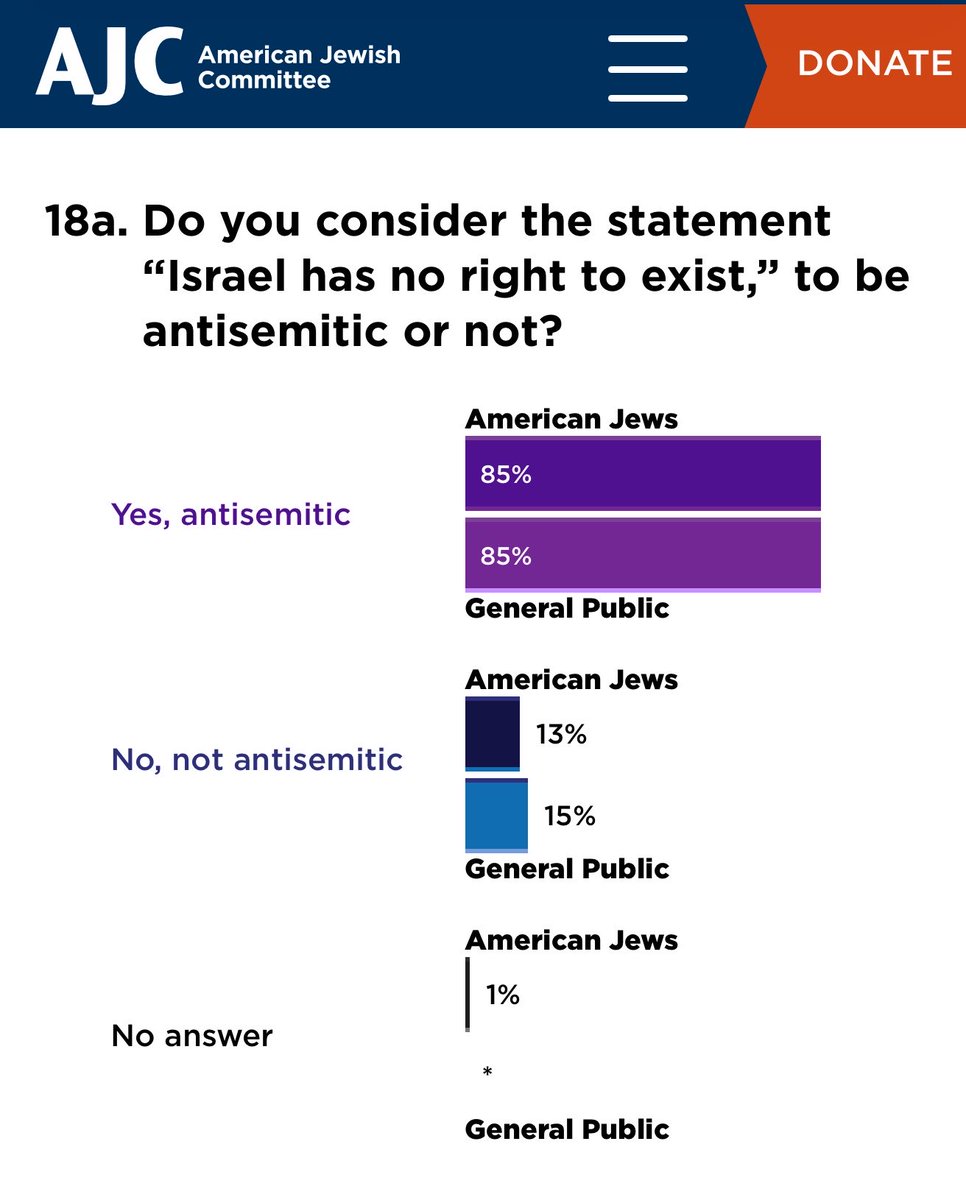
85% of Americans, both Jewish and non-Jewish, view the belief that Israel has no right to exist as antisemitic.
I’m less concerned about El-Sayed than I am about the 2.5 million Michiganders who voted for him knowing that he holds antisemitic views.
85% of Americans, both Jewish and non-Jewish, view the belief that Israel has no right to exist as antisemitic.
I’m less concerned about El-Sayed than I am about the 2.5 million Michiganders who voted for him knowing that he holds antisemitic views.
Israel should not “identify with a culture or a faith,” Sen.-elect Abdul El-Sayed said at The Atlantic Summit, a new iteration of his belief that Israel should not exist as a Jewish state.
AJ Rodriguez reports: https://t.co/Hdv4D1BJbv
@Tyme2SpeakUp Facts don't care about your feelings, and the facts are that 85% of Americans view denying Israel's right to exist, as El-Sayed does, as antisemitic. It's not me saying that -- it's a crushing, overwhelming majority of Americans.
@bfry1981 It is, in fact, none of those things. To deny Israel's right to exist as a Jewish state is to reject its right to exist, period. There are dozens of nation-states, including many with explicitly religious national identities. To reject only the Jewish one is plainly antisemitic.
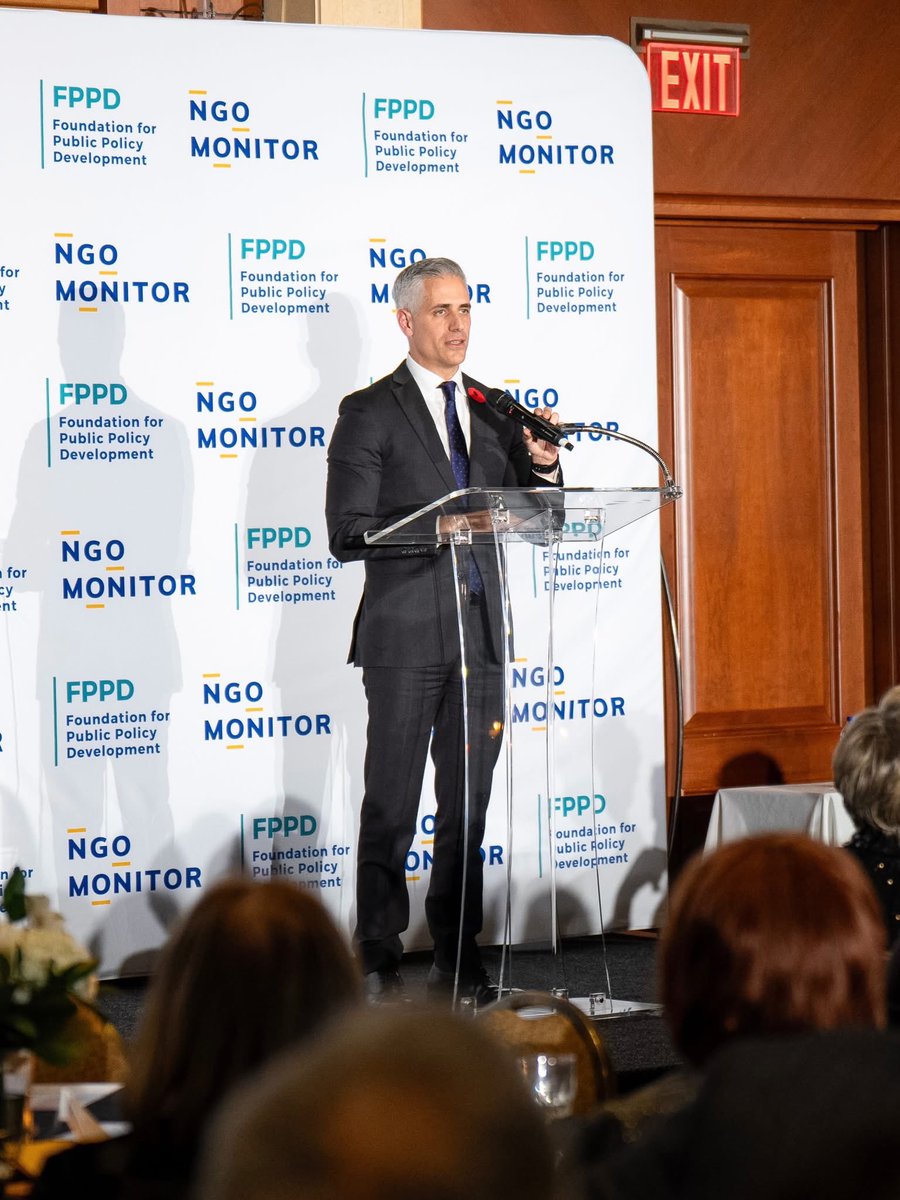
It was wonderful to visit Montreal for the first time in support of @NGOmonitor, led by my dear friends @GeraldNGOM and @olga_deutsch.
I spoke about the arc of the Israeli experience since October 7 and what gives me hope for the future of Israel and the Jewish people, as well as how organizations like NGO Monitor help journalists and policymakers keep tabs on human rights groups focused on Israel and the Palestinians.
NGO Monitor plays a key role in ensuring that those groups adhere to their own missions and to the laws of the countries that fund them, exposing abuses and holding abusers accountable. It was an honor to speak in support of its critical work.
And yes, of course I made the time to enjoy a Montreal bagel (or two) 🥯
New Knesset Speaker Kahana:
"The Knesset is the home of all Israelis and I will be a speaker for all of them, regardless of religion, race, or gender."
(@DaphnaLiel)
The election of a new speaker is viewed as the opening volley in an effort by the change bloc to roll back many of the legislative initiatives undertaken by the Netanyahu government, as well as setting the stage for the initiation of an alternative government.