I launched a new blog dedicated to parenting!
I'll debunk common #parenting myths using the latest science. From the notion that parental actions dictate every facet of a child's future to topics like screen-time & breastfeeding.
Please subscribe & share
https://t.co/ZUoNQYaRzD
@ZakovShay@YaakovOphir מיוקרדיטיס שאכן עולה, זה סלקטיבי? בכל מקרה, יש עוד מחקרים, את זה הבאתי כדי להראות שכבר כתבו על מיוקרדיטיס עוד ב2021 וזה היה ראשוני, בהתאם לשנה. עוד הרבה התפרסמו מאז על מדגמים גדולים ולא רק מהארץ, המסקנות זהות. אשמח לקישור לטענה שמחוסנים מתו יותר. שים לב שנבדק אחוז מהאוכלוסיה.
@Logan5__@ZakovShay@YaakovOphir אני אומרת שזה היה מ2021 ונתתי את זה כדוגמה למאמר בו ניסו לבדוק את הדברים לעומק, בהתאם לנתונים שהיו. מזל שיש עוד הרבה מחקרים מאז. מוזמנים לבדוק. למשל
https://t.co/1f3xMOOqIr
@YaakovOphir 8/ 1. הכי חשוב, בוא תעשה מחקר רציני, קבוצת ביקורת, אימות של אבחנה, בדיקה של סטטוס חיסון/הדבקה ואז תנסה לפרסם (חוזרת שוב ואומרת, יש כבר המון מחקרים כאלו). אם ידחו אותך, מבטיחה שאהיה הראשונה שתנסה לעזור.
@YaakovOphir 7/ לגבי הטענה הזו "החיסון משמעותית *פחות* מסכן מהמחלה עצמה" זה לא עניין של לטעמי או לטעמך, אלו עובדות והמחקר שהבאתי דיבר על מתבגרים באופן ספציפי.
שוב, אתה מציג את הנתונים כאילו הם מוסתרים, אבל הם זמינים לכל בחיפוש קצר. יש עשרות מחקרים על הנושא של בטיחות החיסון בכל הגילאים.
Can someone clarify this?
Is the claim here that this is collider bias but still meaningful for elite performers? How can that be, if it’s a statistical artifact? Like the plane example. Focusing only on those who “made it” leads to biased inference, no?
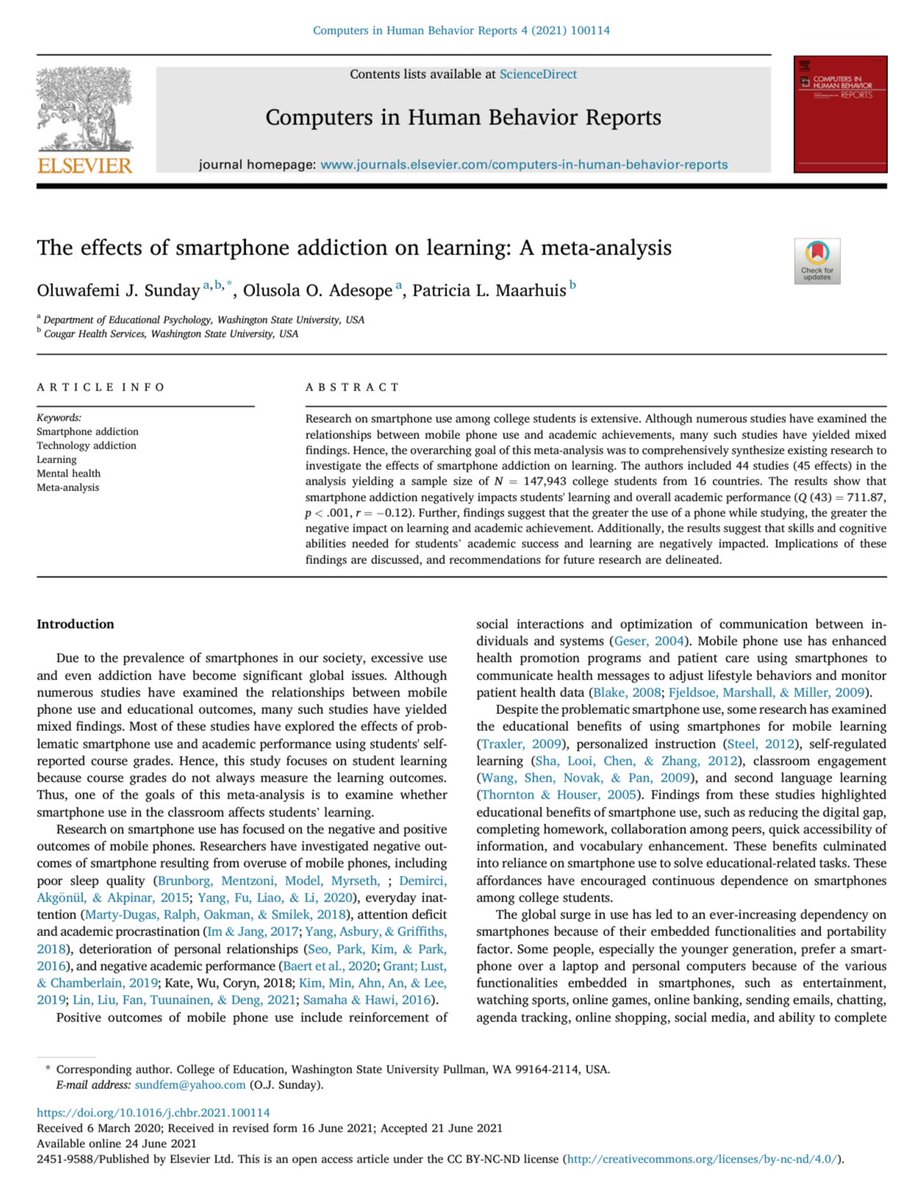
Smartphone addiction has negative impacts on student learning and overall academic performance. The greater the use of a phone while studying, the greater the negative impact on learning. The skills and cognitive abilities students needed for academic success are negatively affected by excessive phone use. The results of this meta-analysis implied that addicted users show a diminished level in learning.
Is he being serious? It hasn't been thought of enough? I can think of a few well-known papers that deal exactly with this question. The classic one being Plomin & Daniels (1987): Why are children in the same family so different from one another?
https://t.co/FMzklrcihs
They got the same DNA. Genes are the same. Same mother, same father, same older siblings, same younger siblings, same number of books in the house, same number of TVs in the house, same teachers, same everything. So they should be absolutely indistinguishable. They should be, you know, clones. Well, if you know a pair of identical twins, you know they’re not indistinguishable. They have separate personalities. I know this intimately, having two identical twin uncles, Barry and Mark, who are more similar than people picked off the street at random, but no one in the family had any doubt which was which. They each had their own personality, and that’s true of all individuals. Well, that leads to a real puzzle that I think psychologists have not really thought through enough, which is: how can they be different? It’s not their genes. It’s not their environment—at least not anything stable about the environment, like who your mother is or what neighborhood you live in.
@thinkableevents
Can someone clarify this?
Is the claim here that this is collider bias but still meaningful for elite performers? How can that be, if it’s a statistical artifact? Like the plane example. Focusing only on those who “made it” leads to biased inference, no?
We thought through statistical artifacts, including collider bias. In the paper, we're focused on elite performers, rather than making broad claims about the greater population.
10/ If we improve those environments, reduce crime, strengthen communities, expand opportunities, those genetic associations would weaken, and might even vanish altogether.